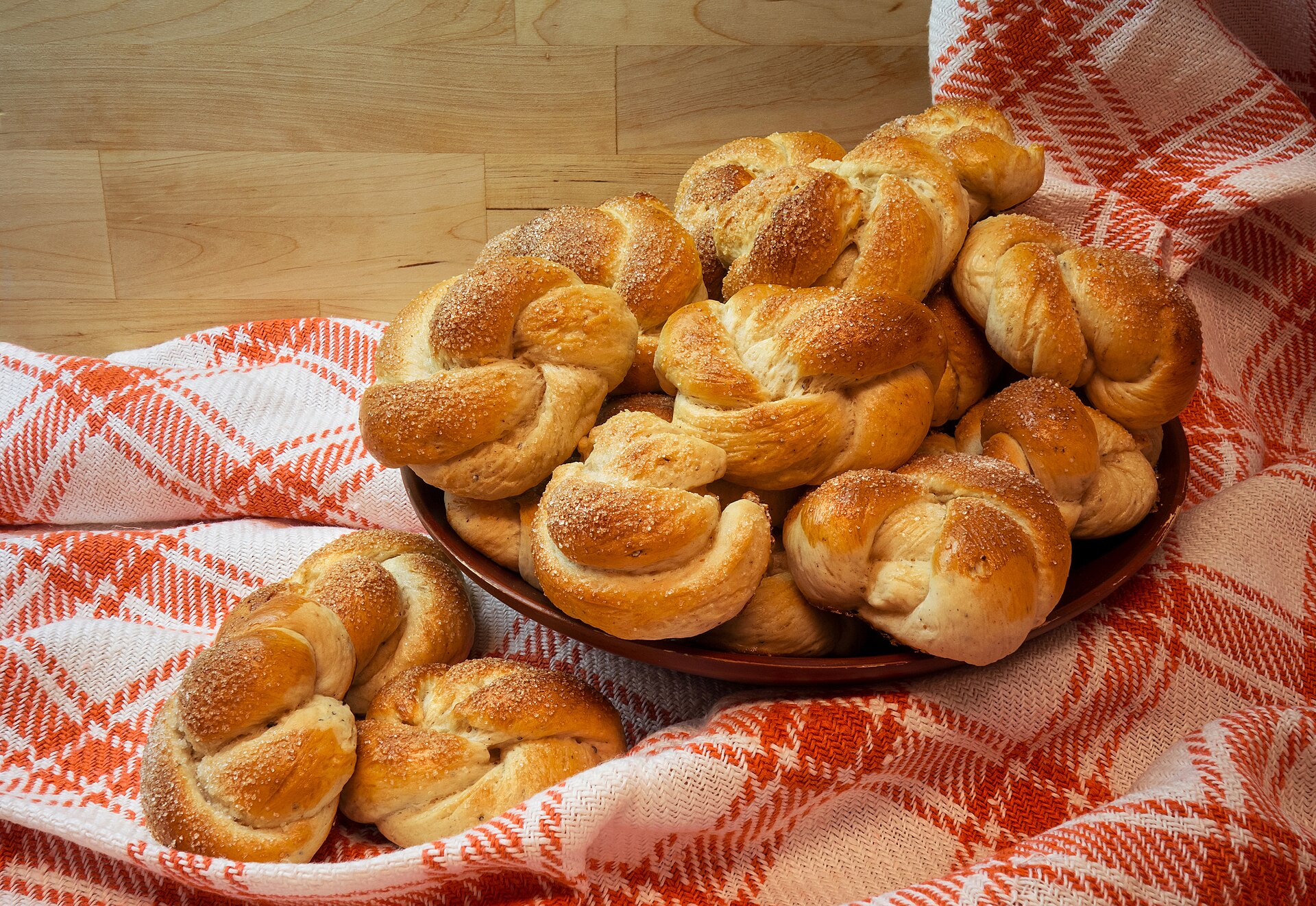
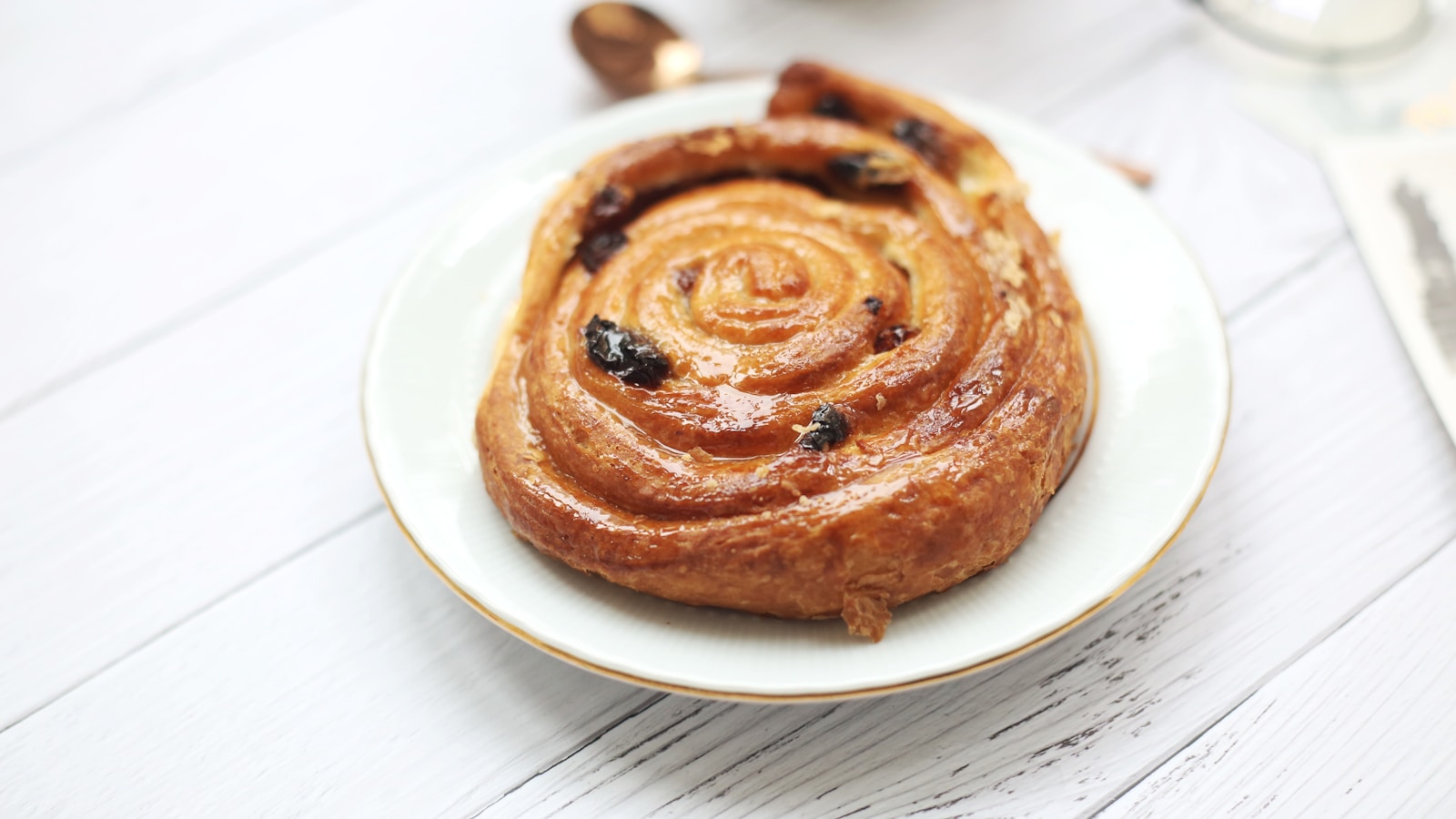
The smell arrives first. Before the oven timer, before the crackle of the pearl sugar beginning to glint on the rising tops, the kitchen fills with the particular perfume of green cardamom meeting warm butter — a scent that is half citrus, half pine forest, half something older that belongs to ships and spice routes and long winters. The knots come out of the oven burnished mahogany at their edges and pale gold in their interior folds. You tear one open. Steam. Layers of cardamom-sugar pulled into ribbons. A crumb so soft it barely registers as bread.
Kardemummabullar are the Swedish answer to the cinnamon roll, and across Stockholm, Copenhagen, Oslo, and increasingly London, Melbourne, and Brooklyn, they are quietly winning. Fabrique, the Stockholm bakery that opened its first London outpost a decade ago and now has branches scattered across the city, has made the cardamom bun its signature. Walk into one on a grey Tuesday morning and you will find a queue of hooded office workers waiting for a bun and a black filter coffee — not a flat white, not a cortado, but coffee the way Swedes drink it: plain, hot, endless. The bun does the flavor. The coffee lets it.
Magnus Nilsson, the Swedish chef behind the now-closed Fäviken and author of the monumental The Nordic Baking Book, devotes an entire chapter to the kardemummabulle. He describes it not as a pastry but as “a ritual object” — the center of fika, the twice-daily Swedish coffee break that is less a snack than a constitutional right. Signe Johansen, whose How to Hygge helped introduce much of the English-speaking world to Scandinavian domestic traditions, writes in Scandilicious Baking that the cardamom bun is “the edible embodiment of Swedish comfort.” She is not overstating the case. By 2025, King Arthur Baking Company was reporting a 140 percent year-over-year rise in searches for cardamom bun recipes on its site. The cinnamon roll, for now, still dominates American breakfast counters. But a quiet revolution is underway, and the bun leading it is this one.
Fika: The Cultural Context You Need to Understand
The bun makes no sense without the ritual that produced it. Fika (pronounced fee-ka) is a Swedish institution that has no direct translation in English. It is both noun and verb — a coffee break and the act of taking one. Workplaces observe it twice daily, around 10 a.m. and 3 p.m. Offices shut down the way Americans stop for lunch. Colleagues gather around a shared pot. A plate of baked goods comes out. Nothing is discussed that cannot wait fifteen minutes. Nothing is rushed. Sweden, the country with Europe’s highest per-capita coffee consumption, has built an entire social contract around this pause, and the baking tradition that supports it is among the most developed in the world.
What fika demands of its pastries is specific. A fika bun must be sweet but not cloying — you will eat one every day. It must be substantial enough to bridge a meal but light enough not to crash you. It must travel well on a wooden board from the kitchen counter to the break room. And above all, it must pair with coffee — not coffee with milk, not espresso, but the simple black brewed coffee Swedes call bryggkaffe. The kardemummabulle answers every one of these requirements with precision. The cardamom cuts the butter, the pearl sugar gives crunch without excessive sweetness, and the enriched dough holds up on a plate for hours. It is engineered, in the best sense of the word, for its context.
The Cardamom: Grind It Yourself, Every Time
If there is one decision that separates a professional-grade kardemummabulle from a disappointing one, it is what you do with your cardamom. Pre-ground cardamom from the spice aisle will not do. The essential oils that give green cardamom its extraordinary aromatic complexity — a compound called cineole, along with alpha-terpinyl acetate — are highly volatile and begin evaporating the moment the pod is crushed. Within three to four months of grinding, most of the flavor is gone. What remains in a jar of pre-ground cardamom on a supermarket shelf is a pale shadow of the real thing: vaguely floral, slightly soapy, nothing like what you smell when you crack a fresh green pod and inhale.
Buy whole green cardamom pods. The best come from Guatemala or India’s Malabar coast, sold in small bags at Indian grocers, Scandinavian specialty stores, and increasingly on supermarket spice walls under brands like Frontier Co-op or The Spice House. For this recipe you will need roughly 30 pods, which sounds like a lot and is correct. Crack each pod open between your fingers or under the flat of a knife. Discard the papery green husks. Keep only the black, sticky seeds inside. Grind them in a mortar and pestle to a coarse powder, or pulse in a dedicated spice grinder. Do not use your coffee grinder unless you want cardamom coffee for the next month.
The Enriched Dough: Patience, Butter, Cold Hands
A Swedish bun dough is classified as enriched — meaning it contains significant fat (butter), sugar, and egg beyond what a plain bread dough would have. Enriched doughs are more tender, more flavorful, and substantially more difficult to work with than lean doughs. The extra fat inhibits gluten formation, so the dough requires longer kneading to reach full elasticity. The extra sugar slows yeast activity, so the rise takes longer than bread. And the butter must be added in stages, softened but not melted, to incorporate properly without breaking the structure you have been building.
The method I use, adapted from Fabrique’s published recipe and from Magnus Nilsson’s instructions in The Nordic Baking Book, starts with the dry ingredients and liquid mixed into a shaggy mass, kneads for six minutes to begin gluten development, then introduces softened butter one tablespoon at a time. Each addition must disappear into the dough before the next goes in. Rush this step and you will end up with a greasy, stringy mass that never recovers. Take your time — eight to ten minutes of patient incorporation — and you will have a glossy, stretchy, elastic dough that passes the windowpane test (a small piece stretched between your fingers should become thin enough to read newsprint through, without tearing).
The first rise takes 60 to 90 minutes in a warm kitchen. Do not cut it short. A partially risen dough produces dense, squat buns that never develop the soft, pulled-apart interior of a proper kardemummabulle. If your kitchen is cold — below 68°F — allow extra time, or create a warm proofing spot by placing the covered bowl in your oven with just the oven light on.
The Twist and the Knot: The Swedish Shape
Americans roll cinnamon buns into spirals and place them cut side up in a pan. Swedes twist theirs into elegant knots that bake free-form on a sheet, each one a small architectural object. The technique is simpler than it looks, but requires a specific sequence. First, roll the dough into a 16-by-20-inch rectangle. Spread the cardamom-butter filling all the way to the edges. Fold the dough in thirds, like a business letter: short edge to short edge, creating a three-layer strip. Roll gently to flatten and lengthen slightly. Cut lengthwise into 12 equal strips about 1 inch wide.
Now the twist. Take one strip. Hold each end and rotate in opposite directions — four or five full twists — until the strip corkscrews tightly on itself. Lay it on the counter and, keeping it twisted, wrap it loosely around two fingers of one hand, twice, tucking the final end up through the center hole to secure. You will get the hang of it by the third bun. The first two may look ragged. This is fine; they will still taste excellent. By the twelfth, you will be shaping them with the casual speed of a Fabrique baker, and the knots will take on that slightly irregular, artisanal look that marks a handmade Scandinavian bun.
Cardamom Bun vs Cinnamon Roll: The Technical Comparison
Understanding why the kardemummabulle is gaining ground on its better-known cousin starts with the specifics of how each is built.
| Attribute | Kardemummabulle | American Cinnamon Roll | Why It Matters |
|---|---|---|---|
| Primary spice | Green cardamom (freshly ground) | Cinnamon (often pre-ground) | Cardamom is brighter and more complex |
| Shape | Twisted knot, baked free-form | Rolled spiral, baked in pan | Free-form knots have more crust, less gooey center |
| Finish | Egg wash + pearl sugar | Cream cheese or vanilla glaze | Pearl sugar adds crunch without excess sweetness |
| Sugar content | Moderate (no glaze) | High (heavy glaze) | Better everyday fika suitability |
| Crumb texture | Pulled, layered, silky | Dense, tightly coiled | Layered twist produces complex mouthfeel |
Ingredients
Cardamom dough:
- 3¾ cups (480 g) all-purpose flour
- ½ cup (100 g) granulated sugar
- 2 teaspoons instant yeast
- 1 teaspoon fine sea salt
- 2 tablespoons freshly ground green cardamom seeds
- 1 cup (240 ml) whole milk, warmed to 100°F (38°C)
- 1 large egg, room temperature
- ½ cup (113 g) unsalted butter, softened
Cardamom-butter filling:
- ½ cup (113 g) unsalted butter, very soft
- ⅔ cup (135 g) light brown sugar, packed
- 1 tablespoon freshly ground green cardamom seeds
- ½ teaspoon fine sea salt
- 1 teaspoon pure vanilla extract
Egg wash and topping:
- 1 large egg beaten with 1 tablespoon milk
- 3 tablespoons Swedish pearl sugar (pärlsocker)
- Extra crushed cardamom for sprinkling
Making It
- Grind the cardamom. Crack open about thirty green cardamom pods between your fingers or under the flat of a knife. Discard the papery green husks. Collect the small black seeds — they should look slightly sticky and smell intensely aromatic. Grind in a mortar and pestle or dedicated spice grinder until coarsely powdered, not dust-fine. You should have about three tablespoons total. Set aside two tablespoons for the dough, one for the filling, and a small pinch for finishing.
- Make the dough. In the bowl of a stand mixer, whisk together flour, granulated sugar, instant yeast, salt, and two tablespoons of the ground cardamom. Add the warm milk and egg. Fit the mixer with the dough hook and knead on medium-low for six minutes, until a shaggy, cohesive dough forms. It should be tacky but pull away from the sides of the bowl. Now add the softened butter, one tablespoon at a time, letting each piece fully disappear before adding the next. This takes patience — about eight to ten minutes total. When finished, the dough should be glossy, elastic, and pass the windowpane test.
- First rise. Scrape the dough into a lightly oiled bowl. Cover with a damp cloth or plastic wrap. Let rise at room temperature for sixty to ninety minutes, until doubled and visibly puffy. If your kitchen runs cold, the oven with just the light on provides a perfect proofing environment at roughly 78°F.
- Make the filling. In a small bowl, mash the very soft butter with the brown sugar, the remaining tablespoon of ground cardamom, the salt, and the vanilla. Use the back of a fork or a spatula to work it into a thick, uniform paste. It should be spreadable but not melting. If it looks broken or runny, chill for ten minutes before using.
- Roll and fill. Turn the risen dough onto a lightly floured work surface. Deflate gently and roll into a 16-by-20-inch rectangle about ¼ inch thick. Spread the cardamom-butter filling evenly across the entire surface, reaching all four edges. Do not leave a border — the edges become the twisted top of the bun.
- Fold and cut. Fold the rectangle in thirds, like a business letter: short edge over short edge, creating a layered strip about 16 inches long and 6 to 7 inches wide. Gently roll to even out and slightly lengthen. Using a sharp knife or bench scraper, cut the strip lengthwise into twelve equal pieces, each roughly 1 inch wide. You will have twelve long layered ribbons of dough with filling striped through them.
- Twist and knot. Take one ribbon. Holding each end between thumb and forefinger, twist in opposite directions — four or five complete rotations — until the strip corkscrews tightly on itself. Lay the twisted rope horizontally on your work surface. Loosely wrap it around two fingers of your non-dominant hand, twice. Tuck the loose end up through the center hole to secure. Transfer the knotted bun to a parchment-lined baking sheet. Repeat with the remaining eleven strips, spacing the buns at least two inches apart on two baking sheets.
- Second rise. Cover the sheets loosely with plastic wrap or a clean towel. Proof at room temperature for forty-five to sixty minutes, until the buns look visibly puffed and hold a finger indent for a moment before slowly springing back. While they proof, preheat the oven to 425°F (220°C). Position a rack in the center.
- Egg wash, sugar, bake. Brush each proofed bun generously with the egg wash, covering all exposed surfaces. Sprinkle immediately with pearl sugar and a final pinch of crushed cardamom — the egg wash acts as the glue that holds the topping in place. Bake for ten to thirteen minutes, rotating the sheets halfway through, until the tops are deeply golden brown and the internal temperature of the thickest bun reads 200°F on an instant-read thermometer.
- Cool and serve. Transfer the buns to a wire rack. Let cool for fifteen minutes — they should be warm, not hot, when you tear one open. Serve with plain black filter coffee. For the authentic Swedish experience, resist the urge to add anything else. The bun is the whole show.
What To Drink With It
A kardemummabulle is engineered for coffee, specifically for the simple black filter coffee that defines Swedish office life. The gentle bitterness of a medium roast cuts the butter and sugar; the water-based drink rinses the palate between bites in a way that milk-based coffees cannot. If coffee is not your drink, a strong Assam or Ceylon black tea works — the tannins serve a similar cleansing function. Hot chocolate is actively wrong for this bun; too much sweetness in both directions collapses the flavor architecture into a single note. Cold drinks are equally misguided. The bun wants heat to bloom its cardamom, and the drink is part of that heat.
For a larger weekend spread where fika becomes brunch, the kardemummabulle pairs beautifully with other enriched doughs. Our soft and fluffy cinnamon rolls from scratch belong to the same enriched-dough family and can be made in parallel with the kardemummabullar — same base technique, different shape and filling. For a contrasting texture on the table, consider our fluffy dinner rolls that melt in your mouth, which share the enriched-dough principles but in a savory direction. And for something that hits the same “special but manageable” note the next morning, our lemon blueberry muffins with streusel topping is an obvious companion.
Make-Ahead and Overnight Method
The best kardemummabullar I have made were cold-proofed overnight. The method: complete the recipe through the shaping step, arranging the knotted buns on their parchment-lined baking sheets. Instead of proofing at room temperature, cover the sheets tightly with plastic wrap and refrigerate for eight to sixteen hours. The cold slows the yeast without stopping it, producing a slower fermentation that develops more complex flavor and improves the cardamom bloom. In the morning, uncover, let the sheets warm on the counter for sixty to seventy-five minutes (the buns will still be cold when you pull them out), egg wash, pearl sugar, and bake as directed. This is exactly how Fabrique and most professional Scandinavian bakeries produce fresh buns for their morning counters.
Storage and Reheating
Kardemummabullar are at their peak within four hours of baking. After that, the enriched dough begins to firm as the butter solidifies, and the cardamom’s volatile oils dissipate. Store leftover buns in an airtight container at room temperature for up to two days. To revive, warm a bun in a 325°F oven for six to eight minutes — not the microwave, which makes the dough gummy. For longer storage, freeze fully baked buns in a single layer on a tray, then transfer to a zip-top bag. Thaw at room temperature and refresh in the oven. Frozen and properly reheated, they are remarkably close to fresh.
Frequently Asked Questions
Why grind green cardamom fresh instead of using pre-ground?
Cardamom’s aromatic oils are extraordinarily volatile. Whole pods retain flavor for over a year; pre-ground cardamom loses most of its complexity within three to four months. Fresh-ground green cardamom has a bright, eucalyptus-and-citrus lift that carries through the enriched dough, the filling, and the finished bun. Swedish bakers grind it the same morning they bake. If pre-ground is all you have, double the quantity to compensate — but understand the flavor will not reach the same intensity.
What is pearl sugar and can I substitute it?
Pearl sugar (pärlsocker) consists of small, hard opaque-white sugar crystals that do not fully melt during baking. Scattered on buns before baking, they hold their shape and give a signature crunch plus visual sparkle. Turbinado or demerara are acceptable substitutes but produce a different texture — softer, more caramelized, less snowy. Pearl sugar is widely available at IKEA food halls, Scandinavian specialty shops, and online. A 500-gram bag lasts through many batches and is worth the search.
Can I make kardemummabullar ahead and bake later?
Yes — this is standard bakery practice. After shaping the knots, cover tightly and refrigerate overnight up to 16 hours. In the morning, let the sheets warm on the counter for sixty to seventy-five minutes, egg wash, pearl sugar, and bake as directed. The cold proof actually improves flavor: the slow rise develops more complex yeast notes and deepens cardamom aromatics. Fabrique and most Scandinavian bakeries use exactly this method for fresh morning service.
Why are my buns dense instead of fluffy?
Three common causes. First, milk too hot when added to yeast: above 115°F kills yeast. Aim for 100°F — warm to the finger but not hot. Second, under-kneading: an enriched butter dough needs twelve to fourteen minutes in a stand mixer to develop enough gluten. The windowpane test confirms readiness. Third, under-proofing: a cold kitchen slows the rise. Give the dough the time it needs to visibly double, even if that takes longer than the recipe states. Patience is the most underrated ingredient in yeast baking.
Sources
- King Arthur Baking — Swedish Cardamom Buns — Tested reference recipe with detailed shaping photographs and dough hydration notes.
- Serious Eats — Kardemummabullar Deep Dive — Technique breakdown covering the tangzhong variation and enriched-dough chemistry.
- USDA FoodData Central — Cardamom and Enriched Wheat Flour — Nutritional data used for per-serving calculations.
Each bun contains roughly 312 calories, 6 g protein, 12 g fat, 45 g carbohydrates, and 2 g fiber — based on 12 buns from the full recipe.
Please note: Nutritional estimates are derived from the USDA FoodData Central database and may vary depending on specific brands and component sizes. This recipe contains dairy, wheat, and eggs. Nothing in this article should be interpreted as medical or dietary guidance. If you have food allergies, egg sensitivities, or specific dietary needs, consult a registered dietitian or healthcare provider before preparing this recipe.