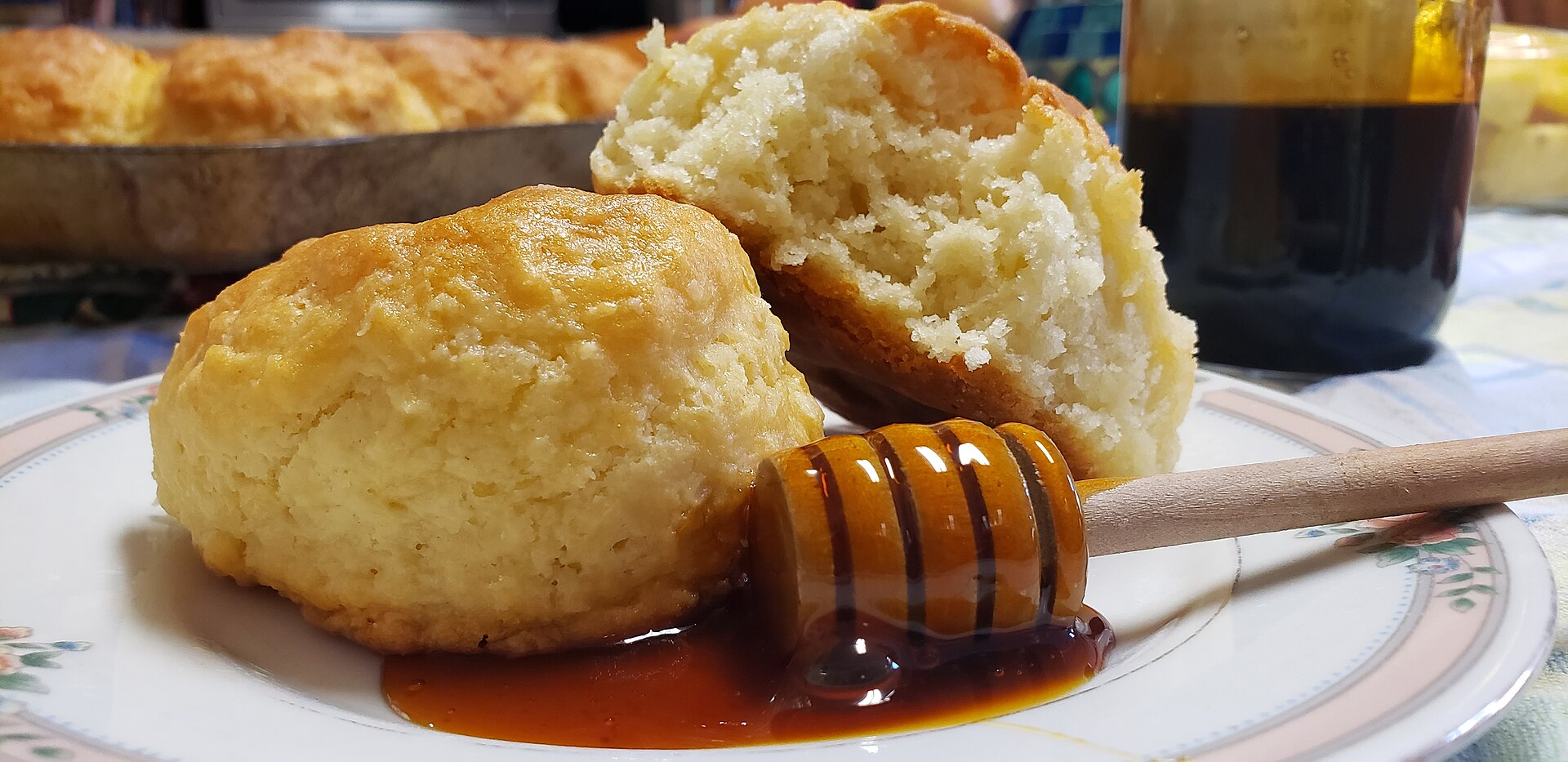
There is a particular plate of food that defines Sunday morning in the American South. A tall split biscuit, golden on top, white and flaky inside, sits on a plate. A ladle of thick peppery sausage gravy — pale beige flecked with chunks of browned sausage and fine specks of pepper — is poured over both halves. You eat it with a fork, but every bite involves both biscuit and gravy together, and by the time you get to the bottom of the plate the biscuit has soaked up enough gravy that it has become a single dense, deeply satisfying mass. There is almost no breakfast in international cuisine that delivers more comfort for less ceremony.
Biscuits and gravy belongs to the broader American tradition of Appalachian frugal cooking, which produced many of the most beloved dishes of the South. The history is utilitarian: Southern farmers and miners in the post-Civil War period needed cheap calorie-dense breakfast that would sustain a long day’s physical work. Pork sausage was on hand from family hogs. Wheat flour was cheap. Milk came from the family cow. A thick milk-and-pork-fat gravy poured over a biscuit produced a meal that could fuel six hours of plowing or coal mining and cost almost nothing. The dish spread across Appalachia and the rural South through the early twentieth century and entered the broader American consciousness through diners and roadside cafes in the 1950s and 1960s.
The Southern food writer Edna Lewis, in The Taste of Country Cooking (1976), traced biscuit traditions to enslaved African and African-American cooks in plantation kitchens, who developed the lamination techniques that produce tall flaky biscuits long before they were codified in cookbooks. Modern revivalists like Sean Brock (whose Husk restaurants celebrated Southern foodways) and Bryant Terry (Black Food, 2021) have brought renewed attention to the labor and skill behind what looks like a simple dish. The rest of this article is the actual technique that makes the biscuits flaky and the gravy proper, drawing on the canon of Southern cooking with notes on the science of each step.
Cold Butter, Cold Buttermilk, Cold Hands
The single most important variable in biscuit making is temperature. Cold butter, when worked into flour, stays as discrete chunks — pea-sized to pebble-sized pieces visible in the unbaked dough. In the oven, those butter chunks melt and the water in the butter (about eighteen percent water content in standard American butter) flashes into steam. The steam creates pockets between layers of dough, and those pockets are the flaky layers. Warm butter integrates into the flour completely and produces dense, scone-like biscuits with no layers at all.
Practical implications: refrigerate the butter overnight before making biscuits. Cube it cold. Some bakers freeze the butter for thirty minutes before working it in, which provides extra insurance. The buttermilk must be cold straight from the refrigerator. On a warm summer day, you can even chill the flour. If you have warm hands (some people do), run them under cold water before mixing. The goal is to keep the butter cold until the biscuits hit the hot oven; the slightest warming compromises the flake.
Lamination: The Letter Fold
The lamination fold is the technique that transforms ordinary biscuit dough into the layered structure that produces “pull-apart” biscuits. After the dough comes together — shaggy, with visible butter chunks — pat it into a rectangle about two centimeters thick. Fold one third over the middle, then fold the other third over (like a business letter). You have now tripled the layers. Pat down again to two centimeters. Fold again. Repeat for three folds total. Some bakers do four. By the end you have approximately 27 layers of butter sandwiched between layers of dough, which will multiply further during baking as the steam expands.
Critical: do not overdo the folds. Beyond four or five, the butter begins to integrate into the dough through repeated working, and you lose the discrete layers. Three folds is the sweet spot for home biscuits. Cold butter, fast folds, minimal hand contact. The dough should look streaky and shaggy throughout — not smooth. If your finished dough looks smooth and uniform, you have overworked it and the biscuits will not be as flaky as they could be. Accept the imperfect-looking dough; it becomes beautiful biscuits.
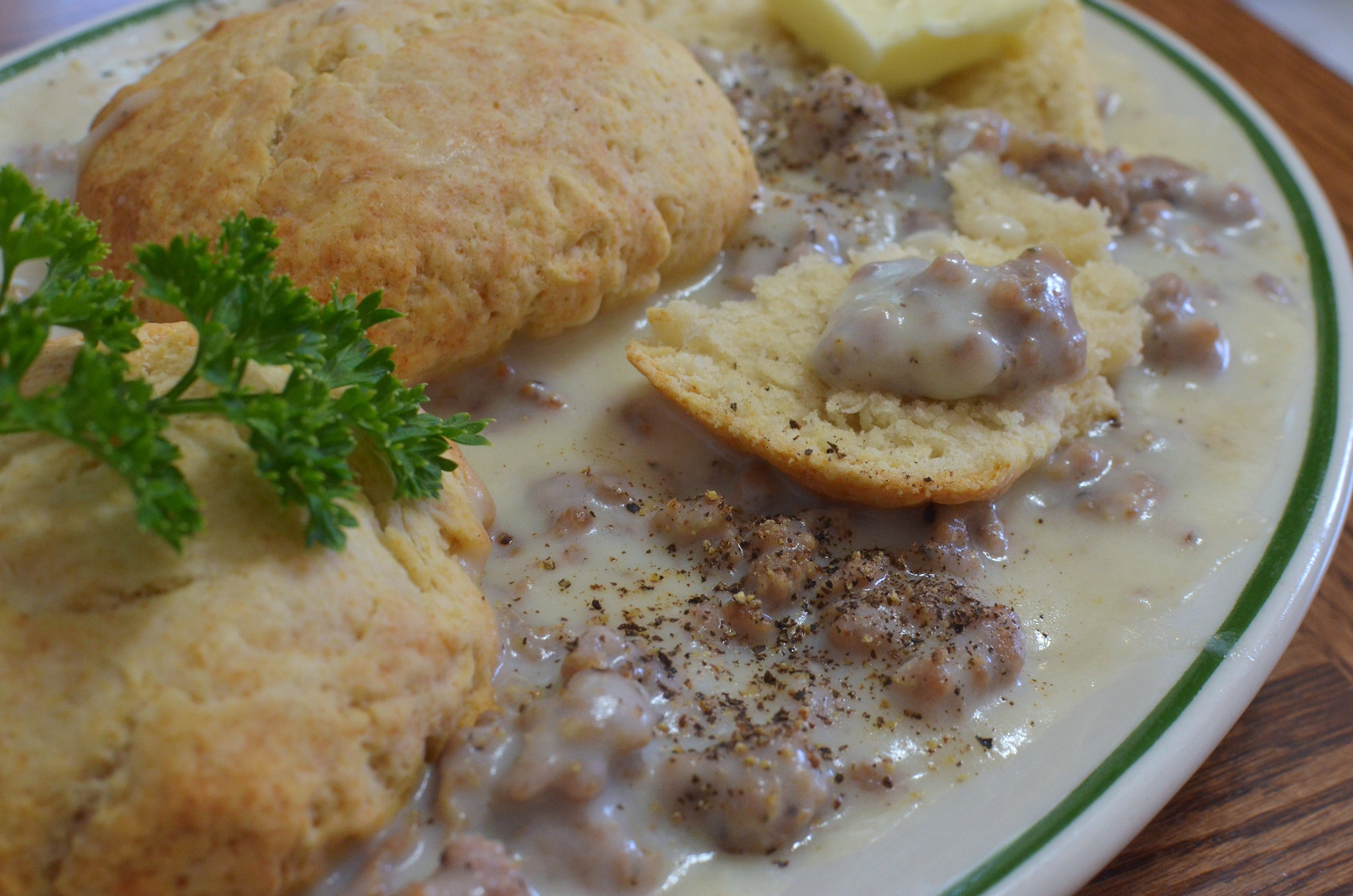
The Sausage Gravy: A Pork-Fat Roux
Sausage gravy is, technically, a béchamel built on rendered pork sausage fat rather than butter. The structure is identical — fat plus flour plus milk — but the pork base provides the dominant flavor. Use bulk breakfast sausage (Jimmy Dean Original, Owens, or a local Southern brand) rather than sausage in casings; the bulk variety has the right ratio of fat to lean and the right sage-and-pepper seasoning that defines the dish. Cook the sausage until evenly browned with crispy bits, then leave all the fat in the pan. Drain off only if the pan is genuinely swimming in fat (rare with bulk sausage).
Sprinkle one-third cup of flour over the cooked sausage and stir constantly for ninety seconds. This is the roux step — you are coating every fat droplet with flour and cooking out the raw flour taste. The mixture will look slightly pasty and tan. Then pour in the milk in a slow steady stream while whisking. The whisking is essential to prevent lumps. The gravy thickens as it heats; bring just to a simmer, then reduce heat and let it cook for five to seven minutes, stirring frequently, until the gravy coats a spoon thickly. Test by drawing a spoon down the back of another spoon: the track should hold for about three seconds before flowing back.
Biscuits and Gravy vs Other Southern Breakfasts: A Quick Map
| Dish | Components | Region |
|---|---|---|
| Biscuits & Gravy | Biscuit + sausage cream gravy | Appalachia, broader South |
| Country Ham & Red-Eye Gravy | Country ham + coffee-based gravy | Virginia, Tennessee |
| Shrimp & Grits | Shrimp on cheesy grits with bacon | Lowcountry (Charleston, Savannah) |
| Hoecakes | Cornmeal cakes with syrup/butter | Across the South |
Ingredients
For the biscuits (yields 8):
- 360 g (3 cups) all-purpose flour
- 1 tablespoon baking powder
- 1 teaspoon baking soda
- 1 1/2 teaspoons fine sea salt
- 1 teaspoon sugar
- 170 g (12 tbsp) very cold unsalted butter, cubed
- 300 ml (1 1/4 cups) very cold cultured buttermilk
- 2 tablespoons melted butter, for brushing
For the sausage gravy:
- 450 g (1 lb) bulk pork breakfast sausage (Jimmy Dean Original or comparable)
- 45 g (1/3 cup) all-purpose flour
- 700 ml (3 cups) whole milk
- 1/2 teaspoon dried sage (or 1 tsp fresh)
- Plenty of freshly ground black pepper
- Salt to taste
Making It
- Preheat oven to 220 C (425 F). Line baking sheet with parchment.
- Make biscuit dough. Whisk flour, baking powder, baking soda, salt, sugar. Cut in cold cubed butter until coarse meal with pea-sized chunks.
- Add buttermilk. Pour all at once. Stir gently with fork just until shaggy.
- Lamination. Turn onto floured surface. Pat to 2-cm rectangle. Letter-fold (thirds). Pat down. Fold again. Repeat for 3 total folds.
- Cut. Pat to 3-cm thick. Press straight down with 7-cm cutter (do not twist). Re-fold scraps, cut more. Should yield 8.
- Bake. Place biscuits with sides touching on parchment. Brush tops with melted butter. Bake 14-18 min until tall and deeply golden. Brush with more butter immediately.
- Make gravy. While biscuits bake, crumble sausage in heavy skillet over medium. Cook 8-10 min, breaking up, until browned. Do NOT drain fat.
- Roux. Sprinkle 1/3 cup flour. Stir constantly 90 seconds.
- Add milk. Slowly pour milk while whisking. Add sage. Bring to simmer. Reduce heat, cook 5-7 min stirring, until coats spoon thickly. Aggressive black pepper. Salt to taste.
- Serve. Split warm biscuits. 2 halves per plate. Smother with gravy. Extra pepper on top. Serve immediately.
Common Mistakes
The most common biscuit mistake is twisting the cutter when pressing down. Twisting seals the edges of the dough and prevents the biscuit from rising properly — you end up with short, dense biscuits. Press straight down and pull straight up. The second mistake is over-mixing the dough. Stop the moment the dough comes together, even if it looks shaggy. Overworking develops gluten and produces tough, bread-like biscuits instead of flaky ones. The third mistake is placing biscuits with space between them on the baking sheet. Side-by-side biscuits force each other to rise straight up; spaced biscuits spread outward and become flatter.
For the gravy: the most common mistake is draining the sausage fat. The fat is the entire flavor base. The second is adding cold milk too fast, which produces lumps. Pour slowly while whisking continuously. The third is under-seasoning. Sausage gravy needs aggressive black pepper — a teaspoon or more for the full batch, freshly ground. Pre-ground pepper does not have enough kick. Taste before salting; the sausage is already salty.
What to Serve Alongside
Biscuits and gravy is the centerpiece of a Southern breakfast plate. Traditional accompaniments: scrambled eggs (cooked soft, slightly underdone), grits (stone-ground, butter, salt), country ham or thick bacon, fried apples, and strong black coffee with cream. The whole plate is the cultural production known as a “Sunday breakfast” or, when expanded with fried chicken and biscuits, “Sunday supper.” For something from our family, our marry me chicken is the comfort-food rotation for dinner-side, and our classic banana bread, perfectly moist with a crackly sugar crust covers the sweet end of the same kitchen tradition.
Storage and Make-Ahead
Biscuit dough can be cut into rounds, frozen on a parchment-lined tray until solid (1 hour), then transferred to a freezer bag for up to 3 months. Bake directly from frozen at 220°C (425°F) for 18 to 22 minutes — no thawing needed. This is how most Southern home cooks meal-prep biscuits for busy weeks. Baked biscuits keep at room temperature for 1 day in a sealed container; reheat in a 180°C (350°F) oven for 5 minutes to refresh. Gravy keeps refrigerated 3 days — reheat with a splash of milk to loosen, since it thickens significantly when cold. The assembled dish does not hold; the biscuits absorb the gravy and turn soggy. Plate at service.
Frequently Asked Questions
Why must the butter and buttermilk be so cold?
Cold butter stays as discrete chunks through mixing. In the oven, butter melts and its water content (about 18% of butter is water) flashes to steam, creating the pockets that produce flaky layers. Room-temperature butter integrates into flour and produces dense scone-like biscuits with no layers. Refrigerate butter overnight, chill the buttermilk 30 min minimum.
What is the lamination fold and why does it matter?
Fold dough into thirds like a business letter, repeat 3-4 times before cutting. Each fold doubles or triples the butter-and-dough layers. By the end, hundreds of microscopic layers produce the famous pull-apart texture. Without lamination, biscuits rise but do not flake. With it, they pull apart in horizontal layers like a croissant.
Why use whole milk instead of cream in the gravy?
Whole milk produces the correct texture and balance. Cream makes the gravy cloyingly rich and viscous — the dish was developed by people who used milk from the family cow, not separated cream. The gravy should taste of sausage and pepper, not of cream. Whole milk gives the slightly more delicate, pourable consistency.
Can I make biscuits and gravy ahead?
Components yes, full dish no. Cut biscuits and freeze on a tray for up to 3 months; bake from frozen. Gravy keeps refrigerated 3 days — reheat with a splash of milk. Assembled dish does not hold — the biscuits absorb the gravy in 20 minutes. Plate at service. This is how Southern diners run brunch.
Sources
- Serious Eats — Best Flaky Buttermilk Biscuits — Stella Parks’ detailed breakdown of the lamination technique and cold butter chemistry.
- NYT Cooking — Biscuits and Gravy — Sam Sifton’s classic Southern version with traditional sausage gravy.
- USDA FoodData Central — Flour, Butter, Pork Sausage — Nutritional data.
Each serving (2 biscuit halves + 1/2 cup gravy) contains roughly 720 calories, 22 g protein, 42 g fat, 55 g carbohydrates, 2 g fiber.
Please note: Contains pork, gluten, dairy, and is very high in sodium and saturated fat. Not suitable for sodium-restricted diets, dairy/gluten allergies, vegetarian/vegan diets, or kosher/halal observance. Consume in moderation. Consult a dietitian for specific dietary needs.