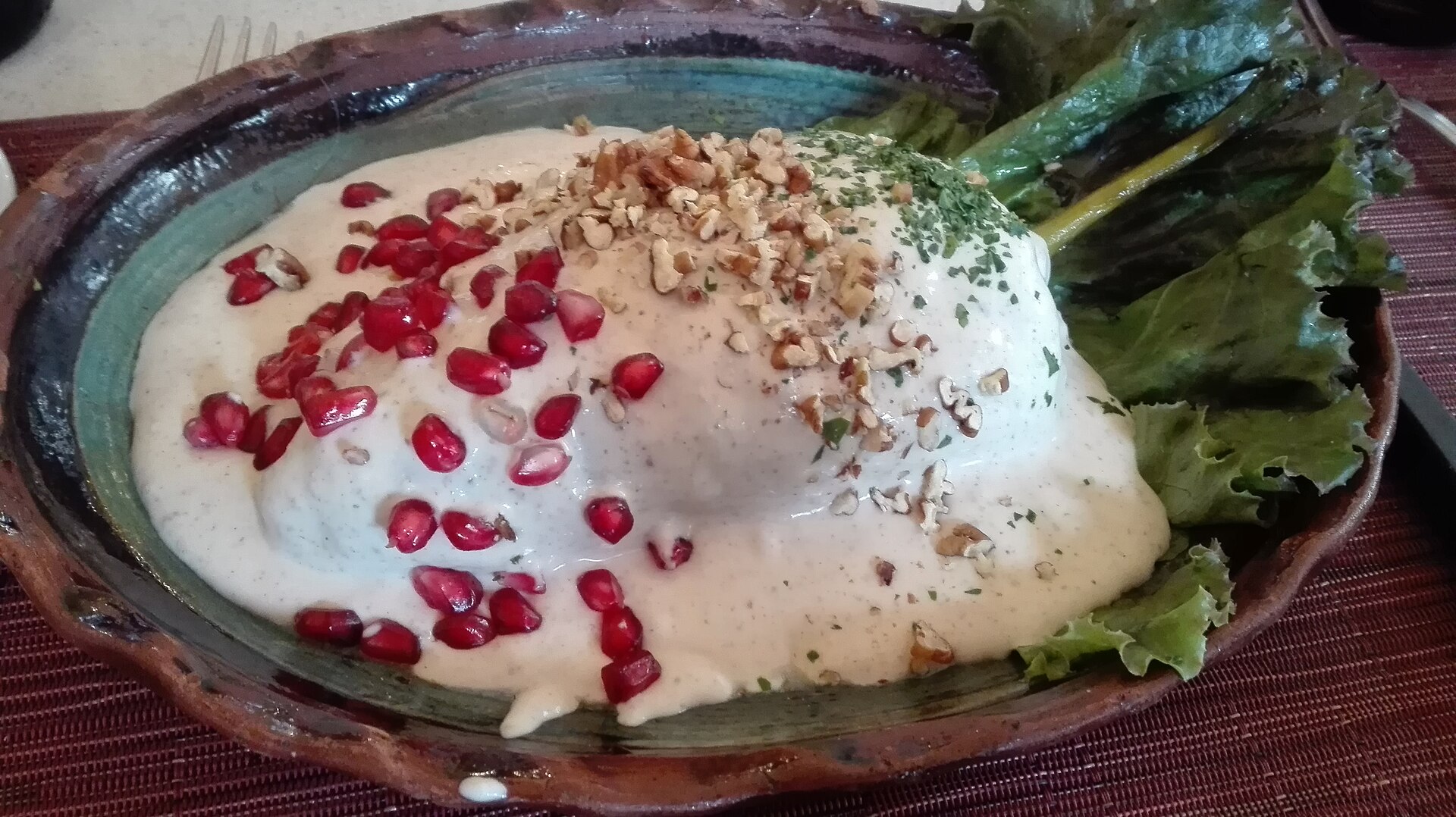
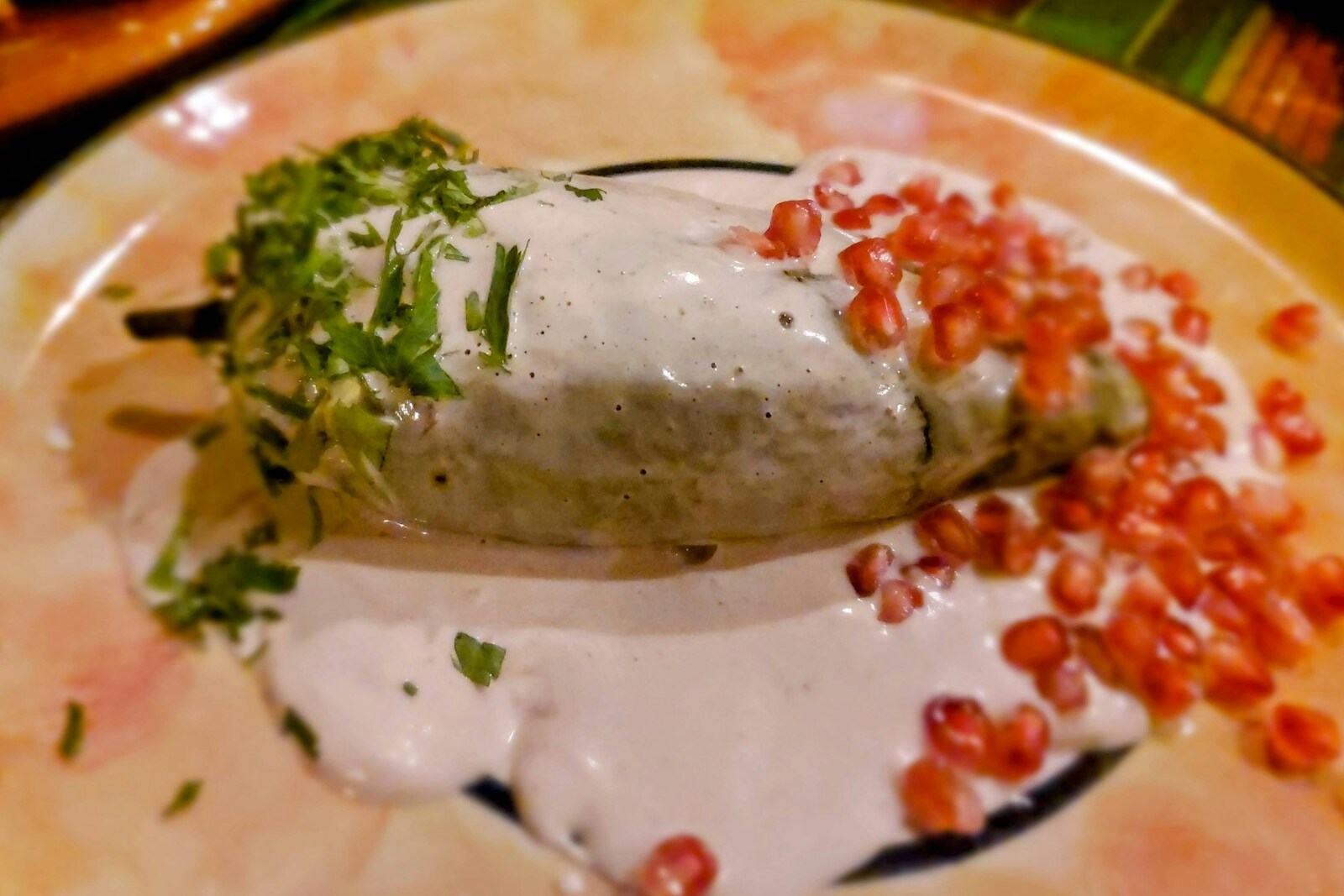
There is no other dish in Mexico that arrives at the table looking like a flag. Chiles en nogada is a roasted poblano pepper, glossy green, split open and stuffed with warm picadillo, draped in a thick cold ivory walnut sauce, and scattered with pomegranate seeds and parsley leaves — green from the pepper and parsley, white from the nogada, red from the pomegranate. The Mexican tricolor on a plate. It is served only in late summer, only at temperature contrast, and only with this specific arrangement of fruit, meat, walnut, and pomegranate. It is the most explicitly patriotic dish in serious Mexican cuisine, and one of the most technically demanding.
The dish has a creation myth and a probable real history. The myth, taught in Mexican schools, places its invention in 1821 in Puebla, where Augustinian nuns at the Convento de Santa Monica supposedly prepared a special dinner for Agustín de Iturbide, the first leader of independent Mexico, who arrived after signing the Treaty of Córdoba that secured independence. The nuns, the story goes, designed the dish around the colors of the new flag and served it on the night of August 28, 1821. The probable history is more modest: chiles rellenos with walnut sauce existed in Puebla colonial convents well before 1821 (walnuts are not native to Mexico but were introduced by Spanish missionaries), and the specific patriotic version with pomegranate likely formalized around the dish’s independence-day association in the late nineteenth century.
Diana Kennedy, the British-born Mexican-cuisine expert who wrote nine books on Mexican cooking from her ranch in Michoacán, called chiles en nogada in her 1972 The Cuisines of Mexico “the most beautiful dish in Mexican cooking and one of the most particular about timing.” The timing she meant is seasonal: the dish requires walnuts that have just been shelled (still soft and creamy, not fully matured and bitter), fresh pomegranates (ripe in September), and stone fruits (peaches and pears at end of summer). Puebla restaurants serve it from August 15 to September 30; outside that window, it is considered both wrong and unlucky. The rest of this article is the proper technique, made with the awareness that ideal execution requires the right month.
The Picadillo: The Fruit-and-Meat Hash
Picadillo in Mexican cuisine is a generic term for chopped meat hash, but the version for chiles en nogada is specific and unmistakable: ground pork (sometimes mixed with beef), softened onion and garlic, a small amount of tomato, warm spices (cinnamon, clove, pepper), and — this is the distinguishing feature — substantial chopped fresh fruit and dried fruit and nuts. Apple, pear, peach, raisins, almonds, candied citron or biznaga (Mexican candied cactus). The fruit transforms what would otherwise be a savory meat filling into something more complex: sweet, savory, slightly aromatic from the spices, dense with texture from the dried and fresh elements.
The proportions matter. Too much meat and the picadillo becomes ordinary chili-style filling; too much fruit and it becomes saccharine. A starting ratio is 500 grams of ground meat to about 250 grams of combined fresh and dried fruit. Cook the meat until just lightly browned (not crispy), add the tomato and spices, then fold in the fruit during the last 8 to 10 minutes — long enough to soften but not so long that the fruit dissolves into the meat. Taste and adjust salt; the dish does not call for chili heat at all, an unusual feature in Mexican savory cooking.
The Nogada: The Cold Walnut Cream
The sauce is the technical centerpiece. Nogada (from nuez, walnut) is a cold cream sauce made by blending fresh-shelled walnuts — the most critical ingredient — with Mexican crema, milk, and queso fresco, then chilling. Fresh-shelled walnuts are dramatically different from supermarket pre-shelled walnuts: they are pale, creamy, and almost sweet, with none of the slight bitter astringency that older walnuts develop. They make a softer, whiter, more elegant sauce. The traditional source for proper walnuts in Puebla is the early September harvest from local groves; outside Mexico, look for walnuts from the previous fall harvest at a high-turnover store and soak them in milk for 30 minutes before blending to soften.
Some Puebla recipes call for blanched almonds in addition to walnuts, which lightens the color and softens the texture. Some include a small amount of sugar to balance the slight bitterness of walnut tannins, and a faint pinch of cinnamon. The cheese (queso fresco) adds a slightly tangy depth that pure cream does not provide. Blend everything on high for at least 90 seconds — the longer the blend, the silkier the sauce. For a restaurant-perfect texture, strain through a fine-mesh sieve after blending; this removes any tiny walnut bits and produces a uniform, pourable cream. Chill at least one hour before serving.
Roasting and Peeling Poblanos
Poblano peppers must be roasted and peeled before stuffing. The skin is unpalatable and the flesh underneath has a mild grassy chile flavor that, slightly charred, becomes deeply aromatic. The most efficient method is direct flame: place each pepper directly on a gas burner’s open flame and turn with tongs every 30 seconds until uniformly blackened on all sides. Total time per pepper is 4 to 6 minutes. No gas burner? A broiler works (8 to 10 minutes, rotating). A grill over hot coals is traditional and produces the deepest flavor.
Once charred, transfer the peppers immediately to a sealed plastic bag, paper bag, or covered bowl. Let steam for 10 minutes — the steam loosens the skin from the flesh. After steaming, peel the skin off with your fingers (do not use water unless the skin refuses to come off, as water washes away the smoky flavor). Make a single lengthwise slit in each pepper and carefully remove seeds and membrane with a small spoon. Leave the stem attached for presentation. Pat dry, then proceed to stuff.
The Tricolor Plating
Plating is the most distinctive feature of chiles en nogada and is the whole point of the dish’s symbolism. The arrangement must show all three flag colors clearly. Place a stuffed pepper on a white plate (the white background helps the colors pop). Pour about a third of a cup of cold nogada over the pepper, covering most of it but leaving the stem visible at one end. Scatter pomegranate seeds generously across the plate — a tablespoon or more per serving. Arrange a few fresh parsley leaves alongside. Done well, the plate reads green-white-red from any angle. Done sloppily, the dish loses its symbolic weight.
Some modern restaurants take liberties: deconstructed versions on long plates, drizzles of nogada in patterns rather than full coverage, pomegranate molasses in addition to seeds, microgreens instead of parsley. These are valid stylistic choices, but they reduce the patriotic clarity that defines the dish. For Independence Day service, stick to the traditional plating — the dish’s whole point is that it should look like the flag.
Ingredients
For the peppers and picadillo:
- 6 large poblano peppers
- 2 tablespoons lard or neutral oil
- 1 medium yellow onion, finely chopped
- 3 garlic cloves, finely chopped
- 500 g (1.1 lb) ground pork
- 1 large ripe tomato, finely chopped
- 1/4 teaspoon ground cinnamon
- 1/8 teaspoon ground cloves
- 1/8 teaspoon ground black pepper
- 1/4 cup raisins
- 1/4 cup sliced almonds, toasted
- 1 small apple, peeled and diced
- 1 small pear, peeled and diced
- 1 small ripe peach, peeled and diced
- 1/4 cup diced candied citron (or biznaga)
- Salt to taste
For the nogada:
- 250 g (9 oz) shelled walnuts (fresh if possible)
- 250 g (9 oz) blanched almonds (optional, for richer cream)
- 250 ml (1 cup) Mexican crema or crème fraîche
- 250 ml (1 cup) whole milk
- 2 oz (60 g) queso fresco
- 1 tablespoon sugar
- 1/4 teaspoon ground cinnamon
To garnish:
- 1/2 cup fresh pomegranate seeds
- 1/4 cup fresh flat-leaf parsley leaves
Making It
- Roast peppers. Char poblanos over gas flame or under broiler until uniformly blackened. Transfer to sealed bag, steam 10 min. Peel. Make lengthwise slit, remove seeds and membrane, leave stem. Pat dry.
- Make picadillo. Heat lard. Saute onion 5 min, garlic 1 min. Add ground pork, brown 8 min. Add tomato, cinnamon, cloves, pepper. Cook 5 min. Add raisins, almonds, apple, pear, peach, candied citron. Cook 8-10 min until fruit softens. Salt to taste.
- Make nogada. Soak walnuts in milk 30 min. Drain. Blend walnuts, blanched almonds if using, crema, milk, queso fresco, sugar, cinnamon on high 90 seconds. Strain through fine mesh. Chill at least 1 hour.
- Stuff peppers. Fill each pepper with about 1/2 cup warm picadillo. Do not overfill.
- Plate. Stuffed pepper on white plate. Pour 1/3 cup cold nogada over each, covering most but leaving stem visible.
- Garnish. Scatter pomegranate seeds generously. Arrange parsley leaves. The plate should read green-white-red. Serve immediately.
Common Mistakes
The most common mistake is over-cooking the picadillo until the fruit dissolves into the meat. The texture should be visibly chunky: distinct pieces of apple, pear, peach, raisin, almond. Cook 8 to 10 minutes after adding fruit, not longer. The second mistake is making nogada in advance and refrigerating overnight — some Mexican cooks insist this is correct but the sauce loses brightness and separates slightly. Make the sauce the morning of, chill 1 to 4 hours, serve. The third mistake is serving the nogada warm or room temperature. The cold-on-warm temperature contrast is essential to the dish and is the reason the cream does not separate on the warm pepper.
What to Serve With Chiles en Nogada
Mexican Independence Day dinner traditionally pairs chiles en nogada with simple sides that do not compete: white rice (arroz blanco), refried black beans (frijoles refritos), or warm corn tortillas. The dish is rich and complete; do not over-accompany. A glass of cold Mexican lager (Pacifico, Modelo Especial), a margarita on the rocks, or a chilled blanco tequila served neat with a side of sangrita are the most traditional drink pairings. For something from our family, our Peruvian lomo saltado offers the broader Latin American sensibility on a different country, and our marry me chicken is the comfort-food alternative for a non-celebration night.
Storage and Make-Ahead
The picadillo improves overnight — make it the day before serving. Refrigerated, it keeps 4 days and reheats gently with a splash of broth or water to loosen. The roasted peeled peppers can be made up to 2 days ahead, stored in an airtight container in the refrigerator. The nogada should be made the morning of serving for best texture; longer storage causes slight separation that requires whisking. Pomegranate seeds keep 5 days refrigerated. To assemble: stuff peppers with warmed picadillo, pour cold nogada over, scatter garnishes, serve immediately. The whole final assembly takes 15 minutes if components are ready.
Frequently Asked Questions
Why is chiles en nogada only served in late summer?
Mid-August to end of September is the only window when all three signature ingredients are in peak season: fresh-shelled walnuts (creamier when not fully matured), pomegranates (ripen in September), and stone fruits like peaches and pears. The dish also commemorates Mexican Independence Day on September 16. Restaurants outside Mexico that serve it year-round use frozen or stored ingredients with mixed results.
What is biznaga and what can I substitute?
Biznaga is Mexican candied cactus — the candied stems of Echinocactus platyacanthus. Slightly chewy texture, mild sweetness. Outside Mexico, hard to find. Standard substitution: candied citron. Candied pineapple or candied ginger (used sparingly) also work. Picadillo functions without it but loses textural nuance.
Can I make the nogada sauce ahead?
Yes — up to 24 hours. The walnut flavor mellows slightly. Beyond 24 hours the cream may separate; whisk or blend briefly to re-emulsify. The picadillo also benefits from a day’s rest. Pepper roasting + stuffing should be done same-day or peppers turn limp.
Should the dish be served warm or cold?
Both, simultaneously. Warm pepper stuffed with warm picadillo, draped with cold nogada. The temperature contrast is part of the experience and is mentioned in nineteenth-century descriptions. The cold prevents cream separation. Some modern restaurants serve everything at room temperature, which is acceptable but loses the dramatic contrast.
Sources
- Serious Eats — Chiles en Nogada — Detailed Diana Kennedy-style breakdown with seasonal sourcing notes.
- Bon Appétit — Chiles en Nogada — American-kitchen adaptation with substitution guidance for biznaga and fresh walnuts.
- USDA FoodData Central — Pork, Walnuts, Poblanos — Nutritional data.
Each serving contains roughly 685 calories, 28 g protein, 45 g fat, 42 g carbohydrates, 7 g fiber.
Please note: Contains pork, tree nuts (walnuts, almonds), dairy, and is rich in saturated fat. Not suitable for tree-nut allergies, dairy intolerance, or vegan diets. Consult a dietitian for specific dietary needs.