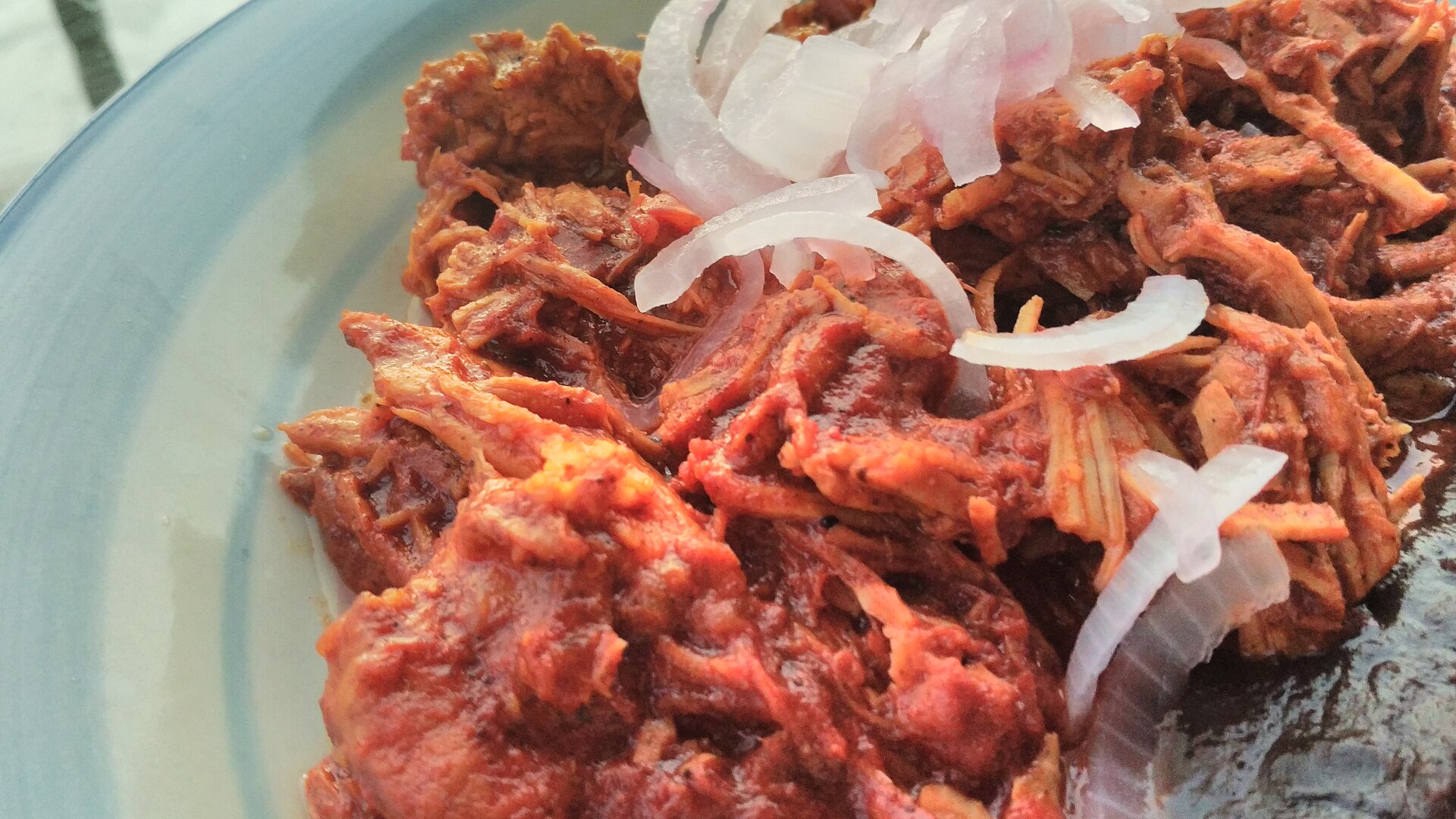
The first time I ate cochinita pibil, I was sitting at a plastic table outside a taqueria in Mérida, in the blue hour before sunset, with the air still carrying the heat of the day. The taco arrived on a warm corn tortilla — a mound of crimson-red shredded pork, glossy and wet, crowned with a tangle of pink pickled onions. It was sweet and sour and smoky and faintly floral all at once, with a faint grassy edge from the banana leaf it had roasted in. I ate four in quick succession and understood, somewhere between the second and third, why every Yucatecan I had met in my life had spoken of this dish with something close to reverence. It is not just food. It is a statement of identity — Mayan, Spanish, indigenous, colonial, bound together by fire and pork and achiote paste.
Cochinita pibil is the most famous dish of the Yucatán Peninsula, and it is also one of the oldest continuously prepared dishes in the Americas. Its lineage reaches back to pre-Columbian Mayan cooking — the píb, or earth oven, was already ancient when the Spanish arrived in the sixteenth century. What the Spanish brought was the pig, along with citrus fruits, allspice, and the notion of marinating meat in acid and aromatics. What they encountered was achiote — the seed of the annatto tree, which the Maya had been using as a colorant and spice for at least two thousand years. The meeting of Spanish pork and Mayan achiote, wrapped in banana leaves and buried in a hot pit, produced cochinita pibil. It is a dish of cultural fusion centuries before anyone called it that.
Diana Kennedy, the British-born cookbook author who spent seven decades documenting Mexican regional cooking and is widely credited as the foremost authority on the country’s food outside of Mexico, called cochinita pibil “the dish that contains all of Yucatán.” Rick Bayless, who has cooked Mexican food at the highest level in Chicago for forty years, writes in Mexico: One Plate at a Time that getting cochinita right is “the single best way to prove to yourself that complex flavors do not require complicated technique.” Pati Jinich, whose PBS series Pati’s Mexican Table has introduced millions of American viewers to regional Mexican home cooking, credits her cochinita recipe to her grandmother-in-law from Campeche. All three authorities agree on two things: the marinade is everything, and the slow, wet heat of roasting in banana leaves is non-negotiable.
The Meaning of Píb
Píb is a Mayan word. It means earth oven — a pit, sometimes three feet deep, lined with flat stones that have been heated by a wood fire for hours. Into this pit go foods wrapped in banana leaves: turkeys, chickens, tamales, whole pigs. The pit is covered with more stones, then with earth, and left for four to eight hours while the stored heat of the stones cooks everything slowly in its own steam. Pibil means cooked in the píb. In rural Yucatán, the píb is still in use, especially during Hanal Pixán — the Mayan Day of the Dead, celebrated in late October — when families gather to bury mucbíl pollo (a giant tamal) in pits in their yards. The technique is thousands of years old. It has not changed.
At home, we cannot dig an earth oven. What we can do is approximate the conditions: steady, low, humid heat over a long period, with the food sealed inside a fragrant wrapper that simultaneously bastes and perfumes. A Dutch oven lined with banana leaves does this remarkably well. The leaves contribute a grassy, almost tea-like aroma that permeates the pork. The sealed environment traps moisture, ensuring the shoulder breaks down into silky strands instead of drying out. The achiote marinade penetrates every fiber during the long cook. The result is not identical to a true píb — nothing is — but it is remarkably close, and it is the version that generations of Yucatecan home cooks have used when the earth oven is not practical.
The Non-Negotiable Ingredients
There are three ingredients that cannot be substituted without losing the identity of the dish. The first is achiote paste, also called recado rojo. This brick-red block is the soul of cochinita pibil. It is made from ground annatto seeds (the source of the red color), garlic, cumin, allspice, black pepper, Mexican oregano, and a touch of bitter orange. Its flavor is earthy, mildly astringent, and faintly floral — not spicy at all. Look for commercial brands like El Yucateco or La Anita in 3.5-ounce bricks at Latin American markets, or order online from Amazon, Walmart, or Mexgrocer. Do not try to substitute with paprika and tomato paste; the flavor is not remotely similar.
The second is sour orange juice, called naranja agria or bitter orange in Mexican cooking. This is not the navel orange of American breakfasts. Sour orange is a small, rough-skinned citrus with a sharp, lightly bitter juice that bridges lime and grapefruit in flavor. It grows throughout the Yucatán and is the traditional acid in every recado marinade. If you cannot find it fresh (Goya sells a frozen version in some markets), the accepted substitute is one part fresh orange juice, one part fresh grapefruit juice, and one part white vinegar or lime juice. That triple-juice blend, from Diana Kennedy’s The Cuisines of Mexico, gets you very close. Never use pure sweet orange juice; the dish becomes cloying.
The third is banana leaves. Found frozen in Latin American and Asian grocery stores, usually in 1-pound packages under brands like Goya or La Preferida. They need a brief pass over an open flame or hot grill to release their aromatic oils and turn them from stiff to supple. The leaves contribute a grassy, faintly smoky note to the pork that is a hallmark of pibil-style cooking. Foil alone does not provide this; parchment wrapped in foil is closer but still not identical. If you genuinely cannot find banana leaves, use parchment-inside-foil and know that the dish will still be excellent, but missing one of its signature aromatic layers.
The Cut of Pork Matters
Cochinita means “little pig” in Spanish, and the historical version of this dish was made with a whole suckling pig weighing ten to twenty pounds. Home cooks today — and most restaurants — use boneless pork shoulder, also called Boston butt or pork butt despite coming from the front of the animal. Shoulder is ideal because it has significant intramuscular fat and connective tissue, both of which break down during four hours of low heat to produce the lush, collapsing texture the dish requires. Lean cuts like pork loin or tenderloin will dry out completely and are not substitutes.
Cut the shoulder into three-inch chunks before marinating. Whole shoulders marinate unevenly — the surface gets heavily seasoned while the interior stays plain. Large chunks maximize marinade absorption while maintaining enough size that the meat does not disintegrate during roasting. Trim excess hard fat caps from the outside but leave the internal fat alone — it will render and keep the meat moist. Plan for a full eight-hour marinade minimum; overnight is better, and forty-eight hours is best. The achiote paste penetrates slowly, and the deeper the marinade, the deeper the color and flavor.
The Pickled Onion Question
Cochinita without cebollas encurtidas — pickled red onions — is not cochinita. The onions are not a garnish; they are structurally essential. Their bright, raw acidity cuts through the fatty pork, their crunch contrasts with the silky strands, and their neon-pink color against the crimson meat is the visual signature of the dish.
| Element | Role in the Dish | Common Mistake | Correct Approach |
|---|---|---|---|
| Achiote paste | Color, earthy depth | Substituting paprika | Real Yucatecan paste, El Yucateco or La Anita |
| Sour orange | Tangy-bitter acid | Using sweet OJ | Fresh sour orange or 3-juice blend |
| Banana leaves | Aromatic steam wrap | Skipping the flame-pass | Pass over gas burner 5 sec each side |
| Pork shoulder | Fat, collagen, silk | Using lean pork loin | Bone-in or boneless shoulder, 4 lb |
| Pickled onions | Acidity, crunch, color | Serving without them | Always, with lime and habanero |
Ingredients
- 4 lb (1.8 kg) boneless pork shoulder, cut into 3-inch chunks
- 3.5 oz (100 g) achiote paste (one brick, El Yucateco or La Anita)
- 1 cup (240 ml) fresh sour orange juice (or: ½ cup orange juice + ½ cup grapefruit juice + ¼ cup white vinegar)
- 6 garlic cloves, peeled
- 2 teaspoons ground cumin
- 1 teaspoon dried Mexican oregano
- 1 teaspoon freshly ground black pepper
- 1 teaspoon ground allspice
- 1 Mexican cinnamon stick (canela), 4 inches, broken
- 2 tablespoons fine sea salt
- 2 tablespoons apple cider vinegar
- 2 tablespoons olive oil or lard
- Large banana leaves, about 6 leaves, for lining and wrapping
- 1 cup (240 ml) chicken stock or water
- For the pickled onions: 2 large red onions, thinly sliced; 1 cup (240 ml) fresh lime juice; 1 teaspoon salt; 1 to 4 habanero chiles, thinly sliced (optional)
- Warm corn tortillas, black beans, and lime wedges, to serve
Making It
- Blend the marinade. Break the achiote brick into small pieces and place in a blender with the sour orange juice (or substitute blend), garlic, cumin, oregano, pepper, allspice, broken cinnamon, salt, vinegar, and olive oil. Blend on high for a full sixty seconds until completely smooth. The color should be a vivid, opaque brick-red; the texture should be thick enough to coat the back of a spoon like thin paint. Taste — it should be salty, sharp, and deeply aromatic, with a faint floral-citrus top note from the achiote.
- Marinate the pork. Place pork shoulder chunks in a large bowl or heavy-duty zip-top bag. Pour the marinade over, massaging with your hands (wear gloves — achiote will stain your fingers yellow for days) until every piece is coated on all sides. Cover tightly and refrigerate for a minimum of 8 hours. Overnight is better. Forty-eight hours produces the deepest flavor. Turn the bag or stir the bowl once or twice during marination.
- Prepare the banana leaves. Remove banana leaves from their packaging and rinse under cool water. Gently pat dry. One at a time, pass each leaf over a gas burner flame or a hot grill pan for about five seconds per side, until the leaf brightens from dull green to vivid emerald and becomes pliable. This releases the aromatic oils that are central to the pibil style. Do not scorch the leaves; you want a heat pass, not a char.
- Line the roasting pan. Preheat oven to 300°F (150°C). Choose a heavy Dutch oven or deep roasting pan large enough to hold all the pork in a single layer. Line the pan with banana leaves, letting long ends hang over the sides by at least four inches. Overlap the leaves to create a complete barrier. Transfer the marinated pork and all its marinade into the leaf-lined pan, arranging pieces in a single layer. Pour chicken stock around the edges — this adds moisture without diluting the marinade directly.
- Seal and roast. Fold the overhanging banana leaves over the top of the pork to fully enclose it in a sealed green parcel. If needed, tuck additional leaves across the top to close any gaps. Cover the pan tightly with a double layer of heavy-duty aluminum foil, crimping the edges down. If your Dutch oven has a lid, add it on top of the foil for extra insulation. Place on the middle oven rack and roast for 4 hours, undisturbed. Do not open the oven before the 3½-hour mark — the sealed environment is doing the work.
- Make the pickled onions while the pork cooks. Place the thinly sliced red onions in a heatproof bowl. Pour boiling water over them, let sit exactly 10 seconds, then drain in a colander. This quick blanch removes the raw-onion harshness without cooking the onions. Transfer to a glass jar. Add lime juice, salt, and habanero slices if using. Stir well. Refrigerate for at least 2 hours; the onions will turn brilliant pink as the lime juice reacts with their anthocyanins. Keep for up to one week.
- Check the pork. After 4 hours, remove the pan from the oven. Carefully peel back the foil (steam will escape — stand back) and open the banana leaves. The pork should be deeply crimson, falling apart at the touch of a fork, and swimming in a thin amber-red juice. If any piece still resists a fork, re-cover and return to the oven for another 30 to 45 minutes. Rest the pork, partially covered, for 15 minutes.
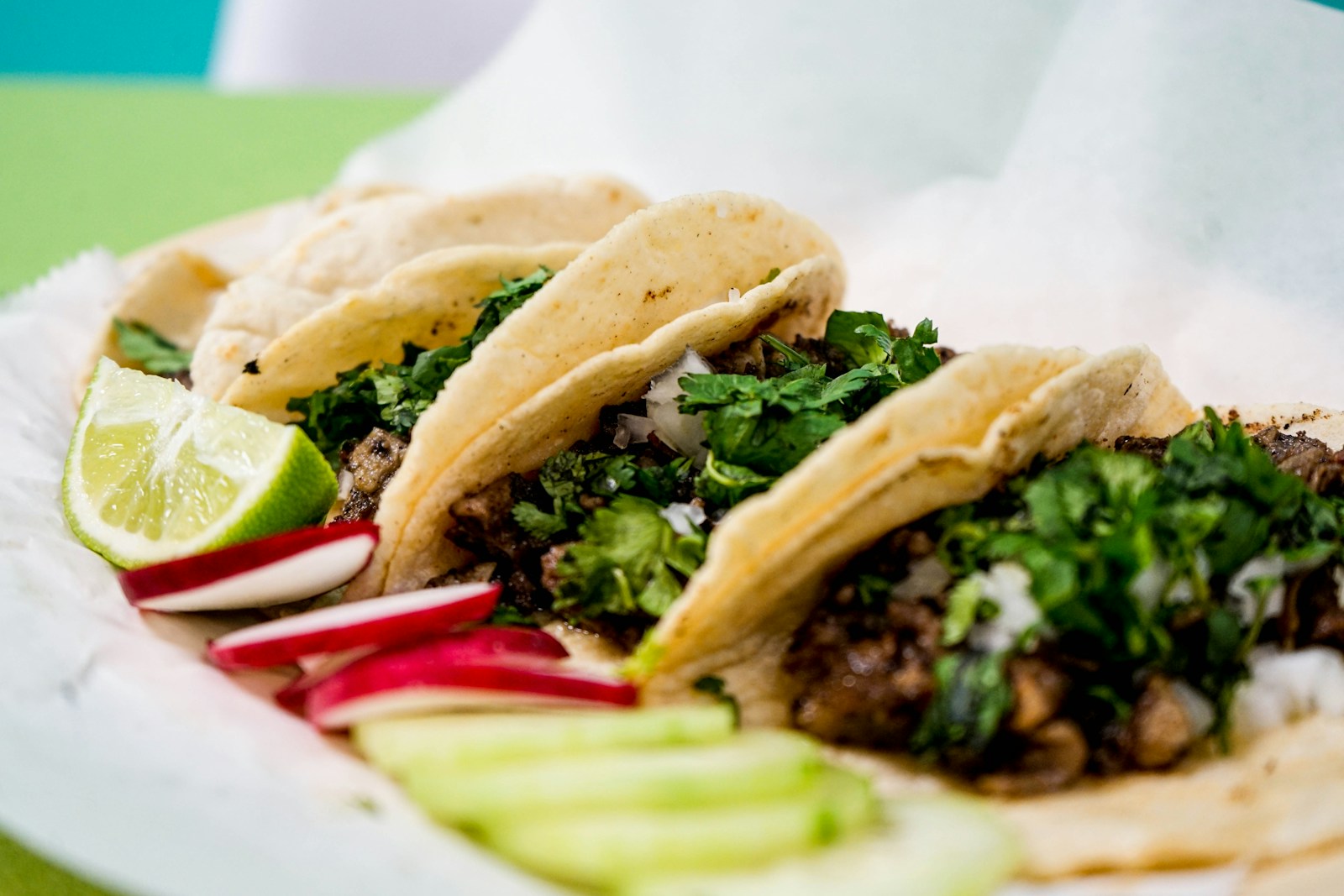
- Shred and serve. Using two forks, shred the pork directly in the roasting juices, breaking it into rough strands. Discard the cinnamon stick, any obvious hard fat caps, and any papery banana leaf bits that have stuck. Moisten the shredded pork with a generous ladle of the juices. To serve, warm corn tortillas on a dry skillet until pliable and spotted. Heap pork onto each tortilla, top with a generous tangle of pickled onions, and serve immediately with lime wedges, black beans, and a wet towel nearby for stained fingers.
Common Mistakes
Cochinita pibil is forgiving in some ways and punishing in others. The errors that undermine most home attempts:
- Marinating for only a few hours. The achiote paste is thick and penetrates slowly. Four hours produces a pork that is reddish on the outside and gray in the middle. Eight hours minimum. Overnight is the floor, not the ceiling.
- Using pork loin or tenderloin. These cuts are lean and dry out completely during a four-hour roast. Only pork shoulder will produce the silky, collapsing texture. Pork butt (same cut) also works.
- Skipping the banana leaves. The aromatic steam is a signature note. If you must skip, use parchment wrapped in foil, but know you are losing something.
- Opening the oven too often. Each opening drops the oven temperature by 50 to 75 degrees and extends the cook time meaningfully. Trust the process. Open at 3½ hours, not before.
- Serving without pickled onions. The onions balance the richness of the pork. Without them, the dish is one-note.
- Using tortillas from a grocery store shelf unheated. Cold, dry tortillas crack and taste cardboardy. Warm them on a dry skillet for 15 seconds per side, or over an open gas flame for 5 seconds, until pliable and lightly charred.
What to Serve With It
In Yucatán, cochinita is served with frijoles colados — strained black beans — and a stack of warm corn tortillas. The beans and tortillas are obligatory; everything else is optional. A bright green habanero salsa and a bowl of xnipec (sour-orange habanero sauce) usually join the table for heat-seekers. A cold Mexican lager — Modelo Negra, Bohemia, or Victoria — is the traditional beverage; a hibiscus agua fresca (agua de jamaica) is the non-alcoholic counterpart. For dessert, a scoop of lime or coconut sorbet cuts through the pork’s richness.
If you are planning a Mexican dinner menu around cochinita, keep the sides restrained — this is an emphatic dish that does not want competition. Simple refried black beans, Mexican rice, and a shredded cabbage salad with lime are the traditional companions. For a broader tour of Mexican slow-cooked proteins, our chicken tikka masala guide showcases a different marinate-and-roast tradition (Indian rather than Yucatecan, but philosophically related). For a different Mexican weeknight protein, Thai basil chicken is the 18-minute stir-fry that delivers maximum flavor with minimum fuss.
Storage and Reheating
Cochinita pibil keeps beautifully for four to five days in the refrigerator in an airtight container with its juices. In fact, like most slow-braised meats, it tastes better on day two than on day one — the achiote compounds penetrate further and the flavors round out. To reheat, warm gently in a covered skillet over medium-low with a splash of the reserved juices or chicken stock, stirring occasionally, for six to eight minutes. The microwave works in a pinch but dries the edges out; the stovetop is better.
For longer storage, portion the shredded pork into zip-top freezer bags along with some of its juices, press flat, and freeze for up to three months. Defrost overnight in the refrigerator, then reheat as above. The pickled onions keep for about a week, refrigerated; they do not freeze well. Cochinita pibil is a dish that is genuinely better than most takeout lunch options, and portioning leftovers for workweek tacos is one of the great arguments for making a large batch.
Frequently Asked Questions
What is achiote paste and where do I find it?
Achiote paste, also called recado rojo, is a brick-red Yucatecan seasoning paste made from ground annatto seeds, garlic, cumin, allspice, black pepper, oregano, and bitter orange. Its flavor is earthy, mildly bitter, and faintly floral — not spicy at all. The red color comes entirely from annatto; paprika is not a substitute. In the United States, look for the El Yucateco or La Anita brands in 3.5-oz brick packages at Latin American grocery stores. Amazon, Walmart, and Mexgrocer also carry it. Homemade achiote paste requires whole annatto seeds and is possible but rarely worth the effort given the quality of the commercial versions.
Can I make this without banana leaves?
You can, but you lose a distinct and desirable aromatic dimension. Banana leaves contribute a grassy, tea-like fragrance that permeates the pork during roasting — it is a subtle note but a signature one. If you cannot find banana leaves (most Latin American and Asian grocery stores carry them frozen in the freezer aisle), the pork will still be delicious cooked in a covered Dutch oven or wrapped in parchment inside foil. Parchment-in-foil is the closest substitute for the steam behavior but will not contribute the banana aroma. The pork remains excellent either way; it is simply missing one of its signature aromatic layers.
What does pibil mean, and what is a píb?
Píb is the Mayan word for an earth oven — a pit dug in the ground, lined with hot stones, filled with food wrapped in banana leaves, covered with earth, and left to slow-cook for many hours using only the stored heat of the stones. Pibil, the adjective, means cooked in the píb. Cochinita pibil literally translates as pit-roasted suckling pig, though most modern versions (home and restaurant) use pork shoulder rather than a whole suckling animal, and most are roasted in conventional ovens. The píb itself still exists in rural Yucatán, especially for celebrations like Hanal Pixán (the Mayan Day of the Dead).
Can I use regular orange juice instead of sour orange?
Yes, with an adjustment. Sour orange, also called naranja agria or bitter orange, is sharper and less sweet than the common orange sold in American supermarkets. The authentic substitute is a mixture: half regular orange juice, half fresh grapefruit juice, plus a quarter cup of white vinegar or lime juice to bring the acidity up. This triple-juice blend approximates the bright, lightly bitter edge of real sour orange and is what Diana Kennedy, Rick Bayless, and most Mexican cookbook authors recommend when the real fruit is unavailable. Never use pure sweet orange juice; the dish becomes cloying and loses its characteristic tang.
Sources
- Serious Eats — Cochinita Pibil — Technique notes on marinade penetration and banana-leaf wrapping.
- Saveur — Cochinita Pibil — Cultural background and the case for sour orange as non-negotiable.
- USDA FoodData Central — Pork Shoulder — Nutritional data used for per-serving calculations.
Each serving contains roughly 442 calories, 38 g protein, 28 g fat, 10 g carbohydrates, and 2 g fiber — based on 8 servings of pork shoulder with marinade, plus pickled onions (not counting tortillas or sides). Sodium is elevated due to the salt in the marinade and the pickled onions.
Please note: Nutritional estimates are derived from the USDA FoodData Central database and may vary depending on specific brands of achiote paste, vinegar, and the fat content of the pork shoulder. This recipe contains pork. Nothing in this article should be interpreted as medical or dietary guidance. If you have food allergies, sodium-sensitive conditions, or specific dietary needs, consult a registered dietitian or healthcare provider before preparing this recipe.