There is a particular smell that fills the kitchen during the second hour of caramelizing onions for French onion soup. The sharp pungent sulfur compounds that make raw onion eye-watering have transformed completely into something else – sweet, almost caramel, with hints of beef stock yet to come. The whole pot has reduced from a mountain of pale white slices to a small dark mahogany sludge that smells of patience and butter. This is the central transformation that defines real French onion soup and the reason most home versions taste flat compared to bistro originals.
Caramelization is a slow process. Onions contain natural sugars that, under sustained low-medium heat for 90 to 180 minutes, undergo Maillard reactions that produce hundreds of new aromatic compounds. There is no shortcut – high heat burns the surface without developing the depth, and quick caramelization (the 45-minute internet hack) produces a darker, harsher product. Three pounds of onions take three hours. The math is fixed.
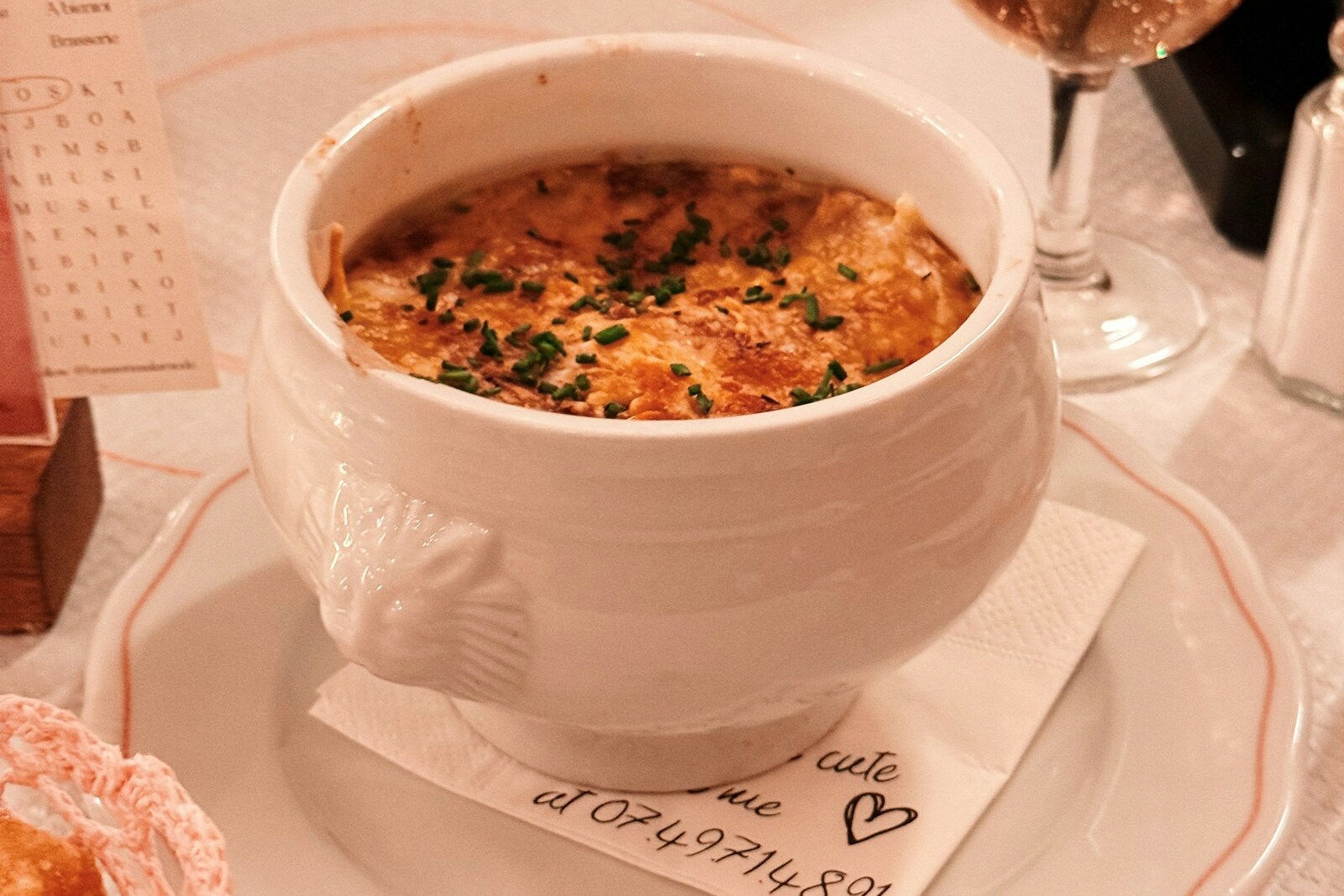
This article is the classical Lyonnaise gratinée as practiced in French bistros – three pounds of yellow onions caramelized in butter, deglazed with dry white wine and beef stock, finished with thyme and Worcestershire, topped with day-old baguette and melted Gruyère under the broiler. The rest covers exactly why each step matters and how to time the dish for a Sunday lunch or a winter dinner party.
The Three-Hour Onion Transformation
Yellow onions are the canonical choice. They are sweeter than white onions and more aromatic than Vidalia or sweet onions. Halve and slice thin (3-4mm). Three pounds (about 6 large yellow onions) is the right quantity for 6 servings. The onions cook down dramatically – that mountain of slices becomes about a cup and a half of dark caramelized result.
Heat butter and olive oil in a heavy Dutch oven over medium-low heat. Add the onions all at once – they will mound to the top of the pot. Add salt to draw out moisture. Stir to coat. Cook for the first hour stirring every 10 minutes. The onions release their water, then start to soften. After 60 minutes you should have golden-brown softened onions. Then comes the magic: another 60-90 minutes at low-medium heat, stirring frequently and scraping the dark fond from the bottom. The onions transform from gold to chestnut to deep mahogany.
Why Beef Stock, Wine, and Worcestershire
Beef stock is what makes French onion soup recognizable. The combination of caramelized onions, dark beef broth, and melted cheese is the architectural foundation of the dish. Chicken stock produces a lighter, less satisfying result. Vegetable stock works for vegetarians but requires umami boosters (miso + soy) to compensate. Homemade beef stock is dramatically better than canned – if using canned, choose low-sodium (you will salt at the end) and a quality brand (Better Than Bouillon paste, Bonewerks, Williams Sonoma).
Dry white wine – Sauvignon Blanc, Pinot Grigio, dry Riesling – deglazes the dark fond from the bottom of the pot. The acid brightens the caramelized onion sweetness. Worcestershire sauce adds the umami punch that gives bistro soup its distinctive depth. A splash of brandy or cognac at the end is optional but traditional – adds warmth and complexity. Skip if cooking for kids or non-drinkers.
Gruyère and the Broiler Finish
Gruyère is the canonical cheese – specifically from Switzerland (Le Gruyère AOP) or France (Gruyère de Comté). It melts beautifully under the broiler, browns to a deep golden crust, and has nutty depth that complements caramelized onions. Comté is the closest substitute. Avoid: cheddar (too sharp), mozzarella (flavorless in this context), American cheese (chemical). Real Gruyère costs $15-20 per pound – a small block makes 6 to 8 servings of soup. The investment is worthwhile.
Use oven-safe ceramic bowls (Le Creuset stoneware, Emile Henry). The bowls must withstand broiler heat. Place soup-filled bowls on a sheet pan. Float toasted baguette on top. Pile cheese generously – this is not a dish for restraint. Broil 3 to 4 minutes, watching constantly. The cheese should be melted, bubbling, and deeply golden brown in spots. Serve immediately with warning – bowls are extremely hot.
Ingredients
- 1.4 kg (3 lb) yellow onions, halved and thinly sliced
- 85 g (6 tbsp) unsalted butter
- 2 tbsp olive oil
- 1 tsp fine sea salt
- 2 tbsp (30 g) all-purpose flour
- 250 ml (1 cup) dry white wine
- 1.5 liters (6 cups) beef stock
- 2 bay leaves
- 4 sprigs fresh thyme
- 1 tbsp Worcestershire sauce
- 1 tbsp brandy (optional)
- Freshly ground black pepper
- 6 slices day-old baguette
- 200 g (7 oz) Gruyère cheese, grated
Making It
- Start the caramelization. Melt butter + oil in heavy Dutch oven on medium-low. Add onions and salt. Stir to coat.
- First hour, low-medium heat. Stir every 10 min. Onions release water, soften, turn golden.
- Second hour, careful caramelization. Continue 60-90 min on low-medium, stirring more often. Scrape fond from bottom. Onions go from gold to mahogany.
- Add flour. Sprinkle over onions. Stir 90 sec to cook out raw flour.
- Deglaze with wine. Pour in white wine. Scrape bottom. Simmer 5 min to reduce.
- Add stock + aromatics. Stock, bay, thyme, Worcestershire. Simmer 30 min uncovered. Stir in brandy if using.
- Toast bread. Day-old baguette slices in 175 C (350 F) oven 8-10 min until dry and pale golden.
- Assemble bowls. Ladle soup into oven-safe bowls. Top with toast. Pile on Gruyère.
- Broil. 3-4 min on sheet pan under broiler. Watch constantly – the difference between perfect and burned is 30 seconds. Serve immediately with caution.
Common Mistakes
Rushing the caramelization is the most common failure. High heat for 45 minutes produces burnt onions with a bitter undertone, not the deep sweetness of properly caramelized. Time is non-negotiable. Using a thin pot – cheap pans transmit heat unevenly and burn the onions on the bottom. Use heavy cast iron or enameled Dutch oven. Skipping the flour – the flour creates body in the soup. Without it, the broth is too thin and slips off the bread.
Cheap stock – the soup is the stock. Bad stock cannot be hidden. Skimping on cheese – this is not a low-fat dish. The cheese cap is half the experience. Use 30 g (1 oz) per serving minimum. Soft bread – the toast must be dry enough to float on top of the soup without instantly disintegrating. Day-old baguette dried in the oven is the right texture.
Make-Ahead and Storage
The soup base improves dramatically with a day or two of rest. Make through the broth stage (before the bread and cheese), refrigerate up to 3 days. Reheat gently, then proceed with the toast and cheese broil. Freezes well for 3 months. The bread and cheese topping cannot be done ahead – it is the final 5 minutes before serving. For a dinner party, prep the base the day before, set out bowls and pre-grate the Gruyère, then assemble and broil as guests sit down.
Frequently Asked Questions
Can I caramelize the onions faster?
No. High heat produces burnt onions, not caramelized ones. 2-3 hours of slow heat is the only way to develop the deep sweetness that defines real French onion soup.
Why beef stock and not chicken or vegetable?
Beef stock provides the deep umami foundation. Chicken stock works but lighter. Vegetable stock works for vegetarians with miso + soy boost.
What cheese should I use?
Real Gruyère from Switzerland or France. Comté is the closest substitute. Avoid cheddar, mozzarella, American.
Can I make French onion soup ahead?
Yes – the base is better the next day. Make through the broth stage up to 3 days ahead. Bread and cheese are added fresh at serving.
Sources
- Serious Eats — The Best French Onion Soup — J. Kenji López-Alt’s detailed caramelization technique.
- NYT Cooking — French Onion Soup — Classic Bittman adaptation.
- USDA FoodData Central — Nutritional data.
Each serving contains roughly 485 calories, 22 g protein, 22 g fat, 48 g carbs, 5 g fiber.
Please note: Contains beef stock, dairy, gluten, and is high in sodium. Not suitable for vegetarian, dairy-free, gluten-free, or sodium-restricted diets. Consult a dietitian for specific needs.

Rachel Summers
Rachel grew up in a Pacific Northwest kitchen, learning Sunday roasts from her mother and pie crust from a grandmother who never wrote a recipe down. CookingZone began as a way to save her family's cooking before it was forgotten, and grew when her cousins started sending in their own. Her work covers foundational American, Italian, French, and Mexican recipes, with an emphasis on weekend baking, comfort food, and the techniques that span both European and American home kitchens.