There is a moment when you serve a properly made molten chocolate cake at the table that almost qualifies as theatrical. The dessert arrives on a plate dusted with powdered sugar, vanilla ice cream melting at the edges, raspberries scattered around. You cut into the center with a spoon. The set chocolate exterior gives way to a flood of dark, glossy, liquid chocolate that spills onto the plate. The whole production from oven to spoon takes about three minutes. The molten center holds for maybe four. This is the dessert that defined fine dining in the 1990s and remains, three decades later, one of the most-ordered restaurant desserts in the world.
Molten chocolate cake (chocolate fondant, lava cake, gateau au coulant) was invented in 1987 by Jean-Georges Vongerichten at Restaurant Lafayette in New York. The story Vongerichten tells is that the dessert was an accident – he pulled chocolate cakes out of the oven thinking they were under-baked, and discovered when guests cut into them that the slightly raw centers produced exactly the dessert he had been trying to develop. By the early 1990s, Vongerichten was serving it at Jojo, JoJoBox, and his namesake restaurants worldwide; by the 2000s, every fine dining restaurant had a version on the menu.
This article is the original Vongerichten recipe (with minor adaptations for home equipment) and the technical reasoning behind every step. The molten center is not actually under-baked – it is a separately formulated batter that is dense enough to set at the edges in 12 minutes while staying liquid in the center. The technique is precise: 12 minutes at 425 degrees, no longer. The rest of the article covers chocolate selection, the egg method, and how to time the dessert for a dinner party.
The 12-Minute Window
The entire molten cake technique rests on one number: 12 minutes at 425 degrees Fahrenheit in a 6-ounce ramekin. At 11 minutes, the edges are not fully set and the cake collapses when inverted. At 12 minutes, edges are set, center is liquid – the perfect window. At 13 minutes, the center is barely flowing, still pleasant but not the dramatic molten flood. At 14 minutes, the center has fully set – delicious chocolate cake, but not molten cake.
This means oven temperature accuracy matters more than for most baking. Verify your oven with a thermometer – many home ovens run 10 to 15 degrees off. Set a timer and pull the cakes the moment it goes off. Watch the centers – they should still look slightly underdone when you pull them. The cakes continue cooking for about 30 seconds from residual heat after leaving the oven; the inversion onto plates happens about 60 seconds after that. By the time the diner cuts into the cake, the center is at the perfect molten texture.
Why 70% Bittersweet Chocolate
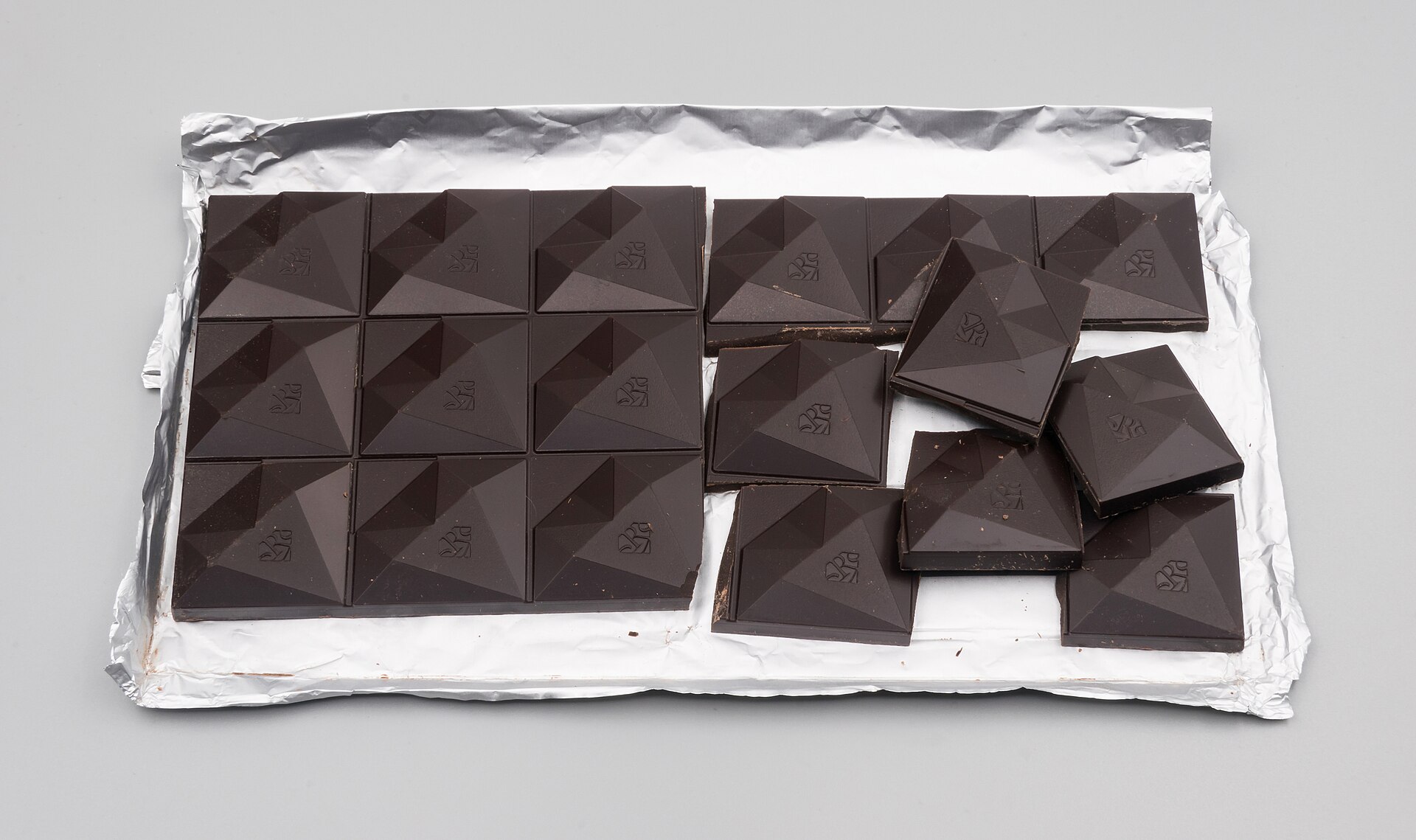
The chocolate is half the recipe. 70 percent bittersweet (also called extra-dark) is the right balance – dark enough that the cakes taste of chocolate rather than sugar, sweet enough that they read as dessert. Lower cocoa content (50 to 60 percent) produces a sweeter, more candy-like result that lacks complexity. Higher cocoa content (75 to 85 percent) produces an austere, slightly bitter cake that some find too intense for the dessert context.
Brand matters significantly. Valrhona Guanaja 70% is the chef’s standard – smooth, complex, almost wine-like. Guittard Cocoa Noir 72% is the American craft equivalent. Scharffen Berger 70% is widely available and excellent. Ghirardelli Bittersweet Baking Bar 60% is the budget option. Avoid: chocolate chips (lecithin and other stabilizers prevent proper melt), supermarket baking chocolate bars (variable quality), or anything generic. A 4-oz bar costs $4 to $9 depending on brand. For 4 servings, the chocolate budget is the entire ingredient cost – everything else is butter, eggs, and sugar.
The Egg Method
The recipe uses both whole eggs AND additional yolks. Whole eggs provide structure and rise. Additional yolks provide richness and the silky, almost custard-like texture of the molten center. The two-and-two ratio (2 whole eggs + 2 yolks) is the Vongerichten standard. Some recipes use just whole eggs (lighter, less rich) or all yolks (denser, more like ganache). The Vongerichten ratio splits the difference perfectly.
Whisk the eggs and sugar until pale and slightly thickened – about 2 minutes by hand or 90 seconds with a stand mixer. The slight aeration helps the structure. Then temper by adding the warm chocolate mixture to the eggs in a slow steady stream while whisking – if you dump hot chocolate into eggs, the yolks scramble. Sift the small amount of flour over the top and fold gently with a spatula. Do not overmix – that develops gluten and produces a rubbery cake.
Ingredients
- 120 g (1/2 cup + 1 tbsp) unsalted butter, plus more for ramekins
- 120 g (4 oz) 70% bittersweet chocolate, chopped
- 2 large eggs
- 2 large egg yolks
- 50 g (1/4 cup) granulated sugar
- 1 tsp pure vanilla extract
- 20 g (2 tbsp) all-purpose flour
- Pinch of fine sea salt
- Cocoa powder, for dusting ramekins
To serve:
- Vanilla ice cream
- Fresh raspberries
- Confectioners’ sugar
Making It
- Preheat 220 C (425 F). Butter 4 ramekins generously. Dust with cocoa, tap out excess.
- Melt chocolate + butter. Double-boiler over simmering water. Stir until smooth. Remove from heat.
- Whisk eggs + yolks + sugar. 2 min until pale and slightly thickened. Add vanilla.
- Temper. Pour warm chocolate into eggs in slow stream while whisking constantly.
- Fold flour. Sift over chocolate mix. Fold gently with spatula just until combined.
- Divide into ramekins.
- Bake exactly 12 min. Edges set, center slightly underdone. Pull at 11 if oven runs hot.
- Rest 60 sec. Run knife around edges. Invert onto plates. Tap to release.
- Garnish + serve immediately. Powdered sugar, ice cream, raspberries. Molten holds 4-5 min.
Make-Ahead Strategy
This is the entertaining secret. Make the batter up to 24 hours ahead, divide into ramekins, cover with plastic wrap, refrigerate. When ready to serve, bring to room temperature 30 minutes before baking. Bake 12 minutes from room temp (13 minutes if baking straight from refrigerator). This way you can do all the work before guests arrive and bake to order during dessert service. Most restaurants use this approach.
Common Mistakes
Overbaking by even a minute sets the center. Use a timer. Watch the cakes. Cheap chocolate tastes like sugar instead of chocolate. Spend on quality. Skipping the cocoa-dust on butter means the cakes stick and tear when inverted. The cocoa creates a release coating. Microwaving the chocolate risks burning it. Double-boiler is 3 extra minutes well spent. Overmixing the batter develops gluten and produces a tough cake. Fold gently just until combined.
Frequently Asked Questions
What happens if I overbake?
The center sets and you have chocolate cake (delicious but not molten). The window between molten and set is 60 seconds. Verify oven temperature, set a timer, pull when center still looks slightly underdone.
Can I make the batter ahead?
Yes – the make-ahead is the secret to entertaining with this dessert. Make batter, divide into ramekins, refrigerate up to 24 hours. Bring to room temp 30 min before baking.
What chocolate is best?
70% bittersweet. Valrhona Guanaja, Guittard 72%, Scharffen Berger, or Ghirardelli 60% as budget. Avoid chocolate chips (stabilizers prevent proper melt).
Why double-boiler instead of microwave?
Microwave risks burning chocolate, which seizes and cannot recover. Double-boiler is precise. If you must microwave: 30-second bursts at 50% power, stop before fully melted.
Sources
- Serious Eats — Molten Chocolate Cake — Stella Parks technique walkthrough.
- NYT Cooking — Molten Chocolate Cakes — Jean-Georges Vongerichten original.
- USDA FoodData Central — Nutritional data.
Each cake contains roughly 485 calories, 7 g protein, 32 g fat, 48 g carbs, 4 g fiber.
Please note: Contains dairy, eggs, gluten, and chocolate (caffeine). Not suitable for vegan, dairy, gluten, or egg allergies. Center contains slightly under-set yolk – eat fresh; not advisable for immunocompromised or pregnant individuals. Consult a dietitian for specific needs.