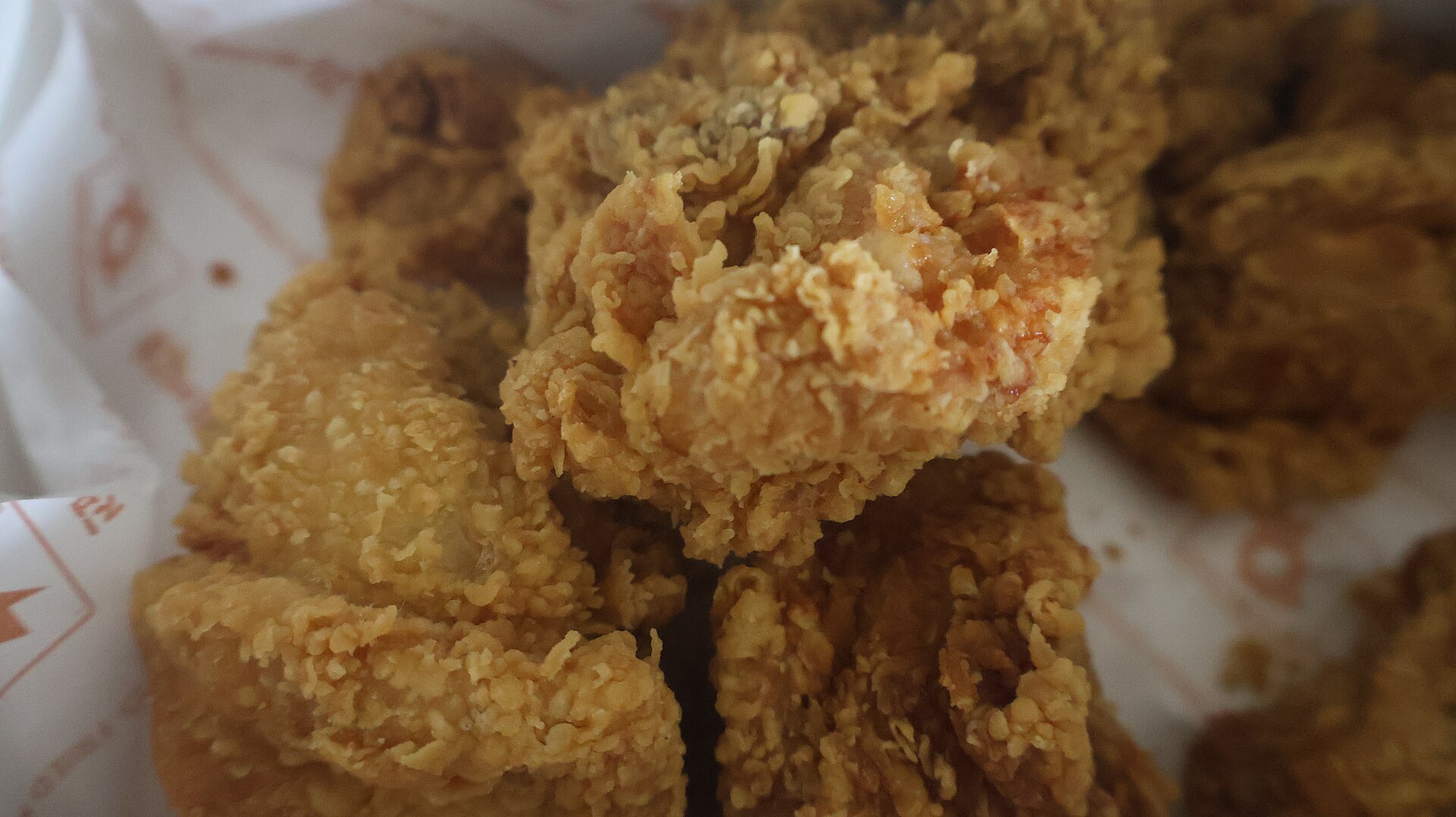
The sound is what gives it away. You bite into a piece of Korean fried chicken and there is a sharp, audible crack — not the soft yield of American buttermilk-coated chicken, not the dense crunch of Japanese karaage, but something glassier, almost like breaking thin sugar work. Inside, the meat is somehow still juicy after a full thirty-five minutes in hot oil. Outside, the shell is so light it barely seems possible the chicken was breaded at all, until the glossy red-orange gochujang glaze catches the light and you understand: this is engineering, not luck.
Korean fried chicken (KFC, locally written treong-deur or simply “chikin”) emerged in postwar Seoul in the 1960s as a fusion of American fried-chicken technique brought by US military bases with Korean flavor traditions. The double-fry method — cook gently at 165°C, rest ten minutes, then re-fry hot at 195°C — was perfected in the 1970s by chains like Pelicana and Mexicana that turned the dish into a national obsession. By the 1990s, the pairing of fried chicken with cold beer had its own portmanteau: chimaek, from chi(kin) + maek(ju, beer). By the 2010s, chimaek had become a Korean cultural export, traveling with K-dramas, BTS lyrics, and a wave of immigration that opened thousands of Korean chicken chains worldwide. Bonchon, Kyochon, BHC, BBQ, and Pelicana now operate in over fifty countries.
The internet has done more than its share to spread the recipe. Maangchi’s YouTube channel has taught millions of home cooks the basics; Eric Kim’s New York Times Cooking columns have brought it into the American mainstream. But the recipe has resisted simplification because the technique is so specific. The temperature schedule, the rest, the choice of potato starch over cornstarch, the order in which the glaze is applied — these are non-negotiable variables. Skip any of them and you get good fried chicken, but you do not get Korean fried chicken. The rest of this article is how to do it properly, and why each step matters.
The Double-Fry: Why the Rest Is Sacred
The mechanism is simple and counterintuitive. A single high-temperature fry burns the coating before the interior cooks. A single low-temperature fry produces a fully cooked but soft-crusted chicken. The Korean solution splits the job: first a low-temperature fry to cook the meat through, then a rest, then a high-temperature fry for the crust. What happens during the rest is the key. As the just-fried chicken sits on the rack, internal steam continues to release through the coating, drying it. The starch coating, hydrated during frying, partially dehydrates. After ten minutes, the surface is dramatically drier than when it came out of the oil — ready to receive the high heat of the second fry without the moisture buffer that would have prevented true crisping.
The first fry is 165°C (330°F) for 7 to 8 minutes. The chicken comes out pale, soft-coated, and just cooked through — not appetizing on its own. Resist the urge to eat one. The second fry is 195°C (385°F) for 3 to 4 minutes, and produces the famous glass-crackle exterior. The temperature differential is everything: 30°C / 55°F between the two frytechnique. Some chefs argue for an even bigger gap (155 first, 200 second) but this risks overcooking the meat. The published recipe in this article is the conservative middle ground that delivers reliably at home without a commercial fryer.
Potato Starch, Not Cornstarch: The Coating Question
Walk into any Korean grocery and look at the shelf devoted to starches; the bag with the pink or green packaging marked gamja-jeonbun is potato starch, and it is what every Korean fried chicken recipe uses. Cornstarch and all-purpose flour both work to produce fried chicken, but neither delivers the specific glass-crackle texture that defines Korean style. Why? Potato starch granules are larger than cornstarch granules and have a different gelatinization curve. When potato starch hits hot oil, it forms a thin, almost translucent shell that contains tiny air pockets — the source of the audible crackle.
Cornstarch produces a denser, slightly powdery coating that is good (Chinese-American restaurants use it extensively) but visually and texturally distinct. All-purpose flour creates a thick, breadcrumb-like crust closer to American Southern fried chicken — also delicious, but not Korean. The recipe in this article uses 60g potato starch and 2 tablespoons flour; the flour adds just enough structural body to keep the starch from being too fragile. If you can only find one starch, use potato starch alone and skip the flour. Look for it labeled gamja-jeonbun (Korean), katakuriko (Japanese, which is identical), or just “potato starch” at Asian markets, Bob’s Red Mill, or specialty grocers.
Yangnyeom vs Soy-Garlic vs Plain: The Three Schools
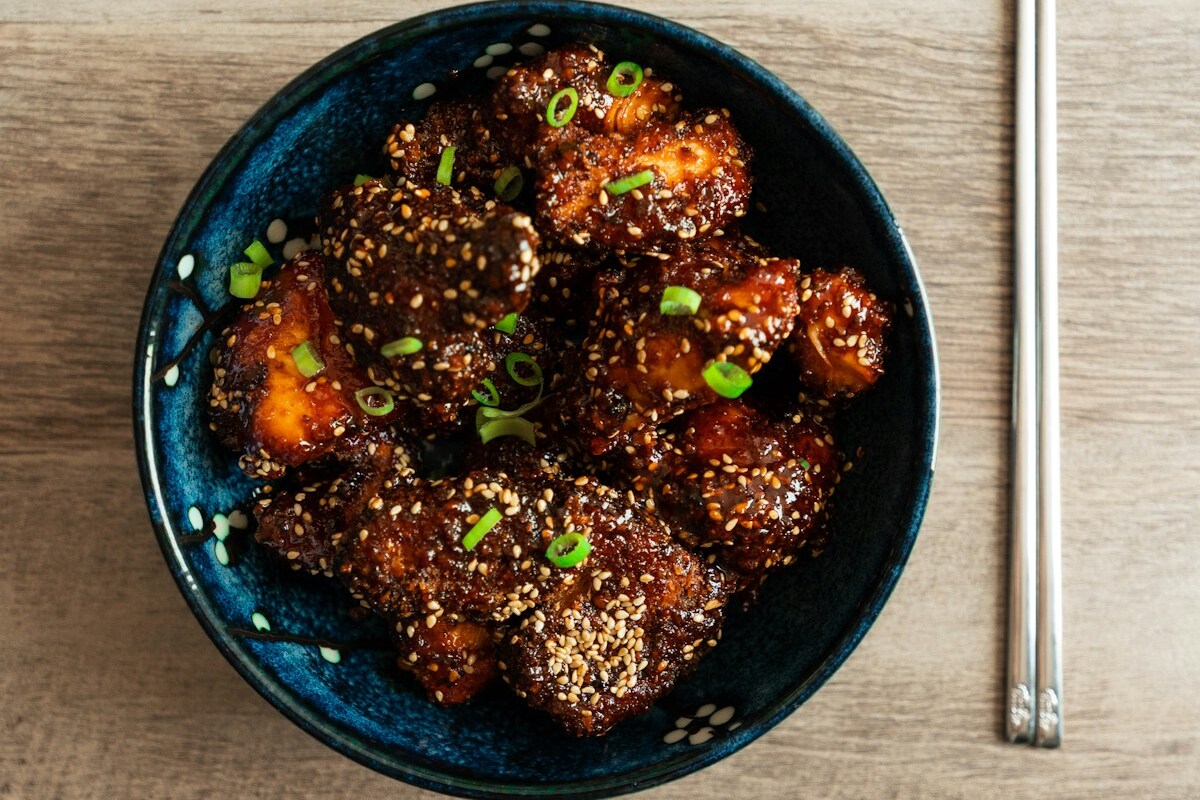
Korean chicken shops in Seoul typically offer three core flavors: yangnyeom (the spicy-sweet gochujang glaze featured in this recipe), kanjang (a soy-garlic glaze), and huraideu (plain, salt-only). The yangnyeom glaze, codified by the chain Kyochon in 1991, is what most non-Koreans associate with Korean fried chicken. It is built on gochujang plus a sweet-sour-savory profile: rice vinegar provides acidity, honey provides sweetness and the gloss, soy adds umami, sesame oil contributes aroma. The glaze should be glossy, pourable, and just thick enough to coat without sliding off.
Soy-garlic (kanjang) chicken uses soy sauce as the base, with garlic, honey, and ginger producing a darker, less spicy, more savory profile. It is the popular alternative for those who do not want heat. Plain huraideu lets the technique speak for itself — salt, double-fry, no glaze — and is the connoisseur’s choice. A traditional Korean order is “banban,” literally half-and-half: half the order with yangnyeom glaze, half with soy-garlic or plain. For a party, order all three flavors.
Yangnyeom vs Soy-Garlic vs American Buffalo: A Quick Map
| Style | Coating | Sauce Base | Heat Level | Texture |
|---|---|---|---|---|
| Yangnyeom (Korean) | Potato starch, double-fry | Gochujang, honey, soy, vinegar | Medium-hot | Glass-crackle, glossy |
| Kanjang (Korean) | Potato starch, double-fry | Soy, garlic, honey, sesame | Mild | Glass-crackle, dark gloss |
| Buffalo (American) | Flour, single-fry | Hot sauce + butter | Hot, sharp | Soft crust, oily |
| Karaage (Japanese) | Potato starch, single-fry | Soy-ginger marinade, no glaze | Mild | Light crunch, juicy |
Ingredients
For the chicken and marinade:
- 1 kg (2.2 lb) chicken wings, separated into drumettes and flats
- 1 tablespoon kosher salt
- 1 teaspoon freshly ground black pepper
- 1 tablespoon (15 ml) soju or vodka
- 1 teaspoon grated fresh ginger
- 2 garlic cloves, finely grated
For the coating:
- 1/2 cup (60 g) potato starch — not cornstarch
- 2 tablespoons (16 g) all-purpose flour
- 1 1/2 liters (6 cups) neutral frying oil (peanut, canola, or vegetable)
For the gochujang glaze:
- 3 tablespoons (60 g) gochujang (Korean fermented chili paste)
- 2 tablespoons (30 ml) soy sauce
- 2 tablespoons (30 ml) rice vinegar
- 3 tablespoons (45 ml) honey
- 1 tablespoon (15 ml) toasted sesame oil
- 2 garlic cloves, finely grated
To garnish:
- 2 teaspoons toasted white sesame seeds
- 2 green onions, thinly sliced
Making It
- Marinate. Pat wings very dry with paper towels. Toss with kosher salt, pepper, soju/vodka, grated ginger, and grated garlic. Let sit 20 minutes at room temperature. The soju draws moisture out and tenderizes; the alcohol evaporates during frying.
- Coat. Combine potato starch and flour in a wide bowl. Add wings, toss to coat uniformly. Shake off excess. Rest 5 minutes — the starch hydrates slightly and grips better.
- Heat oil to 165 C (330 F). Use a thermometer. This first-fry temperature cooks the chicken through gently without aggressive browning.
- First fry. Fry in two batches for 7 to 8 minutes, moving gently. Chicken will be pale, just cooked through. Internal temperature should reach 70 C (158 F). Transfer to a wire rack.
- Rest 10 minutes. This rest is non-negotiable. Steam releases, the coating dries, and the surface prepares for the second fry.
- Heat oil to 195 C (385 F). While wings rest, increase oil temperature. The 30-degree jump is what creates the glass-crackle shell.
- Second fry. Return wings to hot oil in two batches. Fry 3 to 4 minutes until deeply golden and crackling crisp. Transfer to a fresh wire rack.
- Make the glaze. Whisk gochujang, soy, rice vinegar, honey, sesame oil, and grated garlic in a small saucepan over medium-low heat for 2 minutes, until smooth and just bubbling. Do not reduce hard — it should be glossy and pourable.
- Glaze and serve. Place hot wings in a large bowl. Pour warm glaze over them. Toss quickly with tongs until coated. Transfer to a plate. Garnish with sesame seeds and green onions. Serve immediately.
Common Mistakes That Ruin Korean Fried Chicken
The single most common mistake is skipping the rest between fries. Cooks see a tray of pale, soft-coated chicken and assume they can move directly to the second fry to crisp it up. The result is fried chicken that is crisp on the outside but not glassy — the signature texture is gone. The 10-minute rest is when the magic happens. Set a timer. The second mistake is using the wrong starch. American recipes often substitute cornstarch or all-purpose flour because potato starch is unfamiliar. The result is good fried chicken, but not Korean fried chicken. Source proper potato starch before attempting this recipe.
The third mistake is applying the glaze in a saucepan over heat. Some recipes call for tossing the fried chicken with glaze in the warm saucepan; this causes the glaze to scorch and the coating to lose its crackle within seconds. Make the glaze separately, then toss with the chicken in a cool bowl off the heat. The fourth mistake is letting the glazed chicken sit before serving. Korean fried chicken loses its texture rapidly once glazed; the moisture from the sauce starts to soften the shell within 10 to 15 minutes. Glaze and serve immediately. If you are making a large batch for a party, glaze in small rounds as guests arrive.
Chimaek: Beer Pairing and the Cultural Ritual
In Korea, fried chicken is not eaten alone. It is eaten with cold beer, in a ritual called chimaek (chi from chicken, maek from maekju, beer). The pairing is so deep that BBQ Chicken in Seoul markets directly to the post-work crowd with a fried-chicken-plus-pitcher set menu. The beer matters. Korean lagers (Cass, Hite, Kloud) are crisp, light, and unobtrusive — built to cut grease without competing with flavor. American craft IPAs are aggressive and wrong for this pairing; the bitterness fights the gochujang heat and produces an unpleasant clash. Stick with rice lagers, pilsners, or light Mexican beers (Pacifico, Modelo Especial) for the right textural and flavor balance.
For a complete Korean spread alongside the chicken, our Korean bibimbap rice bowl with gochujang sauce rounds out the meal with a balanced rice-and-vegetable course. Our Korean corn dogs with cheese pull doubles down on the street-food chimaek experience. Side dishes (banchan) such as pickled daikon (chicken-mu), kimchi, or quick cucumber pickles refresh the palate between bites.
Storage and the Truth About Leftovers
Korean fried chicken is a same-day food. The glaze and the crackle shell do not survive overnight storage. Refrigerated leftovers turn soft and gummy by morning. If you must store, refrigerate the fried chicken (without glaze) in an airtight container for up to 24 hours. Reheat in a 200°C oven for 10 minutes on a wire rack to restore some crispness. Then make a fresh small batch of glaze and toss just before serving. Do not freeze. The glaze itself keeps refrigerated for up to a week and can be made ahead. For a party, do the marinade and starch coating a few hours ahead, refrigerate the coated wings on a tray, and fry just before guests arrive.
Frequently Asked Questions
Why double-fry? Cannot I just fry once at high heat?
A single high-heat fry produces a burnt exterior and undercooked interior. The double-fry separates the two jobs. The first low-temperature fry (165 C) cooks the chicken through gently. The mandatory 10-minute rest lets internal moisture redistribute and the starch coating dry. The second high-temperature fry (195 C) creates the famous crackling shell because the surface is now dry and high heat causes rapid moisture flash, producing the audible crunch. Skip the rest or the temperature differential and you get ordinary fried chicken.
Why potato starch instead of cornstarch or flour?
Potato starch (gamja-jeonbun in Korean, katakuriko in Japanese) creates a finer, glassier shell that crackles audibly when bitten. Cornstarch produces a denser, slightly powdery coating; all-purpose flour gives a thicker, bready crust closer to American fried chicken. The slight glass-like quality of well-fried potato starch is the textural signature of Korean fried chicken and explains why Bonchon and Kyochon use it exclusively. Find it at Korean markets, Asian supermarkets, or online specialty stores.
What is gochujang and where do I buy it?
Gochujang is a Korean fermented chili paste made from gochugaru, glutinous rice, fermented soybeans, and salt, aged for months. It is the soul of Korean cooking. Look for red plastic tubs at Korean markets, Asian supermarkets, and increasingly Whole Foods or Trader Joes. Chung Jung One and Sempio are the most widely distributed brands. Buy medium heat level (boton mat, 1-2 chili rating) for the chicken glaze. Refrigerated, it lasts months.
Can I make this in an air fryer or oven?
Not really. The crackling shell of Korean fried chicken comes from oil-temperature physics that air fryers and ovens cannot replicate. An air fryer can produce a passable crisp coating but the texture is dry-crunchy rather than the glassy crackle of double-fried chicken. The glaze also bonds differently. If you cannot deep-fry, an air fryer at 200 C for 12 minutes followed by glazing produces an acceptable approximation. For the real thing, embrace the deep fry.
Sources
- Serious Eats — Double-Fried Korean Fried Chicken — J. Kenji López-Alt’s detailed technical breakdown of the double-fry temperature schedule.
- NYT Cooking — Eric Kim’s Korean Fried Chicken — The American-kitchen-friendly version with notes on sourcing gochujang and potato starch.
- USDA FoodData Central — Poultry and Fats — Nutritional data for per-serving calculations.
Each serving (4 to 5 wings with glaze) contains roughly 615 calories, 38 g protein, 32 g fat, 42 g carbohydrates, and 2 g fiber.
Please note: Nutritional estimates are derived from the USDA FoodData Central database and may vary by brand of gochujang, oil, and chicken. This recipe contains chicken, soy, sesame, and wheat (from gluten in flour and gochujang). Nothing in this article should be interpreted as medical or dietary guidance. The recipe is deep-fried and high in sodium; consume in moderation if you have sodium-restricted dietary needs. If you have specific allergies or are pregnant, consult a registered dietitian.