There is no other pasta in Italy that smells like puttanesca cooking. You walk into a kitchen halfway through the simmer and the air is a thick mineral cloud of olive brine and anchovy and garlic warmed in oil, all of it tied together by the funky tomato sweetness underneath. It is one of the most aggressive aromas in southern Italian cooking and one of the most addictive, and it tells you exactly what you are about to eat: a dish that does not whisper.
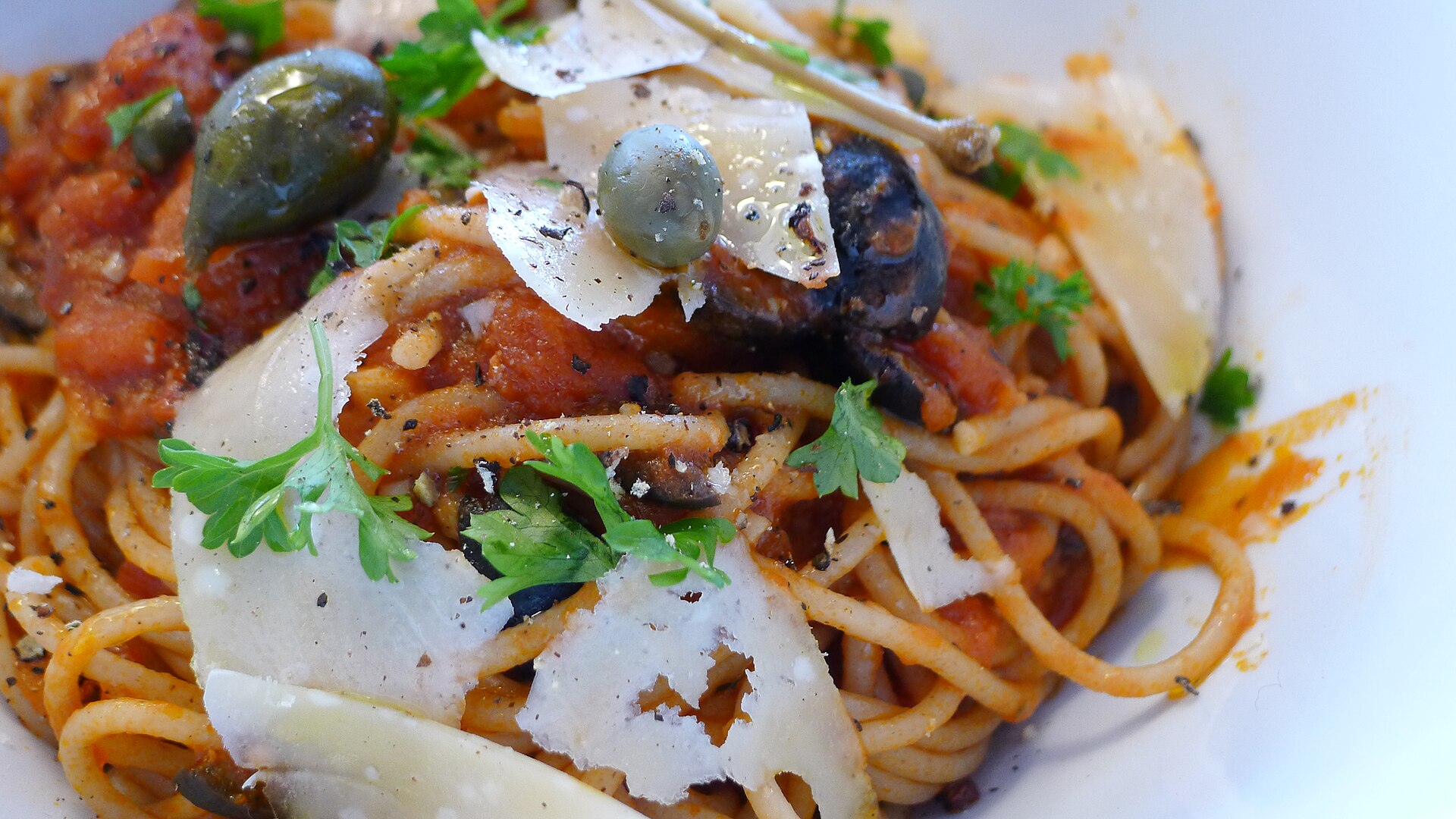
Spaghetti alla puttanesca is the patron pasta of Naples’ cucina povera — the “cuisine of poverty” that, like much working-class Italian food, became some of the country’s greatest cooking. The recipe is structurally simple: oil, garlic, anchovies, capers, olives, chili flakes, canned tomatoes. Nothing fresh except the pasta and a fistful of parsley at the end. Every ingredient is shelf-stable. Every ingredient is salty and savory and assertive. The whole thing comes together in twenty minutes from the moment the water boils, which is precisely why it became famous: it was a meal you could conjure from a bare pantry in less time than it took to walk to the market.
The food historian Annarita Cuomo traced puttanesca to mid-twentieth-century Naples, where it emerged in the postwar period as restaurants and homes improvised with available staples. The colorful etymological story about it being “the pasta of the ladies of the night” is almost certainly urban legend, attached after the fact. What is true is that puttanesca became, by the 1960s, a defining dish of Neapolitan home cooking and is now found in every trattoria from Sorrento to Portici. The rest of this article is how to make it properly — with notes on every variable that decides whether the sauce is balanced or overwhelming.
Anchovies: The Engine of the Sauce
The anchovy is not a flavoring in puttanesca — it is the structural foundation. When chopped anchovies hit warm olive oil, they dissolve completely within ninety seconds, leaving no visible trace except a faintly cloudy oil that smells of the sea. What they leave behind is umami: glutamic acid, inosinate, the same flavor compounds that make aged Parmigiano and slow-roasted tomatoes taste profound. Without anchovies you have an ordinary olive-and-caper marinara. With them, you have puttanesca.
Use oil-packed anchovies, not the salt-packed variety unless you have time to rinse and fillet them yourself. Look for Italian brands packed in olive oil — Agostino Recca, Nettuno, and Ortiz are reliable. Spanish anchoas are excellent but pricier. Avoid anchovy paste, which contains preservatives and produces a more uniform, less interesting result. Six to eight fillets per pound of pasta is the right ratio: enough to be present as a base note, not so much that they dominate. People who claim they hate anchovies generally hate them as topping — melted into a sauce, they become invisible flavor, not a fish you can identify.
Capers and Olives: The Aromatics That Punch
Capers come in two forms: salt-packed and brine-packed. Salt-packed capers are dramatically better — their flavor is more concentrated, less vinegary, and they retain a firmer texture when added to the sauce. The trade-off is that you must rinse them under cold water and soak briefly to remove surface salt. Brine-packed capers (in vinegar) are acceptable but second-best; rinse them anyway to dial down the sourness. Size matters less than freshness; small caperberries and large nonpareils both work.
For olives, choose Gaeta if you can find them — small dark Mediterranean olives that share a flavor profile with the wider Neapolitan kitchen. Kalamatas are the most available substitute and a perfectly respectable choice. What you must avoid: domestic American canned black olives. They are not failed Italian olives; they are a different product, one-dimensional and dull, that will make your sauce taste like an empty pantry. Pit the olives yourself by hand and tear rather than chop — the irregular pieces grip the sauce better and look more rustic on the finished plate.
San Marzano Tomatoes and Why They Matter
Canned San Marzano tomatoes — specifically the DOP-certified variety from the volcanic plains around Mount Vesuvius — are not interchangeable with other canned tomatoes for this dish. They have a higher sugar-to-acid ratio than standard canned tomatoes, which means the sauce develops sweetness during the short simmer without needing added sugar. They are also less acidic, which keeps the bright bitter notes of the capers and anchovies from sliding into harsh. Look for the “DOP” label and the certification number on the back of the can. Cento and La Valle are widely available reliable brands.
Crush the tomatoes by hand directly into the pan rather than using a food processor. You want irregular chunks that break down further during the simmer but leave some texture in the finished sauce. Pureed tomatoes produce a uniform smooth sauce that, while pleasant, lacks the rustic body that makes puttanesca recognizable. If San Marzano DOP is unavailable, the next best options are Mutti Polpa (Italian fine-crushed tomatoes), Bianco DiNapoli (California), or Cento certified-San-Marzano-style.
Puttanesca vs Arrabbiata vs Pomodoro: A Quick Map
| Sauce | Defining ingredients | Flavor profile |
|---|---|---|
| Puttanesca | Anchovies, capers, olives, chili, tomato | Salty, umami, briny, slight heat |
| Arrabbiata | Garlic, chili, tomato | Hot, simple, garlicky |
| Pomodoro | Tomato, basil, olive oil | Pure, sweet, fresh |
| Marinara | Garlic, tomato, herbs | Versatile, balanced |
Ingredients
- 400 g (14 oz) spaghetti (bronze-die dried preferred)
- 1/3 cup (80 ml) extra-virgin olive oil
- 6 garlic cloves, thinly sliced
- 6 to 8 oil-packed anchovy fillets, finely chopped
- 1 teaspoon red pepper flakes
- 3 tablespoons salt-packed capers, rinsed
- 3/4 cup (110 g) pitted Gaeta or Kalamata olives, torn
- 1 can (28 oz / 800 g) whole peeled San Marzano DOP tomatoes, hand-crushed
- Fine sea salt and freshly ground black pepper
- 1/4 cup fresh flat-leaf parsley, chopped
- Coarse salt for the pasta water
Making It
- Salt the water. Bring a large pot of generously salted water to a boil. Salt should taste like the sea.
- Bloom the base. Heat olive oil in a large deep skillet over medium-low heat. Add sliced garlic and chopped anchovies. Cook gently 2 to 3 minutes, stirring, until the anchovies dissolve and the garlic is pale gold.
- Add aromatics. Stir in red pepper flakes, capers, and torn olives. Cook 1 minute to bloom heat and aroma.
- Simmer the sauce. Add the hand-crushed tomatoes with their juices. Bring to a gentle simmer. Cook uncovered 12 to 15 minutes, stirring occasionally, until the sauce thickens. Taste — you may need no added salt.
- Cook the pasta. Cook spaghetti until 1 minute shy of al dente. Reserve 1 cup pasta water before draining.
- Toss in the pan. Transfer drained pasta directly into the sauce skillet. Toss vigorously over medium heat for 60 seconds, adding splashes of reserved pasta water to make a glossy emulsion.
- Finish and serve. Off heat, stir in chopped parsley. Taste once more for salt and pepper. Serve immediately in warmed bowls. No cheese.
Common Mistakes
The most common mistake is over-salting. Anchovies, capers, and olives are all heavily salt-cured, and a sauce that started balanced will turn aggressively briny if you season as if cooking a fresh tomato sauce. Always taste before adding salt to the simmering sauce; most batches need no salt at all. The second mistake is burning the garlic. Puttanesca’s garlic is meant to soften and gild, not brown. If you smell the sharp acrid note of burning garlic, the base is ruined — pour out the pan and start over. Medium-low heat for the bloom step is essential.
The third mistake is overcooking the sauce. Twelve to fifteen minutes of simmering is the target. Longer and the sauce loses its bright tomato character and becomes a muddy paste; shorter and the tomatoes have not broken down enough to integrate. The pan-toss step at the end — pasta with sauce over heat with reserved water — is non-negotiable. Without it, the sauce sits on top of the pasta rather than coating it.
What to Serve With Puttanesca
A bowl of spaghetti puttanesca is a complete first course; the Neapolitan order is typically a small antipasto first (sliced cured meat with bread and pickled vegetables), the pasta as primo, then perhaps a simple grilled fish or roast chicken as secondo, and arugula salad to follow. A glass of unfiltered red — Aglianico, Piedirosso, or a Campanian rosé — cuts the salt and brine beautifully. For a wider Italian table, our cacio e pepe with pro techniques makes a contrast cheese pasta, and our authentic ragù alla Bolognese offers the long-cooked counterpart in the same Italian pantry tradition.
Storage and Make-Ahead
The sauce itself improves with rest. Make it a day ahead, cool, and refrigerate; the flavors integrate further and any sharp edges round out. Reheat gently with a splash of water before tossing with freshly cooked pasta. The sauce keeps refrigerated for 5 days and freezes well for up to 3 months. Cook the spaghetti fresh each time — reheated pasta never recovers its proper texture. Many Neapolitan home cooks keep a batch of puttanesca sauce in the freezer specifically for nights when nothing else is in the house.
Frequently Asked Questions
Why is it called puttanesca?
The folk etymology about “ladies of the night” is largely a 20th-century invention. Food historian Annarita Cuomo traced the dish to mid-20th-century Naples, where it emerged as a quick aromatic pasta built from pantry staples. The name attached itself later as urban legend. The dish is now a classic of Neapolitan cucina povera — the resourceful cooking of poverty that produced many of Italy’s best-loved dishes.
Can I make puttanesca without anchovies?
You can, but you will be making a different dish. Anchovies provide the savory umami depth that defines puttanesca — without them, the sauce becomes a pleasant olive-and-caper marinara. If you cannot use anchovies, substitute 1 tablespoon white miso paste or 2 teaspoons soy sauce. These provide some missing umami, though the result will be milder and less complex.
Should I use cheese on puttanesca?
In Naples, never. The dish is already richly seasoned and adding Parmigiano would overwhelm the balance. A handful of toasted breadcrumbs (pangrattato) crisped in olive oil makes the traditional garnish if you want a textural finish.
What kind of olives should I use?
Gaeta olives are the traditional and ideal choice. Kalamatas are the most widely available substitute. Avoid canned California black olives entirely — they are too mild and one-dimensional. Buy whole, pit them yourself, and tear rather than chop.
Sources
- Serious Eats — Spaghetti alla Puttanesca — Detailed technique notes from a Naples-trained cook with emphasis on anchovy dissolution.
- Bon Appétit — Best Puttanesca — Reliable American adaptation with sourcing notes for capers and anchovies.
- USDA FoodData Central — Pasta and Olive Oil — Nutritional data for per-serving calculations.
Each serving contains roughly 485 calories, 15 g protein, 18 g fat, 68 g carbohydrates, and 5 g fiber.
Please note: Nutritional estimates are derived from USDA FoodData Central and may vary by brand of anchovies, olives, and pasta. This recipe contains fish (anchovies), gluten (pasta), and is high in sodium. Not suitable for sodium-restricted diets or fish allergies. If you have specific dietary needs, consult a registered dietitian.