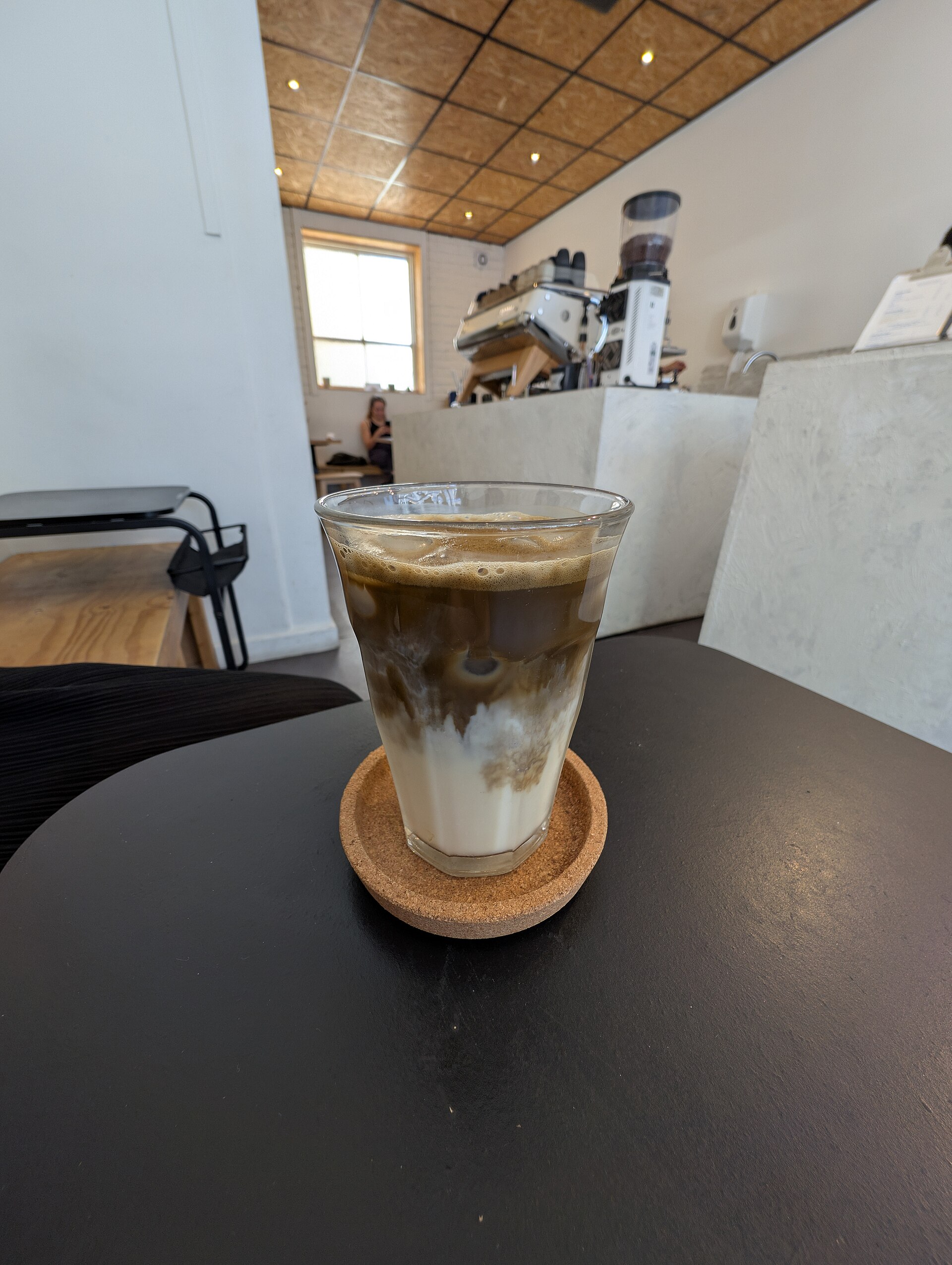
The first sip is not what you expect. You have been drinking matcha lattes for years, green and grassy and faintly bitter at the back of the throat. This is different. It lands on the tongue as caramel at first, then slides into something closer to toasted rice, then something woodier still — like the smell of a neighbor burning leaves across a fence in October. The color in the glass is wrong for green tea: amber, not green. The foam on top is the white of heavy cream whipped loose, flecked with tiny dark specks of hojicha dust. You take another sip, and another, and by the time you reach the bottom of the glass you understand why the baristas in Kyoto have been quietly telling anyone who will listen that hojicha is the drink of 2026.
Hojicha (pronounced hoh-jee-cha) is roasted Japanese green tea — and until recently, it was considered the least interesting member of the Japanese tea family. It was what you served children in Japanese households because it contained almost no caffeine. It was what was poured at the end of a meal, when guests wanted something warm and easy rather than something ceremonial. It was the humble cousin of sencha and matcha, older teas with more prestige and more elaborate preparation rituals. Then, roughly in 2022, hojicha started appearing on the menus of independent cafes in Tokyo, Kyoto, and Osaka with a new confidence. By 2024 it was on every third-wave coffee shop menu in Melbourne and Portland. By 2025 Blue Bottle, Stumptown, and Verve were all selling hojicha lattes. By early 2026, Starbucks Japan had launched a hojicha line that sold out nationally in its first week, and Starbucks Reserve bars in the US were testing their own version.
Rie McClenny, the Japanese-American food writer and former Tasty video lead whose YouTube channel has been a primary vector for Japanese food culture in English since 2020, declared in a December 2025 video that 2026 would be “the year of hojicha.” She was not wrong. Search data bears her out: hojicha searches on Google rose 280 percent year over year in Q1 2026, while matcha searches declined 12 percent for the first time since the metric has been tracked. The shift is real, and understanding why it is happening — and how to make a properly good hojicha latte at home — is the subject of this article.
What Hojicha Actually Is
Hojicha comes from the same plant as all Japanese teas — Camellia sinensis, the tea bush — but from later-harvest material and, critically, it is the only Japanese tea that is roasted. After the leaves and stems are harvested and steamed (as with all Japanese green teas), they are subjected to high-heat roasting in a rotating drum or over charcoal, at temperatures between 200 and 230°C, for three to five minutes. The roasting transforms the tea chemically: chlorophyll breaks down, giving the tea its warm amber color instead of green; caffeine molecules vaporize, dropping the caffeine content by as much as 90 percent; and a cascade of Maillard-reaction products emerges, creating the signature toasty, caramel, slightly smoky flavor.
The most prestigious hojicha comes from Uji, the region just south of Kyoto that has been Japan’s tea heartland for eight centuries. Ippodo, the Kyoto tea house founded in 1717 and still operating from its historic storefront on Teramachi Street, produces some of the finest hojicha on the market. Their Hoshi No Mukashi (“Stars of Old”) hojicha is made from a blend of stem (kukicha) and first-flush leaf, roasted over medium heat for a profile that emphasizes caramel and almond notes without tipping into smokiness. Outside Ippodo, reliable sources include Rishi Tea’s Hojicha Organic Japanese Roasted Tea (widely available in the US), Mizuba Tea Company (organic, single-origin), Harney & Sons’ hojicha, and Yunomi.us (an importer that stocks many smaller Japanese tea farms).
Powder or Loose Leaf?
Both work. Hojicha powder is increasingly popular for lattes because it is easy to measure, dissolves into a smooth concentrate, and produces a visibly darker drink with no straining required. It also captures more of the tea’s particulate flavor — like matcha, you are consuming the whole leaf rather than an extraction. Loose-leaf hojicha produces a cleaner, slightly lighter extraction with more nuanced aromatics, but requires steeping and straining, which adds a small step to the workflow. For daily home use, I recommend keeping both on hand. Powder for speed and visual impact in iced lattes; loose-leaf for quiet hot tea moments when you want to taste the tea itself.
When buying powder, look for warm amber color with no gray-brown dullness. Oxidized hojicha powder has lost most of its flavor and should be avoided. A fresh, high-quality powder smells distinctly of toasted rice and caramel when you open the tin — if yours smells faintly dusty or of nothing in particular, it has sat on a shelf too long. Store opened powder in an airtight container in a cool dry place, and use within three months of opening. Hojicha is more stable than matcha (the roasting process stabilizes it) but still loses aroma over time.
The Milk Choice: Oat Wins (for Once)
I am generally a whole-milk partisan for coffee and tea drinks. The fat of whole cow’s milk carries flavor in a way that plant-based alternatives usually do not. But hojicha is the exception. The roasted, caramel-forward profile of hojicha pairs almost magically with the natural sweetness of oat milk — the two share flavor compounds (particularly around the grainy-toasty axis) that reinforce each other rather than competing. Japanese third-wave cafes increasingly default to oat milk for hojicha lattes even when they serve dairy for coffee and matcha. Oatly Barista Edition is the industry standard; Minor Figures, Califia Farms, and Pacific Foods Barista Edition are all solid alternatives.
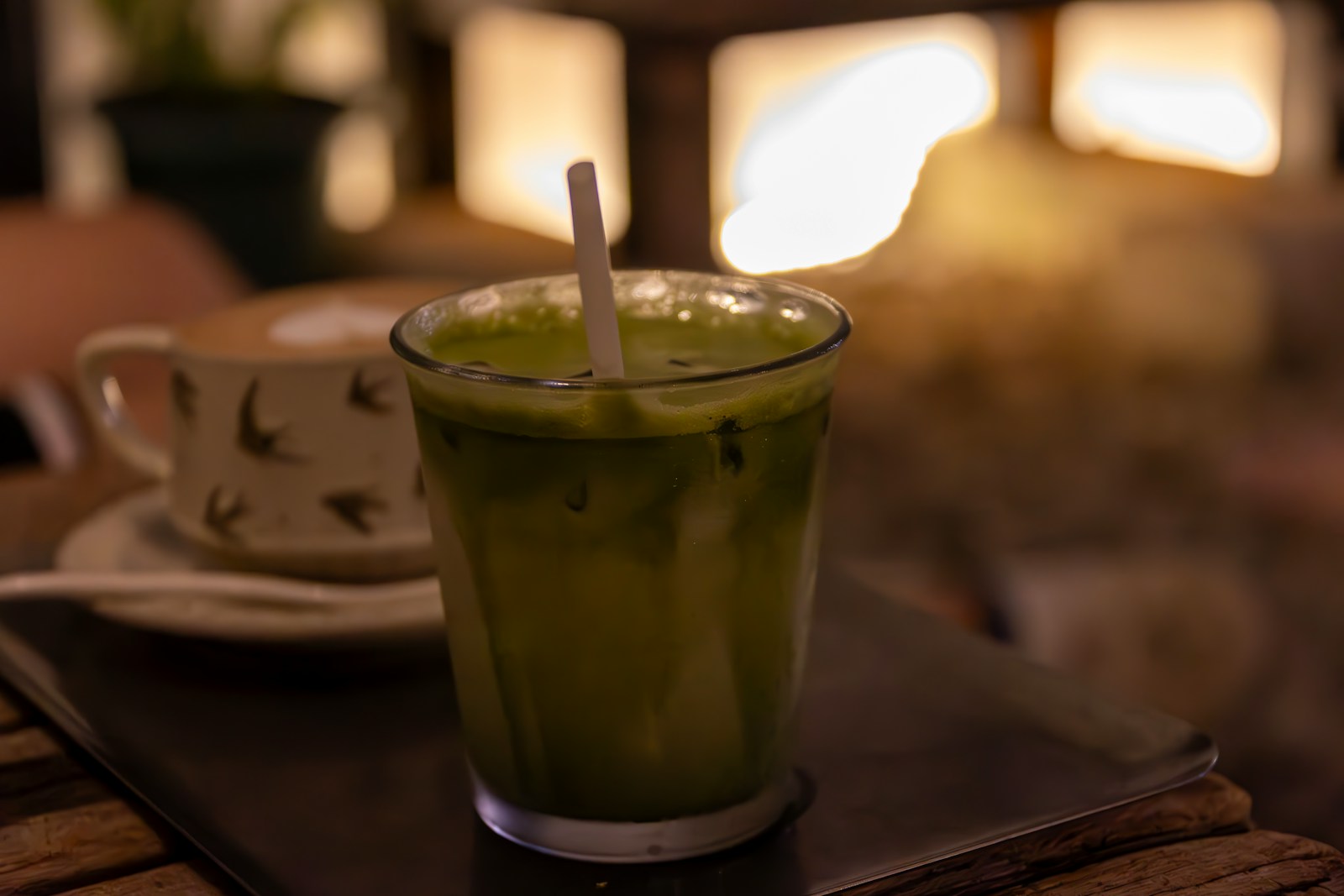
If you do prefer dairy, whole milk is the best cow’s milk option — the fat content carries hojicha’s toasty flavor without muting it. Skim and 2 percent produce a thinner, less satisfying drink. Alternative non-dairy options beyond oat: almond milk works but is neutral rather than complementary; coconut milk adds its own strong character that can overwhelm the hojicha; soy is a distant third but acceptable. Avoid flavored milks entirely — vanilla or chocolate oat milks will compete with the tea’s natural caramel notes and produce a confused drink.
Hojicha vs Matcha vs Coffee: Where It Fits
The landscape of caffeinated drinks has been shifting for a decade. Knowing where hojicha sits relative to its competitors helps you understand when to reach for it.
| Drink | Caffeine (per 8 oz) | Primary Flavor | Best Time of Day |
|---|---|---|---|
| Hojicha | ~7-15 mg | Toasted, caramel, woodsy | Afternoon to evening |
| Matcha | ~70 mg | Vegetal, grassy, umami | Morning to early afternoon |
| Sencha (green tea) | ~30 mg | Fresh, light-green, clean | Any time |
| Coffee (espresso) | ~80-100 mg | Roasted, bitter, complex | Morning |
| Black tea | ~40-70 mg | Tannic, malty, varied | Morning to afternoon |
Ingredients
Hojicha concentrate:
- 2 tablespoons hojicha powder (or 3 tablespoons loose-leaf hojicha)
- ½ cup (120 ml) water, heated to 195°F (90°C)
Latte build:
- 1 cup (240 ml) whole milk or oat milk (Oatly Barista or Minor Figures recommended)
- 1 to 2 tablespoons pure maple syrup, to taste
- Large ice cubes
Vanilla cold foam:
- ¼ cup (60 ml) heavy cream
- 2 tablespoons whole milk
- 1 tablespoon pure maple syrup
- ½ teaspoon pure vanilla extract or ¼ vanilla bean, seeds scraped
Garnish:
- Pinch of hojicha powder for dusting
- Cinnamon stick (optional, for stirring)
Making It
- Heat water precisely. Fill a small saucepan or kettle with fresh cold water. Heat to 195°F (90°C) — just below boiling, with visible steam but no rolling bubbles. A digital thermometer is helpful; alternatively, bring water to a boil and let it rest for 45 seconds before using. Unlike matcha, which scorches easily above 180°F, hojicha’s robust roasted profile is more forgiving of hot water, and higher temperatures actually extract more flavor.
- Make the hojicha concentrate. If using loose-leaf hojicha, place three tablespoons of leaves in a small teapot or heat-safe jar. Pour the hot water over, cover, and steep for four minutes. Strain into a small bowl or cup, pressing the leaves gently to extract. If using powder, place two tablespoons of hojicha powder in a small bowl. Pour the hot water over and whisk vigorously with a small whisk or bamboo chasen (the tool used for matcha works perfectly) for thirty seconds, until completely smooth with no lumps and a thin froth develops on top. Let the concentrate cool for five minutes — it should be warm but not hot, so it does not melt the ice too quickly.
- Make the vanilla cold foam. In a small mason jar with a tight-fitting lid, combine heavy cream, whole milk, maple syrup, and vanilla. Seal the jar and shake vigorously for thirty seconds — the motion should be sharp and rhythmic, like shaking a cocktail. The liquid will double in volume and turn into a loose, floppy foam. Alternatively, use a handheld milk frother (the battery-operated wand type) and froth for twenty seconds. The foam should hold soft peaks when the jar is tilted but not be stiff like whipped cream. If it becomes too thick, add a teaspoon of milk and shake briefly to loosen.
- Build the latte. Fill a tall glass (14 to 16 ounces) two-thirds with large ice cubes. Large cubes melt slowly; avoid crushed ice, which waters down the drink within minutes. Pour the cold milk directly over the ice — about one cup. Drizzle the maple syrup over the ice. Stir briefly with a long spoon to distribute the syrup through the milk. The glass at this point should be mostly pale, with ice visible and a subtle amber tint where the syrup has swirled in.
- Pour the hojicha layer. Hold a spoon upside-down just above the surface of the ice in the glass. Pour the cooled hojicha concentrate slowly over the back of the spoon — this technique, borrowed from cocktail bartenders, breaks the pour into smaller streams that layer gently over the milk rather than mixing immediately. The result is a visible amber layer sitting above the pale milk, at least briefly before natural mixing starts. This is the Instagram-worthy shot.
- Cap with vanilla cold foam. Spoon or pour the vanilla cold foam gently over the top of the drink. The foam should float, supported by the ice, creating a distinct pale-cream cap about an inch thick above the amber hojicha layer. The whole drink now has three visible zones: foam cap, hojicha middle, milk base. This is the classic hojicha latte silhouette that has been proliferating on Japanese Instagram since 2024.
- Dust and garnish. Using a small fine-mesh strainer or a pinch of fingers, lightly dust the foam top with a pinch of hojicha powder. This is purely visual but also adds a small burst of concentrated flavor when the drinker’s lips pass through the foam. Tuck a cinnamon stick into the drink if using — it doubles as a stirrer and adds a gentle warming aromatic. Add a paper or reusable straw.
- Serve immediately. The drink is at its peak within the first five minutes, while the cold foam still holds its cap and the layered visual is intact. Encourage whoever is drinking to pull up through all three layers with each sip — the ideal mouthful has cream, hojicha, and milk together. Stirring fully integrates the drink and turns it a uniform pale caramel; this is what most of the glass will become as it is drunk, and that is fine.
The Hot Version for Winter
A hot hojicha latte is just as beautiful and, some argue, more flattering to the tea’s flavor profile. The caramel-toasty notes come through more intensely when warm, while the refreshing-aromatic qualities that dominate the iced version recede. To make hot: prepare the concentrate as described. Warm one cup of whole or oat milk in a small saucepan over medium-low heat to about 150°F (66°C) — hot to the touch but not scalding. Pour the hojicha concentrate into a mug, add the warm milk and maple syrup, and stir. Top with vanilla cold foam (it will slowly melt but retain enough shape to form a cap) or with warm milk froth made with a frothing wand. The hot version is how hojicha is typically served in Kyoto cafes through the winter months, paired with a small sweet.
Sweetness: Maple Syrup, Not Sugar
The sweetener in a hojicha latte is doing more flavor work than sweetness work. Maple syrup is the recommended choice because its flavor profile — caramel, woodsy, slightly smoky — reinforces the same flavor notes already present in the roasted tea. Honey is a close second, particularly a lighter variety like clover or orange blossom; darker honeys (buckwheat, forest) can overwhelm. Brown sugar syrup (brown sugar dissolved in equal parts hot water) is the traditional Japanese sweetener for hojicha drinks and works beautifully. Plain white sugar is too neutral — it sweetens without contributing flavor, which is a wasted opportunity in a drink built around layered aromatic complexity.
Sweetness level is deeply personal and worth tuning to your own palate. The recipe specifies one to two tablespoons of maple syrup total; a lightly sweet drink uses one tablespoon, a clearly sweet drink uses two. Stop adding sweetener before the drink tastes sweet — aim for a background presence that supports the tea rather than dominating it. Remember that the vanilla cold foam also contains a tablespoon of maple syrup, which contributes to overall sweetness when drunk with the foam cap.
What to Eat With a Hojicha Latte
The toasted, caramel-forward flavor of hojicha pairs beautifully with baked goods that feature brown butter, dark sugars, or warm spices. Anything that shares flavor compounds with roasting and caramelization will amplify the tea rather than compete with it. Almond biscotti, shortbread, gingerbread, and cinnamon rolls all work excellently. For a distinctly Japanese pairing that honors the drink’s origin, dorayaki (red bean pancakes), kasutera (Japanese honey sponge cake), or any mochi-based sweet creates a beautifully aligned East-Asian tea experience.
For Western baking that pairs especially well, our classic banana bread, perfectly moist with a crackly sugar crust shares the same caramelized-sugar profile that makes hojicha sing. Our moist banana bread that stays fresh for days provides a slightly lighter companion for afternoon sipping. For something closer to the cafe-case experience of a Kyoto tea house, our Japanese soufflé pancakes, cloud-soft, jiggly, and impossibly tall creates a full Japanese-cafe experience when made alongside this drink.
Storage and Batching
Hojicha concentrate can be made in larger quantities and stored. A 2-cup batch of concentrate (4 tablespoons powder in 2 cups water, or 6 tablespoons loose-leaf steeped four minutes) keeps in a sealed container in the refrigerator for up to five days. For daily use, make concentrate on Sunday and you have lattes ready all week in under a minute of assembly. Hojicha concentrate does not lose much flavor with cold storage — unlike matcha, which oxidizes and dulls rapidly. Vanilla cold foam does not store; make it fresh each time. Freshly made foam takes thirty seconds in a mason jar. The whole drink, assembled, should be consumed within ten minutes — the layered visual collapses after that, though the flavor remains intact even fully mixed.
Frequently Asked Questions
What exactly is hojicha and how is it different from matcha?
Hojicha is Japanese green tea that has been roasted to a deep amber color. The roasting process transforms the flavor: where matcha is vegetal, grassy, and bitter, hojicha is toasty, caramel-like, and autumnal. Hojicha is also much lower in caffeine (about 7-15 mg per serving versus 70 mg for matcha), because roasting breaks down most of the caffeine. This makes hojicha ideal for afternoon and evening, while matcha is a morning drink. Both come from the same tea plant but hojicha uses later-harvest leaves, stems, and twigs.
Where do I buy good hojicha powder?
The gold standard is Ippodo, a Kyoto tea house founded in 1717 that ships internationally. Their Hoshi No Mukashi hojicha and single-serve packets are exceptional. Rishi Tea (American, widely available), Harney & Sons, and Mizuba Tea Company are reliable mid-tier options. At the entry level, Maeda-En and Yamamotoyama produce decent hojicha. Avoid anything labeled vaguely “roasted green tea” without specifying hojicha, and any powder that looks dull gray-brown. Store in an airtight container away from light and use within three months of opening.
Can I make this hot instead of iced?
Yes, and many tea experts prefer the hot version. Heat milk to about 150°F and combine with the hojicha concentrate and maple syrup in a mug. Top with vanilla cold foam (which melts slightly but retains its cap) or warm microfoam for a latte-art finish. Hot hojicha emphasizes the toasty-caramel notes; iced emphasizes the refreshing aromatic qualities. Both are excellent. Hot hojicha is traditionally served in Kyoto cafes through winter months, paired with Japanese sweets.
Why is hojicha taking market share from matcha in 2026?
Several reasons are converging. Matcha fatigue after a decade of dominance; rising caffeine sensitivity, where a low-caffeine alternative is broadly appealing; and flavor accessibility, since hojicha’s toasty-caramel profile is closer to coffee than matcha’s vegetal-bitter one. Tokyo cafe owners started seeing hojicha outsell matcha in 2023-24. The trend reached US specialty coffee in 2025, and major chains are adding hojicha in 2026. Expect hojicha everywhere in the next two years.
Sources
- Serious Eats — The Complete Guide to Hojicha — Deep dive into the roasting process, chemistry, and traditional preparation methods.
- Bon Appétit — Hojicha is the New Matcha — 2026 trend piece tracking the rise of roasted green tea in American specialty coffee culture.
- USDA FoodData Central — Tea and Plant-Based Milk — Nutritional data used for per-serving calculations.
Each serving contains roughly 215 calories, 4 g protein, 12 g fat, 22 g carbohydrates, and 1 g fiber — based on a 14-ounce latte built with oat milk and vanilla cold foam.
Please note: Nutritional estimates are derived from the USDA FoodData Central database and may vary depending on specific brands of milk, syrup, and tea. This recipe contains dairy (in the cold foam) or may contain oats (in alternative milk versions). Nothing in this article should be interpreted as medical or dietary guidance. Though hojicha contains less caffeine than matcha or coffee, it is not caffeine-free. If you have caffeine sensitivity, are pregnant, or have specific dietary needs, consult a registered dietitian or healthcare provider before consuming regularly.