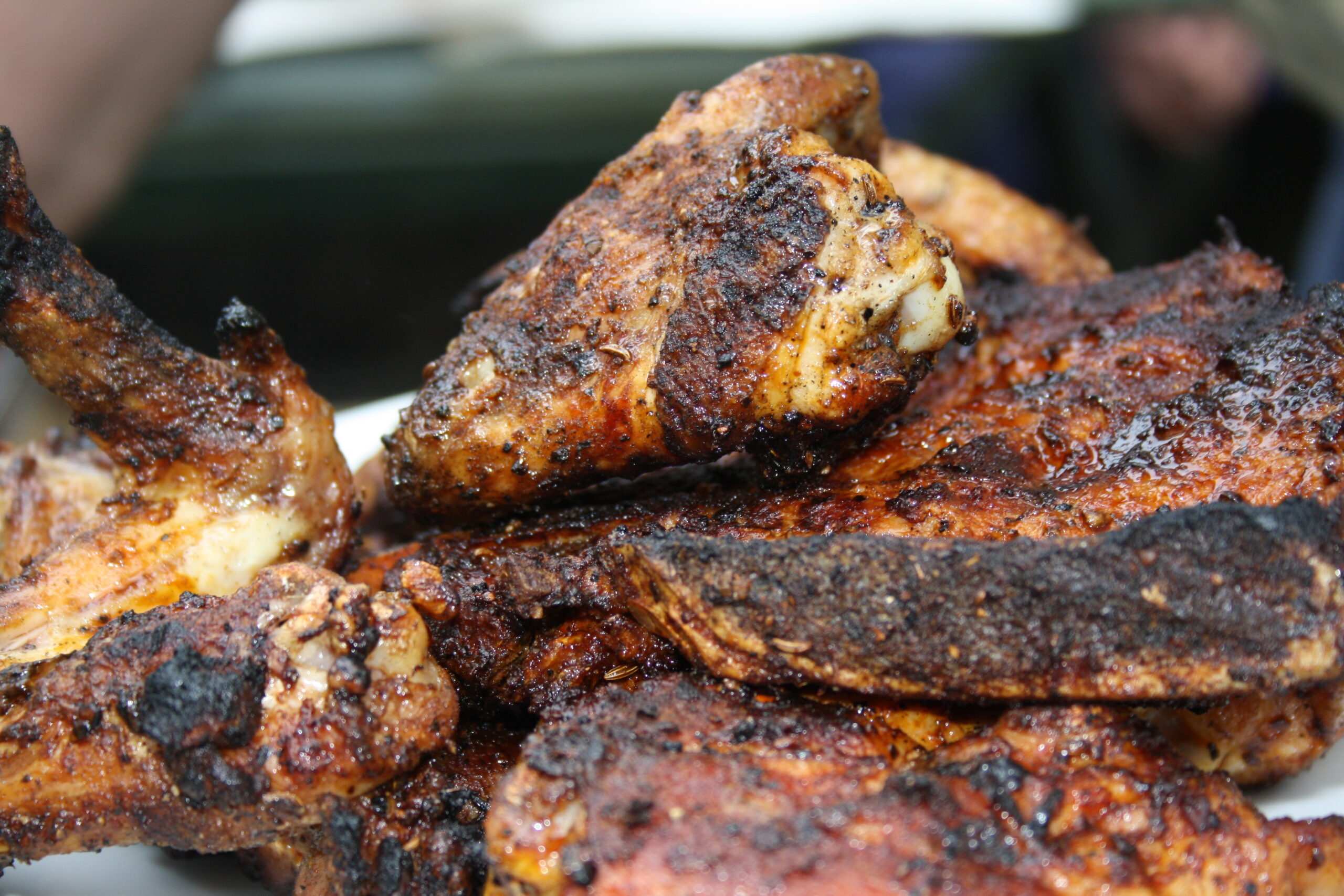
Six chicken thighs, browned in three identical pans, three at a time, all from the same tray and all cooked to the same color. Then half a cup of dry white wine into the first pan, half a cup of chicken stock into the second, and a quarter cup of white wine vinegar cut with a quarter cup of water into the third. Everything else held constant: same shallot, same reduction target, same two tablespoons of cold butter at the end.
The three sauces did not taste like variations on one theme. One was aromatic and slightly sharp with a thin body. One was round, glossy and thick enough to coat a spoon, and tasted mostly of chicken. One was bright to the point of aggression and needed a third more butter to be edible.
The reason is that the three liquids are doing different jobs. One is a solvent, one is an acid, one is a source of body. Below: what each pulls off the pan, how differently they reduce, the combinations that outperform any of them alone, and the practical safety points around alcohol in a hot pan and finished sauces left sitting.
- Wine: dissolves aroma compounds water cannot reach; thin body; needs real reduction
- Stock: adds gelatin and body; mildest flavor change; the most forgiving
- Vinegar: strongest flavor shift per spoonful; must be diluted; concentrates fast
- Working volume: half a cup per two portions, reduced to about three tablespoons
- Best single choice for a beginner: stock, because it is nearly impossible to overshoot
- Best combination: a quarter cup of wine reduced first, then a quarter cup of stock
- Never: pour alcohol from the bottle into a pan sitting over a live flame
One chicken, three pans, one variable
Holding everything constant matters more than it sounds, because most comparisons of this kind change the liquid and the cooking time and the fat at once. The thighs were the same weight, the pans were the same twelve-inch stainless, the burner setting was identical, and each sauce was reduced by eye to the same coating consistency rather than for the same number of minutes.
That last decision is the important one. Timing them equally would have made the comparison meaningless, because the three liquids concentrate at different rates and would have finished at different thicknesses.
The vinegar pan needed dilution before it could be part of the test at all. Half a cup of straight vinegar reduced to three tablespoons is not a sauce; it is a corrosive. Cutting it with an equal volume of water put it on comparable footing.
What the fond gives up, and what needs help getting it out
The brown layer welded to the pan is mostly coagulated protein, browning polymers and caramelized sugars, and the bulk of it is water-soluble. Plain water lifts it in about fifteen seconds, which is why a sauce made with nothing but water and fond still tastes strongly of the meat.
What water does not lift is the fraction of aroma compounds that are more soluble in fat or in alcohol than in water. Those are a minority of the total and they are heavily represented among the compounds people describe as roasted, nutty and complex.
So the choice of liquid is not about whether the fond comes off. It comes off regardless. The choice is about what else comes with it, and what the liquid itself contributes on the way.
Alcohol dissolves compounds water cannot reach
Ethanol is a small molecule with both a water-friendly and a fat-friendly end, which makes a wine-and-water mixture a better solvent than water alone for a whole class of aroma compounds. That is the mechanical reason a wine deglaze smells more complicated than a water one.
It also changes how aroma reaches your nose. Alcohol evaporates faster than water and carries volatile compounds up with it, which is why a pan of reducing wine fills a kitchen and a pan of reducing stock does not.
The cost is that wine brings its own acid and tannin, and both concentrate as the liquid reduces. A wine that tasted balanced in a glass can read sour and astringent at a quarter of its original volume. Dry, unoaked and moderately acidic is the safe category; anything sweet, heavily oaked or very tannic gets worse as it cooks down.
Acid does something different, and it is not just brightness
Acetic acid is the working component of vinegar, and it operates on the whole sauce rather than only on the fond. It sharpens the perception of salt, cuts through fat so that a butter-mounted sauce reads lighter than it is, and lifts flavors that read flat.
It is also the least forgiving of the three because it concentrates rather than mellowing. Some acetic acid does evaporate during a simmer, but far less than people assume, and the reduction concentrates what remains faster than the evaporation removes it. A vinegar sauce that tastes correct at half a cup can be undrinkable at three tablespoons.
The way to use it is as a component rather than as the whole liquid. Deglaze with something else and finish with a teaspoon of vinegar off the heat, where it keeps its aroma and does not get concentrated. If vinegar is the deglazing liquid, dilute it at least by half with water or stock, and taste before the final reduction rather than after.
Gelatin brings body rather than flavor
A homemade stock that sets in the refrigerator carries dissolved gelatin, and gelatin is what makes a reduction thicken and cling without any starch. That is the entire difference between a sauce that coats the back of a spoon and one that runs off it.
Reduce a gelatinous stock and the viscosity climbs steeply near the end, which is both useful and a warning: the window between coating and gluey is short. Reduce a supermarket carton and it thickens hardly at all, because there is very little gelatin in it to concentrate.
This is why stock is the most forgiving of the three. It contributes body, its flavor is already compatible with whatever browned in the pan, and there is no acid or alcohol edge waiting to appear at the end. A roast chicken that leaves a pan of fond and a cup of good stock needs nothing else.
Deglazing liquid comparison, three pans tasted side by side

| Dry white wine | Chicken stock | Vinegar, cut 1:1 | |
|---|---|---|---|
| Time to reduce to 3 tbsp | about 2 minutes | about 3 minutes | about 2.5 minutes |
| Body before butter | thin, watery | syrupy, clings | thin |
| Body after butter | light, glossy | thick, coating | light, needed more butter |
| Dominant flavor | the wine, then the pan | the pan, then the chicken | the acid, then the pan |
| Aroma while cooking | strong, fills the room | mild | sharp, briefly unpleasant |
| Butter needed | 2 tbsp | 1.5 tbsp | 3 tbsp |
| Room to season afterward | moderate | large | almost none |
| Where it fails | sour if the wine was wrong | flat if the stock was weak | harsh if reduced too far |
The row worth dwelling on is the last one but one. A stock-based sauce leaves you room to add acid, herbs, mustard or a spoon of cream at the end. A vinegar-based one has already used up most of its adjustment range before you get there.
Reduction rates are not the same across the three
Wine reduces fastest at the start, because ethanol boils lower than water and leaves early. That is why a pan of wine seems to disappear in the first thirty seconds and then slows down: what is left is mostly water, acid and dissolved solids.
Stock reduces at a steady rate and then appears to stall, which is the gelatin raising the viscosity and slowing evaporation from the surface. That is the point to start watching, because it goes from correct to sticky in under a minute.
Diluted vinegar behaves like water for most of the way and then turns sharply harsh at the end. In all three cases the honest measure is the spoon, not the clock: drag it across the base and stop when the trail holds for about a second before closing.
How much alcohol is left after a simmer
The idea that alcohol burns off instantly does not survive contact with the published retention figures. Adding alcohol to a boiling liquid and immediately taking the pan off the heat leaves the large majority of it behind. Flaming it removes rather less than most people expect.
Time and surface area are what actually drive it off. A sauce simmered fifteen minutes retains a substantial fraction, half an hour rather less, and it takes a couple of hours of simmering to get down to a trace. A quick two-minute pan reduction sits at the high end of that range.
For most people that is a matter of flavor rather than anything else, since the quantities involved in a two-portion sauce are small. It is worth knowing if you are cooking for someone who avoids alcohol entirely, in which case stock, cider, tea or a non-alcoholic wine is the straightforward answer rather than a longer simmer.
The half-and-half combinations that beat any single liquid
Wine then stock. A quarter cup of wine reduced almost to nothing, then a quarter cup of stock. You get the wine’s solvent effect and aroma without its thinness, and the gelatin arrives afterward to carry it. This is the standard restaurant sequence and it is better than either liquid alone.
Stock with vinegar at the end. Deglaze and reduce with stock, then a teaspoon of sherry or wine vinegar off the heat. All of the acid’s lift, none of its concentration problem.
Cider then stock. Hard or fresh cider brings sugar as well as acid, so it reduces to something closer to a glaze. It suits pork and duck, where a little sweetness belongs. A fruit-and-fortified-wine reduction is the same idea taken further.
Vermouth alone. The one wine that works as a solo deglaze without a stock backup, because it is aromatized and slightly bitter and does not go flat when reduced. It also keeps for months open in the refrigerator, which dry white wine does not.
Volume, timing, and the pan off the heat
Half a cup of liquid per two portions is the working figure across all three. Less and the reduction is over before the fond has dissolved. More and you are still boiling three minutes later while the meat goes cold on the plate.
Take the pan off the burner before pouring, particularly with wine or spirits. A screaming hot pan flashes a good part of the liquid into steam before it reaches the metal, which wastes it and puts a cloud of alcohol vapor over an open flame.
Then scrape while the pan is still off the heat, using a flat-edged wooden spoon into the corner where the base meets the wall. Fifteen seconds is enough. Return the pan to medium-high only once the brown has lifted, so nothing scorches in the interval. Sticky glazed thighs leave the most fond of anything in this category, and also the most sugar, so watch the color.
Twelve liquids, ranked by what they add
| Liquid | Body | Acid | Aroma | Goes best with |
|---|---|---|---|---|
| Gelatinous homemade stock | high | none | low | anything at all |
| Dry white wine | none | medium | high | chicken, fish, pork |
| Dry vermouth | none | medium | very high | chicken, mushrooms, fish |
| Red wine | none | medium | high | beef, lamb, duck |
| Hard cider | none | medium | medium | pork, sausage, chicken |
| Beer, pale | low | low | medium, can turn bitter | sausage, onions, pork |
| Sherry, dry | none | low | very high | mushrooms, chicken, shellfish |
| Wine vinegar, diluted | none | very high | medium | rich cuts, liver, cabbage |
| Citrus juice, diluted | none | high | high | fish, chicken, vegetables |
| Carton stock | low | none | low | anything, with help |
| Strong tea | none | low | medium, tannic | duck, game, mushrooms |
| Plain water | none | none | none | anything, and better than skipping the sauce |
The bottom row is not a joke. Water plus fond plus cold butter plus a squeeze of lemon is a complete sauce, and it is a better outcome than putting the pan in the sink because there was no wine open. Lemon and chicken get along on that basis alone.
Heat, flame, and holding a finished sauce safely
Alcohol vapor over a gas burner ignites easily, and a pan that flares is startling rather than dangerous only if you have set it up that way. Take the pan off the heat before pouring, pour from a measuring cup rather than from the bottle, keep your face and sleeves back, and have a lid within reach. If it does catch, slide the lid over the pan and turn off the burner. Never pick the pan up and never use water.
The other risk in this whole sequence is the resting plate. Poultry needs to reach 165 degrees at the thickest part, and the juices that collect under it should go into the sauce while it is still simmering, not stirred in after the pan is off the heat. Use a clean plate for the cooked meat rather than the one the raw pieces came on, and wash anything the raw poultry touched.
Butter-mounted sauces do not hold. They break on reheating and they are meant to be made last and served immediately. If a sauce has to wait, hold the reduction warm and add the butter at the table end, and refrigerate anything left over within two hours rather than leaving the pan on the stove.
Three liquids, three jobs. Pick the one whose contribution the dish is missing, and if the answer is not obvious, use stock and put the acid in at the end.
Frequently Asked Questions
Does the wine have to be good?
It has to be drinkable, which is a lower bar than good. Reduction concentrates faults, so a wine that is already sour, oxidized or heavily oaked gets worse rather than better. A dry, unoaked white or a medium-bodied red at a modest price is the right category, and dry vermouth is the practical answer for people who do not want an open bottle going off.
Can I deglaze with milk or cream?
Cream works and behaves differently: it does not really deglaze so much as dilute, and it needs to go in after the fond has been lifted by something else. Milk is a poor choice because the proteins curdle in an acidic or very hot pan. Use water or stock first, then finish with cream if you want it.
Why did my vinegar sauce taste like salad dressing?
Too much acid, too far reduced, or not enough fat to balance it. Cut vinegar at least half with water or stock before it goes in, stop the reduction earlier than you would with wine, and be prepared to use more butter at the end. Better still, keep the vinegar for the last teaspoon off the heat.
Is a nonstick pan really useless for this?
For deglazing, mostly. The coating exists to keep proteins from bonding to the surface, so there is very little fond to lift. If a nonstick pan is what you have, brown the meat in it anyway and expect a lighter sauce, or finish the browning in a stainless pan for the last two minutes.
How much sauce should half a cup of liquid make?
About a third of a cup after reduction and butter, which is two generous spoonfuls each for two people. Scale by increasing the liquid rather than the butter: three-quarters of a cup for four portions and one cup for six, with the butter going up by half a tablespoon at each step rather than doubling.