The Cold Pan Method
Prep: 20 minutes | Cook: 25 minutes | Rest: 10 minutes | Serves 4
Place the duck breast skin-side down in a cold pan. Do not preheat. Turn the burner to medium-low. Walk away.
That sequence of instructions contradicts nearly everything most home cooks have been taught about searing meat. We are trained to get the pan screaming hot, to wait for the oil to shimmer, to listen for the aggressive sizzle that signals contact. With duck breast, all of that is wrong. The cold-start method — championed by J. Kenji Lopez-Alt in The Food Lab and practiced in every serious French kitchen from Daniel Boulud’s in New York to bistros along the Left Bank in Paris — exists because duck breast carries a subcutaneous fat layer between five and eight millimeters thick. That fat needs to render slowly. If you drop the breast into a hot pan, the exterior proteins seize immediately, trapping the fat beneath the skin like a sealed envelope. The result is rubbery, chewy, and deeply disappointing.
A cold start changes everything. As the pan temperature climbs gradually from room temperature to roughly 300°F over twelve to sixteen minutes, the fat liquefies at its own pace. The collagen matrix breaks down. The skin compresses, thins, and crisps into something that shatters when you bite through it — glassy, golden, almost brittle. The rendered fat pools in the pan, and you spoon it out periodically into a heat-safe bowl. Save it. That fat is, ounce for ounce, the most valuable cooking medium in your kitchen.
Understanding Duck Fat
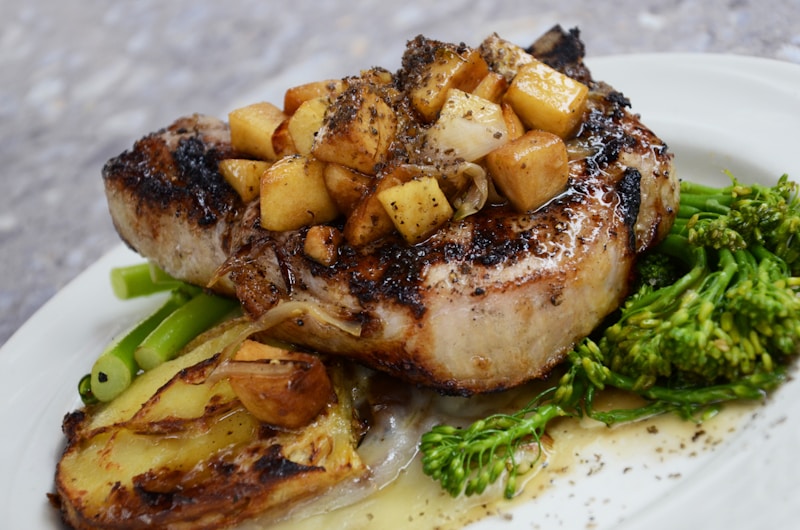
Duck fat is composed primarily of monounsaturated oleic acid — the same fatty acid that gives olive oil its health reputation. Its smoke point sits around 375°F (190°C), which makes it stable for sautéing and roasting. But the real reason chefs prize duck fat has nothing to do with health. It has to do with flavor. Duck fat carries a richness that butter cannot replicate and an earthiness that olive oil does not possess. Potatoes roasted in duck fat develop a crust that is categorically different from potatoes roasted in any other medium — deeper, more savory, faintly sweet.
A single recipe yields approximately three to four tablespoons of rendered fat. Strain it through a fine-mesh sieve into a glass jar, seal, and refrigerate. It keeps for three months in the fridge, six months in the freezer. Use it for roasting root vegetables, enriching scrambled eggs, sautéing greens, or making confit. Thomas Keller has called it liquid gold, and he is not exaggerating. The duck breast you are about to cook is, in a sense, two recipes in one: the meat itself and the fat it leaves behind.
The Score Pattern
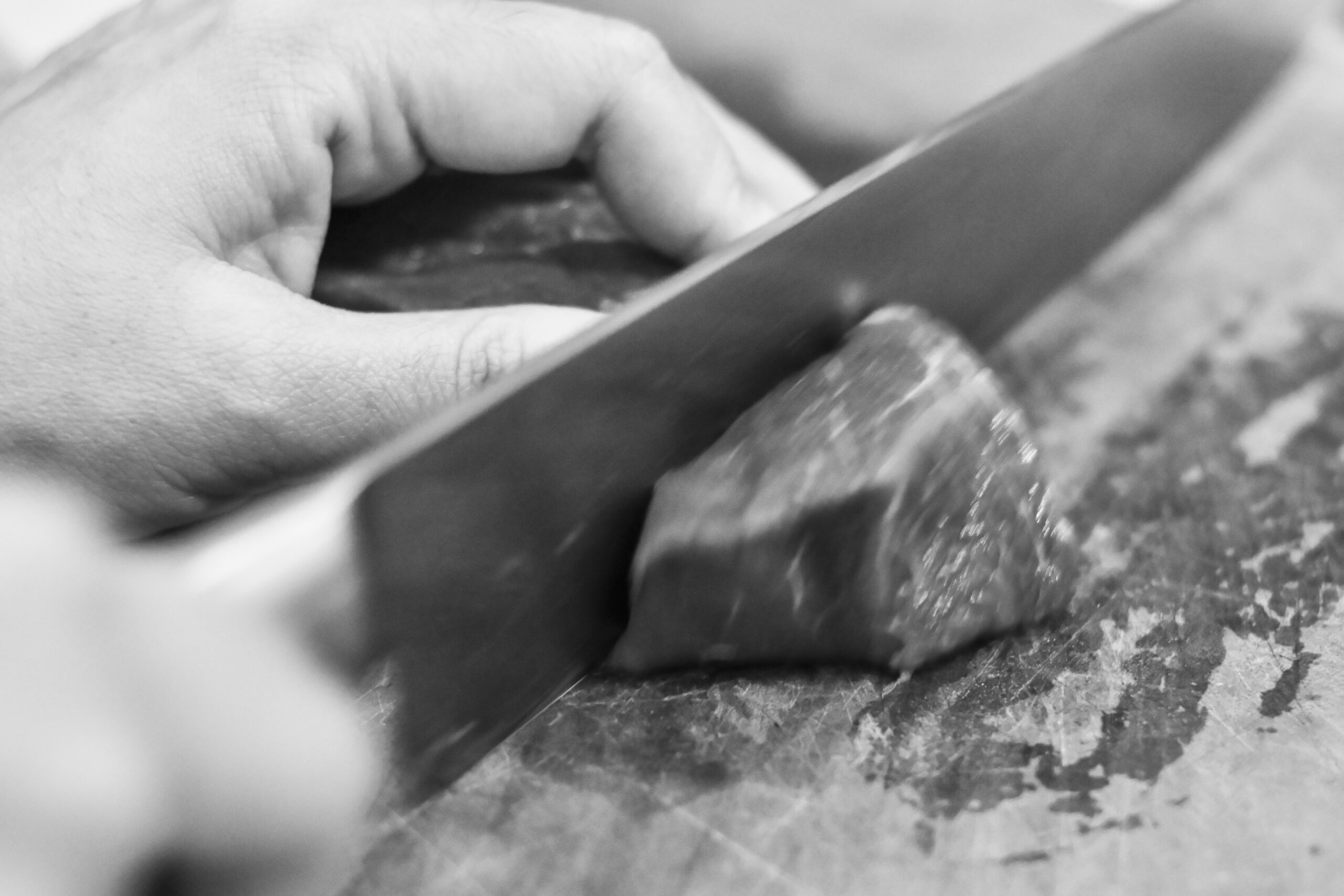
Before the duck touches the pan, you score the skin. This is not decorative. The crosshatch pattern serves a precise mechanical function: it increases the surface area of the fat layer exposed to heat, dramatically accelerating rendering. Without scoring, the fat has to melt its way out through intact skin — a slow, inefficient process that often leaves pockets of unrendered fat even after the skin looks done.
Use a very sharp knife — a utility knife, a paring knife, or even a fresh razor blade. Cut parallel lines roughly one-quarter inch apart, angling the blade at approximately 30 degrees from vertical so that each cut passes through the full depth of the fat layer (typically one-quarter to one-half inch thick) without piercing the red meat beneath. Rotate the breast 90 degrees and repeat, creating a grid of small diamond shapes across the entire surface. Each of those diamonds will crisp individually during rendering, producing the ridged, tile-like texture that defines properly cooked duck breast.
A tip from the butchers at Fleisher’s Craft Butchery in New York: if the fat cap is soft and the knife tears rather than cuts, place the breast in the freezer for fifteen to twenty minutes before scoring. The firmed fat holds its shape under the blade, allowing clean, even incisions.
Internal Temperature Guide
| Doneness | Pull Temp | After Rest |
|---|---|---|
| Rare | 125°F / 52°C | 130–133°F / 54–56°C |
| Medium-Rare | 130–135°F / 54–57°C | 138–142°F / 59–61°C |
| Medium | 140°F / 60°C | 145–150°F / 63–66°C |
Use an instant-read thermometer — a ThermoWorks Thermapen is the industry standard — inserted from the side into the thickest part of the breast, avoiding the fat layer. Duck breast is a red meat, anatomically similar to beef tenderloin, with high myoglobin content. It is best served pink. Cooking past medium renders it dry, tough, and liver-flavored. Medium-rare is the standard doneness recommended by the French Culinary Institute and virtually every professional chef who works with duck.
Choosing Your Duck
Two breeds dominate the market. Moulard duck breasts — a cross between Muscovy and Pekin ducks, the same breed used for foie gras — weigh 14 to 18 ounces each and carry a thick, generous fat cap that provides a wide rendering window. Pekin breasts are smaller (6 to 8 ounces), leaner, and cook faster; if using Pekin, reduce the skin-side rendering time to 10 to 12 minutes and monitor temperature closely. Moulard is more forgiving and produces a more dramatic result. Both are available at Whole Foods, Wegmans, specialty butchers, and Asian grocery stores like H Mart and 99 Ranch. D’Artagnan and Maple Leaf Farms ship nationwide. Frozen performs identically to fresh — thaw in the refrigerator for 24 hours.
Ingredients
For the duck:
- 2 whole Moulard or Pekin duck breasts, 12–14 oz / 340–400 g each
- 1 teaspoon fine sea salt
- ½ teaspoon freshly ground black pepper
For the cherry port reduction:
- 1 tablespoon unsalted butter
- 2 medium shallots, finely minced
- 1 cup (240 ml) ruby port wine
- ½ cup (120 ml) low-sodium chicken stock
- 8 oz (225 g) fresh or frozen sweet cherries, pitted and halved
- 2 tablespoons balsamic vinegar
- 1 tablespoon honey
- 2 sprigs fresh thyme
- 1 tablespoon cold unsalted butter, for finishing
- Fresh thyme leaves and flaky salt for garnish
Method
- Score and season. Pat the duck breasts completely dry with paper towels. Score the skin in a crosshatch pattern at quarter-inch intervals, cutting through the full fat layer without piercing the meat. Season both sides with salt and pepper. For the crispiest possible skin, season 24 hours ahead and leave the breasts uncovered on a wire rack in the refrigerator — a dry-brining technique advocated by Thomas Keller in Ad Hoc at Home that dehydrates the skin surface overnight.
- Render skin-side down in a cold pan. Place the scored duck breasts skin-side down in a large, cold, dry stainless steel or cast iron skillet. No oil. Turn the heat to medium-low. Cook for 12 to 16 minutes without moving the breasts. You will hear a gentle sizzle begin within two to three minutes. Spoon out excess rendered fat periodically into a heat-safe bowl. The skin is done when it is uniformly deep golden and feels rigid to the touch, like a chip.
- Sear the meat side. Flip with tongs. Increase heat to medium. Sear for 3 to 4 minutes. Pull at 130–135°F (54–57°C) for medium-rare. Carryover will add another 5 to 8 degrees during rest.
- Rest. Transfer to a cutting board, skin-side up. Tent loosely with foil — loosely, not tightly, or steam will soften the crisp skin. Rest for a minimum of 8 minutes, ideally 10. Research published in the Journal of Food Science found that resting reduces juice loss by up to 40 percent compared to cutting immediately.
- Build the sauce in the same pan. Pour off all but one tablespoon of rendered fat. Add the butter. When it foams, add the shallots and cook for 2 minutes until softened. Add the port and thyme sprigs. Boil until reduced by half, about 4 to 5 minutes, scraping up all the fond. Add the chicken stock, cherries, balsamic vinegar, and honey. Simmer for 6 to 8 minutes until the cherries are soft and the sauce coats the back of a spoon.
- Finish and plate. Remove from heat. Discard the thyme sprigs. Swirl in the tablespoon of cold butter until incorporated — this is monter au beurre, the classical French technique that gives the sauce its velvety sheen. Slice each breast on a bias into half-inch slices. Fan across warm plates. Spoon the cherry port reduction over and around the meat. Garnish with fresh thyme leaves and flaky salt.
The Cherry Port Reduction
This sauce deserves its own discussion because it is not merely an accompaniment — it is the reason this dish exists in the repertoire of French bistro cooking. The combination of port wine and cherries appears on menus from Le Comptoir du Panthéon in Paris to Balthazar in New York, and for good reason: ruby port contains approximately 20 percent alcohol and 90 to 110 grams per liter of residual sugar, primarily fructose and glucose. As it reduces by half, the water and alcohol evaporate while the sugars concentrate, creating a natural glaze that requires no flour, no cornstarch, no thickening agent of any kind.
The cherries contribute malic and citric acid, which cut through the richness of the duck fat and prevent the sauce from tasting cloying. The balsamic vinegar adds another layer of acidity and a faint caramel depth. And the final tablespoon of cold butter, swirled off-heat until the sauce takes on a glossy, restaurant-quality sheen, is monter au beurre — the classical technique for finishing pan sauces that every line cook in France learns in their first year. Do not return the sauce to high heat after mounting the butter, or the emulsion breaks and the sauce turns greasy.
If you cannot find ruby port, Marsala wine is the closest substitute in terms of body and sweetness. A fruity Pinot Noir works too — add an extra teaspoon of honey to compensate for its lower sugar. For a non-alcoholic version, combine three-quarters cup unsweetened tart cherry juice with a quarter cup pomegranate juice and a tablespoon of balsamic. The sauce will be slightly thinner but still deeply flavorful.
On Dry-Brining
If you have the foresight to plan a day ahead, dry-brining transforms this dish from excellent to extraordinary. The night before cooking, season the scored breasts with salt, place them skin-side up on a wire rack set over a plate, and refrigerate uncovered. Two things happen simultaneously: the salt draws moisture from the skin surface through osmosis and then, over hours, migrates into the meat, seasoning it evenly throughout. Meanwhile, the circulating refrigerator air dehydrates the exterior of the skin. The result, the next day, is a breast that renders faster, crisps more dramatically, and tastes seasoned to the core rather than just on the surface. This is not optional technique for perfectionists. It is the single largest improvement you can make to the recipe with zero additional effort — just time.
Plating
Slice each breast on a sharp bias — roughly 45 degrees — into half-inch pieces. Fan the slices across a warmed plate so that each piece shows the contrast between the dark, glassy skin and the rose-pink interior. Spoon the cherry port reduction not just over the duck but around it, creating a pool of deep garnet sauce on the plate. A few whole cherries from the sauce, placed deliberately rather than dumped, add visual weight. Scatter fresh thyme leaves — just a few, not a garnish avalanche — and finish with a single pinch of flaky salt directly on the skin, where it will catch the light. The plate should look like something from a bistro, not a buffet: composed but not fussy, confident but not overwrought. Serve alongside roasted fingerling potatoes, creamy polenta, or a simple frisée salad dressed with walnut oil. Our slow cooker beef bourguignon makes a fine companion if you are building a full French menu, and a French onion soup with gruyère crouton is the ideal starter course before the duck.
Storage
Leftover sliced duck breast keeps in an airtight container in the refrigerator for up to three days. The cherry port reduction stores separately for up to five days. To reheat, bring the duck to room temperature for twenty minutes, then warm gently in a 300°F (150°C) oven for five to seven minutes — just enough to take the chill off without cooking further. Reheat the sauce in a small saucepan over low heat with a splash of stock to loosen it. To restore skin crispness, place slices skin-side up under a hot broiler for sixty to ninety seconds, watching closely. Whole unsliced breasts freeze well for two months. The rendered duck fat, strained and jarred, keeps refrigerated for three months.
For another special-occasion protein that uses a similar rendering principle, explore our roast leg of lamb, where the fat cap crisps and bastes the meat simultaneously.
Frequently Asked Questions
Why is scoring the duck skin so important?
Scoring creates channels for rendered fat to escape during cooking. Without those cuts, the thick layer of subcutaneous fat between the skin and the meat has nowhere to go, resulting in flabby, rubbery skin that never crisps properly. The crosshatch pattern also increases surface area exposed to the pan, which accelerates the Maillard reaction and produces a more evenly golden, crackling crust. Score through the fat layer but stop just before you reach the meat itself. You can feel the resistance change under your knife when you hit the protein. Cutting too deep allows juices to leak out and the breast to dry unevenly.
What are the target internal temperatures for different levels of doneness?
For rare duck breast, pull it from the pan at 120 to 125 degrees Fahrenheit (49 to 52 degrees Celsius). Medium-rare, the most commonly recommended doneness for domestic duck, targets 130 to 135 degrees Fahrenheit (54 to 57 degrees Celsius). Medium sits at 140 to 145 degrees Fahrenheit (60 to 63 degrees Celsius). Unlike chicken, duck breast is safe and best enjoyed at medium-rare because the dense, red-meat-like muscle fibers become tough and livery when cooked past medium. Always use an instant-read thermometer inserted horizontally into the thickest part of the breast for an accurate reading.
Why does the duck breast need to rest after cooking?
Resting allows the muscle fibers, which contract and tighten during cooking, to relax and reabsorb their juices. If you slice immediately, those juices pour out onto the cutting board instead of staying in the meat, leaving you with a dry, disappointing breast despite cooking it to the correct temperature. A minimum of eight to ten minutes of rest, loosely tented with foil, redistributes moisture evenly throughout the protein. The internal temperature will also rise another three to five degrees during this time from carryover cooking, so account for that when you pull the breast from the pan.
Can I substitute the rendered duck fat with another cooking fat?
You can, but you lose a layer of flavor. Duck fat has a uniquely rich, savory quality and a high smoke point of around 375 degrees Fahrenheit (190 degrees Celsius) that makes it exceptional for roasting and searing. For roasting vegetables alongside the duck, goose fat is the closest substitute. Clarified butter or ghee works well and provides a similar richness. Regular butter burns at lower temperatures, so it is not ideal for the initial sear. Avocado oil or grapeseed oil are neutral alternatives if you want a lighter dish. Save the rendered duck fat from this recipe in a glass jar in the refrigerator for up to three months and use it to roast potatoes, which is arguably the best possible use for it.
What is the best way to reheat leftover duck breast?
The key is low heat and patience. Bring the sliced duck breast to room temperature for about twenty minutes, then warm it in a 300 degree Fahrenheit (150 degree Celsius) oven for five to seven minutes. This gently warms the meat without pushing it past its original doneness. To restore the skin crispness, finish the slices skin-side up under a hot broiler for sixty to ninety seconds, watching them carefully the entire time since they can go from crisp to burnt in seconds. Reheating in a microwave works in an emergency but it softens the skin completely and can make the meat rubbery. The cherry port reduction reheats separately in a small saucepan over low heat with a splash of stock to loosen the consistency.
Sources
- Serious Eats — How to Cook Duck Breast — J. Kenji Lopez-Alt’s definitive guide to the cold-pan rendering technique.
- Bon Appétit — Pan-Seared Duck Breast — Additional technique notes from the BA test kitchen.
- USDA FoodData Central — Duck Breast, Meat and Skin (NDB 05139) — Nutritional data used for the per-serving estimates below.
Per serving (half a breast with sauce): approximately 485 calories, 32 g protein, 28 g fat, 22 g carbohydrates, 2 g fiber, 390 mg sodium. Values assume rendered fat is discarded, not consumed.
Health and safety note: The nutritional information above is estimated from USDA FoodData Central and standard ingredient databases. Actual values depend on duck breed, breast size, fat rendered and discarded, and preparation methods. Duck breast should be cooked to a minimum internal temperature of 130°F (54°C) as measured by an instant-read thermometer. This content is for informational purposes only and does not constitute medical or dietary advice. Individuals with specific health concerns, dietary restrictions, or food allergies should consult a qualified healthcare professional before preparing this dish.
Please note: Nutritional estimates in our recipes are derived from the USDA FoodData Central database and may vary based on specific brands and ingredient sizes. If you have food allergies, dietary restrictions, or medical conditions, consult a registered dietitian or healthcare provider before preparing this recipe. Always follow safe food-handling guidelines, including proper cooking temperatures for meat, poultry, fish, and eggs. Nothing in this article should be interpreted as medical, nutritional, or dietary advice.