The Thursday scramble is rarely about the turkey itself. It is about six things trying to happen in one kitchen with one oven, in the same four hours, because nothing got done ahead of it. A thanksgiving timeline that spreads real tasks across the preceding five days removes almost all of that pressure, without any of it depending on a slow cooker miracle or a shortcut ingredient.
The tasks below are placed on the specific day each one actually has to happen, not just whenever there was a free evening. A frozen turkey has a real thaw schedule that cannot be rushed. A dry brine needs days, not hours, to fully season the meat. Pie dough rests better the longer it sits. None of this is negotiable scheduling; it follows from what the ingredients themselves need.
What follows also flags the refrigerator space each stage needs, since that is the part that actually derails most kitchens: a full turkey thawing, a brining bird, and four days of pre-made sides all competing for the same three shelves.
- Saturday: shop for the turkey and shelf-stable pantry items
- Sunday: begin thawing if frozen, or dry brine if already thawed
- Monday: make and chill pie dough, prep stock from turkey parts
- Tuesday: continue dry brine, make cranberry sauce, prep vegetables
- Wednesday: bake pies, assemble casseroles, make gravy base
- Thursday: roast the turkey, reheat sides, carve, serve
Saturday: buy before the store gets picked over
Saturday is a full shopping day, four days ahead of the meal itself, timed specifically so a frozen turkey has the maximum runway to thaw safely in the refrigerator. Waiting until Monday or Tuesday to buy a frozen bird is the single most common cause of a Thursday morning turkey that is still partly frozen at the center.
This is also the day for every shelf-stable item: canned pumpkin, stock cubes or boxed stock as backup, flour, sugar, spices, and anything else that does not need refrigerator space yet. Buying it now means Tuesday and Wednesday’s shopping trips, if any are needed, are short and focused on fresh produce only.
A fresh, never-frozen turkey does not need this early a start, but buying it Saturday still secures the size needed before smaller or larger birds sell out closer to the holiday.
Sunday: the turkey goes on dry brine
A frozen turkey needs roughly 24 hours of refrigerator thawing time for every four to five pounds of weight, which means a 14-pound bird bought frozen on Saturday needs to go into the refrigerator to thaw no later than Sunday to be fully thawed by Wednesday. This math is the entire reason the Saturday shopping trip exists.
A bird that is already thawed, whether bought fresh or thawed in advance, goes straight onto a dry brine this same day. A tablespoon of kosher salt per five pounds, worked under the skin and over the surface, then an uncovered rest on a rack in the refrigerator, starts the three-day process that produces both seasoned meat and crisp skin by Thursday.
Raw poultry sitting in the refrigerator, whether thawing or brining, needs its own dedicated space away from anything eaten raw or lightly cooked, and any juices that escape onto a shelf should be cleaned immediately rather than left until the bird moves on Thursday.
Monday: pie dough and the first stock
Pie dough benefits from resting well past the minimum hour most recipes list, and dough made Monday for a Wednesday bake has had two full days to fully relax, which shows up as a crust that rolls out more evenly with less shrinkage. Wrapped flat and refrigerated, it holds fine for the two days between now and baking.
If the turkey came with a neck and giblets, or if a separate batch of wings or a turkey neck was bought specifically for this purpose, Monday is a good day to simmer a stock, following the same low, slow logic behind any long-simmered bone broth. A stock made this early cools, gets refrigerated, and becomes the base for both gravy and any stuffing that calls for liquid.
This is also the day to confirm oven and counter space for Thursday itself, since realizing on Wednesday night that two dishes need the same oven rack at the same temperature is a problem better solved four days in advance.
Tuesday: cranberry sauce and vegetable prep
Cranberry sauce is one of the few Thanksgiving components that genuinely improves with a few days of rest, since the set firms up and the flavors round out past the first day. Making it Tuesday for Thursday service uses that time deliberately rather than by accident.
Root vegetables for roasting, or for a casserole, can be peeled, cut, and stored submerged in water in the refrigerator two days ahead without meaningful quality loss, which turns Wednesday’s prep list from a full vegetable-cutting session into a quick drain-and-season step.
Tuesday is also the second full day of the dry brine continuing to work, and a good day to double-check that the turkey is sitting uncovered on its rack, since a bird accidentally covered partway through loses much of the surface-drying effect the brine depends on for crisp skin.
Wednesday: bake what can be baked, refrigerate the rest
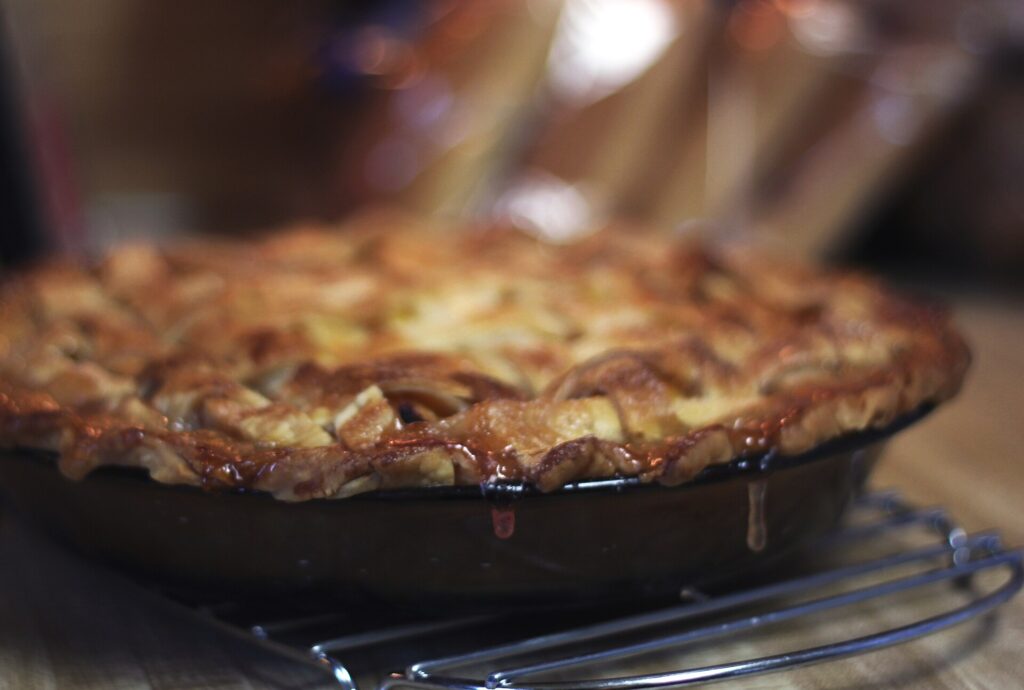
Pies bake fully and hold well overnight at room temperature or in the refrigerator, which makes Wednesday the day to get every pie done and out of the way before Thursday’s oven schedule fills up with the turkey and everything competing for space around it.
Casseroles that will be baked fresh on Thursday can be fully assembled Wednesday and refrigerated unbaked, covered tightly, ready to go straight into the oven the next day. Gravy base, built from Monday’s stock plus any drippings collected so far, can be started now and finished Thursday once the turkey’s own drippings are available to add.
Anything assembled and refrigerated raw, particularly a dish containing eggs or dairy, should stay below 40F until it goes into the oven Thursday, and should not sit out on the counter overnight under the assumption that a covered dish is automatically safe at room temperature.
Thursday: the day itself, working backward from serving time
| Time before serving | Task |
|---|---|
| 5 to 6 hours | turkey goes into the oven |
| 2 hours | casseroles and stovetop sides begin |
| 45 minutes | turkey comes out, begins resting |
| 30 minutes | gravy finished, sides reheated, table set |
| 0 | carve and serve |
Working backward from a fixed serving time, rather than forward from whenever cooking happens to start, is what actually keeps a multi-dish Thursday from turning into a scramble, since each task has a real deadline attached to the one thing that cannot move: the meal’s start time.
The thawing math, spelled out by weight
| Turkey weight | Refrigerator thaw time | Latest start for Thursday |
|---|---|---|
| 8 to 12 lb | 2 to 3 days | Monday |
| 12 to 16 lb | 3 to 4 days | Sunday |
| 16 to 20 lb | 4 to 5 days | Saturday |
| 20 to 24 lb | 5 to 6 days | Friday, the week before |
A turkey still even partly frozen at the center on Thursday morning is not a minor inconvenience; it means the bird cooks unevenly and can leave parts of the meat in the temperature range where bacteria grow fastest for longer than is safe. When in doubt about whether a bird is fully thawed, the cold-water method, submerging the wrapped bird and changing the water every 30 minutes, finishes the job faster than waiting it out in the refrigerator.
What actually goes wrong when the schedule collapses
The most common failure is not any single task going badly; it is every task landing on Thursday at once because nothing got moved earlier. A stock that could have simmered Monday competes for stovetop space with green beans on Thursday afternoon. A pie that could have baked Wednesday competes for oven space with the turkey.
The second most common failure is refrigerator space, not time. A full turkey thawing, four days of prepped sides, and a brining bird all need real shelf space simultaneously, and a refrigerator packed too tightly for air to circulate keeps food from cooling and staying cold evenly, which matters for anything containing dairy, eggs, or raw poultry.
Clearing out anything unnecessary from the refrigerator on Saturday, before the week’s ingredients start arriving, solves more Wednesday-night stress than any amount of additional recipe planning does.
A shorter version for a smaller Thanksgiving
A table of four to six people, using a smaller bird or a turkey breast instead of a whole bird, can compress this same schedule into three days rather than five, since a smaller cut thaws and brines faster and there are fewer sides to prep ahead. The order of operations stays the same; only the calendar shrinks.
What does not shrink, regardless of table size, is the thawing math and the dry brine’s minimum time. Both are governed by the size of the specific piece of meat, not by how many people are eating it.
The full Thanksgiving timeline at a glance
| Day | Main tasks | Fridge space needed |
|---|---|---|
| Saturday | shop for turkey and pantry staples | none yet |
| Sunday | begin thaw or start dry brine | full shelf for the bird |
| Monday | pie dough, stock from parts | dough disk, stock pot |
| Tuesday | cranberry sauce, vegetable prep | containers for cut vegetables |
| Wednesday | bake pies, assemble casseroles | covered casseroles, cooling pies |
| Thursday | roast, reheat, carve, serve | drippings, leftovers post-meal |
Laid out this way, the Thanksgiving timeline is really just six ordinary kitchen tasks distributed across five days instead of piled onto one, with the refrigerator space column being the part most planning guides skip and the part that actually determines whether the schedule holds together.
A household juggling a smaller refrigerator can compress Monday and Tuesday’s tasks into a single day if needed, since neither the stock nor the cranberry sauce is time-sensitive to a specific day the way the turkey’s thaw and brine schedule genuinely is.
None of these five days requires more total cooking time than a rushed single Thursday does. It requires the same tasks placed on the days that actually fit them, which is the entire difference between a calm morning and a kitchen with four things boiling over at once.
Frequently Asked Questions
What if I forgot to start thawing my turkey on time?
Use the cold-water method: keep the turkey in its original wrapping, fully submerged in cold water, changing the water every 30 minutes. This thaws a bird roughly four times faster than refrigerator thawing, though it requires closer attention and cannot be left unattended overnight.
Can I dry brine a turkey for longer than three days?
Up to four days is generally fine and can improve results slightly further, but beyond that the texture can start to firm up more than intended. Three days is the sweet spot for most whole birds in the 12 to 16 pound range.
Is it safe to leave prepped vegetables sitting in water in the fridge for two days?
Yes, for most root vegetables like potatoes and carrots submerged fully in cold water and refrigerated, this prevents browning and holds texture well for up to 48 hours. Change the water once if it becomes cloudy.
Can I make the whole meal a day ahead and just reheat everything Thursday?
Most sides reheat well, but the turkey itself loses meaningful quality reheated compared to roasted fresh, and the two-hour room-temperature limit for cooked food applies to any dish cooling before refrigeration, so a full day-ahead turkey needs careful, fast cooling before it goes in the fridge.
How much extra refrigerator space does this schedule actually need?
More than most kitchens have by default. Clearing out non-essential items on Saturday, and considering a cooler with ice for drinks or overflow items, frees up the shelf space a thawing or brining turkey and several days of prepped sides genuinely require.