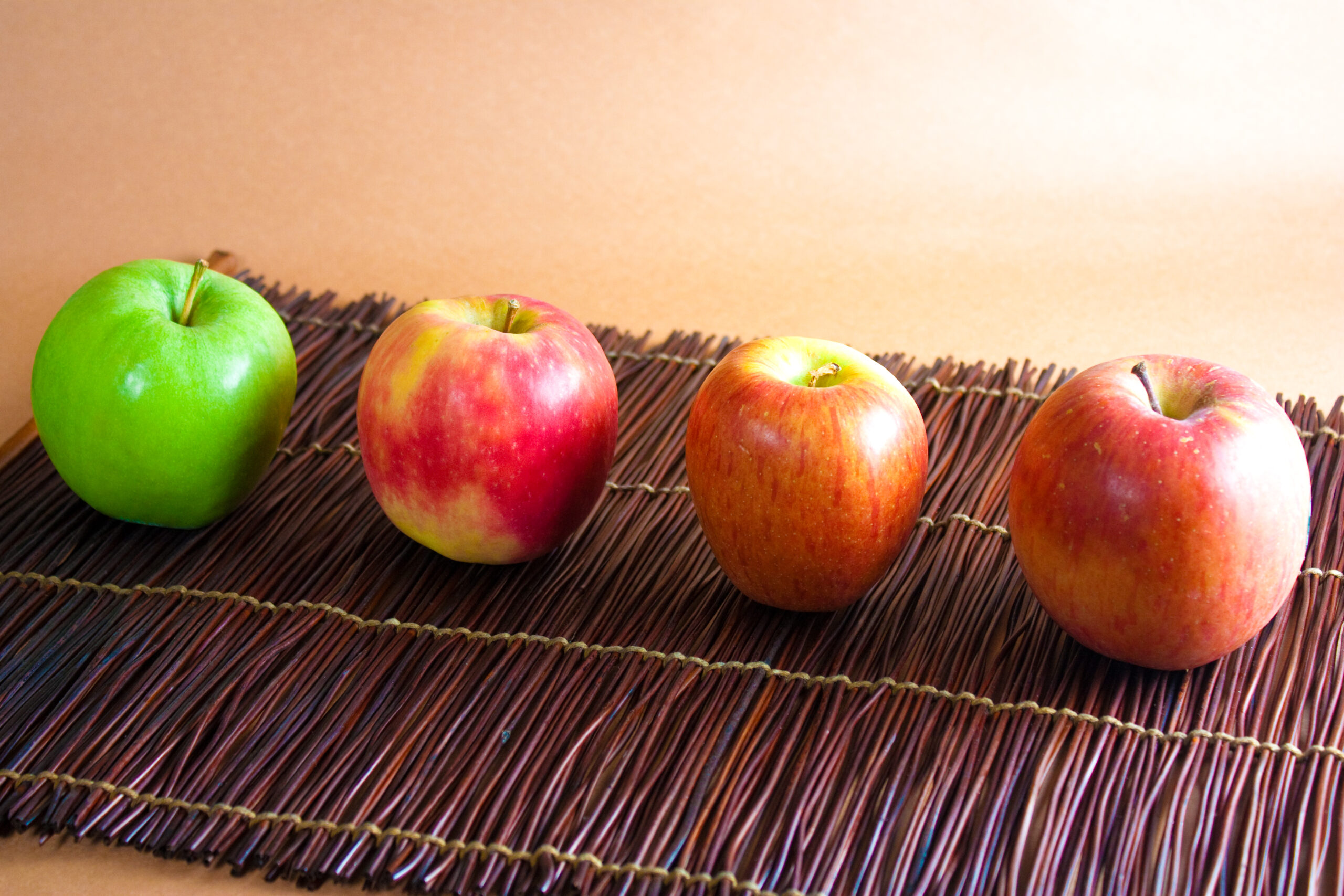
Nine apples, halved, cored, cut side up on one sheet pan, no sugar and no fat, into a 375 degree oven for thirty-five minutes. When the pan came out, three of them were still recognizably apple halves with a bit of give. Three had sagged into soft mounds. Three had lost their shape entirely and were sitting in their own liquid.
The market bin does not tell you which is which. Signs say sweet, tart, crisp, good for snacking, and none of those words predicts what happens in an oven. A Honeycrisp and a McIntosh both eat well raw and behave like two different fruits at 375.
What follows is which varieties held, the structural reason for the split, the acid-and-calcium step that firms up the soft ones, and where a blend beats any single apple. Cut size, pan depth and the water problem in a pie filling are covered too, because they change the result as much as the variety does.
- Test conditions: halved, cored, 375F, 35 minutes, nothing added
- Held their shape: Granny Smith, Braeburn, Northern Spy
- Softened but stayed intact: Honeycrisp, Pink Lady, Golden Delicious
- Collapsed: McIntosh, Cortland, Jonagold
- What decides it: pectin structure and acidity, not sweetness or crunch
- The firming step: 20 minutes at a low temperature before the real bake
- The blend worth using: two parts firm to one part collapsing
Nine varieties, one temperature, one pan
The point of testing them bare was to remove every other variable. No sugar to draw out water, no butter to conduct heat, no crust to trap steam, no spice to distract from texture. Just fruit and heat.
The three that held sat up on the pan with sharp edges and browned skins, and a fork went in with resistance. The three in the middle group had rounded off and slumped an inch but kept their outline and could still be lifted with a spatula in one piece.
The three that failed had spread outward, split along the skin, and released enough juice to pool around them. A spatula lifted purée. That is not a defect; those apples are the right choice when sauce is what you want. It is a defect if you were planning to see slices in the finished dish.
Cell walls, pectin, and what collapse actually is
An apple is roughly eighty-five percent water held inside cells that are glued to one another by pectin in the middle lamella. Firmness in raw fruit is those cells being full and stuck together. Collapse is the glue giving way.
Heat does two things at once. It weakens the cell membranes so water leaks out, which is why any cooked apple gives up liquid. And it degrades pectin, which lets the cells slide apart instead of holding as a block. A variety with sturdier, more cross-linked pectin resists the second process for longer.
The temperature where this becomes visible is above about 180 degrees at the center of the fruit, which any apple in a 375-degree oven reaches within twenty minutes. The difference between varieties is entirely about how fast the breakdown runs after that point, not about whether it starts.
The best apples for baking, ranked by what survived 375F
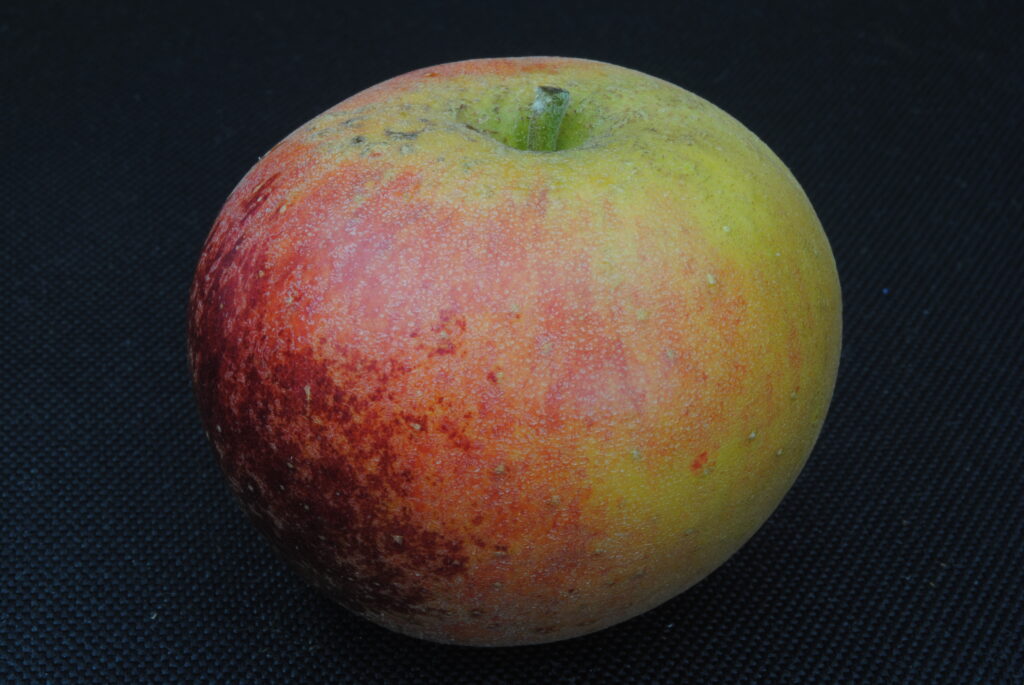
| Variety | Shape after 35 min | Acidity | Sweetness | Use it for |
|---|---|---|---|---|
| Granny Smith | fully intact, firm | very high | low | pie, tarts, anything sliced |
| Braeburn | fully intact, slight give | high | medium | pie, galettes, baked halves |
| Northern Spy | fully intact | high | medium | the traditional pie apple where it grows |
| Pink Lady | intact, softened | high | high | tarts, roasting alongside pork |
| Honeycrisp | intact, quite soft, very wet | medium | high | galettes, crisps, needs more thickener |
| Golden Delicious | intact, rounded | low | high | cakes, blends, anything sweetened lightly |
| Jonagold | partly collapsed | medium | high | blends, crisps, sauce with texture |
| Cortland | collapsed | high | medium | sauce, and raw salads, since it browns slowly |
| McIntosh | fully collapsed | high | medium | sauce, butter, apple cake batters |
Two entries in that table are worth reading twice. Honeycrisp holds together but releases a startling amount of liquid, so a pie built on it alone runs. And Cortland resists browning better than almost anything else once cut, which makes it excellent raw and useless when you want slices to survive.
Why a Cortland goes to sauce and a Braeburn does not
Both are firm and crisp in the hand, so the difference is not something you can feel raw. It sits in the cell wall chemistry: the arrangement and degree of cross-linking in the pectin, which varies by cultivar and is not something breeding for eating quality selects for.
Cell size plays a part too. Varieties with larger cells and more air space between them tend to break down faster, since there is less structure per unit of volume holding things together. It is also why a mealy apple, which is one where the cells have already begun separating in storage, turns to mush faster than a fresh one of the same variety.
Storage time is the variable people forget. An apple in March that has been in controlled storage since October has already lost some structure, and it bakes softer than the same variety bought in October. If a reliable pie apple fails you in spring, the fruit may simply be old rather than the wrong kind.
Acidity is the second variable, and it works two ways
Apples are acidic mainly because of malic acid, and the amount differs by cultivar and drops as the fruit ripens and sits in storage. That acidity does more than shape the flavor.
Pectin degrades more slowly in acidic conditions than in neutral ones at baking temperatures, so a high-acid apple keeps its structure longer for chemical reasons on top of whatever its cell walls are doing. That is part of why Granny Smith and Braeburn sit at the top of the table and low-acid varieties do not.
The practical use is a tablespoon of lemon juice tossed through four cups of sliced apples. It slows the softening slightly, it slows the browning while you work, and it sharpens the flavor of a sweet variety that would otherwise taste flat under sugar. It is a small effect on texture and a large one on taste.
Calcium: the trick that firms up a soft apple
Pectin cross-links with calcium ions, and more cross-links means a stiffer network. Food processors use this deliberately, and a home cook can use a simplified version of the same thing.
The simplest form is a soak. Dissolve about a quarter teaspoon of food-grade calcium chloride, sold for canning and pickling, in two cups of cold water, and soak sliced apples for twenty minutes before draining and using them. They come out noticeably firmer after baking. Use a product labeled for food use, not a de-icing or laboratory grade, and keep to the quantity on the package, since too much reads bitter and salty.
A gentler version needs no additive at all. Hold the sliced fruit at a low temperature, around 130 to 140 degrees, for twenty to thirty minutes before the real bake. That window activates an enzyme naturally present in the fruit that prepares the pectin to bind with the calcium already there. In a home oven, the lowest setting with the door propped slightly, or a covered dish in a 140-degree water bath, gets close enough. It sounds fussy and it turns a collapsing variety into one that holds.
Sugar, salt, and the pre-macerating step
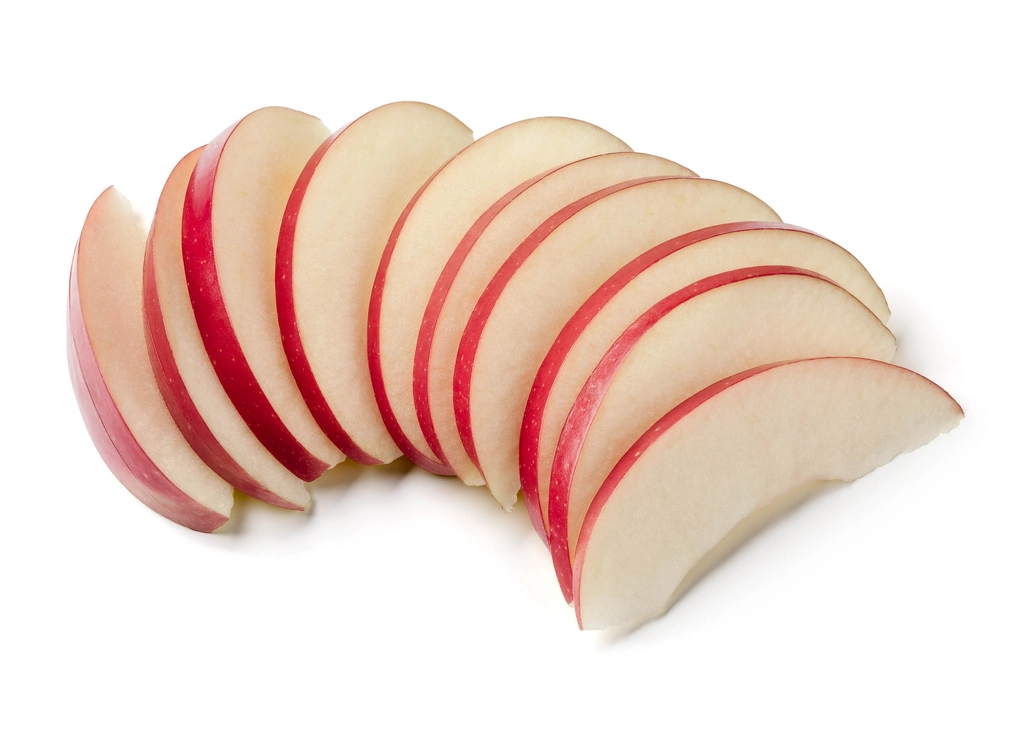
Sugar pulls water out of apple slices by osmosis, and it does that whether you plan for it or not. Sugar added to raw slices in a pie shell keeps pulling water for the entire bake, which is where a flooded pie comes from.
Toss the sliced fruit with the sugar and a pinch of salt, leave it in a colander over a bowl for thirty to sixty minutes, and a surprising amount of juice comes out. Four cups of apples commonly gives up a third to half a cup. Reduce that liquid in a small pan until it is syrupy and add it back, and you have concentrated apple flavor and a filling that does not run.
Salt belongs in the mix even in a dessert. A quarter teaspoon per pie makes the fruit taste more like itself and takes the flat edge off a low-acid variety. A classic double-crust pie improves more from these two steps than from any change of recipe.
Water: the pie filling problem nobody solves with flour
An apple filling releases liquid regardless of what thickener is in it, and the thickener only decides what that liquid looks like afterward. Flour makes it cloudy and pasty, cornstarch makes it clearer but breaks down with long baking and acid, and tapioca starch stays clear and holds up best under both.
Quantities scale with how wet the variety is. For four cups of a firm, drier apple such as Granny Smith, two tablespoons of tapioca starch is enough. For Honeycrisp, closer to three. If the fruit was macerated and the juice reduced first, cut those figures roughly in half.
The other route around the problem is to cook the filling before it goes in. Sauté the slices with the sugar for five to eight minutes, cool them completely, and fill the shell. The apples shrink in the pan instead of in the pie, which also fixes the gap that opens between a domed crust and a sunken filling. A free-form galette sidesteps most of this by letting the steam out at the top.
Blending, and the ratio worth using
Nobody has to choose. A filling made of two parts firm apple to one part collapsing apple gives you distinct slices held together by something closer to sauce, which is what most people picture when they think of a good pie and rarely get from a single variety.
Granny Smith with McIntosh is the classic pairing and it works because the two are at opposite ends of the table and both are widely available. Braeburn with Cortland does the same job with a rounder flavor. Northern Spy on its own is the exception that needs no partner, which is why the orchards that grow it are attached to it.
Keep the pieces the same size across the blend so they cook at the same rate. And do not stretch the ratio past one to one, or the soft fruit takes over and the whole thing reads as sauce with lumps in it.
Cut size and pan depth change the answer
A quarter-inch slice loses its structure faster than a half-inch one, simply because there is less of it. For a pie where you want visible pieces, cut half-inch wedges. For a cake batter or a crisp where the fruit should melt into the topping, go thinner.
Depth matters as much. Apples piled four inches deep in a dish steam in their own liquid, which softens everything from the middle outward regardless of variety. The same fruit spread two inches deep roasts, browns at the edges and holds better. If you want a deep-dish result, choose from the top three rows of the table and add a firming step.
Temperature is less of a lever than people expect. Between 350 and 400 degrees the ranking barely moves; the fruit just gets there faster. Below 325 the apples spend longer in the range where pectin degrades and come out softer, which is the opposite of what a low-and-slow instinct suggests. Savory applications follow the same rules with less sugar.
Storage, browning, and the safety line on cut fruit
Whole apples keep for months at refrigerator temperature and about a week on a counter, and they give off ethylene, which ripens everything nearby faster. Keep them away from anything you want to hold, and store them in the crisper drawer rather than the fruit bowl if you are buying in quantity.
Cut apples brown within minutes because an enzyme in the flesh reacts with oxygen. Acidulated water, meaning a quart of cold water with a tablespoon of lemon juice, slows it for an hour or two. So does a light salt solution, rinsed off before use. Cortland browns slowest of the common varieties, which is a genuine reason to buy it for a salad.
Cut fruit is also perishable in a way whole fruit is not. Once an apple is sliced it belongs in the refrigerator within two hours, kept covered, and used within three or four days. Bruised or split fruit and anything showing mold should be discarded rather than trimmed, since soft fruit lets mold spread further than the visible patch. If you buy fresh cider at an orchard, check whether it has been pasteurized; unpasteurized juice is generally advised against for young children, older adults, pregnant women and anyone with a weakened immune system.
Where the test does not transfer
A crisp or a crumble is a different problem. The topping insulates the fruit, which steams rather than roasts, so even a firm variety softens more than it would uncovered. Cut those slices thicker and expect the whole thing to run a little wetter.
Sauce and butter want the collapsing group on purpose. McIntosh and Cortland break down without any help, need less cooking, and give a smoother result with the skins left on for color and then passed through a food mill.
Cider is a third category where none of this applies at all, since the fruit is being pressed rather than cooked and the criteria are sugar, acid and tannin. Cooked apple stirred into grains is somewhere in between: it wants a variety that softens but does not disappear, which is exactly the middle group in the table.
Buy two kinds, cut them the same size, and give the sugar half an hour to do its work before anything goes in a shell. The variety matters, and it matters less than most of the steps that come after it.
Frequently Asked Questions
What if my market only has one variety?
Work with the steps rather than the fruit. If it is a soft variety, use the low-temperature firming step, add lemon juice, cut thicker slices and drain the fruit after sugaring. If it is a firm variety, add a little more sugar and a splash of cider so it does not read austere. Both are fixable.
Should I peel apples for baking?
For pie, yes, because the skin toughens into strips that separate from the flesh and read as unpleasant in the mouth. For roasted halves, a crisp or sauce that goes through a mill, leave the skin on: it holds shape, adds color and carries flavor. Wash the fruit well either way.
Does a Honeycrisp really make a bad pie?
Not bad, wet. It holds its shape well and releases far more juice than the table suggests, so it needs more thickener or a proper macerating step. Used alone with a standard amount of cornstarch it produces a good-looking pie sitting in a puddle.
Is calcium chloride safe to use at home?
The food-grade product sold for canning is used routinely in home preserving and in commercial fruit processing, at very small quantities. Buy the version labeled for food, follow the amount on the package, and rinse the fruit after soaking. Anything not sold for food use has no place in a kitchen.
Can I freeze apples for baking later?
Yes, and expect them softer. Peel, slice, toss with lemon juice and freeze flat on a tray before bagging. Frozen and thawed apples release a great deal of liquid, so drain them and increase the thickener. Start from the firmest variety you can find, because freezing costs you a step down the table.