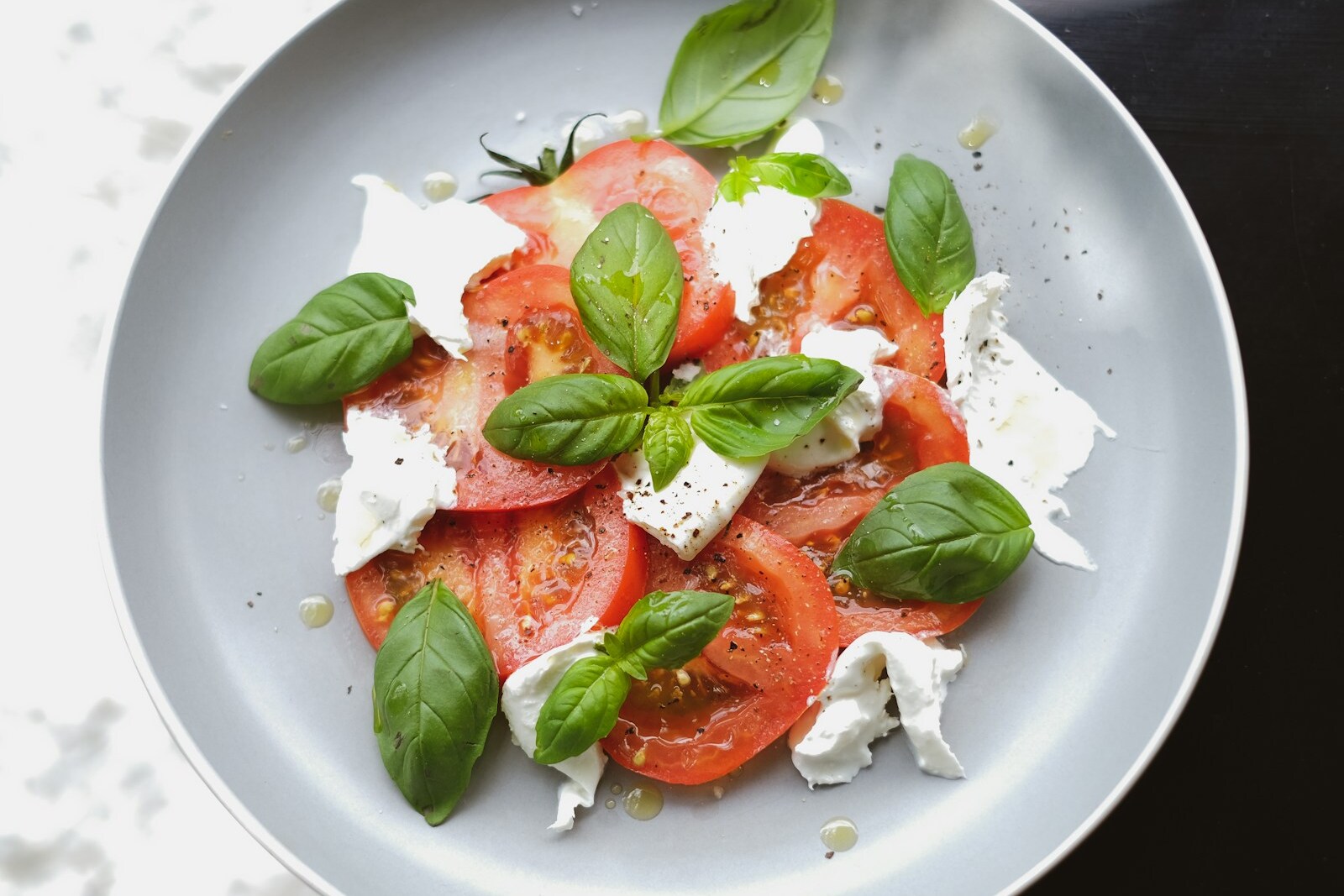
There is a particular moment in late July that defines Italian summer cooking. You walk into the farmers’ market and see the heirloom tomato display – the bumpy purple Cherokee, the deep orange Brandywine, the green-shouldered Black Krim, the pink German Johnson. The tomatoes smell intensely of tomato from arm’s length. You buy 2 pounds. At home, you slice them thick, arrange them with fresh buffalo mozzarella and torn basil leaves, drizzle olive oil, sprinkle flaky salt. Ten minutes after walking in the door, you are eating one of the best meals of the summer.
Caprese is the Italian salad from the island of Capri – probably invented in the 1920s, popularized at the Quisisana hotel and beach restaurants on the island, and now standardized as the canonical Italian summer salad. The three Italian-flag colors (red tomato, white mozzarella, green basil) made the dish a patriotic favorite during World War II. The dish has spread worldwide but is only worth making when tomatoes are at their absolute peak.
This article is the canonical caprese – peak-season heirloom tomatoes, fresh buffalo mozzarella, fresh basil, premium olive oil, flaky salt. The whole thing comes together in 10 minutes with zero cooking. The rest covers exactly why ingredient quality is everything in this dish, what makes buffalo mozzarella different, and the balsamic-or-not debate.
Peak-Season Tomatoes Only
The dish depends entirely on tomato quality. Out-of-season tomatoes (the pink hothouse ones in supermarkets year-round) make caprese taste sad. Peak summer (late July through early September in North America) is the only acceptable window. Source from farmers’ markets when possible – the tomatoes are dramatically more flavorful.
Heirloom varieties (Cherokee Purple, Brandywine, Black Krim, Green Zebra, Yellow Brandywine, German Johnson) add visual drama and complex flavor. Mix varieties in a single platter for the most striking presentation. Use tomatoes weighing 200-300 g each (large) for proper slice size. Look for tomatoes that smell intensely of tomato from arm’s length.
Buffalo Mozzarella, Not Cow
Mozzarella di bufala campana (buffalo mozzarella from Campania) is dramatically better than American cow-milk fresh mozzarella for caprese. The water buffalo milk produces tangier, richer cheese with tender texture and milky water pockets. Look for DOP-certified Italian imports at Whole Foods or quality cheese shops – $10-15 per 8 oz.
If buffalo isn’t available, fresh cow mozzarella (BelGioioso, Galbani) works – just less dramatic. Avoid: low-moisture pizza mozzarella, pre-shredded mozzarella, anything not labeled “fresh” or “in liquid.” The cheese should be at room temperature when served.
The Salt, Oil, and the Balsamic Debate
Flaky salt (Maldon) is critical – more than seems reasonable. Tomatoes need significant salt to express their full flavor. Apply just before serving, not earlier – salt draws water from tomatoes and waters down the dish if applied too early.
Extra virgin olive oil should be quality – a $30 single-estate Italian oil makes a noticeable difference over a $10 mass-market oil. Drizzle generously. Balsamic vinegar is controversial – Italian purists skip it; American chefs add it sparingly. Cheap balsamic glaze is industrial caramelization, not real aging – avoid. Aged balsamic ($40+ DOP Modena) drizzled sparingly is acceptable. My preference: skip balsamic on peak-season heirlooms; use it only on lesser tomatoes.
Ingredients
- 3-4 large heirloom tomatoes (~1 kg / 2 lbs), room temperature
- 450 g (1 lb) fresh buffalo mozzarella, in liquid
- Large handful fresh basil leaves
- 60 ml (1/4 cup) high-quality extra virgin olive oil
- Flaky sea salt (Maldon)
- Freshly cracked black pepper
- Aged balsamic vinegar (optional, controversial)
Making It
- Room temp tomatoes. Out of fridge 1 hour before (better: never refrigerate).
- Slice tomatoes. 8 mm thick. Discard cores.
- Slice mozzarella. Drain. 8 mm thick – same as tomatoes.
- Arrange. Alternating slices on platter. Tuck basil between.
- Drizzle generously. Extra virgin olive oil.
- Season aggressively. Flaky salt – more than seems reasonable. Tomatoes need it.
- Finish. Crack pepper. Optional aged balsamic. Serve within 30 min.
Frequently Asked Questions
Why are tomatoes most important?
Caprese is 3 ingredients with no cooking. Out-of-season supermarket tomatoes make it taste sad. Peak-summer (July-Sept) heirloom from farmers’ market = memorable. Don’t make caprese without good tomatoes.
Why buffalo mozzarella?
Water buffalo milk = tangier, richer cheese with milky water pockets. DOP Italian imports $10-15/8oz. American fresh cow works but less dramatic.
Refrigerate tomatoes?
No – refrigeration destroys ripe tomato flavor by suppressing aromatic enzymes. Always room temperature, stem-side down. The single most important tomato rule.
Balsamic?
Controversial. Italian purists say no. American chefs use sparingly. Aged Modena DOP acceptable. Avoid cheap balsamic glaze. My pref: skip on peak-season heirlooms.
Sources
- Serious Eats — Caprese Salad — The canonical preparation.
- Bon Appétit — Heirloom Caprese — Modern American take.
- USDA FoodData Central — Nutritional data.
Each serving contains roughly 285 calories, 12 g protein, 22 g fat, 10 g carbs.
Please note: Contains dairy. Not suitable for dairy allergies, vegan diets. Consult a dietitian.

Rachel Summers
Rachel grew up in a Pacific Northwest kitchen, learning Sunday roasts from her mother and pie crust from a grandmother who never wrote a recipe down. CookingZone began as a way to save her family's cooking before it was forgotten, and grew when her cousins started sending in their own. Her work covers foundational American, Italian, French, and Mexican recipes, with an emphasis on weekend baking, comfort food, and the techniques that span both European and American home kitchens.