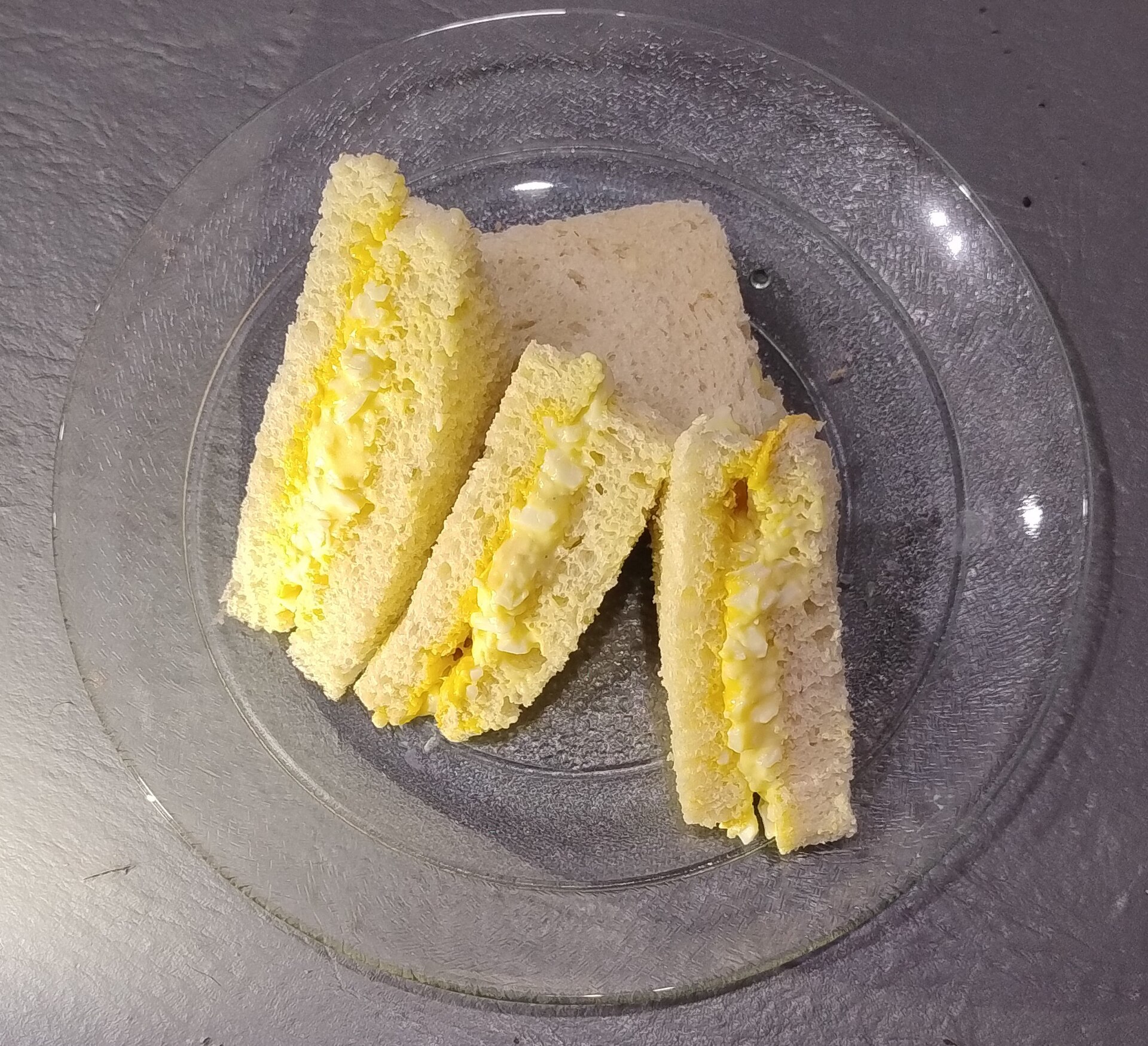
A sandwich made at seven in the morning and eaten at half past twelve has five and a half hours to fall apart, and it usually spends all of them doing exactly that. The tomato slice is the obvious culprit, but the tomato is only the loudest one. Lettuce sweats, deli meat weeps, dressing wicks sideways, and the bottom slice of bread ends up translucent in the middle and dry at the crust.
None of that is a bread quality problem. Water moves from wherever there is more of it to wherever there is less, and bread is always the driest thing in the package. Left with a direct route, the water takes it. The entire craft of a lunchbox sandwich consists of closing that route.
Below: what is actually moving and why, five barrier materials ranked by how long each one holds, the order to stack a sandwich in, the tomato step that takes fifteen unattended minutes, and the temperature rules that have nothing to do with texture.
| What fails | What to do instead |
|---|---|
| Bread goes translucent under the tomato | Salt and drain the tomato elsewhere, then blot it |
| Dressing wicks into the crumb | Fat barrier on both faces, spread to the crust |
| Bread stale and damp at the same time | Keep it out of the coldest part of the refrigerator |
| Everything slides apart at noon | Wet elements in the middle, dry ones against the bread |
| Condensation inside the wrap | Parchment or wax paper rather than plastic film |
| Wet fillings such as tuna or chicken salad | Carry the filling separately and build at the table |
Water moves in one direction, and bread is downhill
Food scientists describe the driving force here as water activity, which measures how freely the water in a food is available to move rather than how much of it there is. A tomato slice and a lettuce leaf sit at the top of the scale, nearly as free as a glass of water. Fresh bread sits lower. Toast sits lower still, and a cracker lower again.
Put two foods in contact and water crosses from the high side to the low side until they meet somewhere in the middle. It does not need gravity, which is why the top slice of a sandwich goes soggy along with the bottom one, and it does not stop when the sandwich is cold.
Bread makes the exchange easy. A slice is a foam of gelatinized starch and gluten with open cells throughout, and those cells behave as capillaries. Liquid touching one edge does not sit there. It travels, which is why a puddle of dressing at the center shows up as a wet ring at the crust an hour later.
The refrigerator makes bread stale and damp at once
A sandwich stored cold usually fails twice, and people blame the second failure on the first. Starch that has been baked and cooled slowly recrystallizes, and that process, called staling, runs fastest at ordinary refrigerator temperatures rather than at room temperature or in a freezer. A day in the fridge ages bread the way several days on the counter would.
Meanwhile the moisture migration described above continues, slower than at room temperature but not remotely stopped. The result is a slice that is simultaneously firm, crumbly at the edges and wet in the center, which feels like a contradiction and is not.
The practical answers are the two ends of the range. Room temperature for a sandwich eaten within a few hours, provided the filling allows it. The freezer for anything built in advance, since starch does not recrystallize at freezer temperatures, and a frozen sandwich packed at seven is thawed and unstaled by noon.
How to keep sandwich from getting soggy, layer by layer
The whole method reduces to one principle: nothing with free water may touch bread directly. Every wet ingredient gets a fat or a solid between it and the crumb, and the wet things go in the middle where they are surrounded on both sides.
That means three zones. Against each slice of bread, a fat barrier. Inside that, a dry structural layer such as cheese or cured meat. In the center, whatever is wet. Built that way, the water that leaves the tomato has nowhere useful to go, and it stays in the sandwich as flavor rather than crossing into the bread.
The other half is preparation. A tomato that has already given up its loose water before it goes in is a different ingredient from one sliced straight onto the bread, and the same is true of cucumber, pickles and any dressed vegetable. Fifteen minutes on a rack does more than any barrier can.
Five barriers, ranked by how long they hold
| Barrier | Why it works | Holds for | Cost |
|---|---|---|---|
| Softened butter, spread to the crust | continuous fat phase, no water route through it | 6 hours or more | has to be soft enough to spread thin |
| Cream cheese or thick soft cheese | high fat and high solids, sits as a sheet | 5 to 6 hours | heavy, dominates mild fillings |
| Hard cheese slice, edge to edge | a physical sheet with almost no free water | 4 to 6 hours | only works if it covers the whole face |
| Mayonnaise, thick layer | oil droplets slow the crossing | 3 to 4 hours | weaker than butter, for the reason below |
| Dry whole lettuce leaf | waxy cuticle, plus a physical gap | 3 to 4 hours | useless if it goes in damp |
Butter outranks mayonnaise, which surprises people, and the reason is structural rather than a matter of fat content. Butter is a water-in-fat emulsion: the continuous phase, the part that forms an unbroken film across the bread, is fat. Mayonnaise is the reverse, an oil-in-water emulsion, so its continuous phase is water. A thick layer still slows things down considerably, but it is not a sealed film.
Use both when the sandwich wants mayonnaise for flavor. A thin scrape of butter against the bread and the mayonnaise above it gives you the barrier and the taste, and it costs about four seconds. A layered club falls apart faster than almost anything else without that first thin coat.
Salt the tomato somewhere else
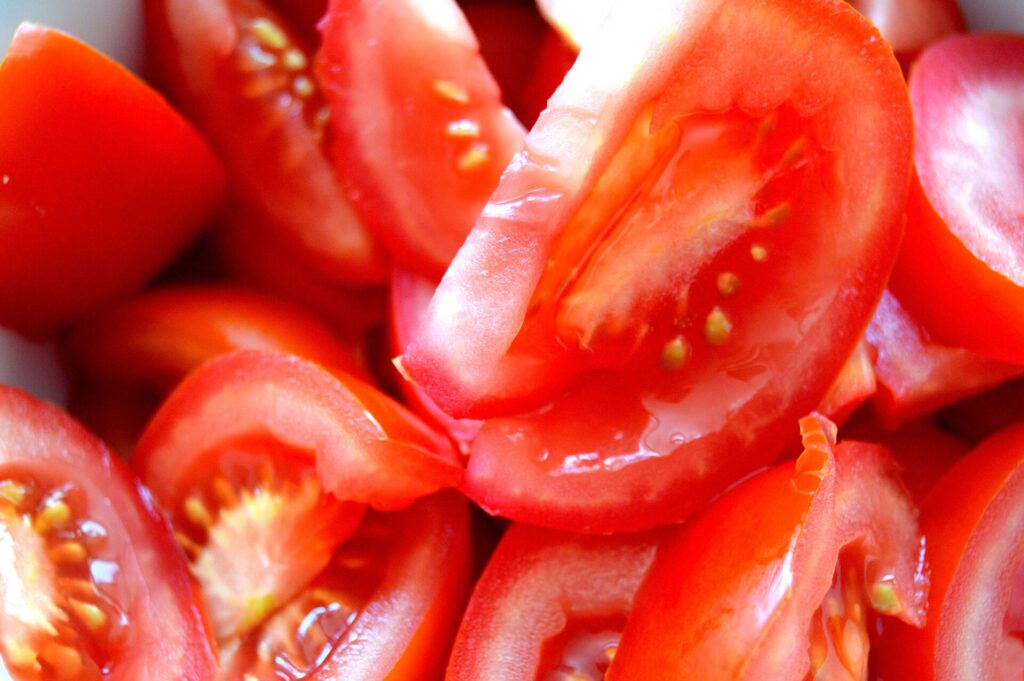
Most of what a ripe tomato weighs is water, and a good share of it is loose, held in the gel around the seeds rather than bound into the flesh. Slice one straight onto bread and that gel starts moving immediately.
Cut the slices a quarter inch thick, lay them on a rack over a plate, and salt both sides lightly. Osmosis pulls the loose water to the surface, where it drips away instead of into your lunch. Fifteen to twenty minutes is enough, and the slices should then be blotted with a paper towel before they go anywhere near bread. They will also taste considerably more of tomato, since what was removed was mostly water.
The same routine handles cucumber, zucchini and salted or brined vegetables. Scoop the seed gel out of a cucumber with a teaspoon before slicing it, drain pickles on a towel, and squeeze anything that arrived in liquid. Kimchi and sauerkraut want a proper press between two paper towels, not a shake of the fork.
Choose the bread by crumb, not by label
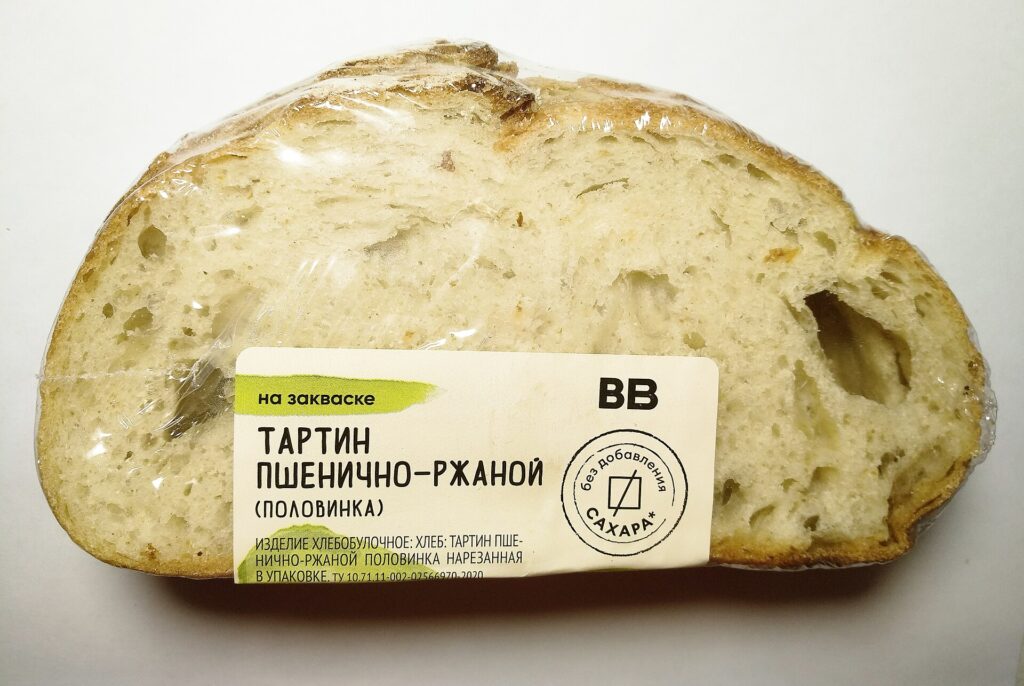
Two loaves with the same ingredient list can behave differently, because what matters is how open the crumb is and how much crust there is per bite. A tight crumb has fewer open capillaries and takes up water slowly. A wide, irregular crumb full of large holes takes it up fast and lets dressing run straight through.
Dense sourdough, rye, pumpernickel, a firm pain de mie and a good pita hold well. Very soft supermarket bread, open-crumb ciabatta and anything with a fragile crust go down quickly. Crust helps, since it is dehydrated and denser than the crumb behind it.
Toasting buys real time by drying the surface layer, but only if the sandwich is not then wrapped tightly while warm. Steam trapped against toast turns it leathery within an hour. Toast, cool the slices on a rack for five minutes, then butter and build.
The build order, bottom slice to top
- Butter both slices to the crust. The edges are where wicking starts, so a bare quarter inch at the rim cancels most of the benefit. Softened butter, spread thin, both inner faces.
- Lay a dry sheet on the bottom slice. Hard cheese, a folded slice of cured meat, or a nut butter. This is the second line, and it should cover the bread completely.
- Add the main dry filling. Sliced roast meat, grilled chicken, hard-boiled egg, cooked and cooled vegetables. Anything that arrived warm goes in fully cold.
- Put the wet elements in the middle. Drained tomato, pickles, pressed slaw, a spoonful of dressing. This is the only place they belong, with dry material above and below.
- Close with a second dry sheet. Another slice of cheese, or a whole dried lettuce leaf laid flat rather than shredded, which keeps its own cut edges out of the equation.
- Cap with the buttered top slice, buttered face down. Press the whole thing gently to lock the layers together.
- Wrap while it is fully cold, and cut afterward. Cutting first doubles the number of exposed crumb faces the filling can reach.
Wrapping, and the case for keeping it in pieces
Plastic film and foil hold everything in, including water vapor, and by mid-morning that vapor has condensed on the inside of the wrap and gone straight back into the crust. Parchment or wax paper wrapped snugly gives a small amount of breathability and keeps the surface dry. A rigid box works too, but only if the sandwich is a firm build that will not slide apart.
Some fillings should not be assembled at all. Tuna, egg and chicken salad, anything dressed with vinaigrette, meatballs in sauce, and warm leftovers all belong in a small container beside the bread. Assembly takes forty seconds at a table and produces a sandwich that has not been degrading for five hours.
Two useful exceptions run the other way. A pressed sandwich built on a sturdy roll with oil-based ingredients, wrapped tight and weighted overnight, is designed for the bread to absorb the oil and improve. A banh mi works on a related principle, with a crisp-crusted roll and pickles drained hard before they go in.
Cold chain, and the two-hour clock
Texture is one problem and temperature is a different one. Perishable fillings should not sit between refrigerator temperature and hot for more than about two hours in total, or one hour on a day above 90 degrees. That clock starts when the sandwich leaves the refrigerator, and it counts the whole morning, not just the time it spends out of the bag.
An insulated bag with a frozen gel pack solves it, and a frozen drink bottle doubles as a second pack. Put the pack against the sandwich, not at the bottom of the bag. Deli meat, cooked chicken, egg, tuna and soft cheese need it. Peanut butter, hard cheese and roasted vegetables are far more forgiving.
Commercial mayonnaise deserves a word, because it takes blame it has not earned. It is made with acidified ingredients and sits at a pH low enough to slow bacterial growth rather than encourage it, and the risk in a lunchbox comes from the chicken or the egg, not from the jar. Mayonnaise made at home with raw egg is a different case: use pasteurized eggs, keep it refrigerated, and do not send it out in a warm bag. An egg salad sandwich lives or dies on that gel pack.
Five builds for five days, one of which improves overnight
Monday. Roast turkey, provolone edge to edge, butter on both slices, undressed shredded cabbage in the middle, dense sourdough. The cabbage stays crisp for six hours because it was never dressed.
Tuesday. Cream cheese to the crust on rye, cucumber seeded and drained twenty minutes, dill, thin red onion. The cream cheese is the barrier and the filling at once.
Wednesday. Chicken salad in a sealed tub, two slices of buttered bread in the box, assembled at the table. The only reliable way to carry a wet filling.
Thursday. Peanut butter to both crusts, banana in the middle, milk bread, built Wednesday night and frozen. It thaws by noon and the freezer prevents both staling and migration.
Friday. Salami, provolone, olive tapenade and roasted pepper on a firm roll, wrapped tight and pressed under a book overnight. Oil soaking into bread is a feature. Water is the enemy, not fat.
Four sandwiches that fail by ten in the morning
Dressing spread on the bread. Vinaigrette, hot sauce, thin mustard and anything pourable applied directly to the crumb is absorbed within minutes. Toss it through the filling instead, or send it in a small jar.
Warm ingredients wrapped straight away. A slice of chicken that went in at room temperature releases steam into a closed package, and that steam has one place to condense. Everything goes in refrigerator cold.
Shredded lettuce. Shredding multiplies cut edges, and every cut edge leaks. A whole leaf, dried properly, works as a barrier. A handful of shreds works as a sponge with the water on the wrong side.
Butter straight from the refrigerator. Cold butter tears the bread and leaves gaps, and gaps are routes. Take it out twenty minutes ahead or grate it, and spread it thin rather than thick. The same softened butter rule decides whether a grilled cheese browns evenly or burns in patches.
Five hours is a long time for anything to sit in a bag, and no build survives it by accident. Butter to the crust, wet things in the middle, tomato salted somewhere else, and a gel pack against the sandwich rather than under it. That is the whole of it, and it costs about two minutes a day.
Frequently Asked Questions
Does toasting the bread actually help?
Yes, but less than people expect and only under one condition. Toasting dries the surface layer, which delays absorption by an hour or so. Wrap the sandwich while the toast is still warm and the trapped steam undoes all of it, leaving bread that is both damp and tough. Cool the slices on a rack first.
Which wrapping keeps a sandwich best?
Parchment or wax paper, folded snugly, for anything eaten within about six hours. Both allow a small amount of vapor out, so condensation does not collect against the crust. Foil and plastic film seal completely and turn the package into a small humid box. A rigid container is fine for firm builds and poor for tall soft ones.
Can I make five sandwiches on Sunday?
Freeze them, and pick the fillings accordingly. Nut butter, hard cheese, cooked meat, cooked egg and cooked vegetables all freeze and thaw well in a sandwich. Lettuce, tomato, cucumber and raw onion collapse into water. Mayonnaise splits, since freezing breaks the emulsion. Build the freezable core, then add the fresh elements on the morning it is eaten.
Why did the bread go hard and wet at the same time?
Two separate processes running side by side in the refrigerator. The starch recrystallized, which is the hard part, and moisture crossed from the filling, which is the wet part. Refrigerator temperature happens to be close to the worst case for the first and does very little to stop the second.
Is there a sandwich that is better after five hours?
Several, and they share a structure: a firm crusted roll, oil-based dressing, cured meat or cooked vegetables, and no free water anywhere in the build. Wrapped tight and pressed, the bread absorbs oil rather than water, the layers compact, and the flavors move around. Any build with a fresh tomato in it is on the opposite schedule.