Two chicken thighs come out of a stainless pan and go onto a plate. What stays behind is a mahogany crust welded to the metal, somewhere between a stain and a solid, and the usual next move is to run water into the hot pan and scrub it off over the sink.
That film is the most concentrated flavor produced in the entire cook. It is water-soluble, which is the whole trick, and it comes off the metal in about fifteen seconds under a splash of any liquid you happen to have. Four minutes after that, with two tablespoons of cold butter, there is a sauce for two people that cost nothing and used one pan.
What follows is what the film actually is, how to tell it from something burnt, which pans build it and which cannot, and the four-minute sequence in order, with the quantities written down so it works the first time.
- Total time: about 4 minutes after the meat leaves the pan
- Liquid for two portions: 1/2 cup, reduced to roughly 3 tablespoons
- Butter: 2 tablespoons, cold, cut into cubes, added off the heat
- Yield: about 1/3 cup of finished sauce, which is two generous spoonfuls each
- Pan: stainless, carbon steel, enameled cast iron, or plain aluminum
- Will not work: nonstick, because it never builds the film in the first place
- The step people skip: pouring the fat off before the liquid goes in
What the brown film is made of
Three things are stuck to the bottom of that pan. The first is coagulated protein, squeezed out of the meat as it heated and set hard against hot metal. The second is a mixture of brown compounds produced by the Maillard reaction, which runs between amino acids and reducing sugars once a dry surface gets past roughly 285 degrees. The third is caramelized sugar from whatever else was in the pan, which needs a higher temperature and no protein at all.
All three are largely water-soluble. That is the fact the whole technique rests on, and it is easy to demonstrate: put a tablespoon of plain water into a warm pan of fond and the brown lifts almost immediately, leaving bare metal behind.
The fat sitting on top is not part of that. Rendered fat carries some flavor but it is not where the browning went, and left in the pan it does two unhelpful things: it dilutes the sauce and it fights the butter emulsion at the end. Fat out, film stays.
Brown is fond, black is carbon
The film should read mahogany to dark chestnut, evenly colored, glossy where fat has pooled and matte where it has not. Lift a corner with a spoon and it should give as a soft layer rather than a chip.
Burnt fond looks different and behaves differently. It is black rather than brown, it flakes rather than dissolves, and it stays stuck when liquid hits it. The smell is the giveaway: acrid, closer to coffee grounds left on a burner than to roast meat. Those compounds are no longer soluble and no amount of scraping turns them into a sauce, only into a bitter one.
A pan with both, which is common, can still be saved. Deglaze anyway, then taste before reducing. If it reads bitter, start again in a clean pan. Small dark flecks strain out at the end; a wholesale black bottom does not.
Which pans build it and which never will
| Pan | Fond | Notes |
|---|---|---|
| Stainless steel, clad base | excellent | the reference pan, and the color is easy to read against the metal |
| Carbon steel | very good | a heavy seasoning releases a little more, still plenty left |
| Enameled cast iron | excellent | a dark interior makes judging color harder, so go by smell |
| Bare or seasoned cast iron | good | the polymerized layer releases more, and heavy pans hold heat through the deglaze |
| Plain or anodized aluminum | very good | fast to respond, easy to overshoot on the reduction |
| Copper, tin or steel lined | very good | reacts to the burner instantly, which suits the last minute |
| Nonstick | almost none | the coating exists to prevent exactly this, and the heat needed shortens its life |
Pan size matters as much as material. Food crowded into a small pan releases moisture faster than it can evaporate, the surface steams instead of browning, and nothing sticks because nothing browned. Leave an inch of clear metal around each piece, or work in two batches and keep the fond from the first one.
Heat is the other half. A film builds when the surface of the meat is dry and the pan is properly hot. A steak in cast iron lays down fond in three minutes at high heat, while the same steak in a lukewarm pan takes eight minutes and produces gray liquid instead.
How to make a pan sauce in four minutes
- Move the meat to a warm plate and tent it loosely. It rests while the sauce is built, and the juices that collect on the plate go into the sauce at the end.
- Pour off the fat, keeping every bit of the brown. Tip the pan, let the fat run to one side, and spoon it out. Leave about a teaspoon behind if aromatics are going in.
- Sweat the aromatics, 30 to 45 seconds. A minced shallot or a clove of garlic in that teaspoon of fat over medium heat. Long enough to soften, not long enough to color.
- Deglaze with half a cup of liquid, off the heat for a moment. Pour it in, then scrape the whole base with a flat-edged wooden spoon. The brown lifts in about fifteen seconds.
- Return to medium-high and reduce to about three tablespoons. Roughly ninety seconds to two minutes. The bubbles change from wide and loose to small and tight as it thickens.
- Take the pan off the burner and wait fifteen seconds. This is the step that decides whether the sauce holds together. The pan has to fall below a simmer before butter goes in.
- Swirl in two tablespoons of cold cubed butter, a piece at a time. Keep the pan moving. Each cube should disappear before the next goes in, and the sauce should turn glossy and opaque.
- Add the resting juices, then season and sharpen. Salt, pepper, and a few drops of vinegar or lemon. Taste, then spoon it over the meat immediately.
Minute one: pour off the fat, keep the film
Everything downstream depends on this. A pan that still holds three tablespoons of rendered fat produces a sauce that separates on the plate into a greasy ring around a thin brown center, and no amount of butter fixes it, because butter is being asked to emulsify into something already saturated with loose fat.
Tip the pan away from you at about thirty degrees and hold it. The fat pools at the low edge and the fond stays welded where it is. Spoon the fat into a bowl, or pour it off in one motion while watching the brown, which will not move.
Keep a teaspoon if aromatics are going in next. Shallot cooked in the fat from the meat tastes like the dish; shallot cooked in fresh butter tastes like shallot and butter. Fat from duck, chicken thighs or pork is worth more in a refrigerator jar than down a drain.
Minute two: the deglaze, and how much liquid
Half a cup of liquid per two portions is the working figure. Less and the reduction finishes before the fond has dissolved. More and you are still boiling three minutes later, by which time the meat has gone cold.
Take the pan off the burner for the pour, particularly with wine, since a screaming-hot pan flashes half the liquid into steam before it reaches the metal. Then scrape. A flat-edged wooden spoon or a stiff silicone spatula gets into the corner where the base meets the wall, which is where the darkest fond collects.
Wine, stock, cider, beer, vermouth and plain water all work, and each one behaves differently once it starts reducing. Water is the honest test: a sauce made with nothing but water and the fond will still taste strongly of the meat, which tells you how much of the flavor was in the film rather than in the bottle.
Minute three: reduce until it coats
Reduction is evaporation and nothing more. Half a cup goes to roughly three tablespoons in ninety seconds to two minutes over medium-high heat in a wide pan, longer in a narrow one, since surface area sets the rate.
Watch the bubbles rather than the clock. A watery liquid boils in wide, loose bubbles that pop lazily. As it concentrates, the bubbles get smaller, tighter and slower, and the surface takes on a sheen. Drag the spoon through it: the trail should hold for a second before closing.
Stock behaves best here because gelatin gives body as it concentrates, which is why a sauce built on homemade stock feels rounder than one built on a supermarket carton. Wine needs a genuine reduction rather than a brief boil, both to concentrate it and to soften the raw edge. The idea that a splash of alcohol burns off entirely in seconds does not hold up; time and surface area drive that off, and a short simmer leaves a measurable amount behind.
Minute four: cold butter, off the heat
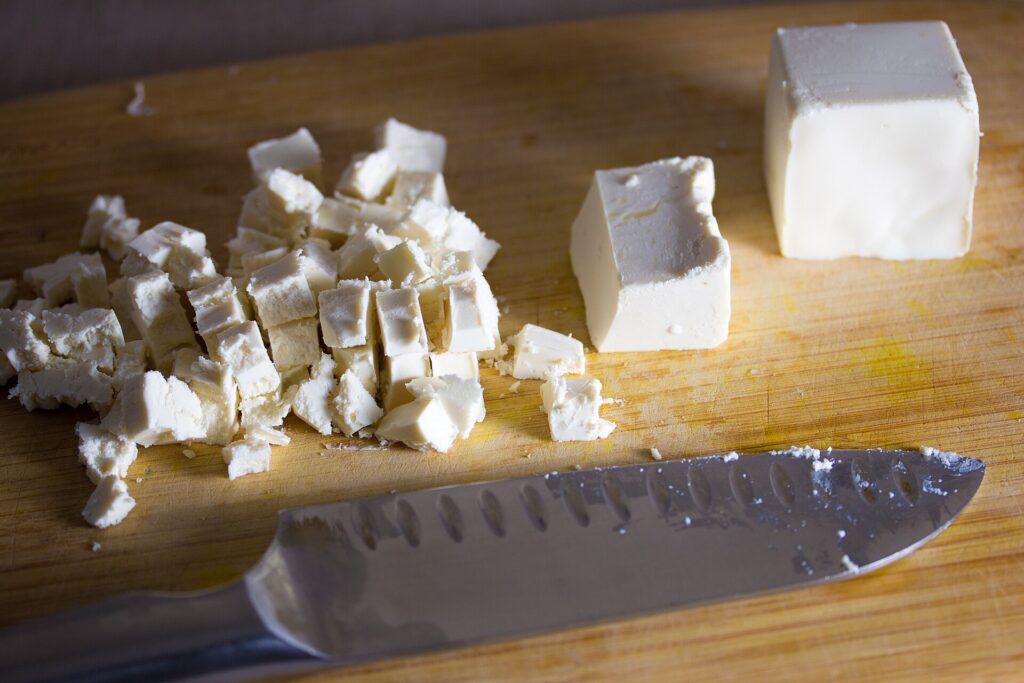
Butter is roughly four-fifths fat and one-fifth water, with milk proteins and phospholipids scattered through it. Those proteins and phospholipids are emulsifiers, and they are what let butter disperse into a watery reduction as microscopic droplets instead of pooling on top. The result is an emulsion, and like every emulsion it is a temperature-sensitive arrangement.
Three rules keep it together. The butter goes in cold, so it melts slowly and the fat is released gradually. The pan comes off the heat first and sits for fifteen seconds, so the sauce is below a simmer when the butter arrives. And the pan keeps moving, either swirled or whisked, because the mechanical agitation is what breaks the fat into droplets small enough to stay suspended.
Two tablespoons into three tablespoons of reduction gives a sauce that is glossy, slightly thickened, and light enough to pour. Four tablespoons gives something closer to a butter sauce with a flavor of pan drippings, which is a legitimate thing to want and a different dish. A fruit-and-port reduction takes the same finish, with the sugar in the fruit doing part of the thickening.
Quantities, and how they scale
| Portions | Pan | Deglazing liquid | Reduce to | Cold butter | Finished sauce |
|---|---|---|---|---|---|
| 2 | 10 inch | 1/2 cup | 3 tablespoons | 2 tablespoons | about 1/3 cup |
| 4 | 12 inch | 3/4 cup | 1/4 cup | 3 tablespoons | about 1/2 cup |
| 6 | 12 inch, two batches of meat | 1 cup | 6 tablespoons | 4 tablespoons | about 3/4 cup |
| 8 | rondeau or roasting pan on two burners | 1 1/2 cups | 1/2 cup | 6 tablespoons | about 1 cup |
The ratios hold, but the timing does not scale linearly. A wide roasting pan on two burners reduces far faster than its volume suggests, and a tall narrow saucepan far slower. Judge by the spoon, not by the multiplication.
What is worth adding, and what is not
Worth it. A minced shallot before the liquid. A teaspoon of mustard whisked in during the reduction, which also helps stabilize the emulsion. Fresh herbs off the heat at the end. A few drops of vinegar or lemon in the last seconds, which lifts a sauce that tastes flat and heavy. The juices from the resting plate, always.
Situational. Cream, added during the reduction rather than at the end, which makes a more forgiving sauce that will not split but tastes less of the pan. A spoon of jam or reduced fruit for pork and duck. Capers, olives or anchovy, all of which bring salt, so hold back on seasoning until they are in.
Not worth it. Flour or cornstarch, which turn a pan sauce into gravy and mask the thing you made it for. Dried herbs, which need long simmering to give anything up. And more butter than the ratio calls for, which reads rich for two spoonfuls and heavy by the fourth. A properly rested steak gives up two tablespoons of juice on its own, and that liquid is better than anything from a jar.
Five ways it breaks, and two rescues
The pan was still boiling. The single most common failure. Butter added to a simmering reduction melts straight to oil and floats. Off the heat, fifteen seconds, then butter.
Too little liquid left. Reduce past a couple of tablespoons and there is not enough water phase to hold the fat. Add a spoonful of stock or water before the butter goes in.
All the butter at once. A single cold block drops the temperature unevenly and releases its fat in a rush. Cubes, one at a time, pan moving.
The fat was never poured off. The emulsion has no room. This one is visible on the plate as a slick ring.
It was reheated. A mounted butter sauce does not survive a second trip to the burner. Make it last and serve it immediately, or hold it somewhere warm rather than hot for a few minutes.
Two rescues work. If it splits while still warm, pull the pan off, add a tablespoon of cold water or cream, and whisk hard; the extra water phase often brings it back. If that fails, put a fresh spoonful of stock in a clean pan, warm it, and whisk the broken sauce into it slowly, which rebuilds the emulsion around a new base.
The habit worth forming is smaller than the technique. Before the pan goes into the sink, look at what is on the bottom of it. If it is brown rather than black, dinner is four minutes from being better than it was.
Frequently Asked Questions
Can I make a pan sauce in a nonstick skillet?
Not really, and the reason is that the pan is doing its job. A release coating prevents proteins from bonding to the surface, so almost no fond forms, and the high heat that builds a good crust shortens the coating’s life. Sear in stainless or carbon steel, then use the nonstick pan for eggs, where release is what you want.
What if I do not have wine or stock?
Water works. It sounds like a compromise and it is a smaller one than expected, because the flavor is in the film rather than the liquid. Water plus fond plus butter plus a squeeze of lemon is a complete sauce. Vermouth, cider, beer, tea and even the liquid from a can of beans all work too.
How do I know when the reduction is done?
Drag a spoon across the base of the pan. If the trail closes instantly the sauce is still too thin. If it holds for about a second before filling in, stop. That happens at roughly three tablespoons for a two-portion sauce, and the butter will thicken it a little further.
Can a pan sauce be made ahead?
Make the reduction ahead and finish it at the last minute. Deglaze, reduce, then cool and refrigerate for up to three days. Rewarm gently and mount the butter just before serving. The finished sauce does not hold, since reheating a butter emulsion is how it splits.
My sauce tastes bitter. What went wrong?
Almost always burnt fond rather than burnt aromatics, though garlic that went black in the first thirty seconds will do it too. Bitterness cannot be corrected once it is in the pan; a pinch of sugar masks it briefly and it comes back. Check the color of the film before deglazing, and start again if it reads black.