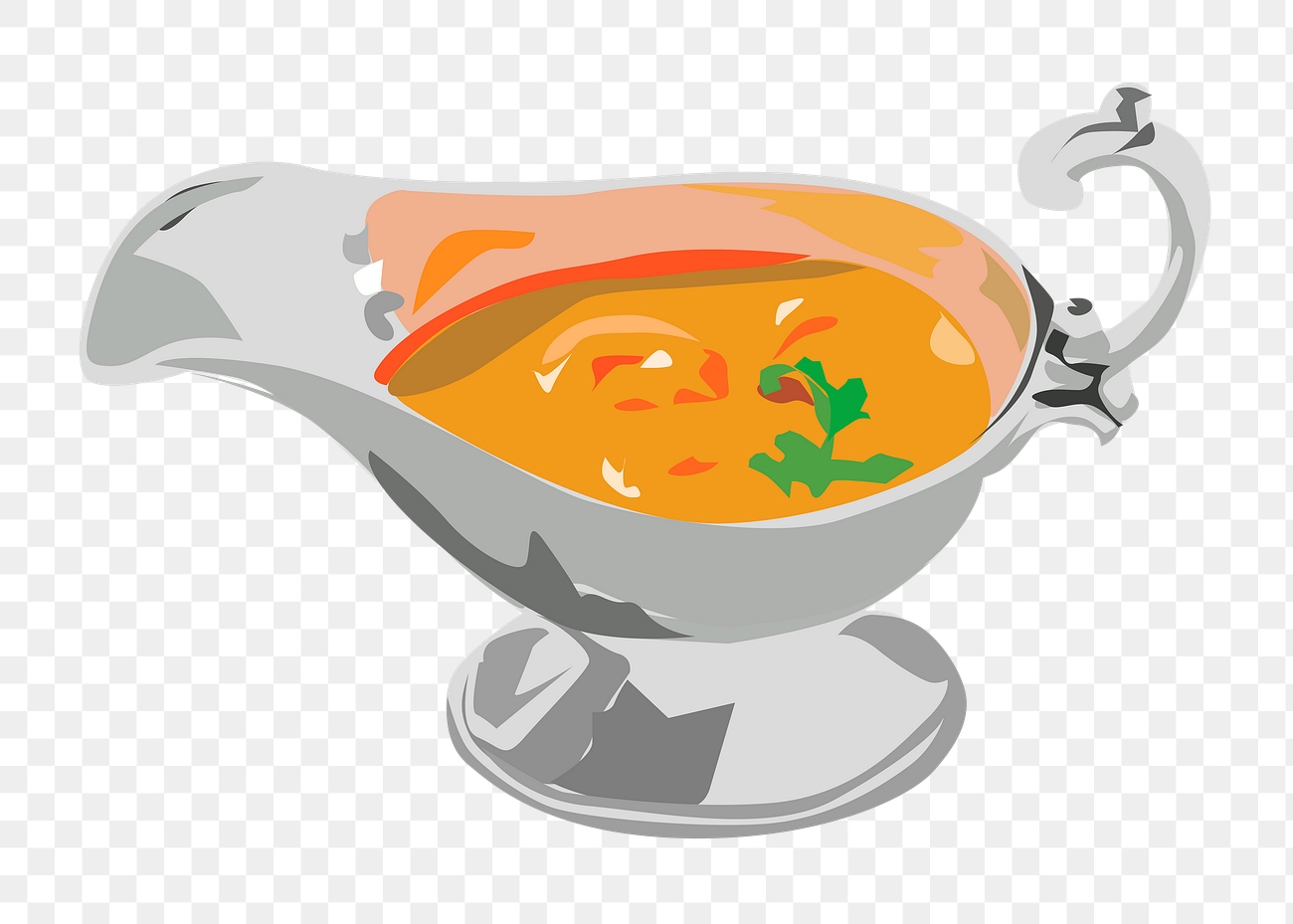
The gravy looked perfect going into the gravy boat. Glossy, smooth, coating the back of a spoon exactly the way it should. An hour later, sitting on the table through a long meal, it had separated into a thin, greasy layer floating over a grainy base.
Nobody did anything to it in that hour. It sat, mostly undisturbed, on a warm table. That is exactly the condition under which a marginal gravy fails, and the failure is not random: it comes from one of two specific structural problems, both traceable back to how the gravy was built in the first place.
Fixing a split gravy after the fact is possible and fast. Understanding why it splits in the first place is what stops it from happening again on a table with even less patience for a fix than this one had.
- When it splits: usually thirty minutes to an hour after it looked fine on the stove
- Cause 1: fat and liquid were never fully emulsified in the first place
- Cause 2: drippings went in before their own fat and liquid had separated and settled
- The ratio that holds: roughly equal parts fat and flour by weight, then liquid whisked in gradually
- Fast fix: a splash of cold liquid whisked in vigorously off the heat
- Slower fix: a fresh small roux blended into the split gravy
- Prevention: let drippings rest and separate before building the gravy
How to fix broken gravy fast, off the heat
- Pull the pan off the heat immediately. Continued heat on a splitting gravy accelerates the separation rather than fixing it.
- Whisk in a small splash of cold liquid, stock or water, vigorously. The sudden temperature change and the whisking motion can re-suspend the fat that has started to separate out.
- If that does not pull it back together, make a small fresh roux in a separate pan. A tablespoon of butter and a tablespoon of flour, cooked for a minute, gives fresh emulsifying power.
- Whisk the split gravy into the fresh roux gradually, a ladle at a time. Adding it all at once overwhelms the small batch of fresh roux before it can do its job.
- Bring it back to a gentle simmer, whisking constantly, until it re-thickens and looks glossy again. Do not let it boil hard; that risks splitting it a second time.
- Taste and adjust seasoning once it has re-emulsified. A rescued gravy sometimes needs a bit more salt, since the fix can dilute the original concentration slightly.
Why gravy is an emulsion, and why that matters
Gravy is fundamentally an emulsion: fat and water-based liquid held together in a stable suspension by starch from the flour and proteins from the drippings, rather than two liquids that naturally want to mix. Oil and water do not combine on their own, and neither do rendered fat and stock, without something bridging them.
Flour, cooked into fat as a roux before liquid is added, is what does that bridging. The starch molecules disperse through the fat and then, once liquid is whisked in, help hold fat droplets suspended throughout the liquid rather than letting them coalesce and float free. A gravy that splits is an emulsion that has failed, and it fails for identifiable, mechanical reasons rather than bad luck.
Once fat droplets that were suspended throughout the liquid start finding each other and merging into larger droplets, that process accelerates on its own; small droplets become bigger ones, bigger ones float more readily, and the gravy visibly separates into a greasy layer over a thinner base within a fairly short window.
Fat-to-flour by weight, the ratio worth memorizing
| Amount of gravy | Fat (butter or drippings) | Flour | Liquid |
|---|---|---|---|
| 2 cups | 2 tbsp (28g) | 2 tbsp (16g) | 2 cups |
| 4 cups | 4 tbsp (56g) | 4 tbsp (32g) | 4 cups |
| 6 cups | 6 tbsp (85g) | 6 tbsp (48g) | 6 cups |
Roughly equal parts fat and flour by volume, cooked together for a minute or two before any liquid goes in, is the ratio that reliably holds. Too little flour relative to the fat leaves not enough starch to stabilize the emulsion as the liquid volume grows; too much flour makes a pasty, overly thick base that can taste raw if it is not cooked long enough.
Weighing rather than measuring by volume removes some of the variability that comes from how tightly flour is packed into a measuring cup, though for a home kitchen, a consistent volume measurement using the same cup each time gets close enough.
Why drippings need to settle before they go into the gravy
Straight from a roasting pan, drippings are a messy mix of rendered fat, meat juices, and browned bits, all still hot and unseparated. Poured directly into a gravy without resting first, that mixture brings inconsistent amounts of fat and liquid into the roux at once, and an unpredictable ratio is much harder to emulsify properly.
Letting the drippings sit for ten to fifteen minutes allows the fat, which is less dense, to rise and separate cleanly to the top, leaving the flavorful liquid underneath. Skimming that fat off and measuring it precisely, rather than guessing at how much fat is mixed into an unsettled pan of drippings, is what lets the fat-to-flour ratio actually work as intended.
A fat separator, a measuring cup with a spout drawing from the bottom, does this job quickly, but a wide bowl and a spoon to skim the fat layer off the top works nearly as well and needs no special equipment.
The two ways a finished gravy splits on the stove an hour later
The first way is an emulsion that was marginal from the start: not quite enough flour relative to the fat, or liquid added too quickly rather than gradually, leaving a gravy that looked fine in the pan but had less structural stability than it appeared to. Marginal emulsions often hold together while actively whisked and heated but fail once left alone to sit.
The second way is temperature cycling. A gravy that goes from hot on the stove, to a slightly cooler serving vessel, to sitting on a table that continues to cool it further, is undergoing exactly the kind of repeated temperature change that stresses an emulsion’s stability. Reheating it too aggressively afterward, especially at a rolling boil, can push an already-stressed emulsion the rest of the way into splitting.
Both causes point to the same prevention: build a properly ratioed emulsion in the first place, and once it is made, keep it at a gentle, steady warm temperature rather than letting it cool and reheat repeatedly through a long meal.
Keeping gravy from splitting while it waits on the table
A gravy boat sitting on an open table cools gradually over the course of a meal, and that slow cool is gentler on the emulsion than a rapid swing from hot to cold and back to hot again. Where possible, keeping the gravy boat on a warmed trivet, or refilling from a pot kept at a low simmer on the stove rather than letting the whole batch sit out at once, reduces the temperature swings that stress it.
A double boiler setup, the gravy pot set over a larger pot of barely simmering water, holds it at a stable, gentle warmth for an extended table service without the risk of scorching or overheating that a gravy left directly over a burner carries.
Whisking the gravy briefly before serving, even if it looks fine, redistributes any fat that has started to separate before it becomes visible enough to be a problem, and it is a low-effort habit that catches a split before it fully develops.
Does the type of flour or fat change how stable the gravy is?
All-purpose flour is the standard choice and works reliably for this purpose, the same base that thickens a proper sausage gravy for biscuits. Cornstarch, sometimes substituted for a gluten-free gravy, thickens differently and does not build the same kind of roux-based emulsion, so a cornstarch gravy needs a different technique, generally a slurry whisked in at the end rather than a roux built from the start.
Butter and rendered poultry fat behave similarly in a roux, though butter contains a small amount of water and milk solids that can occasionally affect stability slightly compared to pure rendered fat. Neither difference is large enough to be the primary cause of a split gravy in most home kitchens; the ratio and the settling step matter far more than which specific fat is used.
A gravy made entirely from drippings without any added butter can work fine, provided the drippings themselves have been properly settled and measured, following the same fat-to-flour logic regardless of the fat’s exact source.
Reheating leftover gravy without splitting it again
Cold gravy, refrigerated after a meal, generally reheats without incident as long as it is warmed gently over low heat, stirred frequently, rather than microwaved at full power in a single long burst or brought quickly to a hard boil on the stove.
A splash of fresh stock or water whisked in during reheating helps loosen a gravy that has thickened considerably after chilling, since starch continues to set up as it cools and a cold gravy is often noticeably stiffer than it was when freshly made. Thinning it back to the original consistency before it fully reheats gives a smoother result than trying to thin it after it has already come to a full simmer.
Leftover gravy should be refrigerated within two hours of the meal ending, the same general food safety window that applies to any dish containing meat drippings, and used within three to four days.
When a gravy is too far gone to rescue
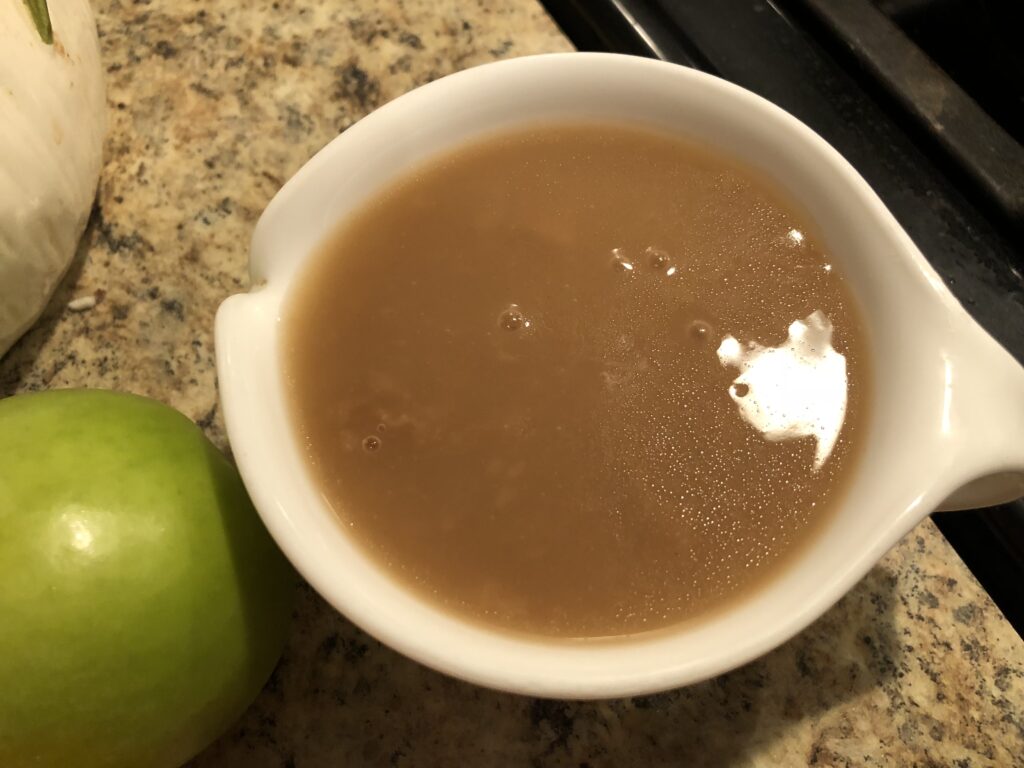
A gravy that has split badly enough to show large, visible curds of separated fat and grainy solids, rather than a simple thin greasy layer on top, is harder to bring back cleanly, and repeated whisking at that point sometimes produces a technically re-combined but visually unappealing result.
In that case, straining the gravy through a fine mesh sieve before attempting the fresh-roux fix removes some of the larger separated solids and gives the rescue a cleaner base to work from. This extra step takes only a minute and meaningfully improves the odds of a fully smooth result.
A gravy that has been sitting out for more than two hours at room temperature is a food safety question rather than just a texture one at that point, and it should be discarded regardless of how it looks, following the same two-hour rule that governs any dish containing meat drippings and dairy.
A whisk, a splash of cold liquid, and a small fresh roux fix almost any split gravy within a couple of minutes. Getting the ratio and the settled drippings right in the first place is what keeps the fix from being necessary at all.
Frequently Asked Questions
Can I use a blender to fix a badly split gravy?
Yes, a quick pulse in a blender can re-emulsify a split gravy mechanically, though it changes the texture slightly, making it smoother and sometimes a touch thinner. It works well as a last resort when whisking alone has not fully brought it back together.
Why does my gravy split every time I add cream to it?
Cream added too quickly, or to a gravy that is boiling hard rather than gently simmering, can curdle on contact with the heat and acidity already present in the pan. Warm the cream slightly first and stir it in gradually off the direct heat for a more stable result.
Is it normal for gravy to thicken a lot as it cools, even without splitting?
Yes, starch continues to set as it cools, so a gravy that looked properly thick hot on the stove will often seem noticeably thicker once it has cooled on the table. This is separate from splitting and is fixed simply by whisking in a bit more warm liquid.
Can I make gravy ahead of time and reheat it on Thanksgiving Day?
Yes, a base gravy made from a properly built rich stock and a roux ahead of time reheats well with careful, gentle heat. Add the actual pan drippings, once they are available on the day itself, to the reheated base rather than trying to make the whole gravy from drippings alone at the last minute.
Does whisking too much cause a gravy to split?
No, whisking generally helps hold an emulsion together rather than break it. What causes splitting is heat that is too aggressive, liquid added too fast in large amounts, or a ratio of fat to flour that was not enough to stabilize the emulsion in the first place.