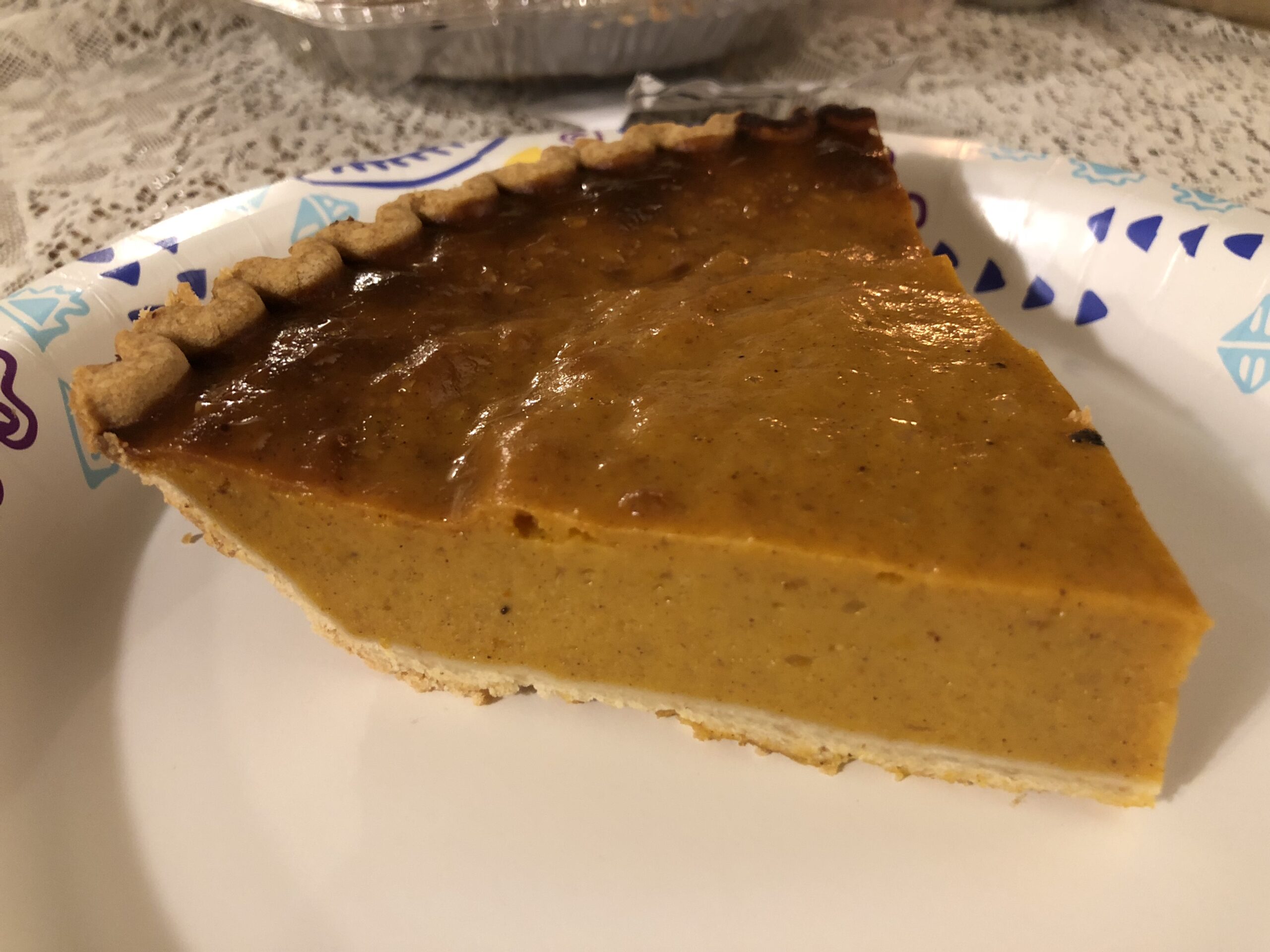
The pie came out of the oven looking perfect. Smooth, evenly domed, no cracks anywhere across the surface. Forty minutes later, cooling on the counter, a fissure opened straight down the center and kept widening as the pie continued to cool.
That timing is the part most people miss. A pumpkin pie that looks flawless the moment it leaves the oven and then cracks while it sits is not a baking failure in the way it appears to be. The center should still wobble slightly when the pie comes out, reading somewhere around 175F, and the crack that shows up later is a cooling problem, not an underbaking one.
Three structural issues cause most cracked pumpkin pies, and none of them are fixed by baking longer. In fact, baking longer to chase a fully firm center at the moment it leaves the oven is one of the more reliable ways to guarantee a crack later.
- When it cracks: during cooling, not during baking, in most cases
- Target pull temperature: about 175F at the center, with a wobble that firms as it cools
- Cause 1: overbaking, which sets the custard too firm and leaves no give as it contracts
- Cause 2: cooling too fast, which shrinks the surface faster than the interior
- Cause 3: too much egg relative to liquid, making a stiffer custard prone to splitting
- The fix that prevents most cracks: pull it early and let it cool slowly, away from drafts
- Cosmetic rescue: whipped cream or a compote hides a crack completely
Pumpkin pie cracking: it happens on the counter, not in the oven
A pumpkin pie filling is a baked custard, held together by egg proteins that set as they heat and then continue to firm slightly as the whole pie cools. That continued firming after the oven is the part that catches people off guard, since a pie that looks done, or even slightly underdone, in the oven is often exactly right by the time it has fully cooled.
The crack itself is a contraction problem. As the custard cools, it shrinks slightly, and if the surface cools and contracts faster than the interior, or if the custard has been baked stiff enough that it has no flexibility left to absorb that shrinkage, something has to give. The result is a crack that appears well after the pie has left the oven, sometimes not until it has been sitting for twenty or thirty minutes.
This is why a pie pulled at the right moment, still visibly underset in the center, so often ends up with a perfectly smooth surface once fully cooled, while a pie baked until it looks completely firm in the oven frequently cracks on the way to room temperature.
Why the center should still wobble when the pie comes out
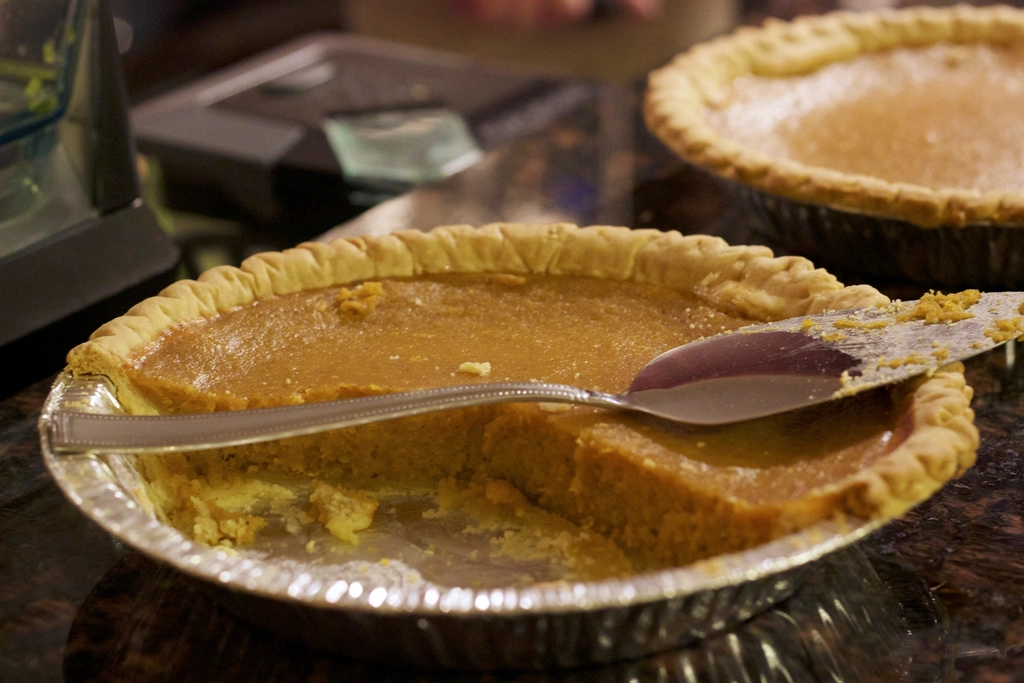
A properly baked pumpkin pie’s center reads around 175F on an instant-read thermometer and jiggles slightly, like a not-quite-set gelatin, when the pan is nudged gently. That wobble is not a sign of an underbaked pie; it is the target.
Carryover cooking, the same phenomenon that continues raising a roast’s internal temperature after it leaves the oven, applies here too. The residual heat throughout the custard keeps cooking it gently for several more minutes after it comes out, and a center that looked underset at 175F is usually fully set by the time the pie has cooled to room temperature.
Pulling the pie later, waiting for the center to look completely firm in the oven, means the custard has already passed the point where carryover would have finished the job gently, and the egg proteins have set into a stiffer structure with less flexibility to handle the contraction that follows during cooling.
Cause one: overbaking sets the custard too firm to flex
Egg proteins denature and link together as they heat, forming the structure that holds a custard’s shape, and that structure gets progressively stiffer the longer it continues to cook past the point where it has already set. A custard baked past its ideal point is not more done in a useful sense; it is simply firmer and more brittle.
A stiffer custard has less give when it contracts during cooling, and a crack is essentially the structure failing at its weakest point rather than flexing to absorb the shrinkage. This is the single most common cause of a cracked pumpkin pie, and it comes directly from an understandable instinct: pulling the pie only once the center looks fully firm, which is already past the ideal point.
The fix is trusting the wobble test over visual firmness. A center that jiggles like a not-quite-set gelatin, rather than sitting rigid, is the signal to pull the pie, even though it looks less finished than expected.
Cause two: cooling too fast shrinks the surface out of sync with the center
A hot pie moved straight from the oven to a cold countertop, or worse, into the refrigerator immediately, cools unevenly: the surface and edges lose heat much faster than the still-hot interior. That uneven cooling means the surface contracts before the center has caught up, creating tension that a crack releases.
A slower, more even cool, achieved by letting the pie sit on a wire rack at room temperature away from drafts or an open window, lets the whole pie lose heat at a more similar rate throughout. The temperature difference between the surface and the center stays smaller, and the contraction that does happen is more evenly distributed rather than concentrated at one weak point.
Refrigerating the pie is still necessary once it has come down close to room temperature, since a custard pie should not sit out for hours, but that transfer should happen after the initial cool rather than the moment the pie leaves the oven.
Cause three: too much egg makes a stiffer, more crack-prone custard
The ratio of egg to liquid in a custard directly controls its final texture. More egg relative to the pumpkin puree, milk, and cream produces a firmer, denser set, which some recipes intentionally use for a sliceable, almost cheesecake-like texture, but that firmer structure also has less flexibility and cracks more readily during cooling.
A recipe closer to two eggs per standard nine-inch pie, rather than three or four, tends to produce a softer, creamier custard that both tastes better to most palates and holds up better against cracking, since it has more give built into its structure from the start.
Swapping in additional egg yolks rather than whole eggs is a way to add richness without adding as much of the structural protein that comes primarily from egg whites, which is worth knowing for anyone troubleshooting a recipe that consistently comes out stiffer than intended.
The freezer step that replaces a cracked crust edge
A separate but related issue, a crust edge that slumps or shrinks unevenly during baking, shows up as a cosmetic flaw around the pie’s rim rather than across the filling itself, and it comes from gluten in the dough relaxing and pulling back once it hits oven heat.
Chilling the shaped, unbaked crust in the freezer for fifteen to twenty minutes right before it goes into the oven firms the fat and relaxes any residual gluten tension enough to hold its shape much better through the bake. This step matters more for the crust’s edge than for preventing filling cracks, but the two issues often get blamed on each other since they show up on the same pie.
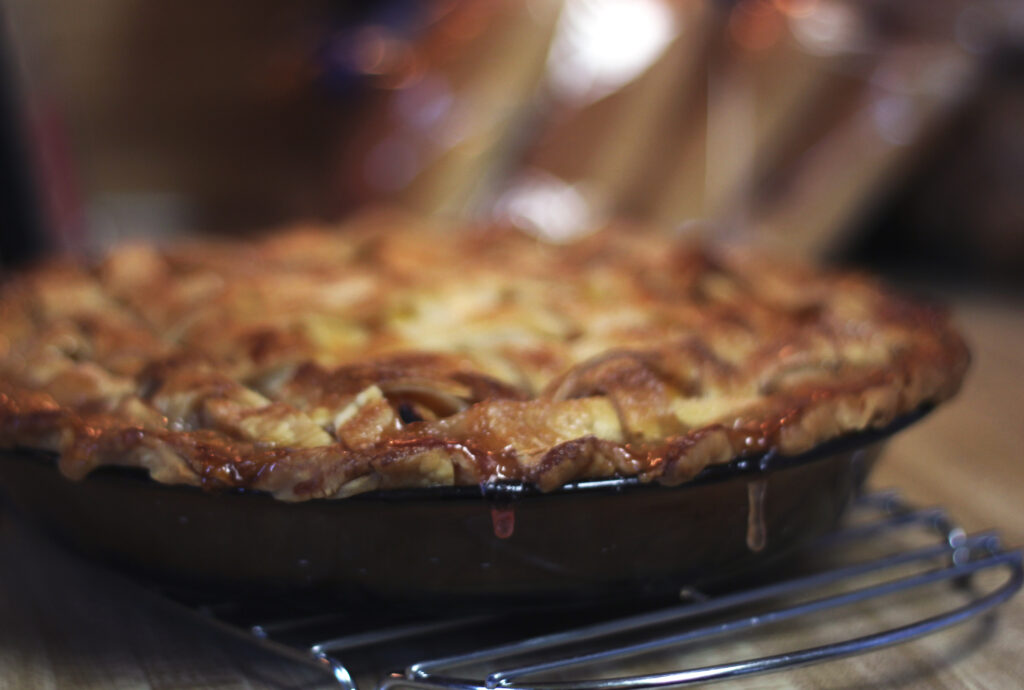
A properly chilled crust also bakes a cleaner line where it meets the custard filling, which becomes more visually obvious once a filling crack has been avoided and the rest of the pie is smooth, the same crust discipline that keeps an apple pie’s edge from slumping.
How to test doneness without cutting into the pie
| Test | What it tells you | Reliability |
|---|---|---|
| Instant-read thermometer, center | reads 175F when correctly done | most reliable |
| Gentle jiggle of the pan | center should wobble like soft gelatin, edges set | reliable with practice |
| Visual surface, no thermometer | a slight sheen and matte edges | least reliable, easy to overbake by eye |
| Toothpick in the center | not useful; custard clings regardless of doneness | not recommended |
An instant-read thermometer inserted at an angle into the center, avoiding the crust below, gives the clearest signal and removes the guesswork that leads most home bakers to overshoot. The jiggle test works nearly as well once a baker has done it a few times and knows what the right amount of wobble looks like.
What to do if a crack has already formed
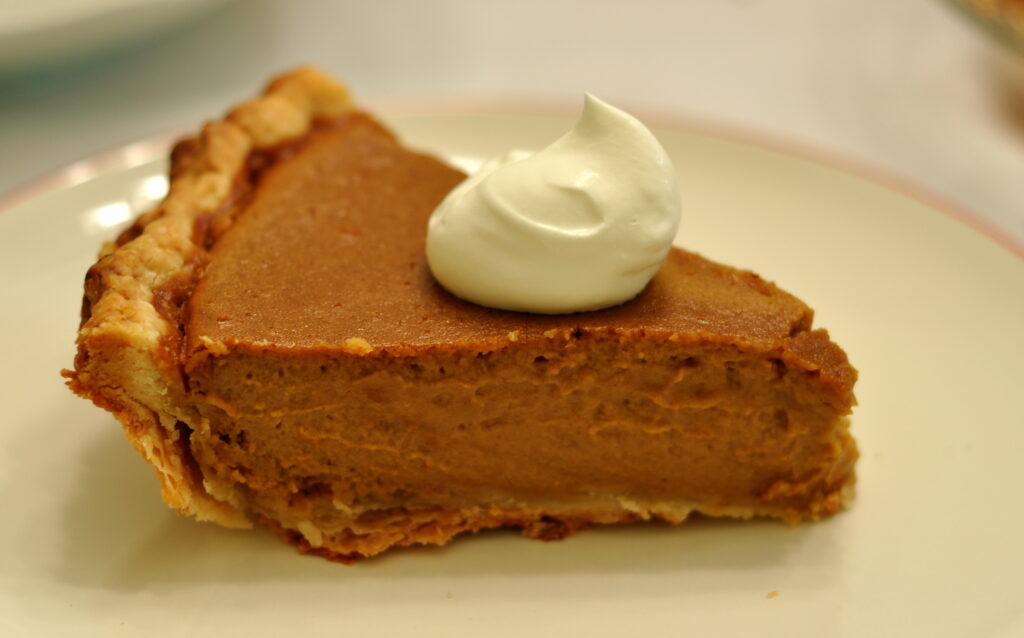
Once a crack opens, nothing brings the surface back to a single smooth plane again; the structural damage is done, and a home fix that attempts to smooth or fill the crack after the fact tends to look worse than the crack itself once it dries.
The reliable rescue is coverage rather than repair. A layer of lightly sweetened whipped cream, spread or piped across the entire top, hides a crack of almost any size completely, and it is close to standard practice for pumpkin pie regardless of whether a crack occurred, which is part of why the fix feels less like a compromise than it might for a different dessert.
A cranberry compote or a dusting of toasted pecans spooned over the top works the same way for a presentation that skips whipped cream, the kind of finishing touch that also saves a rustic free-form galette when its filling runs during baking. Either approach turns a structural flaw into something that looks intentional rather than salvaged.
Storing a finished pumpkin pie safely
A baked pumpkin pie is a custard containing eggs and dairy, and it should not sit out at room temperature for more than about two hours before it needs to go into the refrigerator, the same rule that applies to any dish containing raw or lightly cooked egg-based ingredients.
Refrigerated and covered, it keeps well for three to four days, and the flavor is arguably at its best on the second day, after the spices have had time to settle through the filling. Freezing a baked pumpkin pie is possible but tends to introduce moisture as it thaws, softening the crust noticeably, so refrigeration is the better choice for anything that will be eaten within the week.
Reheating is not necessary; a pumpkin pie is traditionally served cold or at cool room temperature rather than warmed, which also sidesteps any concern about holding a custard dessert at an unsafe temperature for an extended period.
A pie transported to another location for a gathering should travel in a cooler or insulated carrier if the trip runs longer than a short drive, especially in warmer weather, since a custard pie sitting in a warm car for an extended stretch faces the same two-hour exposure limit as one left on an unrefrigerated counter at home.
A pie pulled slightly underdone, cooled slowly on a rack, and topped generously if a crack does appear anyway covers nearly every version of this problem. The oven is rarely where it goes wrong; the counter usually is.
Frequently Asked Questions
Why did my pie crack even though I followed the recipe’s baking time exactly?
Oven temperatures vary enough between units that a fixed baking time is a rough guide rather than a guarantee. Relying on the internal temperature and wobble test rather than the clock accounts for that variation and gives a more consistent result across different ovens.
Can I fix a crack by pressing the pie back together while it’s still warm?
No, once the structure has separated, pressing it back together does not reform the protein network that cracked. It will simply crack again, or leave a visible seam, once it fully cools. Covering it after the fact works better than attempting a repair.
Does using canned pumpkin instead of fresh puree affect cracking?
Not directly, though canned puree tends to be more consistent in moisture content than homemade puree, which can vary depending on how well it was drained. A watery fresh puree can behave slightly differently in the custard, but the overbaking and fast-cooling causes remain the same regardless of which puree is used.
Is a slight dome on the pie normal, or does that mean it will crack?
A slight dome while baking is normal and usually settles back down as the pie cools. A dome that is extreme, paired with a very firm-looking surface, is often a sign of overbaking and is worth pulling from the oven before it goes any further.
Should I bake the pie on a lower oven rack to prevent cracking?
Rack position affects browning more than cracking directly, though a rack that is too close to the top heating element can overbake the surface before the center catches up, which indirectly contributes to the overbaking problem. A middle rack position is the safer default.