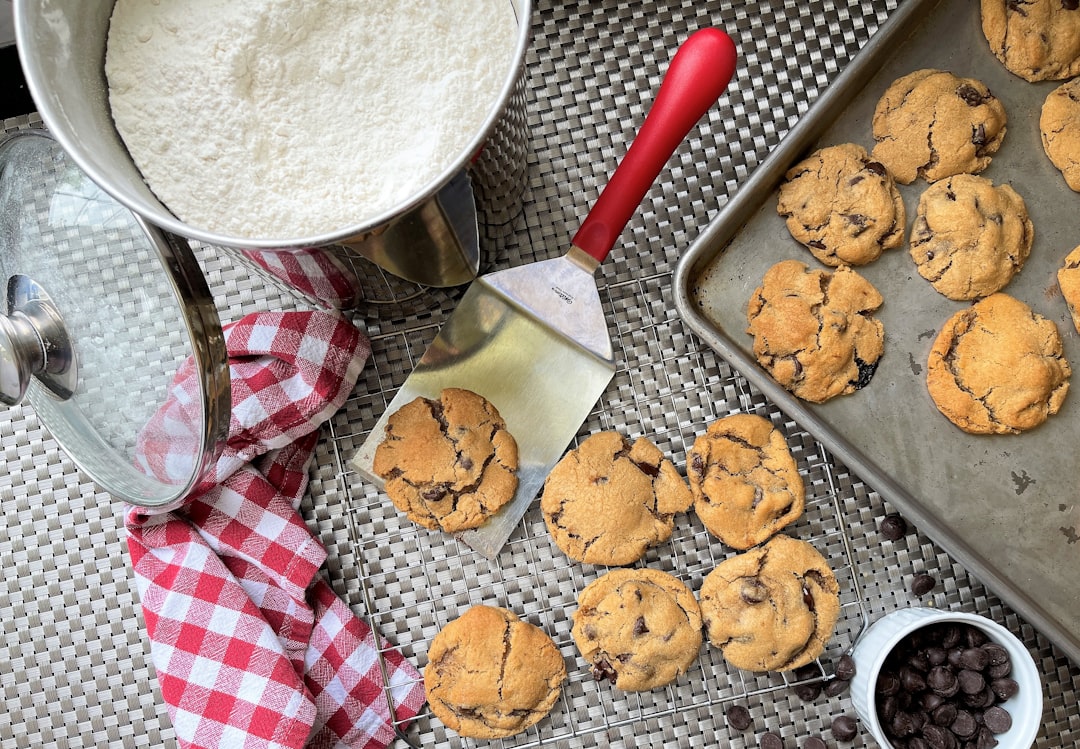

Three small pans, the same 60 grams of butter and 60 grams of flour in each, the same burner set to medium. The first came off at three minutes, still pale and smelling of raw pastry. The second at seven, the color of wet sand. The third at twenty-two, dark as an old penny and smelling of toasted nuts.
Each one went into 600 milliliters of hot milk or stock. The pale one set into something a spoon stood up in. The sand-colored one made a proper coating sauce. The dark one made a liquid that was unmistakably delicious and barely thicker than what went into the pan.
That is the whole trade. Every minute of color you buy costs you body, and the exchange rate is steeper than most recipes admit. Here is the timing for each stage, the ratio worth committing to memory, and how much extra dark roux you need to land in the same place.
- Ratio: equal weights of fat and flour, always, whatever the color
- White: 2 to 4 minutes, full thickening power, bechamel and cream soups
- Blond: 5 to 8 minutes, roughly four fifths the power, veloute and pan gravy
- Brown: 15 to 25 minutes, about half, etouffee and dark gravies
- Dark brown: 30 to 45 minutes, a third or less, gumbo and little else
- To match a white roux with a brown one: use about twice as much
- Watch out for: splashing hot roux, and flour that never got cooked
Three pans, one flour, three outcomes
Nothing was added and nothing was taken away between the three pans. The butter was the same butter, the flour the same all-purpose flour out of the same bin, and the heat was held at a steady medium with a thermometer laid in the fat to keep it honest.
What changed was time. Flour heated in fat browns the same way bread browns, through the reaction between its own proteins and sugars, and it also does something quieter that matters more for a sauce: the long starch chains that do the thickening start breaking into shorter fragments.
Short fragments still dissolve, still taste good, and still contribute flavor. They just cannot trap water the way an intact chain can. By the time the pan smells of roasted hazelnut, a meaningful share of the thickening machinery has been dismantled in exchange for that smell.
Why thickening power falls as the color rises
Flour thickens because its starch granules swell in hot liquid and release long amylose and amylopectin molecules that tangle with each other and with water. That tangling is what a spoon feels as body. The process has a name, gelatinization, and it needs both heat and water to happen.
Dry heat in fat does the opposite job. It breaks glycosidic bonds along those chains, a process usually called dextrinization, and each break shortens the molecule. A shortened molecule occupies less space, holds less water, and forms a weaker network when it finally meets liquid.
So the browning and the weakening are not two separate things happening at once. They are the same heating, seen from two angles. This is why there is no technique, no fancy flour and no clever pan that gives you dark color and full thickening in one roux. The only way to get both is to make more roux.
The roux stages, timed and described
The times below assume a heavy pan, medium heat, and equal weights of butter and all-purpose flour in a batch of around 120 grams total. A larger batch runs slower and a thin pan runs faster and less evenly.
| Stage | Minutes on medium | Color | Smell | Relative thickening |
|---|---|---|---|---|
| White | 2 to 4 | ivory, no change | faintly of pastry | 100 percent, the reference |
| Blond | 5 to 8 | pale straw | toasted, biscuit-like | about 80 percent |
| Brown | 15 to 25 | peanut butter to copper | nutty, popcorn | about 50 percent |
| Dark brown | 30 to 45 | milk chocolate | coffee, roasted | 30 percent or less |
Those percentages are approximations and they hold up well enough to plan a recipe around. The first four minutes cost you almost nothing, which is why nobody serves a truly raw roux: white is not uncooked, it is cooked just long enough to lose the flour taste without taking on color.
The clock accelerates at the end. Between minute twenty-five and minute thirty-five a brown roux can go past dark and into burnt, and burnt is not a stage. Black flecks and an acrid smell mean the batch is finished, and no amount of stock will hide it.
Fat to flour by weight, not by tablespoon
Equal weights is the working ratio and it is the one that survives contact with reality. A cup of flour weighs about 120 grams and a stick of butter about 113, which is close enough that the old volume conventions land in roughly the right place by accident.
Butter complicates it slightly because it is only around 80 percent fat. The rest is water, which boils off in the first two minutes with a lot of noise, and milk solids, which are the first thing to scorch in a long dark roux. Clarified butter, oil or rendered fat all behave more predictably past the blond stage.
If a roux looks greasy and separates in the pan, there is too much fat. If it clumps into a dry paste that will not spread, there is too much flour. Both are workable, and neither is what you want, since a correct roux looks like wet sand and moves like slow lava.
How much more brown roux you need for the same body
The practical question is not how a roux browns but how to substitute one for another without rewriting the recipe. Start from the standard sauce ratios and scale up as the color goes down the table.
| Sauce weight | White roux per liter | Blond | Brown | Dark brown |
|---|---|---|---|---|
| Light, coats a spoon thinly | 50 g fat + 50 g flour | 60 + 60 | 100 + 100 | 160 + 160 |
| Medium, standard sauce | 70 + 70 | 85 + 85 | 140 + 140 | 220 + 220 |
| Heavy, souffle base or filling | 110 + 110 | 135 + 135 | 220 + 220 | not practical |
The bottom right corner of that table is empty for a reason. Getting a heavy binding thickness out of a dark roux means putting so much fat into the pot that the sauce breaks and slicks the surface. Gumbo is thin for this exact reason, and it is thin on purpose.
When a dark roux cannot carry the load alone, the honest fix is a second thickener rather than more roux: okra, file powder, a puree of the vegetables already in the pot, or simple reduction. Cooks who work with dark roux daily reach for all four.
Which fat, and what it changes
Butter tastes best and browns first, because those milk solids brown well before the flour does. For anything past blond, it is working against you. Below the blond stage it is the obvious choice and the reason a bechamel tastes like it does.
Neutral oil is the standard for long dark roux. It tolerates the twenty-five minutes without contributing burnt dairy, and it lets the flour itself set the flavor. Rendered pork fat, bacon fat, duck fat and beef drippings all work and all bring their own character, which is welcome in a gravy and distracting in a cream soup.
Whatever the fat, it should be hot but not smoking when the flour goes in. Flour dropped into fat at its smoke point seizes on the outside and stays raw inside, and the resulting lumps do not dissolve later.
The method, pan to sauce
- Weigh the fat and the flour before anything is hot. Equal weights. Doing this after the pan is going is how ratios drift.
- Melt the fat over medium heat and let the bubbling stop. With butter, that noise is water leaving. Adding flour before it goes quiet gives you a wetter start and an unpredictable clock.
- Add all the flour at once and stir it smooth. A flat wooden spoon or a heatproof spatula beats a whisk here, because a whisk traps paste in its wires.
- Stir continuously and watch the color, not the timer. The times in the table are a guide. Your pan, your burner and your batch size all move them.
- Pull the pan one shade before the color you want. A hot pan keeps working for another thirty to sixty seconds after it leaves the heat.
- Add the liquid in three stages, whisking hard between each. The first addition should turn the roux into a thick paste, the second into a batter, the third into a sauce.
- Bring it to a simmer and hold it there for at least ten minutes. This is not optional. Full thickness only arrives at a simmer, and the flour needs the time.
- Season at the end, after the reduction has happened. A sauce that simmers for twenty minutes concentrates, and salt added early ends up doubled.
Hot roux, cold liquid, and the lump question
The rule people repeat is hot roux into cold liquid, or cold roux into hot liquid, never hot into hot. It works, and the reason has nothing to do with magic. A temperature difference gives you time to disperse the starch before it gelatinizes and glues itself into a ball.
In practice the more reliable variable is how you add it. Liquid poured in slowly with hard whisking gives a smooth sauce at almost any combination of temperatures. Liquid dumped in all at once gives you lumps even when the temperatures are textbook.
A roux pan is genuinely dangerous in a way most kitchen tasks are not. Hot fat and flour sit well above the boiling point of water, they stick to skin, and a splash of cold liquid into a very hot dark roux erupts. Add the first liquid off the heat, stand back, and keep your forearms out of the pan. Cooks who make dark roux regularly call it a name that has to do with napalm, and the joke has a point behind it.
Where each stage actually belongs
The four stages of roux are not interchangeable jobs with different colors. White roux goes into bechamel, into the base for a mac and cheese, into cream soups and into a croquette binding where you want the mixture stiff enough to shape when cold. It contributes body and essentially no flavor of its own.
Blond is the workhorse. It goes into veloute, into pan gravy, into pot pie filling and into any sauce where a suggestion of toast is welcome but the sauce should still taste of the stock. A filling that has to hold its shape under a crust is blond roux territory.
Brown belongs in etouffee, in a dark onion gravy, in Creole and Cajun braises. Dark brown belongs in gumbo and in very little else, and the cooks who use it treat forty minutes of stirring as the price of admission rather than a step to shortcut. A sausage gravy sits at the pale end of that range and would be ruined by anything darker.
Storing roux, and the batch that saves a weeknight

Roux keeps, which is the single most useful thing about it. A large batch of brown roux cooked once and portioned out turns a forty-minute step into a spoonful, and it is standard practice in kitchens that serve dark sauces every day.
Cool it spread thin on a tray rather than in the pot, since a deep container of hot fat holds heat for a long time and cools through the range where things grow. Once it is properly cold, it keeps in a sealed jar in the refrigerator for around a month and in the freezer for six, and it scoops straight from cold into hot liquid.
Frozen in an ice cube tray, each cube is roughly a tablespoon of each component, which makes the arithmetic easy. Label the jar with the stage and the date, because a blond roux and a brown roux look almost identical once they are cold and set.
Six ways a roux goes wrong
It tastes of raw flour. The sauce did not simmer long enough after the liquid went in. Ten minutes at a real simmer is the minimum, and this also matters beyond taste: flour is a raw agricultural product and cooking it through is the point at which that stops being a question.
It is thinner than expected. Either the roux was darker than the recipe assumed, or the sauce never reached a simmer. Both are common and the second is more common.
There are lumps. Liquid went in too fast, or the pan was left unstirred long enough to form a skin. Push it through a sieve and move on; a stick blender will also fix it at some cost to texture.
It has black specks and smells sharp. Burnt, and there is no rescue. Wash the pan and start over, because the bitterness spreads through the whole pot.
It broke and there is fat on the surface. Too much fat for the flour, or the sauce boiled hard. Whisk in a little more liquid off the heat, and next time weigh both.
It got thicker overnight. Normal. Starch networks tighten as they cool, a process called retrogradation, and a splash of liquid over gentle heat brings it back. Reheat sauces to a full simmer rather than warming them through, and treat leftovers as a three-day proposition in the refrigerator.
Frequently Asked Questions
Can I make a roux in the oven instead of stirring for forty minutes?
Yes, and for dark roux it is the better method. Equal weights of flour and oil in an ovenproof pan at 350F, stirred every twenty minutes, reaches a deep brown in about an hour and a half with almost no attention and no risk of a scorched patch. It also removes most of the burn hazard, since nothing is at eye level.
Does the type of flour matter?
Less than people expect. All-purpose is the standard and works everywhere. Bread flour has more protein and slightly less starch, so it thickens a little less. Cake flour thickens a little more. Rice flour and cornstarch are not roux material at all, since they behave differently in fat.
Why does my white sauce taste of flour even after simmering?
Usually the roux itself was undercooked, not the sauce. Two full minutes of stirring in the fat before any liquid goes in, until the paste smells faintly toasted rather than dusty, is the fix. A very thick sauce also insulates itself and simmers less than it appears to.
Is a brown roux worth making if I only need color?
No. If the goal is a dark sauce rather than a roasted flavor, get the color from browned onions, from a well-developed fond, from tomato paste cooked down, or from a splash of soy or dark stock. Use a blond roux for the body and let something else handle the color.
Can I thicken with a roux at the end of cooking?
Not directly, since raw roux dropped into a finished pot gives lumps and a floury edge. Make a slurry instead by whisking a spoonful of cooked roux into a ladle of the hot liquid, then stir that back in and simmer for ten minutes. Beurre manie, which is raw butter and flour kneaded together, works the same way and needs the same simmering time.