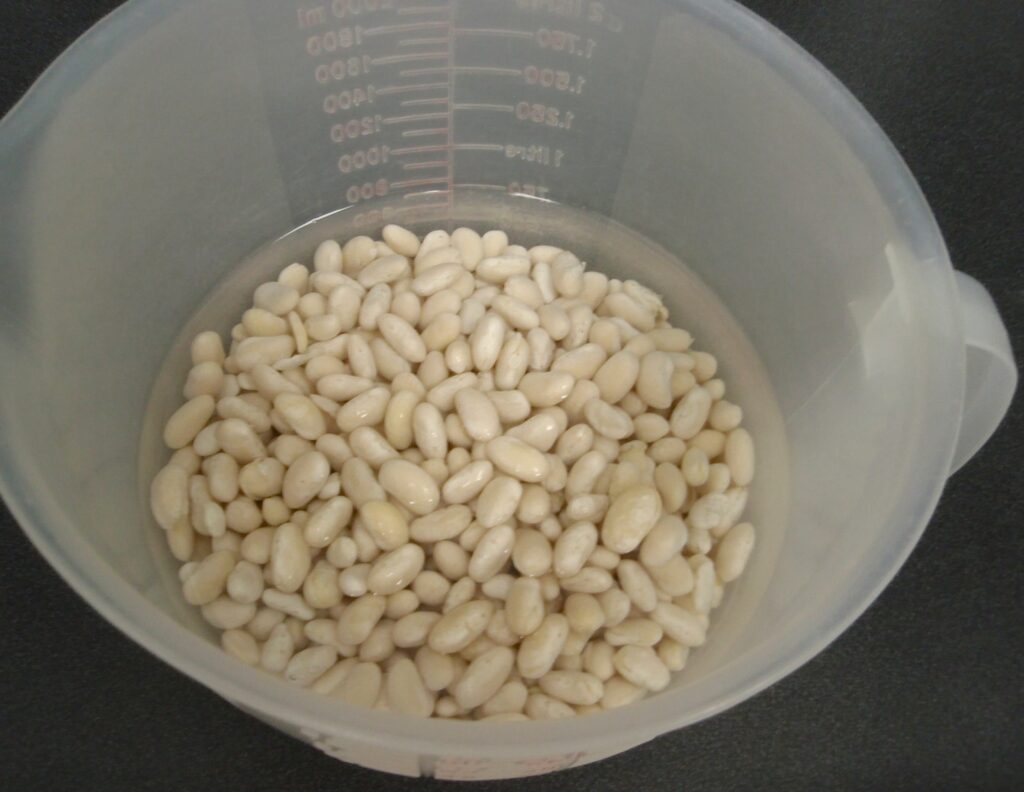
Four pounds of the same dried pinto beans, from the same bag, bought the same week. One pound went into the pot dry. One soaked overnight in plain water. One soaked overnight in water with an eighth of a teaspoon of baking soda. One cooked with a four-inch strip of kombu in the pot. Same pot shape, same burner, same simmer.
The cook times ran from just under an hour to just over two and a half. The skins told a more interesting story than the clock did, and the treatment that finished fastest was also the one that produced the most split beans and the flattest taste.
Below are the four results side by side, what salt in the soaking water actually does, why the kombu claim is weaker than it is usually presented, and the one bean where none of this is negotiable on safety grounds.
- No soak: 2 to 2.5 hours, best skins, deepest flavor
- Overnight plain soak: 1.5 hours, some splitting, mildest flavor
- Baking soda in the soak: 55 to 70 minutes, most splitting, soapy if overdosed
- Kombu in the pot: same time as no soak, better seasoning, no measurable speed gain
- Salt in the soak: softens skins rather than toughening them; use it
- Old beans: never soften properly, whatever you do
- Red kidney beans: must be boiled hard for 10 minutes, no exceptions
What is actually slowing a bean down
Two structures inside a bean resist. The seed coat is a waxy, largely impermeable skin designed to keep water out until the seed is ready to germinate. Behind it, the cotyledon cells are held together by pectin cross-linked with calcium and magnesium ions, and that cross-linking is what makes a bean chalky rather than creamy.
Cooking has to get water through the coat and then break down that pectin. Anything that speeds a bean up works on one of those two problems: soaking hydrates through the coat in advance, alkalinity attacks the pectin directly, and softer water leaves fewer minerals to reinforce it.
Everything else in the folklore is either a variation on those two mechanisms or is not doing much. That is a useful filter for the advice you will find, because a great deal of it contradicts itself.
How to cook dried beans faster, four treatments compared
| Treatment | Cook time | Skins | Texture | Flavor |
|---|---|---|---|---|
| No soak, straight to simmer | 2 to 2.5 hr | almost all intact | creamy, holds shape | deepest, most bean |
| Overnight plain water soak | 1.25 to 1.5 hr | some splitting | even, slightly softer | milder, some lost to the water |
| Overnight brine soak, salted | 1.25 to 1.5 hr | fewest splits of all | creamy, seasoned through | best of the soaked group |
| Baking soda in the soak | 55 to 70 min | many split and shed | mushy at the edges | flat, soapy above a pinch |
| Kombu in the cooking water | 2 to 2.5 hr | intact | as unsoaked | savory, rounder, better seasoned |
| Quick soak, boil 2 min then rest 1 hr | 1.5 hr | more splits than overnight | uneven | similar to plain soak |
The row that surprises people is the first one. Unsoaked beans take the longest and produce the best pot, because nothing is leaching into water that gets thrown away and the skins have not been stressed by a night of swelling before they ever hit heat.
Salt in the soaking water, and the myth it replaced
The old advice was that salt toughens beans and must be added only at the end. It is wrong, and it is wrong in an interesting way.
Sodium ions in the soaking water displace some of the calcium and magnesium that were cross-linking the pectin in the skins. Weaker cross-links mean skins that soften at the same rate as the interior, which is exactly what you want, since a bean that bursts is a bean whose skin gave up before its inside was done.
A tablespoon of salt per quart of soaking water, or roughly a tablespoon and a half per pound of beans in enough water to cover by two inches, is the working amount. Drain the soaking water and cook in fresh liquid, salted again to taste. Beans salted from the start are seasoned through; beans salted at the end are seasoned on the outside.
Baking soda: fast, and it costs you
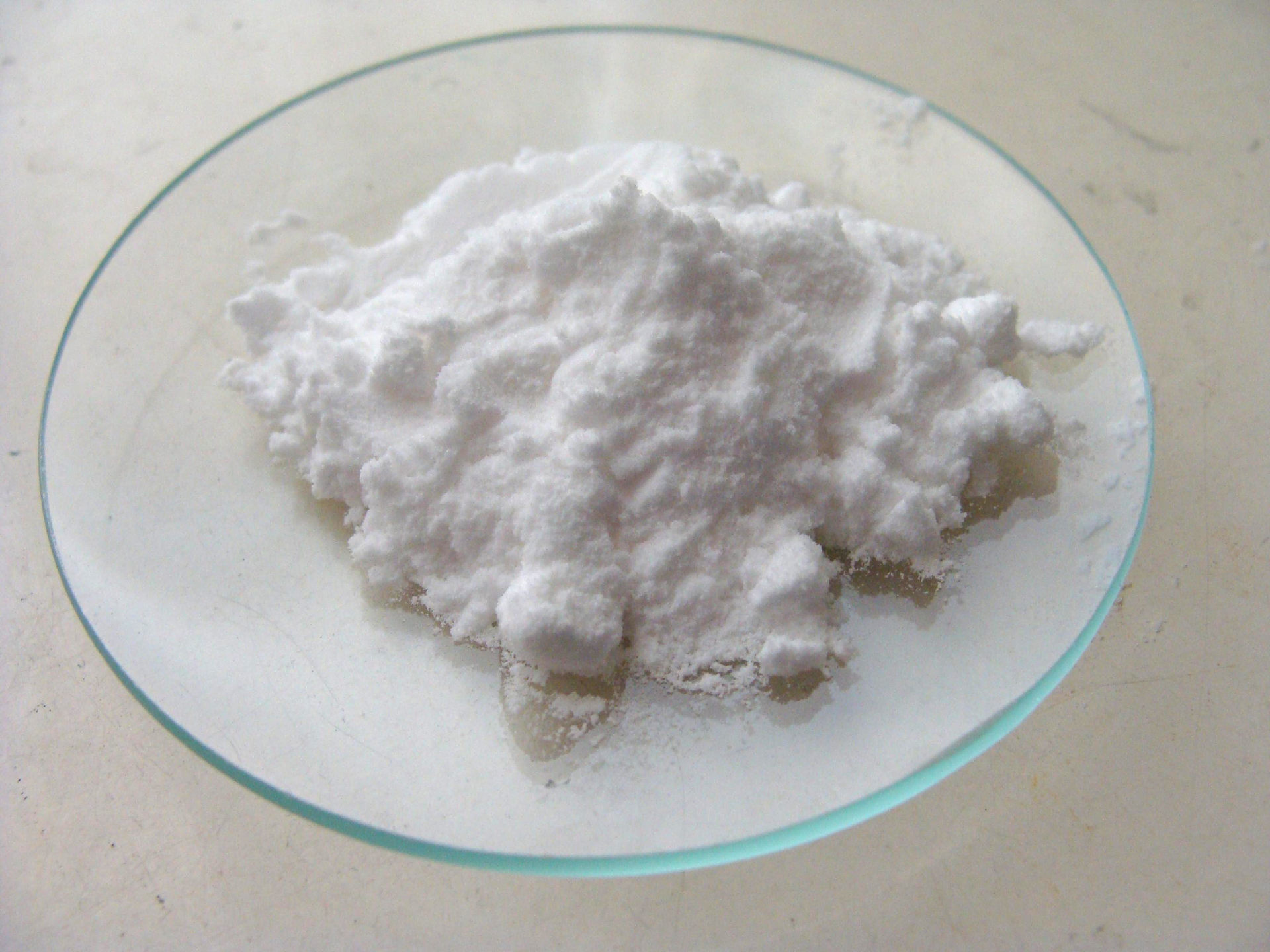
Alkaline water breaks pectin down considerably faster, and a small amount of sodium bicarbonate is the most effective speed-up on the list. An eighth of a teaspoon per pound of beans in the soaking water, or a scant quarter teaspoon in the cooking water, is the range worth using.
Above that it stops being a trick and starts being a problem. Too much and the beans go past creamy into slippery and disintegrating, the skins shed entirely, and there is a distinct soapy taste that nothing covers. It also degrades some of the thiamine in the beans, which is a minor point nutritionally and a real one if beans are a staple rather than a side.
Where it genuinely earns its place is hard water, old beans and chickpeas destined for a smooth puree, where skins falling apart is the goal rather than the failure. For a pot of beans meant to hold their shape, it is the wrong tool.
Kombu, and the honest version of the claim
Kombu is dried kelp, and the standard claim is that a strip in the pot both speeds cooking and reduces the gas beans cause. The evidence for the first is thin and the mechanism offered, that glutamic acid tenderizes, does not hold up well against a controlled comparison. In this test the kombu pot ran on the same clock as the unsoaked control.
The digestibility claim is more interesting and still not settled. Kombu contains enzymes and compounds that may act on the oligosaccharides responsible for gas, and the traditional Japanese practice of cooking beans with it is long-established. Whether a four-inch strip in a household pot does enough to notice is not something a home kitchen can measure.
What kombu unquestionably does is season. It contributes glutamate, which makes the pot taste more savory and rounder without adding anything identifiable, and it does that for pennies. Use it for the flavor, treat the rest as unproven, and remove the strip before serving or chop it into the pot.
Gas, oligosaccharides, and what soaking removes
The compounds responsible are raffinose-family oligosaccharides, which humans lack the enzyme to digest. They pass to the large intestine intact and the bacteria there ferment them, which produces gas and also, incidentally, feeds a population of bacteria that most nutrition research regards as worth feeding.
They are water-soluble. A long soak followed by discarding the soaking water removes a meaningful share of them, which is the strongest practical argument for soaking at all. Cooking in fresh water and discarding the first boil removes a little more.
The other half of the answer is adaptation. People who eat beans regularly report far less trouble than people who eat them twice a year, and the gut bacterial population shifting to handle the load is a real and reasonably well-documented effect. Building beans into the week does more than any single treatment on this list.
The red kidney bean exception
This one is not a matter of texture. Raw and undercooked red kidney beans contain a high level of a lectin called phytohaemagglutinin, and eating even a small number of them raw or lightly cooked causes severe nausea, vomiting and abdominal pain within a few hours. Cases have been documented from as few as four or five beans.
The lectin is destroyed by boiling. The standard advice is to soak the beans for at least five hours, discard that water, and then boil hard in fresh water for at least ten minutes before reducing to a simmer. A rolling boil, not a bare one, and not a lid-on shortcut.
The reason this gets its own section is that a slow cooker on the low setting may never reach a temperature high enough to do it, and holding kidney beans at that temperature can increase the toxicity rather than removing it. Boil kidney beans hard on the stove first, then transfer. White kidney beans and other varieties contain less of the same lectin, so the rule is worth extending to any raw kidney-type bean. Canned beans of every kind have already been through this and need no such treatment. The compound itself is well characterized and the precaution is not folklore.
Beans that will not soften, whatever you do
Sometimes the pot has been simmering for four hours and the beans are still chalky. Three causes account for nearly all of it.
Age is the first and the most common. Dried beans are sold with no useful date and a bag that has been in a warehouse for three years will never come good. The seed coat has hardened past the point where water penetrates it evenly. Buy from a shop with turnover, and buy the bag that looks glossy rather than dusty.
Hard water is the second: calcium and magnesium in the water reinforce the pectin cross-linking exactly as they do in the bean. A pinch of baking soda offsets it, or use filtered water. The third is acid, which slows softening considerably, so tomatoes, vinegar, wine and molasses all belong in the pot after the beans are tender rather than before.
A pot that works, start to finish

- Sort the beans on a tray and rinse. Stones and split beans come through in every bag. This takes two minutes and saves a tooth.
- Decide: soak or not. Soak for speed and for a gentler pot; skip it for flavor and structure. For kidney beans, soak.
- If soaking, use salted water and cover by two inches. A tablespoon of salt per quart. Overnight, or eight hours, at room temperature in a cool kitchen and in the refrigerator in a warm one.
- Drain and cook in fresh water. Two inches over the beans, a bay leaf, half an onion, a clove of garlic, and the kombu if you are using it.
- Boil hard for ten minutes if these are kidney beans. Then reduce. For every other bean, bring to a boil and drop straight to a bare simmer.
- Simmer with the lid ajar, never at a rolling boil. A hard boil breaks skins and clouds the liquid. The surface should barely move.
- Salt the cooking water once the beans are hot. A teaspoon and a half per pound to start, adjusted later.
- Start tasting at 45 minutes, then every 15. Eat one. Chalky in the center means keep going; creamy through means stop.
- Add acid only after they are tender. Tomato, vinegar and wine all go in at the end.
- Cool them in their liquid. Beans stored dry go leathery. The liquid is also worth keeping as a cooking stock.
Cooling, storage and the pressure cooker
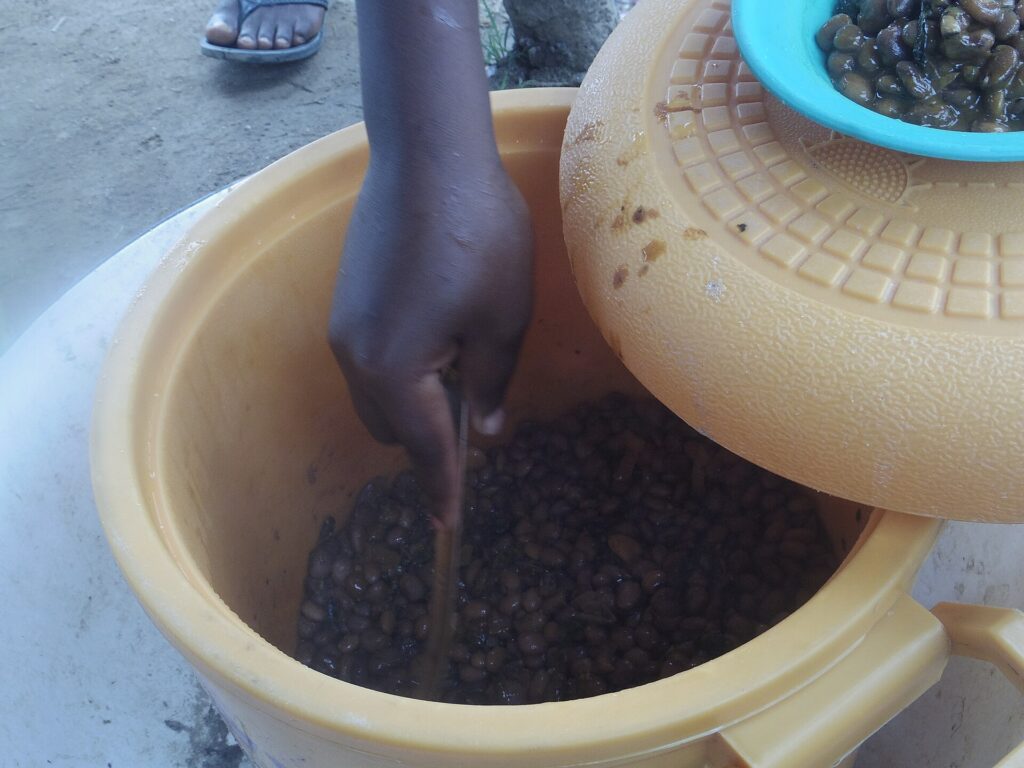
A large pot of beans holds heat for hours and belongs in shallow containers in the refrigerator within two hours of coming off the heat, liquid and all. Four days refrigerated is the working limit and they freeze well for three months in their liquid.
A pressure cooker changes the arithmetic entirely and does not change any of the safety points. Unsoaked pintos run around 35 to 45 minutes at high pressure with a natural release, soaked ones around 20 to 25, and kidney beans reach a temperature well above what the lectin survives. Natural release rather than a fast one, since venting hard blows the skins off.
The one thing a pressure cooker does badly is judgment. There is no tasting halfway through and a batch of old beans that needed another twenty minutes has to go back under pressure to find out. For a bean you have cooked before it is the fastest route by a distance. Dishes where the bean is the structure are worth doing on the stove where you can watch them.
Salt the soak, skip the baking soda unless you want the skins gone, and buy beans from somewhere that sells a lot of them. The pot that takes two and a half hours is usually the one worth eating.
Frequently Asked Questions
Is the soaking water worth keeping?
No. It holds the oligosaccharides you were trying to remove, some of the dust and field debris, and any tannins that leached from the skins. Drain it and cook in fresh water. The cooking liquid is a different matter and is worth every bit of keeping.
Do I have to soak beans at all?
Only kidney beans and their close relatives, where it is part of a safety procedure. Everything else is a choice between an hour of cooking time and a somewhat better pot. Lentils and split peas need no soaking at all and are usually worse for it.
Why did my beans split open?
Usually a hard boil rather than a simmer, or a soak that swelled them faster than the skins could stretch. A gentler simmer and salt in the soaking water both help. Old beans split more too, since the skins have lost their elasticity.
Can I cook different beans in the same pot?
Not well. A black bean and a chickpea are an hour apart and one of them will be paste when the other is ready. Cook them separately and combine afterward, which also lets you freeze what you do not use. Chickpeas in particular want their own pot and their own clock.
How much does a pound of dried beans make?
Between six and seven cups cooked, which is roughly the yield of four fifteen-ounce cans. That ratio is the reason to bother: dried beans cost a fraction of canned, and the cooking liquid that comes with them is worth more than the difference.