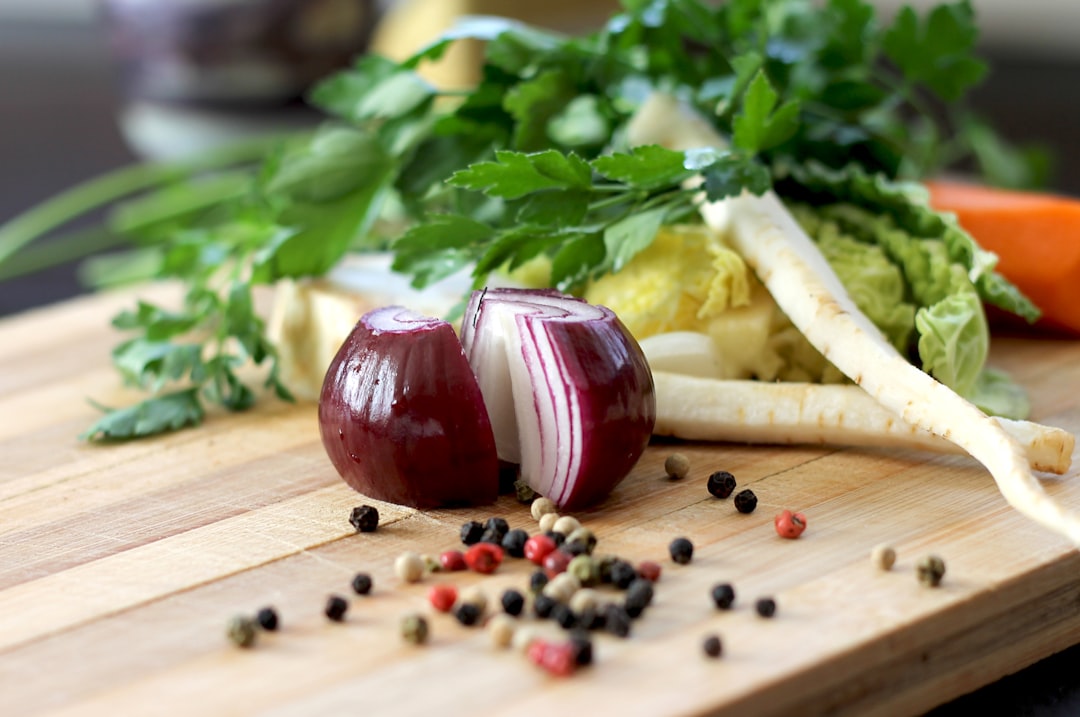
Two pans on the same stove. In one, a halved onion sits cut side down in a dry skillet, going from white to gold to deep amber over twenty minutes. In the other, granulated sugar with a spoonful of water sits still and pale until it suddenly turns the color of strong tea. Both are called browning in most kitchens. They are two unrelated pieces of chemistry.
The first needs an amino acid and a reducing sugar in the same place at the same time, and it starts producing visible color when the surface gets somewhere near 285 degrees Fahrenheit. The second needs sugar alone, no protein anywhere, and ordinary table sugar does not begin to break down until roughly 320. That forty-degree gap sounds trivial and it is the reason a seared scallop and a spoonful of caramel share almost no flavor.
What follows is what each reaction consumes, the conditions that speed it up or stall it out, the temperatures written down in one table, and the foods where both are running on the same surface at the same moment.
- Maillard needs: amino acids plus reducing sugars, a dry surface, roughly 285F and up
- Caramelization needs: sugar only, no protein required, roughly 320F for sucrose
- Both are blocked by: free surface water, which pins the surface near 212F
- Strongest lever for Maillard: a slightly alkaline surface, not a hotter oven
- Strongest lever for caramelization: which sugar you started with
- Both at once: bread crust, roast onion, seared scallop, browned butter
- Neither is a safety test: color reports on the surface and says nothing about the center
Two brown crusts that are not the same reaction
A seared scallop and a spoonful of caramel are both brown, both smell good, and overlap barely at all in the compounds they contain. Sear the scallop and the aroma reads roasted, nutty, faintly meaty. Cook sugar to the same shade and it reads sweet, buttery, and at the far end bitter.
The distinction is worth holding onto because the two respond to different controls. If a roast will not brown, adding sugar rarely fixes it. If a caramel will not take color, adding protein does nothing whatsoever. Knowing which reaction you are trying to run tells you which dial is connected to anything.
Recipe writing swaps the names constantly. Caramelized onions are the standard example: the phrase is fixed in the language, and most of what happens in that pan is Maillard chemistry, because an onion carries amino acids alongside its sugars.
What the Maillard reaction actually consumes
The Maillard reaction is a family of reactions rather than one step. It opens when the carbonyl group of a reducing sugar meets the amino group of an amino acid, then cascades through dozens of unstable intermediates into the large brown polymers that give a crust its color and the small volatile fragments that give it its smell.
Reducing sugars are the ones carrying a free carbonyl group: glucose, fructose, lactose, maltose. Sucrose is not one of them until it splits into glucose and fructose, which both heat and acid accomplish. That is why a dusting of plain sugar on a roast does less than a spoonful of honey, and why milk browns so readily.
The amino acid side decides the smell more than the sugar side does. Different amino acids steer the cascade toward different aroma compounds, which is part of why bread crust, roast beef and toasted almonds smell nothing alike while running the same underlying chemistry.
Caramelization is sugar alone, and it needs more heat
Caramelization is thermal decomposition. Push a sugar past its breakdown point and the molecule comes apart and reassembles into hundreds of fragments, some volatile and aromatic, some large and brown, a good number of them bitter.
No protein is involved and none is required. A pan of sugar and water browns perfectly well without a nitrogen atom in it. The temperature needed is higher than for Maillard, and it depends heavily on which sugar is in the pan.
Sucrose is the reference at roughly 320 degrees. Fructose starts well below 250, glucose lands near 300, and maltose does not move until past 350. That spread is why honey scorches on a grill while granulated sugar sits there unchanged, and why a fructose-heavy glaze belongs in the last three minutes of a cook rather than the first.
The temperatures, and why they are ranges rather than points
| Reaction | What it needs | Starts near | Runs fast near | Signature flavors |
|---|---|---|---|---|
| Maillard | amino acids and a reducing sugar | 285F at the surface | 300 to 350F | roasted, nutty, meaty, bready |
| Caramelization, fructose | fructose | 230F | 250 to 300F | quick, floral, burns in seconds |
| Caramelization, glucose | glucose | 300F | 320 to 350F | clean and mildly sweet |
| Caramelization, sucrose | table sugar | 320F | 335 to 360F | butterscotch, then bitter |
| Caramelization, maltose | maltose | 355F | 360 to 380F | malty and restrained |
| Both together | protein plus free sugar | 285F | 300 to 360F | most crusts worth eating |
Every number in that table describes the surface, not the oven and not the center. A chicken thigh in a 425 degree oven has a skin sitting close to 212 degrees until the moisture there is gone, and only then does it climb. That lag is the entire reason a wet surface refuses to color.
They are ranges rather than points because both reactions run slowly well below their nominal start and quickly above it. Maillard products accumulate at 250 degrees given an hour, which is what a long low roast trades on. Time substitutes for heat, within limits.
Water is the gatekeeper for both
While free water is evaporating off a surface, that surface stays pinned near the boiling point, and neither reaction gets anywhere. This single fact explains most browning failures in a home kitchen, and it is almost never the one people suspect.
Crowding is the usual culprit. Six chicken thighs in a ten-inch skillet release moisture faster than it can leave the pan, the pan fills with steam, and forty minutes later the skin is pale and slack. The same six thighs spread across a half sheet pan with an inch between them brown in well under half that time.
Drying the surface buys more than raising the heat does. Pat meat dry, salt it hours ahead and leave it uncovered on a rack in the refrigerator, and give vegetables room to breathe. A tray of roasted vegetables browns or steams depending almost entirely on how far apart the pieces sit.
pH moves the Maillard reaction more than heat does
An alkaline surface accelerates Maillard browning sharply, because an amino group that is not carrying a proton is far more reactive. A quarter teaspoon of baking soda tossed through a pound of sliced onions is a large intervention, not a garnish.
Pretzels are the clearest demonstration. The alkaline dip before baking is what produces that mahogany skin at ordinary bread temperatures, in a dough that would otherwise bake pale gold. The same trick pulls onions from an hour down to about twenty minutes and makes a stir-fry sauce brown almost on contact.
There is a cost. Too much soda turns vegetable texture slippery, breaks down pectin, and leaves a soapy metallic edge that no amount of salt hides. Start at an eighth of a teaspoon per pound and stop the moment the flavor shifts. Acid runs the other direction and slows the reaction down, which is one reason a heavily vinegared marinade produces pale meat no matter how hot the grill is.
Maillard vs caramelization, side by side on one sheet pan
Four things on one half sheet at 400 degrees: a bone-in chicken thigh, a wedge of yellow onion, a single layer of carrot coins, and a spoonful of dry sugar in a small foil cup. Same oven, same rack, twenty-five minutes.
The chicken browned by Maillard alone. There is not enough free sugar in muscle for anything else, and what color developed came from protein and the small amount of glucose present. The carrots ran both reactions, since a carrot carries sucrose and free amino acids together, and the cut edges went noticeably darker than the flat faces because the edges dried first.
The onion ran both heavily and produced the deepest smell on the tray. The sugar in the foil cup did essentially nothing. At 400 degrees of moving oven air, a shallow pool of dry sucrose barely reached its own threshold before the timer went off. Sugar wants contact with hot metal, not hot air, and that difference is worth more than fifty degrees.
Where both run on the same piece of food
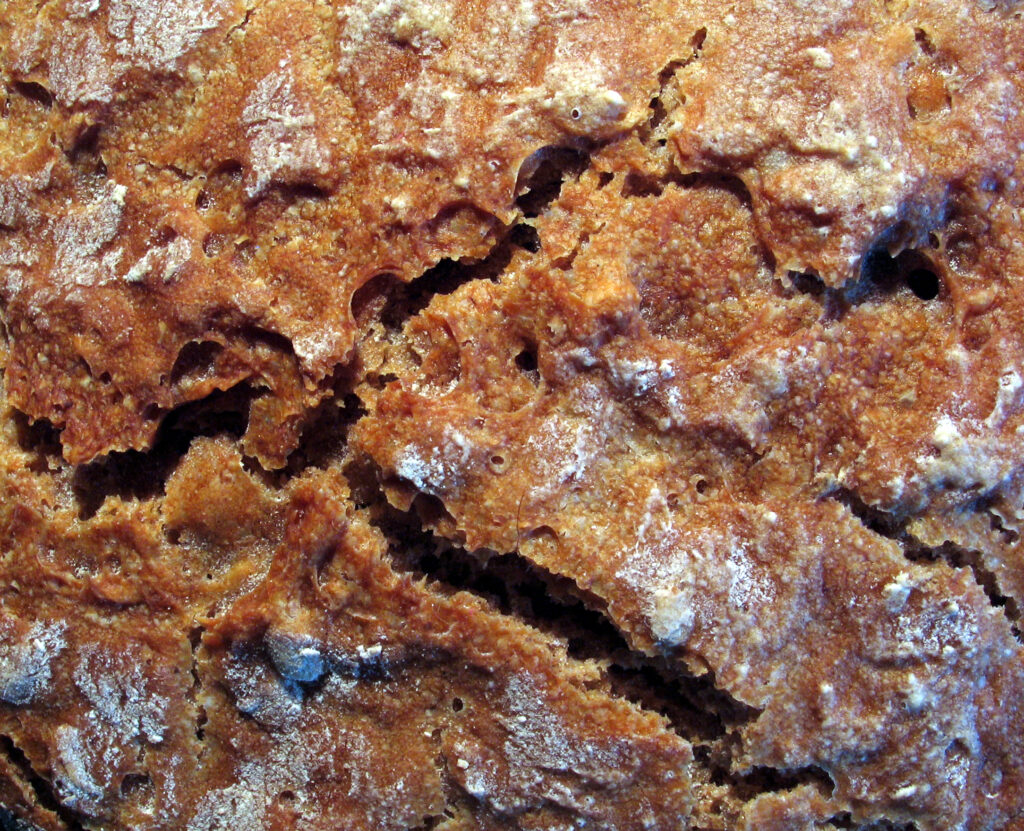
Most crusts are mixtures. Bread crust runs Maillard on the flour’s protein and free sugars, with caramelization layered on top wherever the surface gets dry and hot enough. Onions cooked down for hours run both from the first ten minutes onward.
Browned butter is a clean single case in disguise. The milk solids that settle at the bottom of the pan carry protein and lactose, and lactose is a reducing sugar, so the reaction turning them brown and nutty is Maillard rather than caramel, whatever the color suggests.
Dulce de leche looks like the opposite and is not. Milk brings lactose and plenty of protein, so a long slow cook produces a Maillard-dominant flavor even though the result is universally called a caramel. In both cases the word describes the color, not the mechanism.
Sugar type decides which caramel you get
When you are working sugar directly, the sugar you choose changes the working window more than the burner setting does. Sucrose gives the widest usable range and the most familiar flavor, which is why nearly every caramel recipe starts there and why substitutions go wrong.
Fructose-heavy syrups, meaning honey, agave and invert syrups, begin browning more than eighty degrees lower and travel from pale to black in seconds. On a grill they scorch long before the meat is done. A cookie built on brown sugar browns faster than the same dough built on white for related reasons: molasses brings both acid and invert sugars.
Corn syrup added to a sucrose caramel does something unrelated to browning. It interferes with crystal formation and keeps the finished caramel smooth, which is a texture decision rather than a color one.
Brown is not a doneness reading
Color develops at the surface, and the surface reports nothing reliable about the center. A thick pork chop can carry a mahogany crust over a raw interior after four minutes in a very hot pan, and a slow-roasted bird can be fully cooked while still looking underdone.
Ground meat fails in both directions and deserves a specific warning. It can turn gray-brown well before it reaches a safe internal temperature, and it can stay stubbornly pink well past it, because pH and the chemical state of myoglobin shift the color independently of heat. Use an instant-read thermometer in the thickest part, checked in more than one spot, and go by the number: poultry and all ground poultry at 165F, other ground meats at 160F, whole cuts of pork and beef at their own targets followed by a rest.
There is a second reason to stop chasing color past a point. Starchy foods pushed hard at high heat, particularly potatoes, bread and coffee, form acrylamide along with the flavor, and food safety agencies advise aiming for gold rather than dark brown on fried and roasted starches. That is an argument for stopping at amber, not for skipping browning.
Six foods, and which reaction is doing the work
| Food | Maillard | Caramelization | The lever that matters |
|---|---|---|---|
| Seared steak | dominant | negligible | dry surface and a very hot pan |
| Slow-cooked onion | dominant | present | time and pH, not temperature |
| Bread crust | dominant | present at the surface | steam early, dry heat late |
| Browned butter | dominant | none | watch the solids, not the fat |
| Caramel sauce | none | only | sugar type and pan contact |
| Roast carrot or squash | present | dominant at the edges | spacing and cut size |
Read down the last column and the useful lever is almost never the oven dial. It is water, spacing, contact and pH, in roughly that order of importance. A steak in a heavy pan proves the first two on its own.
What burnt looks like on each side
Both reactions run past their useful window into something acrid, and the two failures look different enough to tell apart. Overcooked Maillard products go black and matte, flake rather than dissolve, and smell like coffee left on a burner. Nothing corrects them.
Overcooked caramel travels from amber to red-brown to near black, thins out as it goes, and turns sharply bitter. A very dark caramel is a legitimate ingredient in small quantity, since the bitterness balances sweetness in a sauce, but past that line it is waste. Pull it a shade earlier than looks right, because a heavy pan keeps cooking after the burner is off.
The recoverable case is the pan carrying both, brown fond with a scatter of black flecks. Deglaze, taste before committing, and strain if it reads clean. If the whole base is black, the honest move is a fresh pan.
Ask which of the two you are actually running and the fix usually names itself. A pale roast is a water problem. A stalled caramel is a contact problem. Neither one gets solved by turning the oven up another fifty degrees.
Frequently Asked Questions
Are caramelized onions actually caramelized?
Mostly not. Onions carry amino acids alongside their sugars, so the browning that happens over an hour in a pan is largely Maillard chemistry, with genuine caramelization joining in once the surface is dry and hot enough. The name is fixed by usage. The practical consequence is that a pinch of baking soda speeds them up considerably, which would do nothing at all to a real caramel.
Why does my meat go gray instead of brown?
Water, in one of three forms. Either the surface was wet when it hit the pan, or the pan was crowded, or the heat was too low to drive off juices as fast as they appeared. Dry the surface with paper towel, leave space between pieces, and let the pan reach temperature before anything goes in.
Does searing seal in the juices?
No. A seared crust is porous, and a seared steak loses roughly as much moisture as an unseared one over the same cook. What searing does is build flavor compounds that are otherwise absent, which is reason enough on its own without the sealing story.
Can I get Maillard browning below 285 degrees?
Yes, slowly. Both reactions proceed at lower temperatures given longer times, which is what a very low roast and a long reduction rely on. What you cannot do is get the same rate. The gap between 250 and 350 degrees is the gap between hours and minutes.
Why does sugar burn in one spot before the rest of the pan melts?
Uneven heat transfer. Sugar needs direct contact with a uniformly hot surface, and thin pans develop hot spots faster than the sugar can conduct heat sideways. Use a heavy stainless or copper pan, add a spoonful of water at the start so the sugar dissolves before it browns, and swirl the pan rather than stirring it.