A four-pound pork shoulder went into a Dutch oven with a whole bottle of dry cider and nothing else but onions. Three and a half hours later the meat was still firm at the center and the liquid had reduced to something with a hard, tinny edge to it. Another hour did not fix the firmness. It concentrated the sourness.
The same cut, the same oven and the same cider at half the volume, made up with stock, was pulling apart at three hours and tasted of apples rather than of vinegar. The variable was not time and it was not temperature.
Acid in a braising pot is a real ingredient with a real effect on how fast connective tissue converts, and cider is more acidic than most people treat it as. Below is the ratio that works, the point where the sharpness gets added on purpose, and the two-stage cook that gets you a soft interior without a pale, boiled exterior.
- The ceiling: cider at no more than half the total braising liquid
- Working ratio: 250 ml cider to 250 ml stock for a 4 lb shoulder
- Liquid level: halfway up the meat, never covering it
- Oven: 300F, covered, 3 to 4 hours for shoulder
- Finish: lid off for the last 30 to 45 minutes
- Vinegar: 1 to 2 tablespoons at the very end, off the heat
- Pull at: 200 to 205F for shreddable, and rest at least 30 minutes
The pot that came out sour
Cider tastes mild in a glass. In a pot that has reduced by a third, it does not. A dry cider sits somewhere near the acidity of a light white wine, and unlike wine it also carries residual sugar, so a heavy reduction gets sharp and sweet at the same time, which is a harder combination to correct than either one alone.
The firmness is the more interesting failure. A braise that will not tenderize after four hours gets blamed on the cut or the oven, and in a cider pot it is often the acid instead.
Both problems come from the same source and both are solved the same way. Use less cider, make up the volume with something neutral, and add the sharpness back at the end when it has no time to do damage.
What acid does while collagen converts
Braising makes a tough cut tender through one process and one process only: collagen in the connective tissue slowly converting to gelatin. That happens above about 160F and it happens on a curve, so an hour at 190F does far more than three hours at 165F.
Acid has two opposing effects on that. At mild levels it swells collagen fibers and helps water get in, which is the mechanism behind a marinade and behind the small splash of wine in a classic braise. At higher levels it also denatures the muscle proteins themselves, which tighten and expel moisture, and the net result is meat that feels dry and firm even while it is technically cooked through.
Where the balance tips is roughly where cider stops being a flavoring and becomes the medium. Keep it under half the liquid and you get the swelling without the squeezing. Push past that and the pot fights itself for four hours.
How much cider is too much
The number worth remembering is fifty percent, and forty is safer. That is cider as a share of total braising liquid, counting whatever comes out of the onions and the meat as part of the total.
| Cider share of liquid | Time to tender, 4 lb shoulder | Result |
|---|---|---|
| 0 percent, stock only | 3 hours | tender, flat, no top note |
| 25 percent | 3 hours | tender, apple present in the background |
| 50 percent | 3 to 3.5 hours | tender, clearly cider, best balance |
| 75 percent | 4 hours plus | firm edges, sauce turning sharp |
| 100 percent | never quite gets there | tight fibers, harsh reduction |
The middle row is the target. At fifty percent the cider is unmistakably the dominant flavor, the pot still tenderizes on schedule, and the reduction at the end tastes concentrated rather than aggressive.
If a full bottle is going to be opened anyway, use half in the pot and reduce the other half separately in a small pan down to a syrup, then whisk that into the finished sauce. You get all the flavor of the bottle and none of the four hours of acid on the meat.
Cider braised pork, the working ratio
For cider braised pork the quantities scale off the weight of the meat rather than off the size of the pot, and the pot should be just large enough to hold everything with an inch to spare.
| Pork shoulder | Cider | Stock | Onion | Covered time at 300F |
|---|---|---|---|---|
| 2 lb (900 g) | 150 ml | 150 ml | 1 large | 2 to 2.5 hr |
| 4 lb (1.8 kg) | 250 ml | 250 ml | 2 large | 3 to 3.5 hr |
| 6 lb (2.7 kg) | 350 ml | 350 ml | 3 large | 4 to 4.5 hr |
| Country ribs, 3 lb | 200 ml | 200 ml | 2 medium | 1.5 to 2 hr |
| Loin, 3 lb | 150 ml | 150 ml | 1 large | 50 to 70 min |
Loin is on that list with a warning attached. It has almost no collagen and it does not want a long braise at all, so it comes out at an internal temperature rather than at a texture. Shoulder, country ribs and picnic are the cuts this method was built for.
Those liquid volumes look small next to most recipes. They are meant to. Meat sitting in liquid up to its shoulders boils; meat sitting in liquid halfway up roasts on top and braises underneath, and the difference in the finished surface is not subtle.
Reading a cider label before it goes in the pot
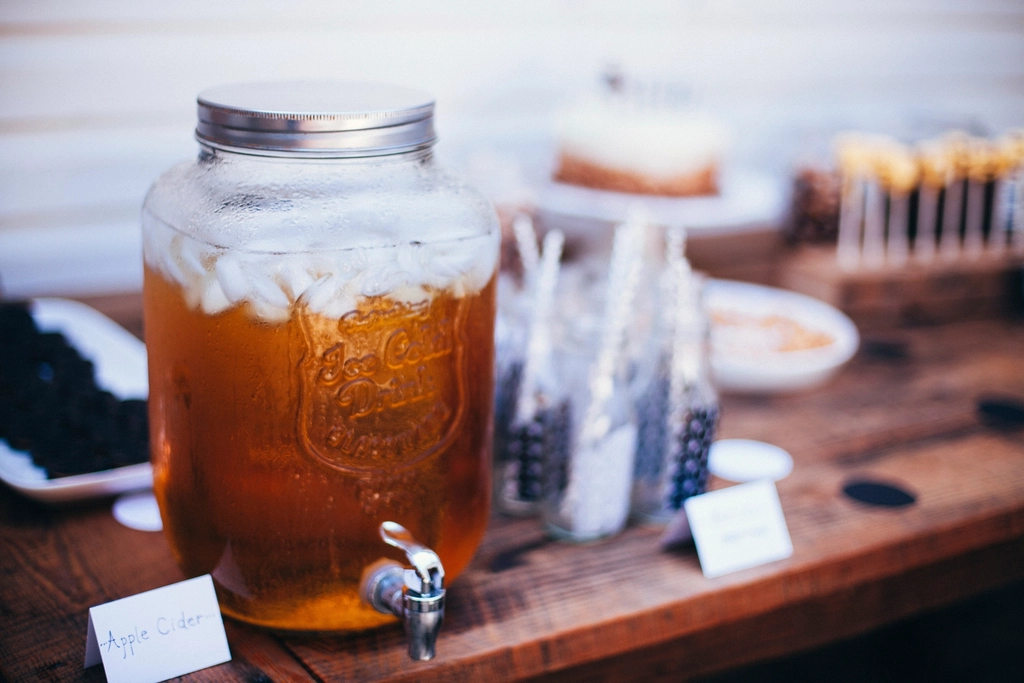
The word cider covers different products depending on where you are standing. In much of the United States, cider is unfermented pressed apple juice, cloudy and sweet, sold refrigerated in autumn. In Britain, Ireland and France it means the fermented, alcoholic drink. Both work in a braise and they behave differently.
Fermented dry cider brings acidity, a little alcohol that helps extract aromatic compounds, and almost no sugar. It is the more forgiving choice, and the sourness problem described above comes mostly from using too much of it rather than from using it at all.
Sweet unfermented cider brings sugar, which browns well in the uncovered stage and can tip into cloying. Cut it to a third of the liquid, skip any added sugar, and expect to need more vinegar at the end.
Stage one: a dry surface and a hot pan
The sear is not optional and it is not decorative. Every bit of brown on the outside of that shoulder is flavor the braising liquid will pick up, and none of it forms once liquid is in the pot.
The meat has to be dry to brown. Salt it the day before if there is time, leave it uncovered in the refrigerator, and pat it again before it goes near heat. A wet surface spends its first four minutes boiling off water and never gets past gray. The same rule governs a roast and it is worth internalizing once.
Work in a pot wide enough that the pieces do not touch, over medium-high heat, and turn only when a piece releases on its own. Eight to twelve minutes total for a shoulder cut into two or three chunks. Then take the meat out, pour off most of the fat, and cook the onions in what is left.
Stage two: the covered hours
With the onions softened and the meat back in, the cider goes in first, on its own, and reduces by about a third over five minutes with the pot uncovered. This burns off the raw alcohol edge and starts concentrating the apple before anything else dilutes it.
Then the stock, the aromatics, and the lid. An oven at 300F surrounds the pot rather than heating it from one side, and the liquid should sit at a bare tremble rather than a simmer. If it is bubbling audibly through the lid, the oven is too hot by twenty-five degrees.
Three hours is where a four-pound shoulder usually lands, and the test is a fork rather than a clock. Twist a fork in the thickest part: if it turns with resistance, the collagen has not finished. If it turns freely and the meat shreds, it is done. Check at two and a half hours and every twenty minutes after.
Why the last forty minutes come off the lid
A covered pot holds the surface of the meat at the boiling point of water, and nothing browns at that temperature. So the meat comes out tender and pale, sitting in a thin, apple-colored liquid, and it tastes like less than the sum of what went in.
Taking the lid off for the last thirty to forty-five minutes fixes both halves of that. The exposed top of the meat dries and browns, the liquid reduces and gains body from the gelatin already in it, and the sauce goes from thin to something that coats.
Spoon the liquid over the meat twice during that window and no more. Each basting resets the surface and slows the browning, which is why a pot basted every ten minutes ends up glossy and pale.
Vinegar at the end, not at the beginning
A finished cider braise is usually flat rather than sour, which is the opposite of what the earlier failure suggests. Long cooking drives off the volatile compounds that read as fresh and leaves behind the ones that read as heavy.
A tablespoon or two of cider vinegar stirred in off the heat puts back the top note without any of the four-hour consequences. Add it a teaspoon at a time and taste between each, because the point is a lift you notice and not an acidity you identify. If it tastes like vinegar, you went one teaspoon past.
The same logic applies to anything sharp or fresh: mustard, a squeeze of lemon, chopped parsley, sliced raw apple. Acid added at the end seasons. Acid added at the start becomes part of the cooking environment, and it is that second role where it costs you tenderness.
The method, shoulder to plate
- Salt the pork the day before, 1 percent of its weight, and refrigerate it uncovered. Eighteen grams for a four-pound shoulder. If there is no time, salt it an hour ahead and dry it hard.
- Cut the shoulder into two or three fist-sized pieces. More surface for browning, faster and more even cooking, and it still shreds.
- Heat the oven to 300F and brown the pork in a heavy pot. Medium-high, no crowding, eight to twelve minutes total. Remove it to a plate.
- Pour off all but a tablespoon of fat and cook two sliced onions until soft and golden. Eight minutes. Scrape the browned film off the bottom as they release water.
- Add the cider alone and reduce it by a third, uncovered. Five minutes at a hard simmer. This is the only time the cider is on its own.
- Return the pork, add stock until the liquid reaches halfway up the meat. Add a bay leaf, a few sage leaves or thyme sprigs, and a spoon of mustard.
- Cover and put it in the oven for three hours. Check that it is barely trembling after twenty minutes and drop the oven 25 degrees if it is boiling.
- Test with a fork at two and a half hours, then every twenty minutes. Free rotation and shredding at the edges means it is ready for the next stage.
- Take the lid off and give it 30 to 45 minutes more. Baste twice, no more. The top should brown and the liquid should thicken.
- Rest the meat 30 minutes while you finish the sauce. Skim the fat, reduce further if needed, then stir in the vinegar off the heat.
- Shred or slice, and return it to the sauce before serving. Meat that sits dry on a board for ten minutes loses more than the rest gained it.
Doneness, resting and the numbers that matter
Two temperatures apply to pork and confusing them is where most of the disagreement comes from. Whole-muscle pork is safe at 145F followed by a three-minute rest, which is the standard that replaced the old 160. That is the number for loin, tenderloin and chops.
Shoulder is a different problem. It reaches safety long before it reaches edibility, and the texture you want arrives somewhere between 200 and 205F, where the collagen has converted and the fibers have gone slack. A shoulder pulled at 185F is safe and unpleasant.
Rest it at least thirty minutes, covered loosely, and longer is fine for a large piece. Cool leftovers in shallow containers rather than in the pot, get them into the refrigerator within two hours, and reheat to a full simmer in the sauce. A braise genuinely improves overnight, and it keeps three to four days cold.
Five ways it goes wrong
Sour and tinny. Too much cider, or a heavy reduction of a sweet cider. Cut it with stock, add a knob of butter, and correct with a pinch of sugar rather than more salt.
Tender but tasteless. No sear, or the meat went in wet. The fix is upstream and there is no way to add it later.
Still tough after four hours. Either the acid was too high, or the oven was too low and the pot never got above 160F for long enough. Raise the oven 25 degrees and keep going, because undercooked collagen only responds to more heat and time.
Greasy. Pork shoulder renders a lot of fat and it all ends up in the sauce. Chill the finished braise, lift the solid cap off, and reheat. This is the single best argument for cooking it a day ahead.
Thin sauce. Not enough uncovered time, or too much liquid at the start. Pour it into a wide pan and reduce hard while the meat rests. A wide pan reduces in ten minutes what a Dutch oven takes forty to do.
Frequently Asked Questions
Can I use apple juice instead of cider?
You can, and it needs adjusting. Commercial apple juice is filtered, sweeter and much lower in acid, so it browns aggressively and brings no lift at all. Use a third less of it, skip any sugar in the recipe, and plan on a full two tablespoons of vinegar at the end.
Does unpasteurized cider matter here?
Not once it is in the pot. Anything that simmers for three hours has been well past the point that matters for a long time. The caution around raw pressed cider applies to drinking it, not to cooking with it, and it applies mainly to young children, older adults and anyone whose immune system is compromised.
Can this be done on the stovetop instead of in the oven?
Yes, on the lowest burner setting with a heat diffuser under the pot, and it needs watching. The bottom of the pot sits much hotter than the rest, so the meat wants turning every forty minutes and the risk of a scorched base is real. The classic braises go in the oven for exactly this reason.
What goes with it besides potatoes?
Anything starchy that will take the sauce, and something sharp alongside. Polenta, white beans, buttered egg noodles or a celery root mash all work. A raw slaw with mustard, or a plate of sliced apple with a squeeze of lemon, does more for the meal than another cooked vegetable. Apples on the savory side earn their place here.
Can I braise it a day ahead?
You should. Cool it in the sauce, refrigerate overnight, lift off the fat cap, and reheat covered at 300F for forty minutes. The flavor is better, the fat problem solves itself, and the uncovered browning stage can be done at the end of the reheat instead.