
Press a fresh yolk and it gives like a water balloon. Press one that has spent six days buried in salt and sugar and it feels like a firm gumdrop, dense the whole way through, with a slight resistance that pushes back. That change is the entire technique, and it is the only endpoint worth trusting.
Twelve yolks went into one tray, pulled at four, five, six, seven and nine days. The four-day yolks were still soft in the center and collapsed on the grater. The nine-day yolks were hard, dark and unpleasantly salty. Six days was where the batch became something you would put on a plate.
Below is the cure by weight, the burial depth that decides whether the batch is even, the dry that finishes it, how long it keeps, and the four dishes where a shaved yolk does the job an aged cheese would.
- Cure: 2 parts kosher salt to 1 part sugar by weight, about 600 g total for 6 yolks
- Depth: a full centimeter under each yolk, and completely covered above
- Time: 5 to 7 days in the refrigerator, 6 as the default
- Feel at the end: firm and yielding like a gumdrop, no soft center
- Dry: dehydrator at 150F for 2 to 4 hours, or a low oven with the door ajar
- Keeps: about a month wrapped and refrigerated, longer if fully hard
- Note: this is a cured raw egg, not a cooked one. Use clean, fresh, refrigerated eggs.
What six days under salt does to a yolk
A yolk is roughly half water, and salt on the outside of it creates a steep concentration gradient. Water leaves the yolk and travels into the salt, which is why a tray that started dry has damp, clumped hollows around each yolk by day three.
As the water goes, the proteins and fat that are left behind pack together and the yolk shrinks, darkens and firms. It loses somewhere between a third and half its weight over a week. Salt also moves inward, so the finished yolk is seasoned all the way through rather than salty on the surface.
The flavor changes as much as the texture. A raw yolk tastes mild and faintly metallic. A cured one tastes savory, concentrated and slightly nutty, close enough to a hard aged cheese that the substitution works on a plate rather than only in theory. Cooks who have grated bottarga over pasta will recognize the effect immediately.
The cure, weighed rather than eyeballed
Two parts kosher salt to one part sugar by weight is the working ratio. Salt does the drawing and the preserving; sugar softens the finished texture, rounds off the salinity, and keeps the yolk from turning brittle and glassy.
All salt with no sugar works and gives a harder, sharper result that grates beautifully and tastes flatly salty. Equal parts salt and sugar gives a softer, sweeter yolk that some people prefer and that takes a day or two longer to firm up. Start at two to one.
| Yolks | Kosher salt | Sugar | Container |
|---|---|---|---|
| 4 | 300 g | 150 g | small loaf pan |
| 6 | 400 g | 200 g | 8-inch square dish |
| 12 | 800 g | 400 g | 9 by 13 dish |
Use plain kosher or coarse sea salt. Iodized table salt contributes a metallic note that the concentration only amplifies, and fine salt packs so densely that it draws unevenly. Anything with anti-caking agents leaves a chalky film on the finished yolk.
Burial depth is the variable nobody specifies

Most instructions say to make a well in the salt, drop the yolk in, and cover it. What they leave out is how much salt has to be underneath, and that is where uneven batches come from.
A yolk sitting on a thin layer draws mostly upward, because the salt beneath it saturates within a day and stops working. The bottom of the yolk stays wet and soft while the top firms, and the finished piece has a soft core off to one side. A full centimeter of dry salt underneath solves it.
Above, the yolk needs to disappear completely, with no dome showing. Half a centimeter is enough on top since gravity is not working against you there. The wells should be spaced far enough apart that the damp zones around each one do not meet, which means about three centimeters between yolks.
Salt cured egg yolks, day by day
- Mix the salt and sugar thoroughly in a bowl. Two to one by weight. Whisk it, do not stir it, so there are no pockets of pure sugar.
- Spread a full centimeter of the mixture across the bottom of the dish. Level it with the back of a spoon. This layer is not optional.
- Make a well for each yolk with the back of a measuring spoon. Shallow and rounded, three centimeters apart, roughly the size of the yolk itself.
- Separate the eggs and rest each yolk in a small strainer for a moment. Rolling it briefly on a strainer sheds the loose white that clings, and clinging white is what makes a yolk stick and tear later.
- Slide each yolk into its well from a spoon, not from your fingers. A broken yolk at this stage is gone. Work slowly.
- Cover them completely with more of the mixture, half a centimeter above. No part of any yolk should be visible. Do not press down.
- Cover the dish and refrigerate for five to seven days. A lid, a plate or plastic film all work. Nothing needs turning or checking before day four.
- From day five, uncover one yolk and press it gently with a fingertip. Brush the salt back over it if it is not ready. Test the same yolk each time.
- When it feels firm through the center, excavate them all with a spoon. Lift from underneath. The salt around each will be damp and caked, which is normal.
- Rinse each one under a thin stream of cold water and pat dry. Seconds, not minutes. Then move straight to the drying step.
The endpoint you can feel with a thumb
A finished yolk feels like a firm gumdrop. There is give, but the give is uniform and it springs back, and there is no soft spot anywhere on it. Cut one in half and the color should be even from edge to center with no wet core.
Underdone reads as a yolk that dents and stays dented, or one that feels firm on top and squashy underneath. Give it another day and check again, since a day is cheap and a soft center will not dry properly and will not keep.
Overdone is harder to miss than it sounds. Past about nine days a yolk goes from firm to hard, the color turns from deep amber toward brown, and the salt has moved so far in that the flavor is aggressive rather than savory. It still grates. It just dominates whatever it lands on.
Drying: dehydrator, low oven, or patience
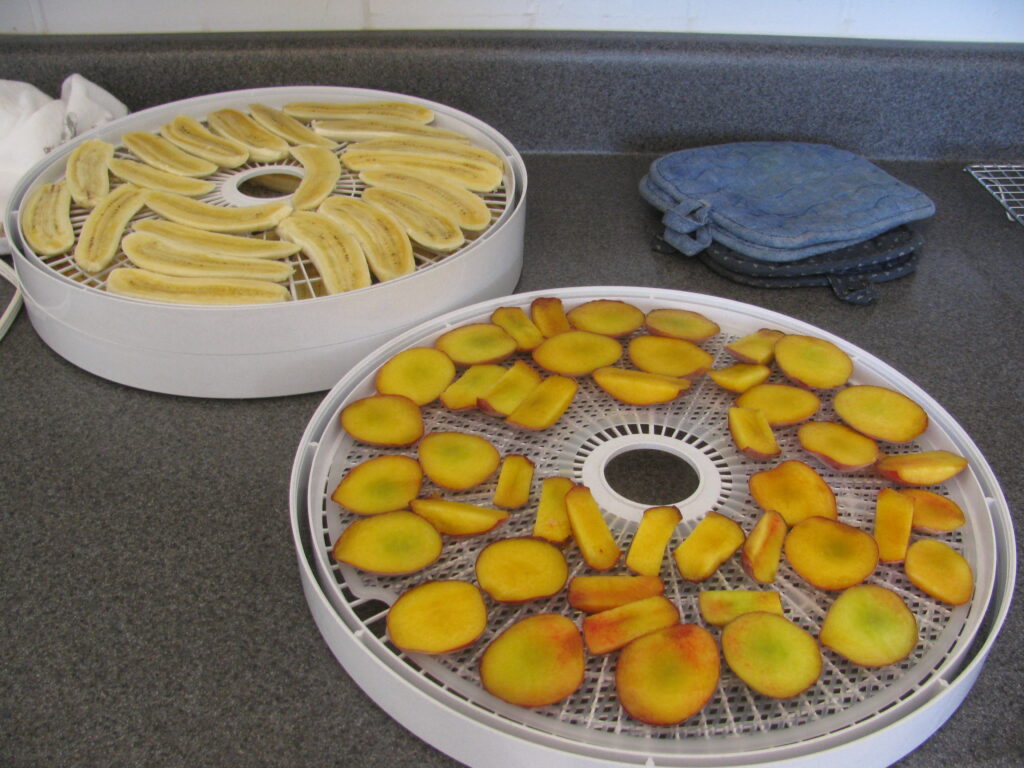
The cure removes most of the water. The dry removes enough of what is left that the yolk grates cleanly instead of smearing, and it is the step that determines how long the batch keeps.
| Method | Setting | Time | Result |
|---|---|---|---|
| Dehydrator | 150F | 2 to 4 hours | most even, easiest to control |
| Low oven, door ajar | lowest setting, 170F or under | 1.5 to 2.5 hours | fast, watch for the edges hardening first |
| Cheesecloth in the refrigerator | ambient | 1 to 2 weeks | best texture, needs airflow and patience |
| No drying at all | – | – | usable in a week, smears on a grater |
Whichever route, set the yolks on a rack rather than flat on a tray so air reaches all sides. A yolk dried on a solid surface stays tacky underneath and picks up a flat spot.
The refrigerator method, wrapped loosely in cheesecloth and hung or set on a rack, gives the best result and asks for a week or two of doing nothing. It works because a refrigerator is a low-humidity box with air moving through it, which is the same principle behind any hung cure.
Four dishes where the shavings replace cheese
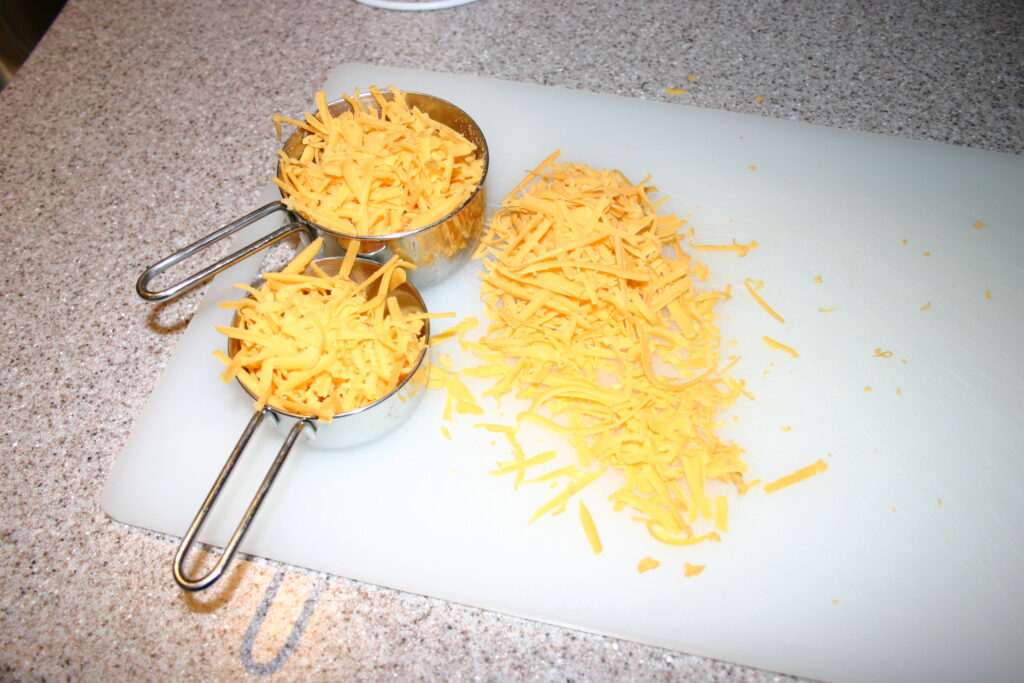
Pasta, off the heat. Grate a yolk over a bowl of cacio e pepe, carbonara or anything with butter and pepper, at the table rather than in the pan. The heat of the pasta releases the aroma and the salt seasons the dish, so cut the salt elsewhere in the recipe.
Roasted vegetables. Asparagus, broccoli, cauliflower and squash all take it. The savory note lands where a shower of aged cheese would, and it does not go greasy under a broiler because there is far less fat to melt. A tray of well-browned vegetables is the easiest place to try it.
Toast, soup and eggs. Over buttered toast with black pepper, over a bowl of beans or a puree, over a soft-boiled egg. Anything mild and starchy that would otherwise want salt and a hard cheese.
A board. A whole cured yolk on a plate with a microplane next to it does the work of a wedge of aged sheep’s cheese, and it is a genuinely unusual thing to put out. A board built around contrast takes it well.
Storage, and what goes wrong in a jar
Fully dried yolks keep about a month wrapped in parchment or cheesecloth in a sealed container in the refrigerator, and a well-hardened batch keeps considerably longer. Wrap them individually so they do not sweat against each other.
Do not store them in an airtight container while they are still tacky. Residual moisture with nowhere to go condenses on the inside of the jar, and a yolk sitting in its own condensation will grow mold within a week. Parchment first, then the container.
They also freeze, wrapped, for several months with a small loss of texture. What they should not do is sit at room temperature. These are a cured food rather than a fully shelf-stable one, and the refrigerator is part of the method rather than a suggestion.
Where this sits on egg safety
A cured yolk has never been cooked. What makes it stable is the removal of water and the concentration of salt, which together make it a poor environment for bacterial growth. That is the same principle behind any dry cure.
Start with clean, uncracked, refrigerated eggs from a source you trust, and keep them cold until the moment they are separated. Nothing about this process improves an egg that was questionable to begin with, and the cure is not a heat step.
Anyone who would normally avoid raw or lightly cooked eggs should treat these the same way. That means pregnant women, young children, older adults and anyone whose immune system is compromised, and the practical answer for those cases is pasteurized in-shell eggs, which cure exactly the same way. If a batch smells sour, ammoniac or off in any way, throw it out rather than reasoning about it.
Six ways a batch fails
The yolk broke going in. Almost always clinging white, or fingers. Roll each yolk on a strainer first and transfer it on a spoon.
Soft in the middle at day seven. Not enough salt underneath, or the yolks were unusually large. Rebury and give it two more days.
It smears instead of grating. Not dried enough. Back into the dehydrator or the low oven for another hour.
Too salty to eat. Left in past nine days, or fine table salt was used. Use it sparingly as a seasoning rather than as a garnish, and pull the next batch a day earlier.
The surface is chalky and white. Salt that did not rinse off, or an anti-caking agent. Rinse a moment longer and switch salt.
Mold in the storage container. Stored tacky in an airtight jar. That batch goes out, and the next one gets wrapped in parchment and given another hour of drying.
Frequently Asked Questions
Can I reuse the salt afterward?
Not for another batch of yolks. It is damp, it has taken on egg, and the sugar has partly dissolved, so it no longer draws the way dry cure does. It can be dried out in a low oven and used for a salt crust on fish or a roasted beetroot, where it is going to be discarded anyway.
What do I do with all the leftover whites?
They freeze well in an ice cube tray, one white per compartment, for up to a year. Thawed whites whip a little less high but work perfectly well in meringues, financiers, egg white omelets and anything that calls for a wash. Six yolks means six whites, so plan for them before you start.
Do duck eggs work?
Yes, and they are arguably better. The yolk is larger, richer and higher in fat, so it cures to a denser, deeper-colored result. Add a day or two to the cure to account for the size, and expect a stronger flavor.
Can I flavor the cure?
You can, within limits. Dried chile, black pepper, miso powder, smoked paprika or citrus zest mixed into the salt all come through faintly. Anything wet, including fresh herbs and fresh zest, adds water to a mixture whose whole job is removing it, so keep additions dry.
How much does one yolk actually season?
More than it looks. A single cured yolk grates over two generous plates of pasta or a large tray of vegetables, and it is doing the work of both the cheese and a good pinch of salt. Grate less than instinct suggests, taste, and add more.