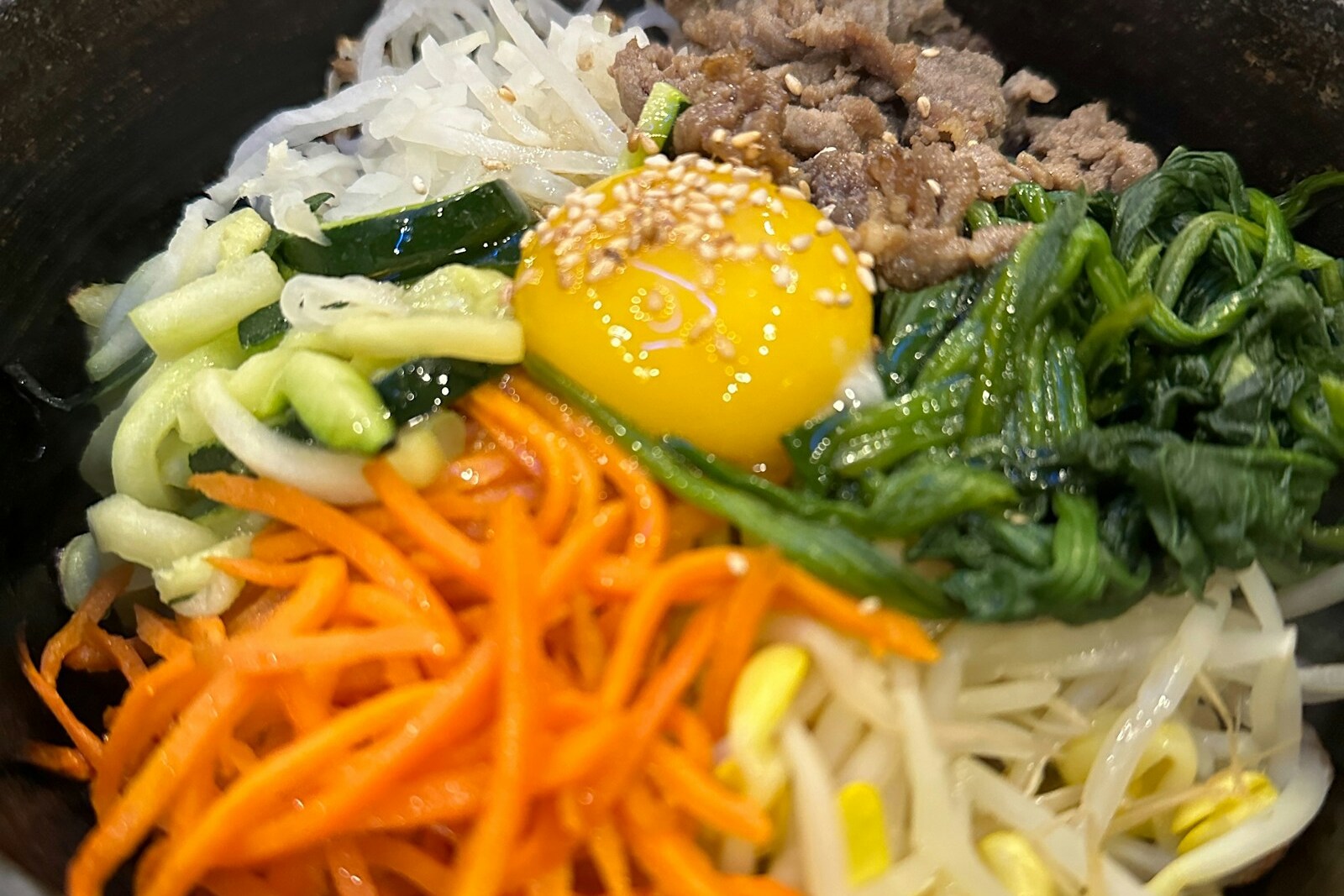
There is a particular moment in Korean summer cooking that defines the season. The temperature in Seoul is 33 C. The humidity is brutal. The Korean grandmother in the kitchen reaches for a chilled bowl of yeolmu kimchi – young radish kimchi – and spoons it over a bowl of cold rice. She adds julienned cucumber, carrot, blanched bean sprouts. She drizzles gochujang sauce in a spiral. A fried egg with runny yolk goes on top. The whole thing is mixed at the table, the cold rice and cool vegetables providing immediate relief from the heat. This is Korean summer comfort food at its highest expression.
Yeolmu bibimbap is the cold summer version of bibimbap, the Korean mixed rice bowl. Traditional dolsot bibimbap (the stone-bowl version with hot rice) is iconic, but Korean summer demands cold food. Yeolmu kimchi – young radish kimchi made from immature radish leaves and stems – provides the tangy fermented foundation that anchors the dish. The vegetables are seasonal: cucumber, carrot, bean sprouts, sometimes spinach or zucchini.
This article is the canonical cold yeolmu bibimbap – cold short-grain rice, yeolmu kimchi, julienned vegetables, gochujang sauce, fried egg. The whole thing comes together in 30 minutes and tastes exactly like Korean summer relief. The rest covers exactly what yeolmu kimchi is, how to source it, and substitutions if you don’t live near a Korean grocery.
Yeolmu Kimchi: The Star
Yeolmu is young summer radish – the immature radish leaves and stems that Korean farmers harvest in early summer before the radishes mature underground. Fermented with garlic, fish sauce, chile flakes, and a touch of sugar, the resulting kimchi is light, vegetal, slightly bitter, and intensely refreshing.
Find it at Korean groceries (Hmart in the US) near the regular kimchi. Look for “Yeolmu Kimchi” on the label – often in glass jars with red lid. Brand: Jongga is widely available. Will keep refrigerated 2-3 weeks. The flavor deepens with refrigeration – day 7 yeolmu is better than day 1.
The Vegetables and Their Prep
The vegetables provide texture and color contrast. Cucumber (julienned thin, salted briefly to remove water, then squeezed dry). Carrot (julienned thin and used raw). Bean sprouts (blanched 30 seconds in salted water, rinsed cold, squeezed dry, seasoned with sesame oil and salt). Some traditional versions add spinach (blanched, squeezed, seasoned).
Cut vegetables uniformly. Mandolin or sharp knife. The cuts should be similar to the size of the rice grains so they integrate when mixed. Color contrast is part of the visual appeal – bright green cucumber, orange carrot, white sprouts, red kimchi, yellow egg yolk.
The Gochujang Sauce
Gochujang (Korean chile paste) is the flavor base. Available at any Korean grocery and most American supermarket international sections. Brands: Annie Chun’s, Chung Jung One, Korean Bell Farm. The sauce builds gochujang with sesame oil (for richness), rice vinegar (for acidity), soy sauce (for umami), and sugar (to balance).
2 tablespoons of gochujang sauce per bowl is the right amount. More heat is achievable by adding 1 tsp more gochujang or 1 tsp gochugaru (Korean chile flakes). The fried egg yolk runs through the gochujang sauce when mixed, producing the creamy spicy coating that defines the dish.
Ingredients
- 3 cups cooked short-grain rice (cold or room temp)
- 2 cups yeolmu kimchi (young radish kimchi)
- 1 cucumber, julienned
- 1 carrot, julienned
- 100 g (3.5 oz) bean sprouts
- For gochujang sauce:
- 2 tbsp gochujang
- 1 tbsp toasted sesame oil
- 1 tbsp rice vinegar
- 1 tsp soy sauce
- 1 tsp sugar
- To assemble:
- 4 large eggs
- 1 tbsp neutral oil
- Toasted sesame seeds
- Sliced scallions
Making It
- Make sauce. Whisk gochujang, sesame oil, vinegar, soy sauce, sugar until smooth.
- Blanch sprouts. 30 sec in salted boiling water. Drain, rinse cold, squeeze dry. Toss with sesame oil + salt.
- Prep cucumber + carrot. Julienne. Salt cucumber 10 min, squeeze water.
- Fry eggs. Sunny-side up, neutral oil, medium heat, 3-4 min for runny yolks.
- Assemble bowls. Rice in 4 bowls. Arrange yeolmu kimchi, cucumber, carrot, sprouts in sections.
- Finish. Egg in center. Gochujang sauce around. Sesame + scallions.
- Serve. Diners mix everything with chopsticks just before eating.
Frequently Asked Questions
What is yeolmu kimchi?
Young summer-radish kimchi – immature radish leaves and stems with fish sauce, garlic, chile, fermentation. Light, refreshing. Korean groceries (Hmart). Substitute: cucumber kimchi, finely chopped baechu kimchi.
Why cold bibimbap in summer?
Korean summer is brutally hot. Cold food provides physiological relief. Yeolmu bibimbap = same flavor as hot bibimbap but refreshing – one of the most pleasurable Korean summer meals.
Stone bowl needed?
No – stone bowl (dolsot) is for hot version. Cold yeolmu uses regular ceramic or wooden bowls.
Gochujang substitute?
Essentially non-substitutable. Available at any Asian market, $4-8 tub, keeps 1 year. Sriracha + tomato paste + brown sugar approximates poorly.
Sources
- Maangchi — Yeolmu Bibimbap — The Korean YouTube authority.
- Serious Eats — Cold Bibimbap — American adaptation.
- USDA FoodData Central — Nutritional data.
Each bowl contains roughly 485 calories, 15 g protein, 18 g fat, 68 g carbs, 6 g fiber.
Please note: Contains eggs, soy, fish (in kimchi), gluten (in soy sauce). Not suitable for these allergies. Consult a dietitian.

Tom Nakamura
Tom learned to cook from his obaachan during summers in Japan - pickling daikon at the kitchen table, watching her stir miso into broth without ever measuring. Later, family trips with cousins took him through markets in Bangkok, Shanghai, and Hanoi, and the food stuck with him. His writing focuses on making authentic Asian techniques accessible to home cooks without diluting the technique or the culture that defines them. He handles Chinese, Japanese, Korean, Thai, Vietnamese, Indian, and Middle Eastern recipes at the publication.