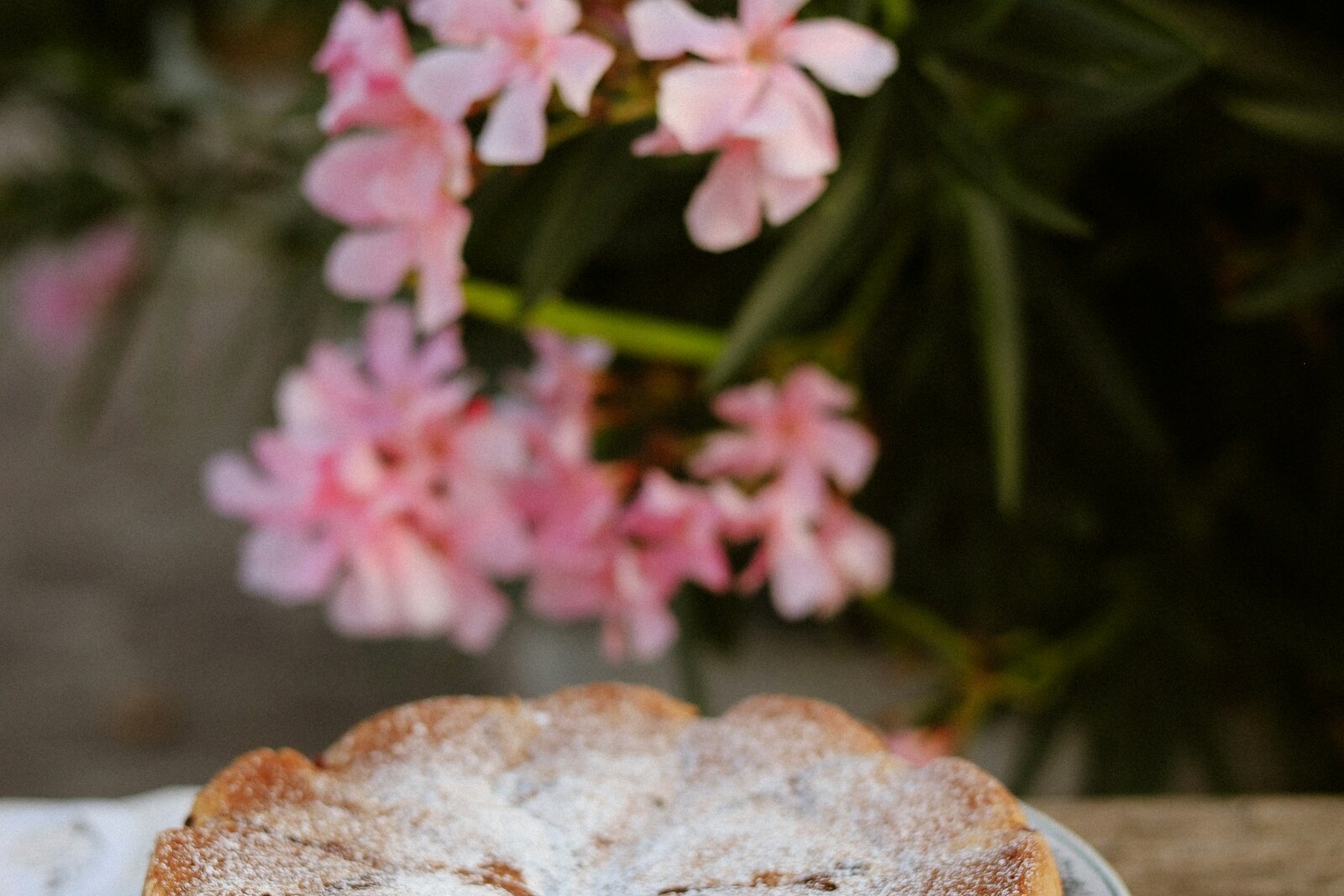
There is a particular smell that defines a French country kitchen in June. Fresh sweet cherries baking in a buttery custard, the smell of warm vanilla and slightly caramelized fruit drifting from the oven. Forty-five minutes after you walked into the kitchen, you pull a deeply golden clafoutis out of the oven, the surface puffed and just-set, the cherries jeweled and slightly burst through the eggy custard batter. A dusting of confectioners’ sugar, a wedge cut, and you understand why this dish has been the standard summer dessert in Limousin for centuries.
Clafoutis comes from the Limousin region of central France, where cherry season is an annual culinary obsession. The dish dates to at least the 19th century, when the French peasant cooking tradition of stretching fruit with eggy batter and milk produced this elegant rustic dessert. The word comes from clafir, an Old French verb meaning to fill. Local pride is fierce – if made with cherries, it’s clafoutis; with any other fruit, it’s technically flaugnarde.
This article is the canonical Limousin clafoutis – fresh sweet cherries, custard batter, baked in a ceramic dish until golden and just-set. The whole thing comes together in an hour, mostly hands-off oven time. The rest covers exactly which cherries to choose, whether to pit them, and how to scale the dessert for entertaining.
The Cherry Decision
Sweet dark cherries (Bing, Sweetheart, Lapins) are the standard – they produce a deep magenta dessert with rich cherry flavor. Sour cherries (Montmorency, Morello) work too and add complexity, though they require more sugar to balance. Stay away from canned or frozen cherries for this dish – the texture and water content are wrong.
June through July is peak cherry season in most of North America. Buy cherries at farmers’ markets when possible – the cherries are dramatically more flavorful than 9-month-old supermarket cherries that arrive from Chile in winter. Buy more than you need – you’ll snack.
To Pit or Not to Pit
The traditional Limousin clafoutis leaves the pits in. Local lore holds that the pits add a subtle almond flavor (the amygdalin compound in the kernel produces traces of benzaldehyde, the almond-extract chemical). Modern French chefs and home cooks generally pit the cherries for practical reasons – eating around pits is awkward for guests, and dental risks are real.
If pitting, a cherry pitter ($15) makes the job trivial – 500 g of cherries pit in about 10 minutes. The alternative is cutting cherries in half and removing pits with fingers. The dessert is 95% identical in flavor either way – the pit theory is mostly tradition.
The Custard Batter
The clafoutis batter is essentially a thin crepe batter – eggs, flour, sugar, milk, cream, salt, vanilla. Blender preparation produces the smoothest result in 30 seconds. Sift the dry ingredients if mixing by hand to prevent lumps. The batter should be thin like cream – if it’s thick, the clafoutis becomes more like a cake. If it’s too thin, it doesn’t set properly.
A 9-inch (23 cm) ceramic or cast iron baking dish is the right size for 500 g of cherries and the resulting batter. Pyrex glass works too. Generously butter the dish to prevent sticking and add a layer of flavor. Some bakers add a small dash of kirsch (cherry brandy) to the batter for additional flavor – 1 tsp is enough; more becomes obvious.
Ingredients
- 500 g (1 lb) fresh sweet cherries, washed (pit or leave whole)
- 100 g (1/2 cup) granulated sugar, divided
- 3 large eggs
- 75 g (1/2 cup + 2 tbsp) all-purpose flour
- 1/4 tsp fine sea salt
- 300 ml (1 1/4 cups) whole milk
- 60 ml (1/4 cup) heavy cream
- 1 tsp pure vanilla extract
- 1 tsp kirsch or brandy (optional)
- 1 tbsp butter (for greasing pan)
- Confectioners’ sugar, for dusting
Making It
- Preheat 180 C (350 F). Butter 9-inch ceramic or cast iron dish.
- Arrange cherries. Single layer in dish.
- Sprinkle 2 tbsp sugar over cherries.
- Blend batter. Eggs, remaining sugar, flour, salt, milk, cream, vanilla, kirsch. Blend 30 sec until smooth.
- Pour over cherries. Cherries should rise to about batter level.
- Bake 40-45 min. Until deeply golden, puffed, knife in center comes out clean.
- Cool 10 min on counter.
- Dust + serve. Confectioners’ sugar. Warm or room temp.
Frequently Asked Questions
Should I pit cherries?
Traditional Limousin leaves pits in (lore: almond flavor from kernels). Modern chefs pit for practicality. 95% identical flavor either way.
Right cherry?
Sweet dark (Bing, Sweetheart, Lapins) – standard. Sour (Montmorency, Morello) work with more sugar. Avoid canned/frozen. June-July peak season.
Why called clafoutis?
From clafir (Old French “to fill”) – cherries filling the dish. From Limousin region. Cherries = clafoutis. Other fruit = technically flaugnarde.
Other fruit?
Apricots, plums, pears, berries all work. Berries reduce milk by 60 ml. Avoid very wet fruit (watermelon, citrus, figs).
Sources
- Serious Eats — Cherry Clafoutis — Modern American adaptation.
- NYT Cooking — Cherry Clafoutis — French canonical version.
- USDA FoodData Central — Nutritional data.
Each serving contains roughly 285 calories, 7 g protein, 10 g fat, 42 g carbs.
Please note: Contains eggs, dairy, gluten. Not suitable for these allergies. Consult a dietitian.

Elena Vasquez
Elena learned to bake from her abuela on a family farm in the south of Spain - wood-fired ovens, breakfast bread before sunrise, and a tia who taught her pastry between long lunches with cousins. At CookingZone she develops desserts, pastry, breakfast, healthy recipes, and beverages - from protein-rich morning bowls to classic French patisserie and viral bakery hits. She still tests every dessert on the same crew of family and friends before it makes it onto the site.