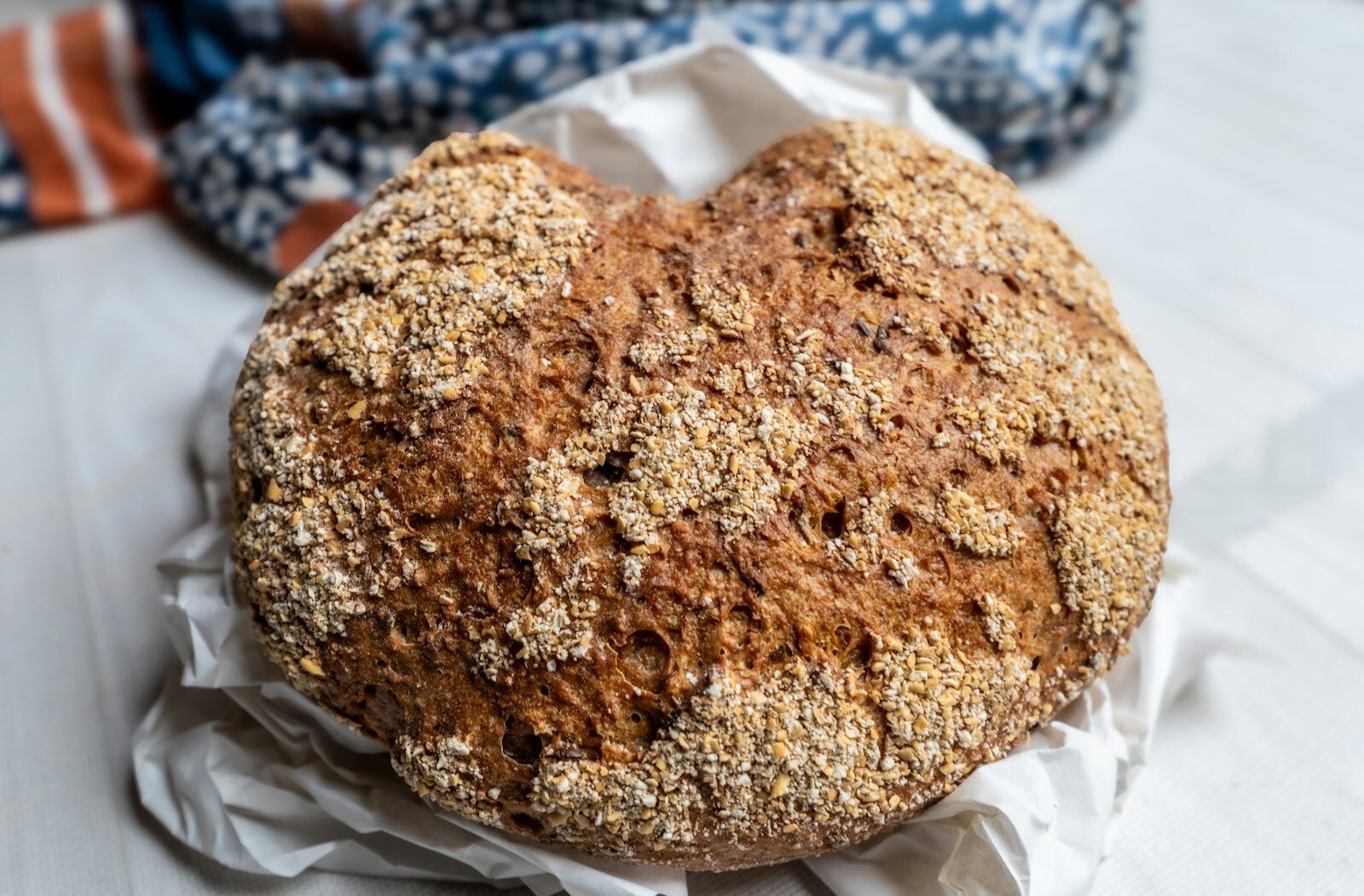
There is a particular satisfaction to a loaf of Irish soda bread coming out of the oven 50 minutes after you first opened a bag of flour. No kneading, no rising, no yeast monitoring. Just mixing four ingredients in a bowl, shaping a round loaf, cutting a cross on top, and baking. The whole productivity-to-result ratio is unlike any other bread – and on St. Patrick’s Day, when a million American kitchens are simultaneously making corned beef and cabbage, the soda bread is what completes the meal.
Irish soda bread is the canonical example of chemical leavening. The bread does not rise from yeast (which needs hours to ferment and a controlled warm environment) but from the instant chemical reaction between baking soda and the lactic acid in buttermilk. The reaction produces carbon dioxide gas immediately, leavening the dough in seconds. This is why soda bread requires no rest time – the rise happens during baking, not before.
The technique was invented in 19th-century Ireland specifically because Irish farms had plentiful buttermilk (from butter-making) and bicarbonate of soda was the only available chemical leavener. Yeast was hard to keep fresh in damp Irish farmhouses. Soda bread became a daily staple that could be made fresh every morning in under an hour. This article is the traditional recipe with notes on the chemistry, the cross-cut technique, and how to vary the bread without losing its character.
The Buttermilk-Soda Chemistry
The reaction is fundamentally similar to a vinegar-baking-soda volcano. Baking soda (sodium bicarbonate, alkaline) plus buttermilk (lactic acid) react instantly: NaHCO3 + CH3CHOHCOOH = CO2 + water + sodium lactate. The CO2 gas is what makes the bread rise. The reaction is fast – it begins the moment you combine the two ingredients and continues during the early minutes of baking until the soda is fully neutralized.
This is why you cannot let soda bread dough sit – the gas escapes before you bake. Mix, shape, bake immediately. The whole sequence from combining ingredients to oven should take 5 minutes maximum. Recipes that call for resting soda bread dough are wrong – they produce a denser, less risen loaf.
Cultured Buttermilk: The Real Thing
Real cultured buttermilk (made by fermenting low-fat milk with lactic acid bacteria) has the acid concentration the chemistry needs. Modern American buttermilk is cultured buttermilk – look for the word “cultured” on the label. It is thick, tangy, and slightly clumpy when you pour it.
Substitutes work in a pinch but produce inferior results. Milk + 1 tbsp vinegar (sit 5 min) creates an acidified milk that mimics buttermilk acidity but lacks the body. Kefir is an excellent substitute – more cultured, more complex. Yogurt thinned with milk to buttermilk consistency also works. Avoid: powdered buttermilk (lacks the active acid).
The Cross: Symbolic and Practical
The deep cross cut into the top of soda bread serves two purposes. Practically, it acts as a steam vent during baking, allowing the bread to expand evenly along the cut lines rather than cracking randomly. Symbolically, the cross was a blessing – Irish farm wives marked their bread with a cross to ward off evil spirits and bless the bread for daily consumption.
Cut about 1.5 cm deep with a sharp knife or razor blade. The cuts should reach 2/3 down through the loaf. As the bread bakes, the cuts open into rounded valleys, creating the distinctive cross-quartered appearance that defines Irish soda bread.
Optional Additions
Traditional soda bread is plain – flour, buttermilk, baking soda, salt. Modern adaptations add raisins or currants (sweetens the bread, makes it good for tea); caraway seeds (Irish farm tradition, slightly licorice flavor); or whole wheat flour (substitute up to 50% for a denser nuttier loaf). Avoid: butter, sugar, eggs – all of these change the bread from soda bread into something else (essentially a quick bread). Purists insist on the four-ingredient version only.
Day-Of Freshness
Soda bread is at its best within 6 hours of baking. After that, the chemical leavening has fully reacted and the texture starts to firm up. Day-two soda bread is still good but noticeably drier than day-one. Day-three soda bread is best toasted and buttered. Best practice: bake it the same day you serve it, slice while still slightly warm, eat with Irish butter (Kerrygold, Roisin Aged Irish Butter) and a glass of stout or strong tea.
Ingredients
- 480 g (4 cups) all-purpose flour
- 1 tsp baking soda (not baking powder)
- 1.5 tsp fine sea salt
- 420 ml (1 3/4 cups) cultured buttermilk
- Optional: 60 g (1/4 cup) raisins or currants
- Optional: 1 tbsp caraway seeds
Making It
- Preheat oven 220 C (425 F). Line baking sheet with parchment.
- Whisk dry ingredients. Flour, baking soda, salt. Add raisins and caraway if using.
- Add buttermilk. Pour into a well in the center of the dry ingredients.
- Mix briefly. Stir with fork or wooden spoon JUST until dough comes together – 30 seconds. Do NOT knead.
- Shape. Turn out onto floured surface. Gently shape into 18 cm round.
- Transfer + cross. Place on baking sheet. Cut deep cross (1.5 cm deep) on top with sharp knife.
- Bake. 35-45 min until deeply golden, thermometer in center reads 95 C (203 F).
- Cool 30 min. On rack before slicing. Best eaten same day.
Frequently Asked Questions
Why baking soda and not baking powder?
Buttermilk is acidic, baking soda is alkaline – they react instantly producing CO2 gas. Baking powder is soda + acid in dry form, defeats the historical purpose. Traditional Irish soda bread uses baking soda + buttermilk.
What is the cross on top for?
Practical: steam vent so bread rises evenly. Symbolic: Irish farm tradition – bless the bread, ward off evil spirits. Cut 1.5 cm deep with sharp knife.
Can I make soda bread without buttermilk?
Substitute with milk + 1 tbsp vinegar (sit 5 min). Kefir works excellently. Real cultured buttermilk produces best result.
Why soapy taste?
Too much baking soda or insufficient acid. Do not increase soda. Fresh buttermilk is essential – aged buttermilk loses acid.
Sources
- Serious Eats — Irish Soda Bread — Traditional Irish technique.
- Bon Appétit — Irish Soda Bread — Adapted version for American kitchens.
- USDA FoodData Central — Nutritional data.
Each slice contains roughly 180 calories, 6 g protein, 2 g fat, 35 g carbs.
Please note: Contains gluten and dairy. Not suitable for gluten or dairy allergies. High in carbohydrates. Consult a dietitian.

Rachel Summers
Rachel grew up in a Pacific Northwest kitchen, learning Sunday roasts from her mother and pie crust from a grandmother who never wrote a recipe down. CookingZone began as a way to save her family's cooking before it was forgotten, and grew when her cousins started sending in their own. Her work covers foundational American, Italian, French, and Mexican recipes, with an emphasis on weekend baking, comfort food, and the techniques that span both European and American home kitchens.