There is a particular smell that fills a kitchen during the third hour of a bourguignon braise. The wine has reduced down by half. The fat has rendered out of the lardons and fused with the tomato paste and the beef fond. The whole thing has gone from sharp wine and raw beef to something deeper, more savory, the kind of smell that does not exist in any commercial product and cannot be conjured in less than ninety minutes of slow heat. It is the smell of a French country kitchen on a Sunday afternoon and it has not changed since 1903, when Auguste Escoffier formalized the recipe.
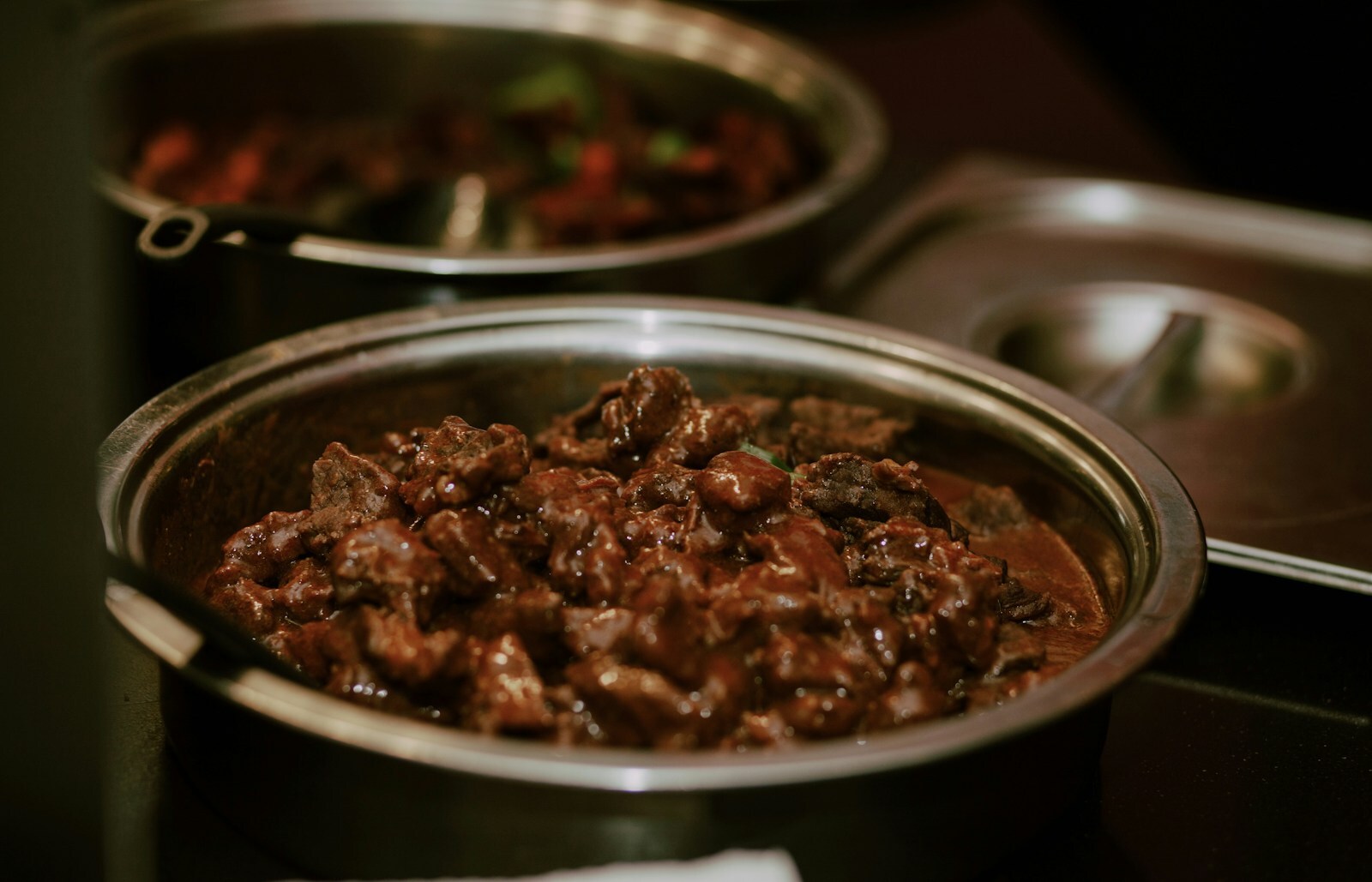
Beef bourguignon (boeuf à la bourguignonne) belongs to the broader family of slow-braised peasant dishes that defined French regional cooking before the haute cuisine revolution of the nineteenth century. Burgundy gave it its name because Burgundy gave the dish its wine: the Pinot Noir of the Cote d’Or, the same grape that produces some of the most expensive wines in the world, was historically the cheap everyday wine of Burgundian working people. They drank it; they cooked with it; they cooked the tough cuts of beef that would not sell in the morning markets in it. By long, slow heat, the connective tissue in chuck or shank breaks down into gelatin, the wine reduces from a thin liquid into a glossy lacquer, and an ordinary inexpensive cut of beef is transformed into one of the most luxurious-tasting dishes in classical French cooking.
Julia Child taught beef bourguignon to two generations of American home cooks in Mastering the Art of French Cooking, published 1961, and the dish became one of the cornerstones of what mid-century Americans thought of as French food. Her recipe is still the canonical English-language version. This article follows her core method — brown the meat hard, build the sauce on the fond, braise low and long — with modern adjustments based on food-science work by Harold McGee on connective tissue and the more recent work of J. Kenji López-Alt on the role of gelatin in stew thickening. The rest of this article is how every variable matters.
The Cut of Beef and Why Chuck Wins
Beef bourguignon needs a hard-working muscle full of collagen — the connective tissue that, with enough time and gentle heat, melts into gelatin and gives the sauce its glossy body and the meat its silky texture. Chuck (shoulder) is the standard choice in the US: well-marbled, evenly textured, forgiving of long cook times. Brisket point or short rib are excellent alternatives. Stewing beef in pre-cut packages is acceptable but inconsistent — you do not know which muscle the cubes came from. Buying a single chuck roast and cutting it yourself produces the most uniform result.
Avoid lean cuts: round, sirloin, tenderloin will all turn dry and stringy during a 3-hour braise no matter how careful you are. They have no collagen to convert. Avoid pre-ground beef entirely — bourguignon is a chunk-of-meat dish, not a ground-beef dish. Cube the meat to 2-inch (5-cm) pieces; smaller falls apart, larger fails to become fork-tender in the standard cook time. Trim excess hard fat (the white waxy stuff) but leave intramuscular marbling and the silver-skin alone — both melt down during cooking.
Browning Hard: Why Maillard Matters
The single step that separates good bourguignon from mediocre is the browning. The Maillard reaction — the dry-heat chemical transformation of amino acids and reducing sugars on the surface of the beef — produces hundreds of new aromatic compounds that define what we recognize as “browned meat” flavor. Without it, you have boiled beef in wine, which is not the same dish. To achieve real Maillard:
Pat the beef bone-dry with paper towels before it enters the pan. Wet meat steams instead of browning. Brown in batches with substantial space between pieces — crowding produces steam, not sear. Use a heavy bottomed pot (Dutch oven, enameled cast iron). Brown over medium-high to high heat in the bacon fat plus a tablespoon of oil. Each batch needs 5 to 7 minutes; deep mahogany on all sides is the target, not pale gold. The dark fond that builds on the pot bottom is half the flavor of the final dish — do not wash any of it out before deglazing.
The Wine Question
The rule is the rule of every cooking-with-wine recipe: use wine you would drink. Pinot Noir from Burgundy is the historical and ideal choice. A village-level Burgundy in the $20-30 range, an Oregon Willamette Valley Pinot Noir, or a Sonoma Coast Pinot Noir are all excellent. Cotes du Rhone, young Chianti, and Beaujolais are acceptable substitutes from other regions and price points. Avoid: oaky Californian Cabernet (too tannic), sweet wines (Lambrusco, Port), fortified wines, and most importantly “cooking wine” sold in the vinegar aisle of US grocery stores. That product is undrinkable in a glass and undrinkable in a sauce.
Use the whole bottle. Half for the optional marinade, half for the braise, or all 750 ml in the braise itself if you skip the marinade. The volume seems excessive but reduces dramatically during cooking. Open the bottle in advance and pour yourself a small glass to taste — verify it is not corked before committing it to a 3-hour braise.
Bourguignon vs Daube vs Carbonnade: A Quick Map
| Dish | Region | Liquid base |
|---|---|---|
| Boeuf Bourguignon | Burgundy, France | Red Burgundy (Pinot Noir) |
| Daube Provençale | Provence, France | Red wine + orange peel + herbs de Provence |
| Carbonnade Flamande | Flanders, Belgium | Dark Belgian beer (instead of wine) |
| Goulash | Hungary | Paprika + tomato (no wine) |
Ingredients
- 1.5 kg (3.3 lb) beef chuck, cut into 5-cm (2-inch) cubes
- 200 g (7 oz) thick-cut bacon or lardons, diced
- 2 tablespoons (30 ml) neutral oil
- 3 tablespoons (45 g) all-purpose flour
- 1 bottle (750 ml) dry red Burgundy or Pinot Noir
- 500 ml (2 cups) beef stock
- 2 tablespoons (35 g) tomato paste
- 6 garlic cloves, smashed
- 1 bouquet garni (8 parsley stems, 4 thyme sprigs, 2 bay leaves, tied)
- 450 g (1 lb) pearl onions, peeled
- 450 g (1 lb) cremini mushrooms, quartered
- 2 tablespoons (30 g) unsalted butter
- Salt and freshly ground black pepper
- Fresh parsley, chopped, for serving
Making It
- (Optional) Marinate. Combine beef, half the wine, garlic, and bouquet garni 4-24 hours in refrigerator. Drain, reserving wine. Pat beef bone-dry.
- Render lardons. In a 6-qt Dutch oven over medium, render bacon 8-10 min until crisp. Remove; reserve.
- Brown beef. Increase to medium-high. In batches (do not crowd), brown beef cubes deeply on all sides in bacon fat + oil. Mahogany, not pale.
- Build base. Reduce to medium. Splash in wine to deglaze, scraping all fond off bottom. Sprinkle flour and whisk 90 seconds.
- Combine. Return beef and bacon to pot. Add tomato paste, garlic, bouquet garni, remaining wine, and stock until beef is just covered. Bring to bare simmer.
- Braise. Cover, transfer to 160 C (325 F) oven. Braise 2.5-3 hours, stirring once hourly, until fork-tender.
- Brown garnish. Meanwhile, saute pearl onions in 1 tbsp butter for 8 min until golden; saute mushrooms in 1 tbsp butter for 5-7 min.
- Finish. Remove from oven. Discard bouquet garni. Skim fat. Stir in onions and mushrooms. Simmer 5 min on stovetop to integrate.
- Rest. Ideally rest 30 min off heat (or refrigerate overnight, reheat gently). Serve over noodles, mash, or with crusty bread. Garnish with parsley.
Common Mistakes
The most common mistake is rushing the brown. Wet meat or crowded pan means no Maillard and a flat-tasting sauce. Pat meat bone-dry, brown in batches with space, accept that this step takes 25 minutes and is not optional. The second mistake is using lean meat. Round, sirloin, or tenderloin produce dry stringy beef no matter the technique. Use chuck. The third mistake is over-thickening with flour. Bourguignon should have a glossy, lacquered sauce, not a gravy. Two tablespoons of flour is plenty for 1.5 kg of meat. Excess flour produces a pasty texture and dulls the wine flavor.
What to Serve With Bourguignon
Buttered egg noodles are the classic American accompaniment. In France, pommes de terre vapeur (steamed potatoes) or buttered baguette are more traditional. Mashed potatoes with a generous spoonful of butter work beautifully for soaking up the sauce. A simple green salad with mustard vinaigrette to follow cuts the richness. For the full French meal, end with our French macarons with the almond flour technique or a simple French chocolate mousse. Wine to drink with the meal: open another bottle of the same Pinot Noir you cooked with.
Storage and Make-Ahead
Bourguignon is a 24-hour dish: dramatically better the next day. Make it the day before serving. Refrigerated, the stew keeps 5 days and the flavor improves through day 2 or 3 as the fat solidifies on top (skim it off before reheating). Reheat gently in a covered pot over low heat with a splash of stock if it has thickened too much. The stew freezes beautifully for up to 4 months in airtight containers; thaw overnight in the refrigerator. Many French home cooks make a double batch on Sunday and eat from it through the week with different sides.
Frequently Asked Questions
What red wine should I use for beef bourguignon?
Traditionally Burgundy (Pinot Noir) is correct, but any dry, medium-bodied red works — the rule is to use wine you would drink. Pinot Noir from Burgundy or Oregon is ideal. Côtes du Rhône, young Chianti, or Beaujolais also work. Avoid: oaky Cabernet, sweet wines, and so-called “cooking wine.”
Can I make beef bourguignon in a slow cooker or Instant Pot?
Yes, with caveats. Slow cooker: 8 hours low, then reduce the liquid 10 minutes on stovetop. Instant Pot: 45 minutes high pressure + natural release, thicken with flour slurry at the end. Both produce tender meat but slightly thinner sauce than oven braise. The oven remains gold standard for sauce body.
Why does my bourguignon taste sour or thin?
Sour usually means the wine did not reduce enough. Simmer uncovered after braising for 15-20 minutes to concentrate. A teaspoon of dark chocolate or red currant jelly rounds harsh acidity. Thin means too much liquid or too little flour. A 24-hour rest also dramatically improves body.
What is a bouquet garni and can I substitute?
A small bundle of herbs tied with twine so they can flavor a stew without floating loose. Classic French: parsley stems, thyme sprigs, bay leaves. If missing items, priority order is thyme + bay (essential), parsley stems (helpful). 1 tsp dried thyme + 2 bay leaves can substitute in a pinch.
Sources
- Serious Eats — The Best Beef Stew — J. Kenji López-Alt’s detailed work on the role of gelatin in stew thickening, applicable to bourguignon technique.
- NYT Cooking — Julia Child’s Beef Bourguignon — The canonical English-language recipe, adapted from Mastering the Art of French Cooking.
- USDA FoodData Central — Beef and Wine — Nutritional data.
Each serving contains roughly 620 calories, 42 g protein, 32 g fat, 18 g carbohydrates, 3 g fiber.
Please note: Contains beef, pork (bacon), gluten (flour), and alcohol (most cooks off during 3-hour braise but trace amounts may remain). Not suitable for pregnancy, alcohol abstention, or specific dietary restrictions without modifications. Consult a dietitian for guidance.

Rachel Summers
Rachel grew up in a Pacific Northwest kitchen, learning Sunday roasts from her mother and pie crust from a grandmother who never wrote a recipe down. CookingZone began as a way to save her family's cooking before it was forgotten, and grew when her cousins started sending in their own. Her work covers foundational American, Italian, French, and Mexican recipes, with an emphasis on weekend baking, comfort food, and the techniques that span both European and American home kitchens.