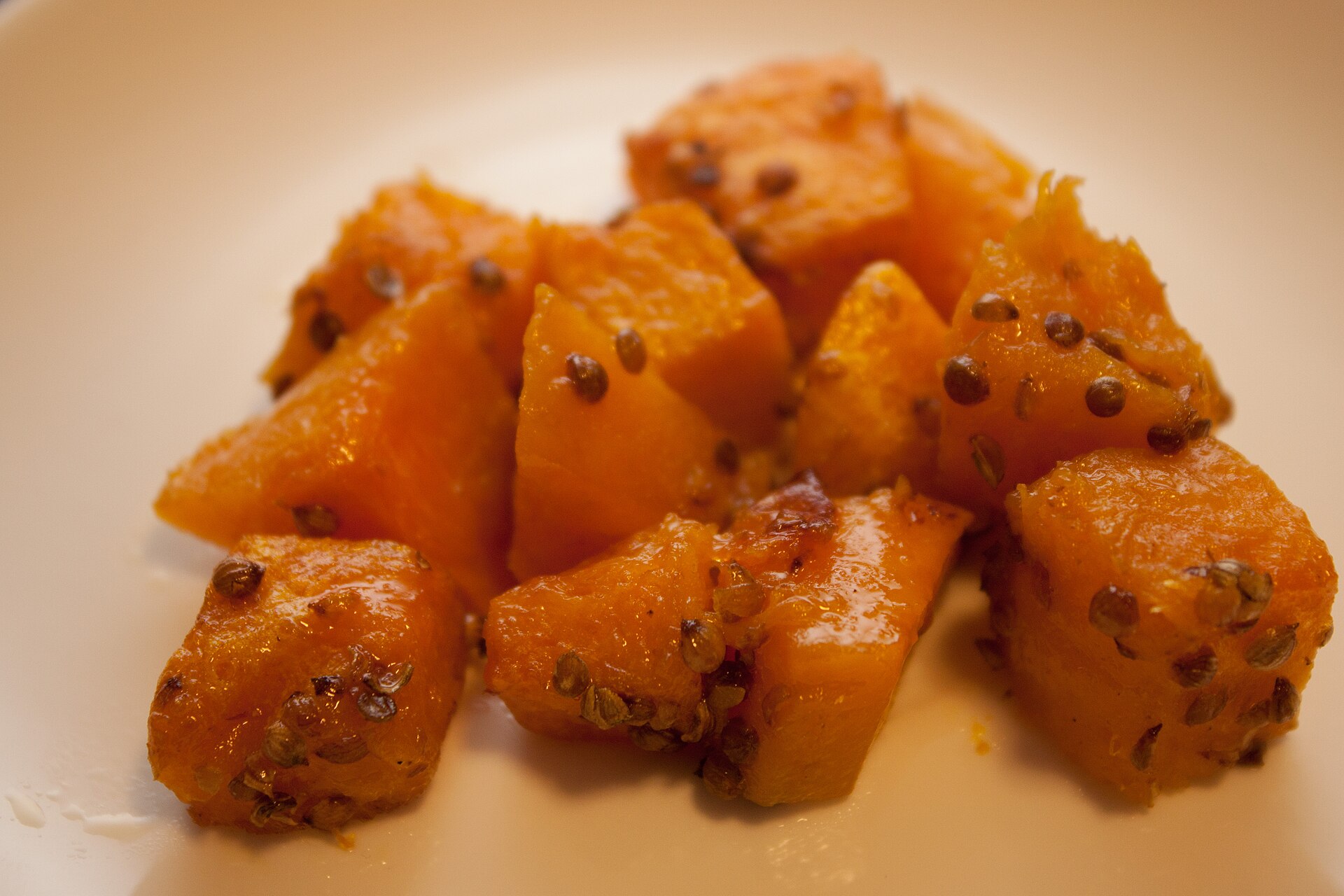
Two trays of the same butternut squash go into the same oven. One is tossed with a tablespoon of olive oil, the other is steamed over water and served plain. They contain almost identical amounts of beta-carotene when they come out. The difference is what happens after they are eaten, and it is large enough to matter.
Carotenoids and the four fat-soluble vitamins do not dissolve in the watery contents of the gut. They need fat to form the mixed micelles that carry them across the intestinal wall, and without it a substantial share of what was on the plate passes straight through. The plain steamed squash is not less nutritious on paper. It is less available.
What follows is which nutrients this applies to, roughly how much fat it takes at the table, the vegetables in season now where the effect is biggest, the cooking steps that help beyond simply adding oil, and where the whole idea gets oversold.
- Affected: vitamins A, D, E and K, plus carotenoids such as beta-carotene, lycopene and lutein
- Fat needed: in the region of one to two teaspoons of added fat per serving, not a tablespoon per person
- Best sources of that fat: olive oil, avocado, nuts, seeds, whole dairy, egg yolk
- Biggest effect right now: winter squash, carrots, sweet potato, kale, cooked tomato
- Cooking helps too: heat and cutting break cell walls that trap carotenoids
- Where it does not apply: vitamin C, the B vitamins, minerals, fiber
- The trade: fat adds calories, so use it where it does something
Two trays of squash, one variable
Roasting squash in oil at 400 degrees and steaming it over water produce two plates that look similar and behave differently. The roasted one carries fat into the meal at the same moment the carotenoids arrive, which is the condition the absorption pathway requires.
The steamed one is not worthless. Some fat from elsewhere in the meal will still be circulating, and a steamed squash eaten alongside a piece of salmon is in a completely different position from one eaten alone at lunch. The relevant unit is the meal, not the vegetable.
That is the practical shape of the whole subject. You are not choosing between healthy and unhealthy preparation. You are choosing whether the fat that makes the pigment usable is present at the same time as the pigment.
What fat soluble actually means in the gut
Digestion moves fat through a specific sequence. Bile salts from the gallbladder emulsify it into droplets, pancreatic enzymes break the triglycerides down, and the products reassemble with bile salts into micelles a few nanometers across. Those micelles ferry their contents to the intestinal wall for uptake.
Carotenoids and the fat-soluble vitamins ride along in that structure because they dissolve in the lipid core and nowhere else. No fat in the meal means few micelles, and few micelles means much of the pigment stays in the lumen and leaves with everything else.
Vitamin C and the B vitamins face no such problem; they dissolve in water and cross by their own routes. This is also why the losses that matter for water-soluble nutrients happen in the cooking pot rather than in the body, which is the opposite of the situation here.
Fat soluble vitamin absorption in vegetables, by nutrient
| Nutrient | Where it is in the produce aisle | Effect of added fat | Also helped by |
|---|---|---|---|
| Beta-carotene | carrot, winter squash, sweet potato, apricot | large | cooking, pureeing, fine cutting |
| Lycopene | tomato, watermelon, pink grapefruit | large | prolonged cooking, concentration |
| Lutein and zeaxanthin | kale, spinach, chard, egg yolk, corn | large | gentle cooking, chopping |
| Vitamin K1 | leafy greens, brassicas, herbs | moderate | little; it is fairly heat-stable |
| Vitamin E | seeds, nuts, wheat germ, oils | usually arrives with its own fat | not applicable |
| Vitamin A, preformed | liver, dairy, egg yolk | usually arrives with its own fat | not applicable |
| Vitamin D | oily fish, egg yolk, fortified foods | moderate | not applicable |
The first three rows are where a home cook has real leverage, because those are the ones that show up in plant food with essentially no fat attached. The last three tend to arrive already dissolved in the fat of whatever they came in.
How much fat it actually takes
Less than the advice implies. The published work on carotenoid uptake generally finds that the curve rises steeply from zero and then flattens, so the difference between no fat and a small amount of fat is far larger than the difference between a small amount and a lot.
In kitchen terms that means one to two teaspoons of oil per serving of vegetables, or the fat already present in a dressing, a handful of nuts, a few slices of avocado, a spoonful of yogurt or an egg. Drowning a salad in dressing to improve absorption is not doing anything the first spoonful did not already do.
It also means fat-free dressing on a salad of carrot, tomato and dark greens is a genuinely poor trade. You save a small number of calories and give away a meaningful share of the carotenoids you bought the vegetables for. An oil-based dressing earns its place at the table on this count alone.
Heat and knife work do half the job
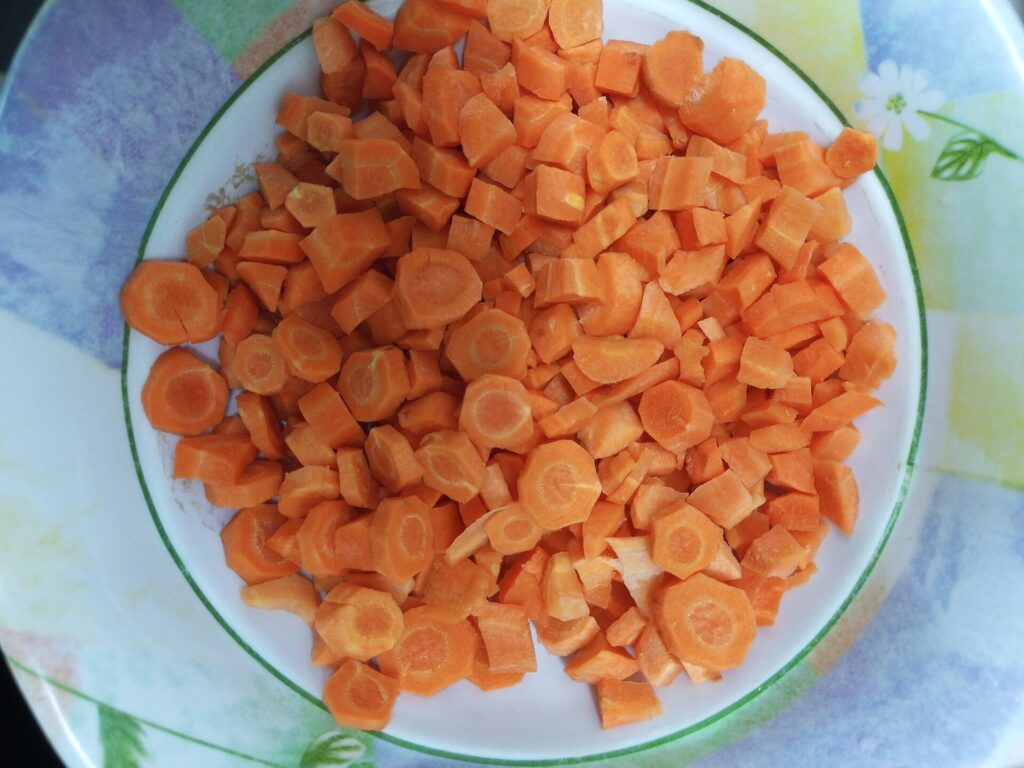
Carotenoids sit inside plant cells, bound up in structures the cell wall protects. Raw and whole, a great deal of that never gets released during digestion at all. Cutting, mashing and cooking break those walls down and free the pigment before it ever reaches the gut.
This is why cooked carrot delivers more usable beta-carotene than raw carrot, and why lycopene from cooked and concentrated tomato is more available than lycopene from a fresh one. It is one of the few cases in nutrition where processing improves the outcome rather than degrading it.
There is a ceiling. Long, hard cooking degrades carotenoids eventually, and it also converts some of them to forms the body handles less well. Roasting until tender and lightly browned is comfortably inside the useful range. Boiling a carrot to collapse for forty minutes is past it.
Steaming, roasting and boiling on the same squash
Steaming is gentle on the pigment itself and does nothing to help it get absorbed, since no fat is involved and the cell walls only partly break down. It is the method that looks best on a nutrition label and performs worst at the table for this particular group of compounds.
Boiling adds a second problem. Carotenoids are not water-soluble, so unlike vitamin C they do not leach into the pot, but the extended contact with water does soften the tissue past the useful point and dilutes the flavor enough that people then add butter anyway. If butter is going on afterward, it may as well have gone on before.
Roasting with oil does three things at once: it breaks down the cell walls with dry heat, it concentrates the vegetable by driving off water, and it supplies the fat at the same moment. Sauteing does the same on a shorter clock. Neither is a nutritional trick so much as the ordinary way most of these vegetables were already being cooked.
| Method | Cell wall breakdown | Fat present | Net effect on carotenoids |
|---|---|---|---|
| Raw, whole or in sticks | minimal | none | weakest |
| Raw, finely grated or blended | moderate | none unless dressed | better with a dressing |
| Steamed | moderate | none | middling |
| Boiled | high | none | middling, and flatter in flavor |
| Roasted in oil | high | yes | strongest |
| Sauteed in oil | high | yes | strong |
| Pureed into soup with dairy or oil | very high | yes | strongest |
The vegetables where it matters most this month
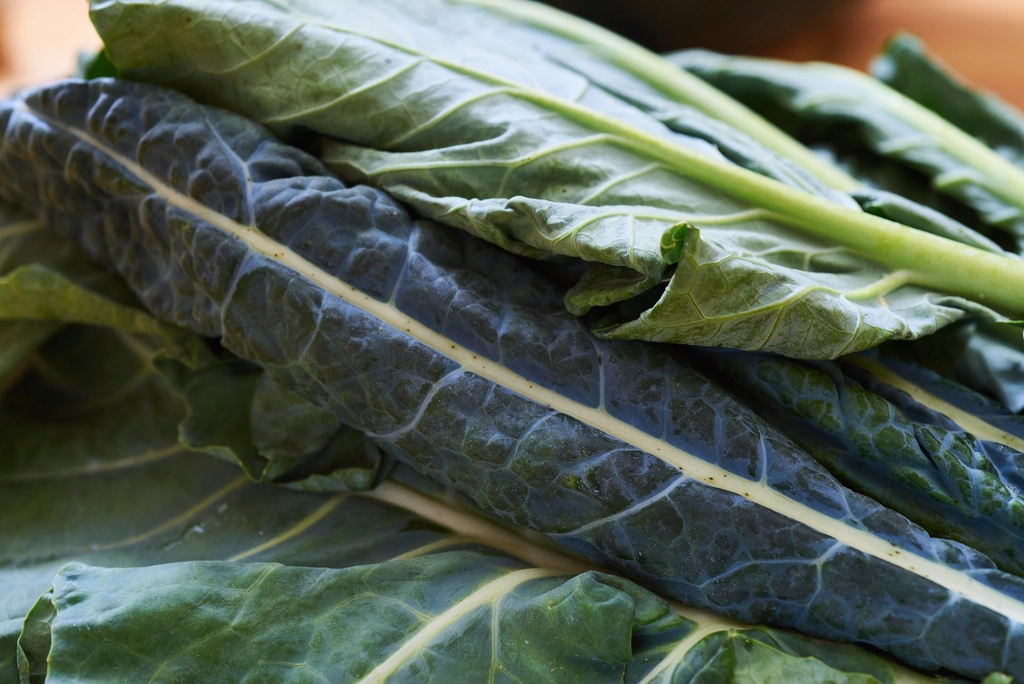
Winter squash. Butternut, kabocha and red kuri are among the densest sources of beta-carotene on the autumn table. Roast in wedges with oil, or puree with butter or coconut milk for soup.
Sweet potato. Same pigment, same rule. Baked plain and eaten plain is the weakest version; the same potato with olive oil or a spoonful of full-fat yogurt is a different proposition.
Carrots. Roast rather than steam, cut smaller rather than in halves, and pair with fat. Raw carrot sticks with hummus does the job through the tahini.
Kale and chard. Lutein and vitamin K1, both improved by a sauté in oil rather than a boil. Roasting greens and hardy vegetables together handles this without any special effort.
Cooked tomato. The classic case, and the reason a long-simmered tomato sauce with olive oil in it is more than the sum of its parts.
Pairings that already work, and ones that do not
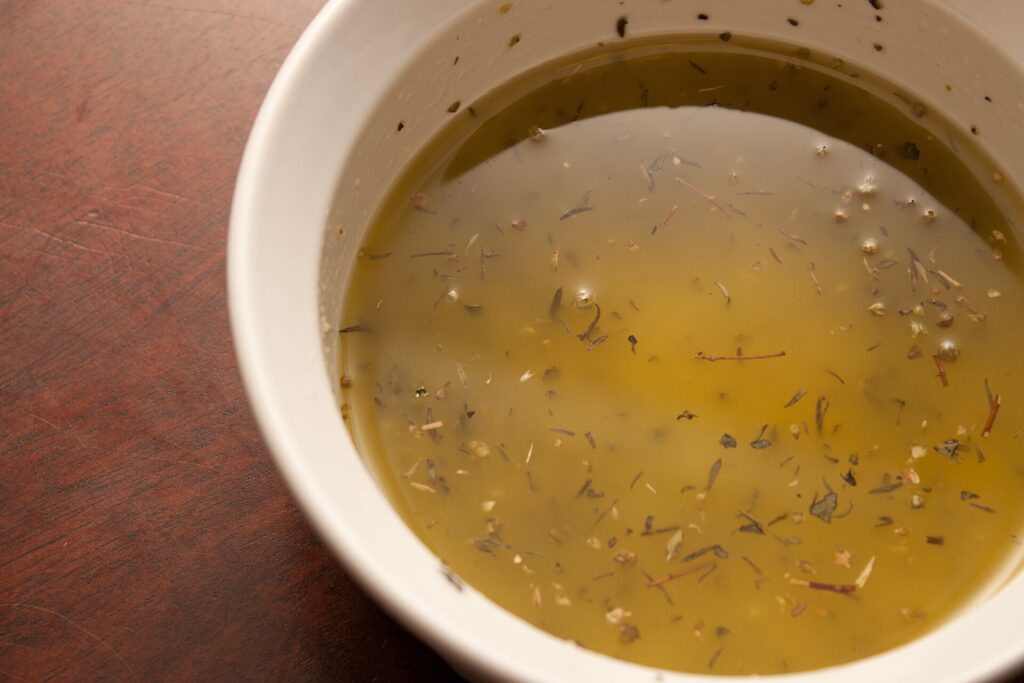
| Dish | Fat source | Doing the job? |
|---|---|---|
| Roasted squash with olive oil | the oil | yes |
| Steamed carrots, plain, as a side | none | no; add butter or serve with a fatty main |
| Green salad, fat-free dressing | none | no |
| Green salad, olive oil vinaigrette | the oil | yes |
| Tomato sauce simmered in olive oil | the oil | yes, and the cooking helps too |
| Raw carrot sticks alone | none | no; and the cell walls are intact as well |
| Kale sauteed in oil with garlic | the oil | yes |
| Sweet potato with yogurt or tahini | the dairy or seed fat | yes |
| Carrot soup finished with cream | the cream | yes, and the puree helps too |
Nothing in that table requires a change of menu. It is mostly a matter of not stripping fat out of dishes that were built with it, and of putting a teaspoon back into the ones that lost it.
Where the idea gets oversold
Absorption is not the same as benefit. A higher blood level of a carotenoid does not automatically translate into a health outcome, and the large trials that tested isolated beta-carotene supplements did not produce the results the observational data suggested they might. Whole food and a supplement pill are not interchangeable, which is a recurring pattern rather than an exception.
Individual variation is also wide. Genetics, gut health, the specific food matrix and even the presence of other carotenoids competing for the same transport all move the number, and published absorption figures are averages across groups rather than predictions about a person.
And fat is not free. A tablespoon of oil is roughly 120 calories, which is fine when it is buying you something and less fine when it is habit. The point is to place a small amount of fat where it is doing work, not to add oil to everything on principle.
Two safety notes worth keeping straight
Fat-soluble vitamins are stored in the body rather than flushed, which is what makes high-dose supplements of vitamin A and vitamin D capable of causing harm in a way that vitamin C supplements generally are not. Food is not the problem here; a lifetime of eating carrots will not produce vitamin A toxicity, though a large enough intake of carotene will turn palms and soles orange, which is harmless and reverses. Supplements are a separate question and belong with a clinician, particularly during pregnancy and particularly alongside any prescribed medication.
The second note is about the pan rather than the body. Adding oil to vegetables is only useful if the oil survives the cooking, so keep roasting temperatures at or below about 425 degrees for extra virgin olive oil and use a refined oil above that. And cooked vegetables follow the same rules as everything else: get leftovers into the refrigerator within two hours, into shallow containers rather than the roasting tray, and eat them within three or four days.
A week of small changes
Put a teaspoon of olive oil on the roasting tray instead of using a spray. Dress the salad with oil and vinegar rather than a fat-free bottle. Finish the squash soup with cream, butter or coconut milk instead of stock. Serve carrots roasted rather than steamed, and cut them smaller.
Eat the leafy greens with something fatty in the same meal, which most people do without thinking. Keep tomato sauce made with olive oil rather than water. Add nuts or seeds to a vegetable-heavy plate. None of that is a diet; it is a set of default settings.
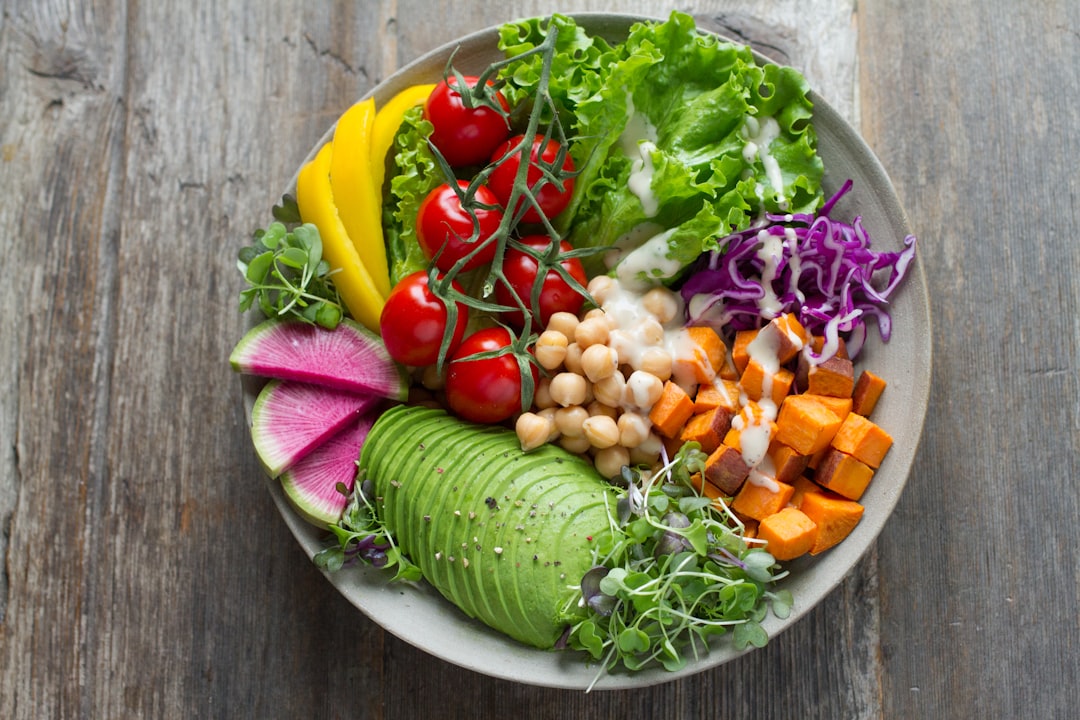
The color on the plate is a decent proxy for where these compounds are, because the pigment and the nutrient are frequently the same molecule. Orange, red and dark green are the three that want a little fat nearby.
The squash was never the problem. The tray it was cooked on, and the plate it landed next to, decide how much of it you actually get.
Frequently Asked Questions
Does the type of fat matter?
Less than the presence of any fat at all. Olive oil, butter, avocado, nuts and dairy fat all form micelles and all work. There is some evidence that unsaturated oils are marginally better carriers for carotenoids, but the gap between one fat and another is small compared with the gap between some fat and none.
Can I just take a supplement instead?
Isolated carotenoid supplements have a poor record in controlled trials, and in some populations high-dose beta-carotene performed worse than placebo. Vegetables deliver these compounds alongside fiber, potassium and a great many other things, in doses nobody has to titrate. Anyone with a diagnosed deficiency should be working from a blood test and a clinician’s advice rather than a supplement aisle.
Is raw always worse than cooked for these nutrients?
For carotenoids, cooked is usually better because the cell walls come apart. For vitamin C and folate the opposite holds, since both are heat-sensitive and water-soluble. A diet with both raw and cooked vegetables in it sidesteps the question, which is the honest answer.
Does a fat-free dressing ruin a salad nutritionally?
It does not ruin it, and it does waste part of it. If the rest of the meal contains fat, the carotenoids from the salad have a reasonable chance of being absorbed anyway. If the salad is the meal, an oil-based dressing is doing real work for about a hundred calories.
What about frozen and canned vegetables?
Both hold carotenoids well, since these compounds are far more stable to processing and storage than vitamin C is. Canned tomatoes in particular are a strong source of lycopene, and frozen squash and carrot lose very little. The broader nutrient picture is not much changed by the freezer.