Two pans of caramel failed in the same twenty minutes and in opposite ways. The wet one, sugar and water, went cloudy at around 250F and then set into a white grainy mass with a wooden spoon standing in it. The dry one, sugar alone, was still pale in three quarters of the pan while a patch by the handle had already gone black and started to smoke.
Neither failure was carelessness exactly. They are the characteristic failure of each method, they happen for opposite reasons, and knowing which one you are exposed to changes what you do with the spoon.
Below are the sugar stages by temperature, the two methods measured against each other, the insurance that prevents each failure, and the two rescues that genuinely work once a pan has gone wrong.
- Wet caramel: sugar plus water, slower, even, fails by crystallizing
- Dry caramel: sugar alone, faster, deeper flavor, fails by scorching
- Caramel starts: around 320F, and is dark by 375F
- Insurance for wet: a spoon of glucose or corn syrup, or a few drops of lemon juice
- Insurance for dry: add the sugar in thirds, and use a pan with a heavy base
- Rescue for a seized pan: more water and back to a boil
- The real hazard: molten sugar at 350F, and cream that erupts when it hits it
Sugar stages, by temperature
| Stage | Temperature | What it does when cool | Used for |
|---|---|---|---|
| Thread | 223 to 235F | syrup, no set | fruit syrups, glazes |
| Soft ball | 235 to 245F | squashes between fingers | fudge, buttercream, fondant |
| Firm ball | 245 to 250F | holds shape, still pliable | caramels, nougat |
| Hard ball | 250 to 266F | chewy, holds firmly | marshmallow, divinity |
| Soft crack | 270 to 290F | bends, then snaps | taffy, some brittles |
| Hard crack | 295 to 310F | shatters cleanly | brittle, spun sugar, lollipops |
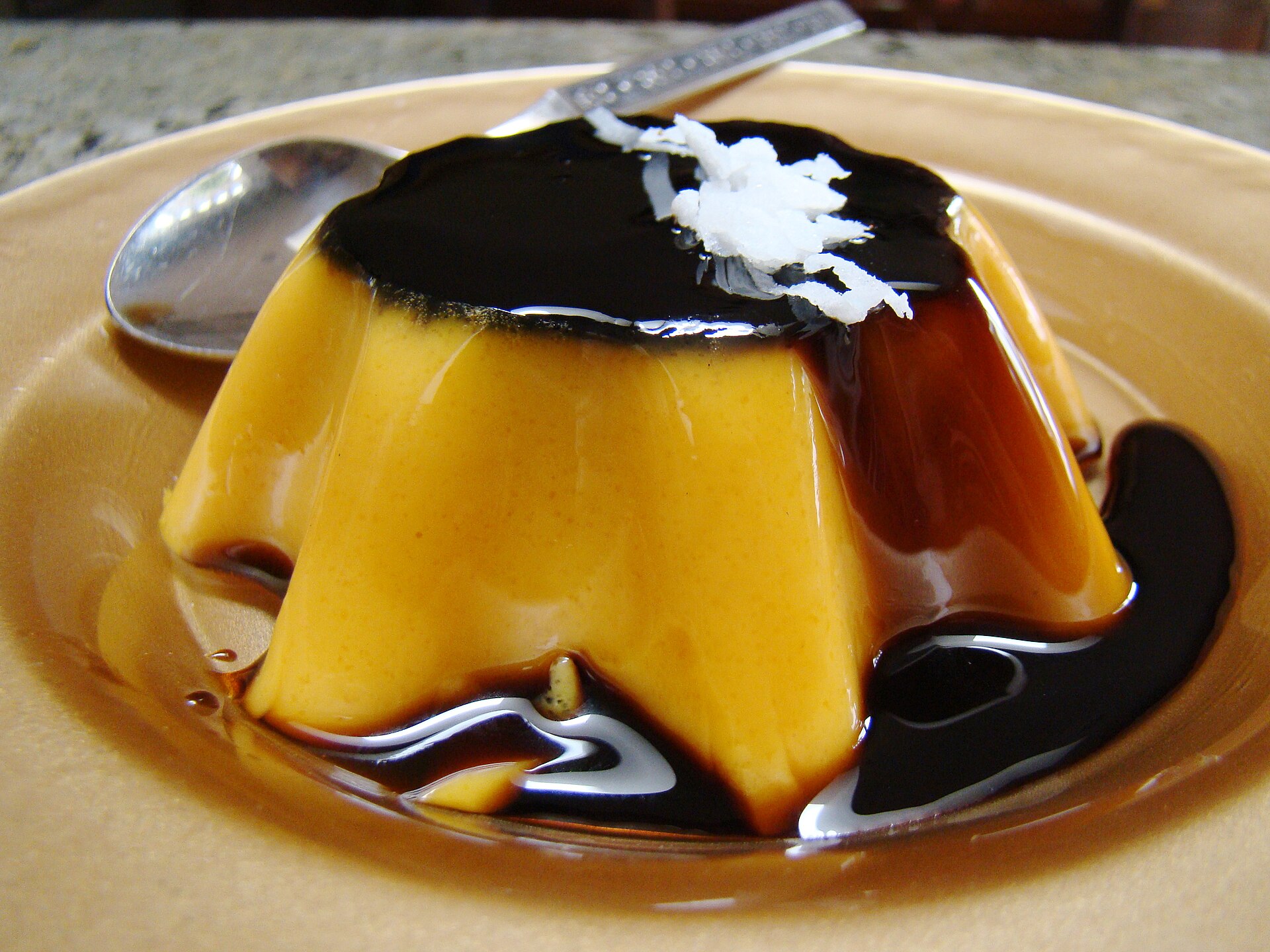
| Light caramel | 320 to 340F | pale amber, mild | flan, sauces, glass sugar |
| Medium caramel | 345 to 360F | copper, balanced | caramel sauce, praline |
| Dark caramel | 365 to 380F | mahogany, bitter edge | dark sauces, savory work |
| Burnt | 390F and up | black, acrid, smoking | nothing |
Everything below 310F is still colorless sugar syrup where the temperature is doing the work of setting the texture. Everything above 320F is caramelization, where the sugar molecules break apart and recombine into hundreds of new compounds, and the color is the readout.
The gap between medium and burnt is about thirty degrees, and a pan on high heat crosses thirty degrees in well under a minute. That is the whole reason caramel has a reputation.
Wet vs dry caramel, side by side
| Wet | Dry | |
|---|---|---|
| What goes in the pan | sugar plus 25 to 30 percent water by weight | sugar alone |
| Time to medium amber | 10 to 14 minutes | 5 to 8 minutes |
| Evenness | excellent, the water distributes heat | poor without stirring |
| Characteristic failure | crystallizes into a grainy mass | burns in patches |
| Flavor | clean, straightforward | deeper, faintly toasted |
| Stirring | never, once it boils | constantly, from the start |
| Best for | large batches, sauces, anything poured | small batches, praline, savory work |
The wet method is the one to learn first, because its failure mode is recoverable and its dry counterpart’s is not. A crystallized pan can be brought back. A scorched pan is finished.
The dry method is faster and it tastes better, and the trade is that it demands your full attention for six minutes. For a small quantity going into praline or a savory sauce, that is a good deal.
Why wet caramel seizes
Sugar dissolved in water wants to go back to being crystals. All it needs is a starting point: a single sugar crystal on the side of the pan, a speck of dust, a stir with a spoon that has sugar clinging to it. From that seed, crystallization propagates through the whole syrup in seconds.
This is why every classic instruction says not to stir a boiling sugar syrup and to wash the sides of the pan down with a wet brush. Both are about the same thing: making sure no undissolved crystal ever touches the syrup.
It is also why the failure looks so dramatic. A clear syrup goes cloudy and then solid in the space of about ten seconds, and the pan that was fine a moment ago now contains something that looks like wet sand.
Why dry caramel scorches
With no water in the pan, there is nothing to distribute the heat. The sugar in contact with the metal melts first, and once it has melted it starts caramelizing immediately, while the dry granules two centimeters away are still at room temperature.
So a dry pan develops a temperature spread that a wet pan never does. By the time the last crystals have melted, the first sugar to melt has been above 320F for several minutes, and on a thin pan over a small burner it has been sitting directly over the flame the whole time.
The result is a pan that is simultaneously undercooked and burnt, and no amount of stirring afterward mixes the two into something usable. Bitterness from scorched sugar is powerful, and a small burnt patch flavors the whole batch.
The insurance policies
For wet caramel: an interfering agent. A tablespoon of glucose syrup or corn syrup per 200 grams of sugar, or a quarter teaspoon of lemon juice, or a pinch of cream of tartar. All three work by breaking some of the sucrose into glucose and fructose, which physically get in the way of crystals forming. Acid does it during cooking; glucose does it by being present.
For wet caramel: a lid, for two minutes. Covering the pan for the first two minutes of boiling lets steam condense on the sides and wash any stray crystals back down. It replaces the pastry brush and it is more reliable.
For dry caramel: add the sugar in thirds. Melt a third, let it liquefy and just start to color, then add the next third and stir it into the melt, then the last. Each addition cools the pan slightly and the sugar going in has liquid to dissolve into rather than metal to sit on.
For both: the right pan. Heavy stainless with a thick base, and light-colored inside so the color can be read. A dark nonstick pan makes it impossible to judge, and a thin pan concentrates heat wherever the burner is.
Making a wet caramel that does not crystallize
- Put 200 g sugar and 60 ml water in a heavy pan with a tablespoon of glucose syrup. Stir once to wet all the sugar, before any heat.
- Set it on medium heat and stir until the sugar has fully dissolved. The syrup should be completely clear. This is the last time the spoon goes in.
- Bring it to a boil and cover the pan for two minutes. Then take the lid off and leave it alone.
- Do not stir again. Swirl the pan by the handle if it colors unevenly. Swirling is safe; stirring is not.
- Watch for color from about the eight-minute mark. Nothing happens for a long time, then everything happens at once.
- Pull it one shade lighter than the target. A hot pan carries the caramel further after it leaves the burner, and darker is a matter of ten seconds.
- Stop the cooking by setting the pan base in a shallow tray of cold water for three seconds. Or by adding whatever liquid the recipe calls for, carefully.
Making a dry caramel that does not scorch
- Weigh the sugar and divide it into three. 200 g total is a manageable batch for a home burner.
- Heat the empty pan over medium-low for a minute, then add the first third. Spread it in an even layer rather than a heap.
- Stir constantly with a heatproof spatula as it melts. It will clump before it flows. Keep moving it and keep scraping the base.
- When it is liquid and just beginning to color, add the second third. Stir it in until it dissolves into the melt, then add the last.
- Keep the heat at medium-low the whole time. Higher heat does not save time here, it only widens the gap between the hot spots and the rest.
- Pull it at one shade under target and stop the cooking. The same rule as wet caramel, and it matters more because a dry pan is hotter.
The two rescues that work
A crystallized wet caramel comes back. Add water, roughly as much as you started with, put it back on the heat, and bring it to a boil while stirring until every crystal has dissolved again. Then stop stirring and start over from the boiling stage. It costs ten minutes and nothing else, and this is the single most useful thing to know about sugar work.
A caramel that is too dark but not burnt gets diluted. If it went past the target and is bitter but has no black in it and no smoke came off it, whisking in cream, butter or water pulls the concentration down and a pinch of salt covers a surprising amount of the bitter edge. It will not become a light caramel, and it can become a good dark one.
What cannot be rescued is a pan that smoked, went black in patches, or smells acrid. Those compounds do not dilute out. Fill the pan with water, put it back on the heat until the sugar dissolves, pour it away, and start again.
Adding cream, butter or water at the end
This is the step that turns a caramel into a sauce and it is where most kitchen injuries around sugar happen. Caramel at 350F meeting cold liquid produces an instant, violent burst of steam that throws molten sugar out of the pan.
Warm the cream first, take the pan off the heat, and add the liquid in a slow stream down the side of the pan rather than into the middle, with the pan tilted away from you. It will still bubble up hard, and the pan needs to be at least twice as tall as the finished volume for that reason.
Butter goes in after the cream, off the heat, in cubes, whisked until it emulsifies. Salt goes in last. A caramel sauce made this way keeps two to three weeks refrigerated in a sealed jar and thickens considerably when cold, so warm it gently before judging the consistency.
Burns, and why this needs its own paragraph
Molten sugar is between 320 and 380F, it is sticky, and it does not come off skin. Water boils at 212F, and oil frying is usually 350F but runs off; caramel adheres and keeps transferring heat, which is why sugar burns are typically deeper than either.
Keep a bowl of ice water beside the stove for the whole operation, and if sugar lands on skin, get that hand into the water immediately and hold it there. Wear long sleeves, use a pan with a long handle, and keep children and pets out of the kitchen while a caramel is going.
Do not taste caramel off a spoon while it is hot, do not touch a set caramel decoration to check it, and never lean over the pan when liquid is going in. None of this is excessive caution. It is the standard practice in any professional pastry kitchen, and it exists because the alternative is a burn that takes weeks.
Which method for which job
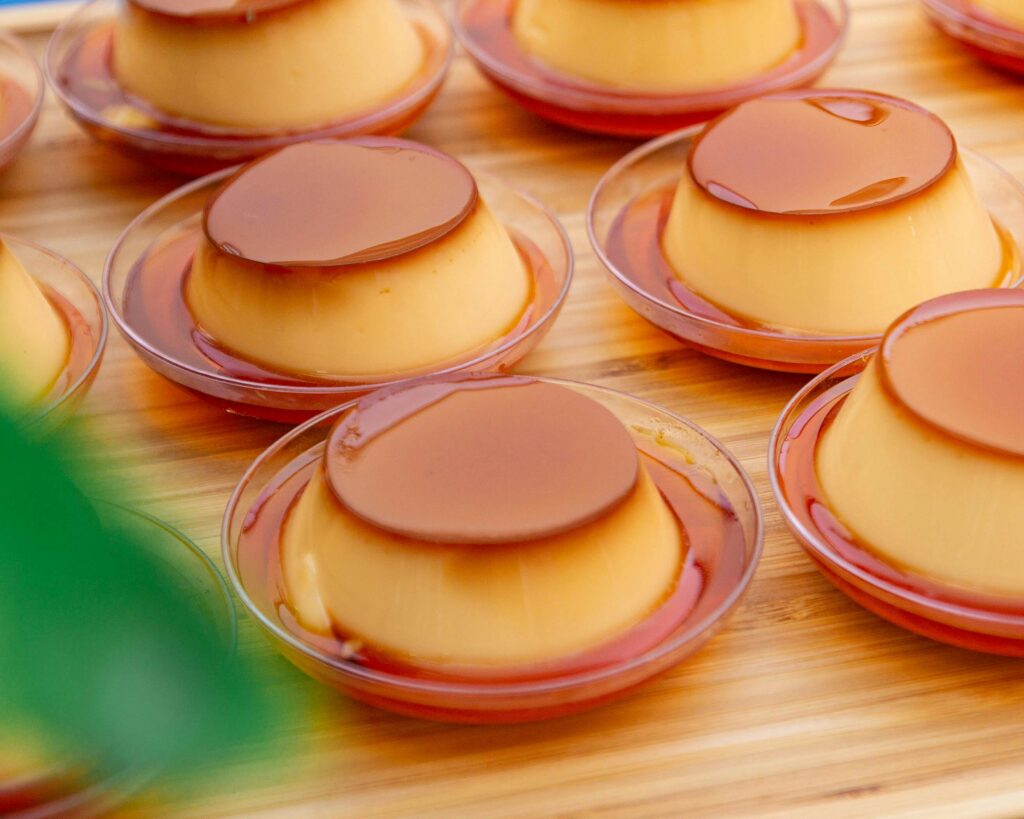
Use wet for anything poured, anything large, and anything where evenness matters more than the last degree of flavor: a flan lining, a caramel sauce, a glaze, spun sugar. It is also the right choice when other things need attention at the same time.
Use dry for praline, for nut brittle, for a small quantity going into a savory sauce, and for any time the caramel is the flavor rather than the sweetness. It is a six-minute job that gets a deeper, rounder result. A brulee topping is neither, since that caramel forms on the surface of the custard rather than in a pan.
For a first attempt, wet with glucose in it, in a heavy pan, with a thermometer clipped to the side. Get the timing into your hands once and the thermometer becomes optional. Most of what makes a dessert difficult is a step exactly like this one.
Frequently Asked Questions
Do I need a candy thermometer?
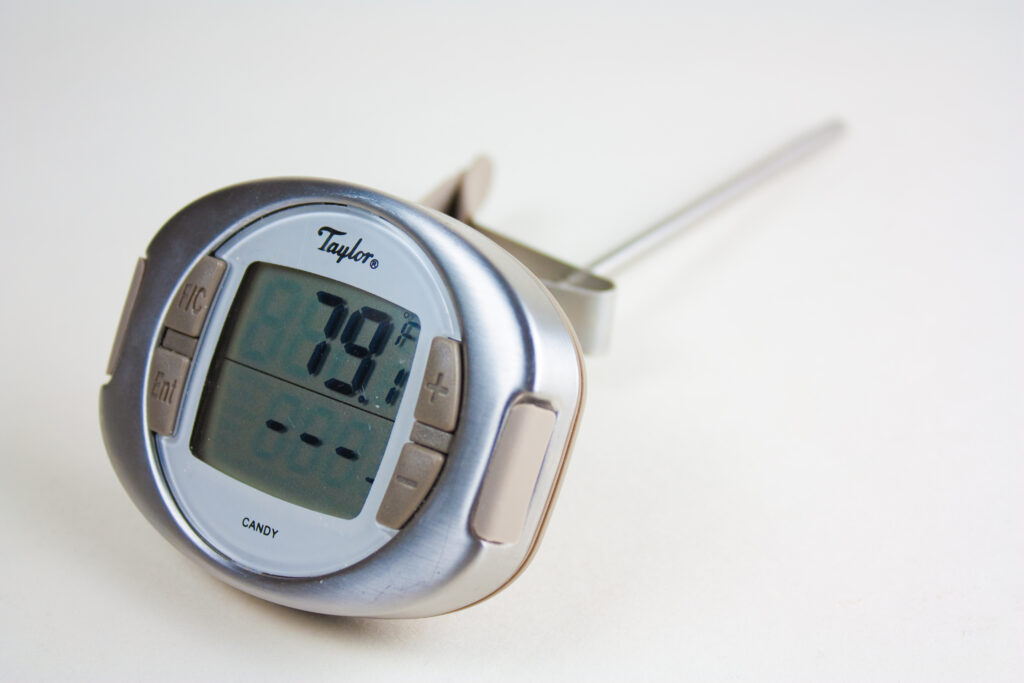
For anything below caramel stage, yes, since sugar work below caramel stage depends on hitting a narrow temperature and there is no color to read. For caramel itself, color is a better guide than temperature, and experienced cooks work by eye and smell. A thermometer is still useful the first several times.
Can I use brown sugar?
Not really. Brown sugar already contains molasses, which browns at a much lower temperature and burns before the sucrose has caramelized, so the result tastes scorched rather than caramelized. Use white sugar and add a little molasses at the end if that flavor is what you want.
Why did my caramel go grainy after it cooled?
Late crystallization, usually because something disturbed it while it was setting or because the syrup was slightly undercooked. A spoonful of glucose in the next batch prevents it, and stirring a finished caramel as little as possible while it cools helps too.
How do I clean a pan with hardened caramel in it?
Fill it with water and bring it to a boil. The sugar dissolves completely in a few minutes and pours away. Never chip at set caramel with a knife or a scourer, since it is harder than it looks and the pan will lose.
Can caramel be made ahead?
Caramel sauce, yes, two to three weeks in the refrigerator. Hard caramel decorations, only in a dry room, since they absorb moisture from the air and go sticky within hours in a humid kitchen. Praline stored in an airtight jar with a silica pack keeps a month.