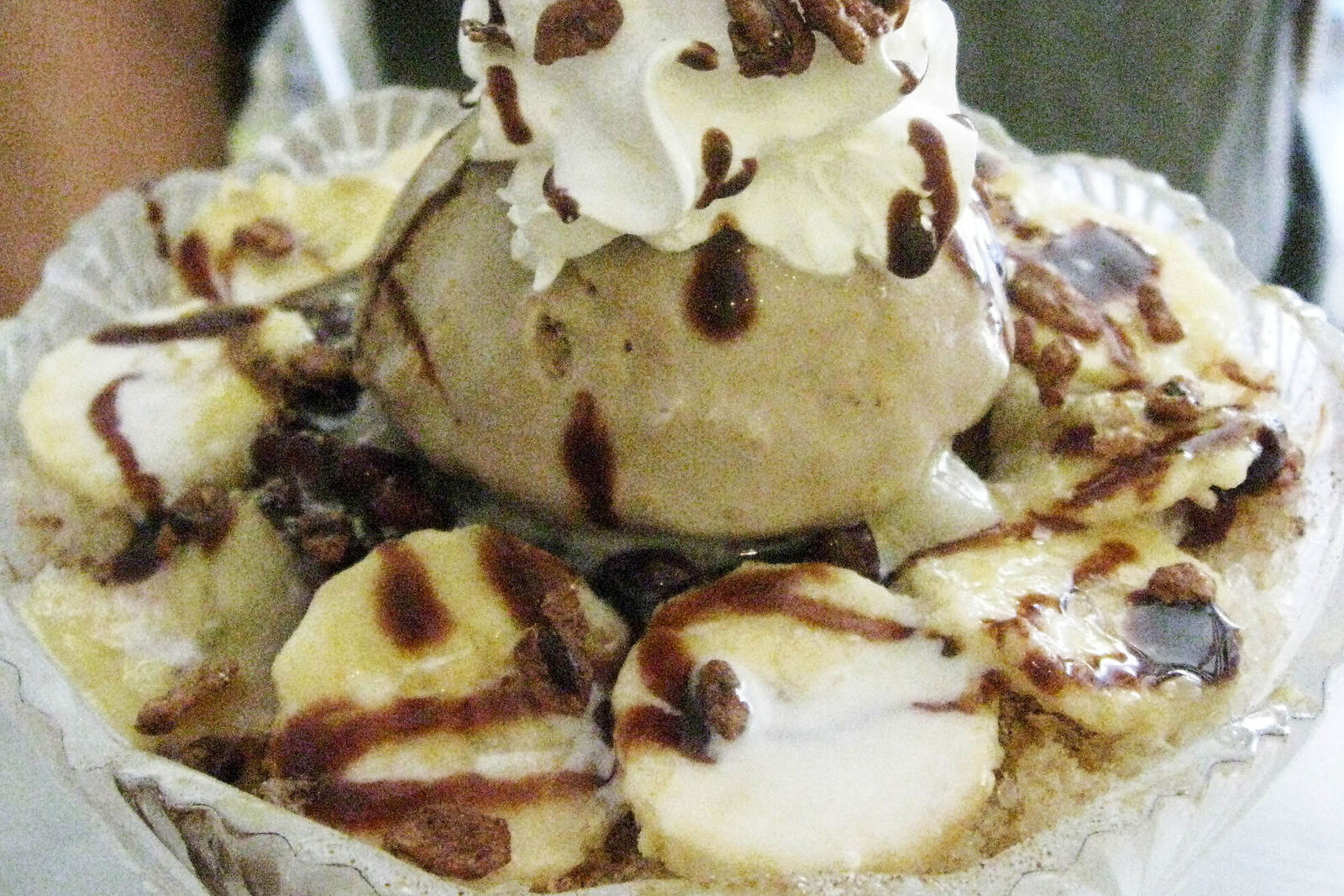
Seoul in late July. 35 C, humidity that feels like wading through soup. The streets near Hongdae have lines outside the Sulbing cafes – everyone wants a bingsu. The bowl arrives mounded with snowy shaved ice, sweet red bean paste in the center, fresh fruit around the edges, condensed milk drizzled over, ice cream on top. Twenty minutes later the bowl is gone and you can almost feel your core temperature drop.
This is the home-makeable patbingsu (the original traditional version with red bean paste). Frozen milk ice replaces the special Korean shaved-ice machine; sweet red bean paste, fresh fruit, condensed milk, and kinako (roasted soybean powder) provide the layered flavors that define the dish. The whole production requires 6 hours of advance freezing but only 10 minutes of active prep.
Quick Read — At a Glance
| Yield | 2 large bowls |
| Total time | 6 hours 10 min (6h freeze + 10 min assembly) |
| Difficulty | Easy |
| Texture | Snowy milk ice, sweet bean paste, juicy fruit, crunchy kinako |
| Critical | Milk ice must be shaved or grated thin – chunks of frozen milk are wrong |
Milk Ice Foundation
Korean bingsu uses milk frozen into a block, not plain water ice. The milk is sweetened (60 g sugar per 500 ml whole milk) and frozen in a shallow pan for 6+ hours. The resulting block is shaved into snow-like ribbons. Restaurant bingsu machines do this perfectly; home preparation uses a box grater on the frozen block.
Plain ice (Hawaiian-style shave ice) lacks the creamy quality that defines bingsu. The milk contributes both flavor and texture – softer, sweeter, more luxurious than plain water ice.
Red Bean Paste Plays Star
Sweet red bean paste (patjuk in Korean, anko in Japanese) is the defining topping. Available at any Asian market in cans. Two textures: tsubuan (chunky, whole beans intact) is traditional for bingsu; koshian (smooth paste) works but loses visual interest. Brand: Wang Korea, Haitai. Homemade version: simmer 250 g dried azuki beans with 200 g sugar for 2 hours until tender.
The red bean paste contrasts the ice both visually (dark red against snowy white) and texturally (dense, sweet, slightly grainy against crisp, cold). The paste is placed in a generous mound in the center of the bowl.
| Variation | Topping | Era | Difficulty |
|---|---|---|---|
| Patbingsu (original) | Sweet red bean + fruit | Pre-1990s traditional | ✓ Canonical (this recipe) |
| Matcha bingsu | Green tea powder + azuki | 2010s modern cafes | Easy variation |
| Mango bingsu | Fresh mango chunks + syrup | Sulbing trend 2015+ | Easy (seasonal) |
| Injeolmi bingsu | Korean rice cake + soybean | Traditional revival | Medium (sourcing) |
| Cheesecake bingsu | Cheese cubes + biscuit | 2020s viral | Easy modern twist |
Ingredients
- Milk ice:
- 500 ml (2 cups) whole milk
- 60 g (1/4 cup) granulated sugar
- 1 tsp vanilla extract
- Pinch of fine sea salt
- Toppings:
- 200 g (7 oz) sweet red bean paste (patjuk, can or homemade)
- Mixed fresh fruit (1 mango cubed, 100 g strawberries halved, 1 kiwi sliced)
- 60 ml (1/4 cup) sweetened condensed milk
- 2 tbsp kinako (roasted soybean powder)
- 2 small scoops vanilla ice cream
Making It
- Milk ice mix. Whisk milk + sugar + vanilla + salt until sugar dissolves.
- Freeze 6h+. Pour in shallow metal pan (no more than 3 cm deep). Freeze overnight ideal.
- Shave/grate. Box grater on the frozen block. Snowy ribbons.
- Mound in bowls. Two wide bowls. High mounds.
- Red bean center. Generous scoop of patjuk in middle.
- Fruit around edges. Mango, strawberry, kiwi in segments.
- Drizzle + sprinkle. Condensed milk over, kinako sprinkled.
- Ice cream + serve. Scoop on top. Immediately – melts fast.
Frequently Asked Questions
Patbingsu vs bingsu?
Bingsu = generic shaved ice. Patbingsu = red bean version (original traditional). Modern variations: matcha, mango, cheesecake bingsu. Patbingsu is the foundation.
Why shave milk ice?
Milk ice is creamier and sweeter than plain water ice. Hawaiian shave ice uses water and is harder. Bingsu machine optimal but box grater works.
Where buy red bean paste?
Asian markets (H Mart, 99 Ranch). Cans labeled patjuk (Korean) or anko (Japanese). Tsubuan chunky traditional. Brands: Wang Korea, Haitai.
What is kinako?
Roasted soybean powder. Light tan, slightly sweet, nutty. Crunchy contrast to sweet ice. Asian markets in small bags. Substitute: roasted soy flour.
Sources
- Maangchi — Patbingsu — The Korean YouTube authority.
- Serious Eats — Bingsu — American adaptation.
- USDA FoodData Central — Nutritional data.
Each bowl contains roughly 485 calories, 15 g protein, 12 g fat, 82 g carbs.
Please note: Contains dairy, soy. Not suitable for these allergies. Consult a dietitian.

Tom Nakamura
Tom learned to cook from his obaachan during summers in Japan - pickling daikon at the kitchen table, watching her stir miso into broth without ever measuring. Later, family trips with cousins took him through markets in Bangkok, Shanghai, and Hanoi, and the food stuck with him. His writing focuses on making authentic Asian techniques accessible to home cooks without diluting the technique or the culture that defines them. He handles Chinese, Japanese, Korean, Thai, Vietnamese, Indian, and Middle Eastern recipes at the publication.