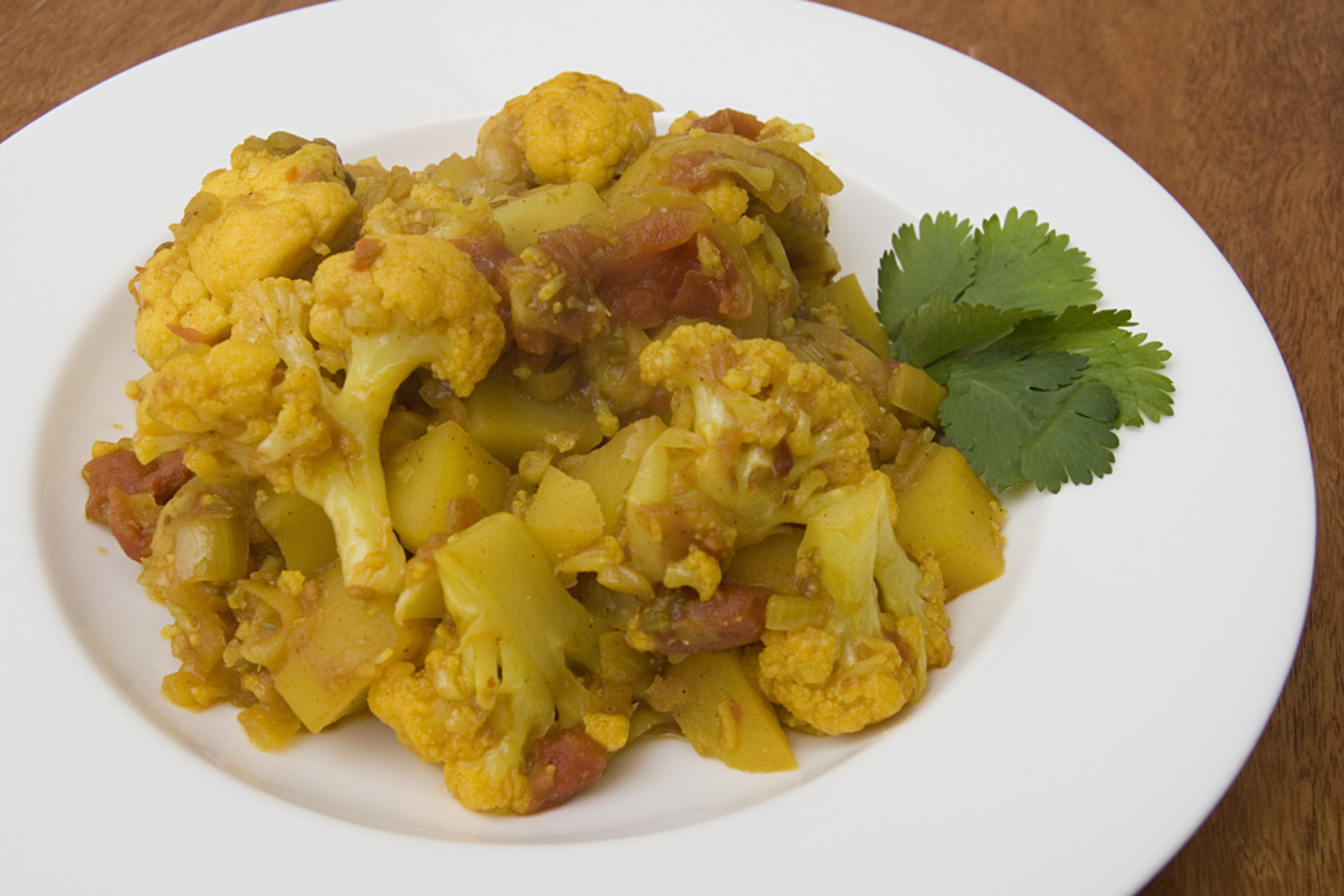
Aloo gobi is the dish every Indian household makes on weeknights. Cauliflower (gobi) and potato (aloo) cooked in turmeric-stained gravy with cumin, ginger, and fresh cilantro. The technique is uniquely Indian — bhuna the spices in oil first, then the vegetables absorb the flavor as they cook. The result is a one-pot vegetarian dinner that satisfies meat-eaters and converts vegetable skeptics.
This article is the canonical North Indian Punjabi version with the bhuna technique (5-minute tomato reduction), finishing garam masala, and fresh cilantro. The whole production takes 45 minutes. Best with basmati rice or fresh naan. The leftovers are even better the next day after the spices have integrated overnight.
Quick Read — At a Glance
| Yield | 4 servings |
| Total time | 45 min |
| Difficulty | Easy-Intermediate |
| Texture | Tender cauliflower and potato, thick spiced gravy, herbal cilantro finish |
| Critical | Bhuna the tomatoes 5 minutes — don’t skip this step |
The Bhuna Step
Bhuna means roast/sauté in Hindi. After adding turmeric and other spices to the pan, add diced tomatoes and cook 5 minutes until they break down completely into a paste. This concentrates flavor and creates the gravy base. Skipping bhuna produces raw-tomato curry with flat watery taste. The 5-minute extra step is what separates proper Indian home cooking from amateur attempts.
Garam Masala: Finishing, Not Cooking
Garam masala is added at the END of cooking, not the beginning. The spice blend (cardamom, cinnamon, cloves, cumin, coriander, pepper) is delicate — heat destroys the aromatics. Sprinkle 1 tsp over the dish in the last minute, stir, serve immediately. This is opposite to what Westerners do with curry powder. Brand: MDH or Everest from Indian markets are reliable. Avoid: “curry powder” labels — those are Western inventions Indians don’t use.
Ingredients
- 1 medium cauliflower (700 g), cut in florets
- 3 medium potatoes (500 g), cubed
- 4 tbsp ghee or neutral oil
- 2 tsp cumin seeds
- 1 large onion, fine diced
- 3 garlic cloves + 1 piece ginger, minced
- 1 tsp turmeric
- 1 tsp cumin powder
- 1 tsp coriander powder
- 1/2-1 tsp Kashmiri red chile (mild) + 1/4 tsp cayenne (heat)
- 1 tsp garam masala (finishing)
- 2 tomatoes, diced
- Fresh cilantro for garnish
- Salt to taste
Making It
- Toast cumin seeds. Ghee 30 sec until fragrant.
- Onion 8 min. Until golden.
- Garlic + ginger. 1 min.
- Add spice powders. Turmeric, cumin, coriander, chile. Toast 30 sec.
- BHUNA TOMATOES. 5 min until they break down. Essential.
- Potatoes + 60 ml water. Cover, 8 min until starting to soften.
- Cauliflower. Stir gently, cover, 12-15 min until tender.
- Finish. Garam masala + cilantro. Salt to taste.
- Serve. Basmati rice or naan.
Frequently Asked Questions
Why bhuna tomatoes?
Bhuna = roast/sauté. Concentrates flavor, creates gravy base. Skipping = flat watery curry. Defines proper Indian home cooking.
Pre-cook or one-pot?
One-pot traditional. Pre-blanching cauliflower is restaurant trick but skips spice infusion. Home cooking = one-pot.
Garam masala vs curry powder?
Garam masala = specific blend added at END (delicate, heat destroys). Curry powder = Western invention, used at start. Indians use garam masala finish.
Spicier?
1 minced green chile with onion, double cayenne, chaat masala finish. Default is medium-Punjabi heat.
Sources
- Serious Eats — Aloo Gobi — Indian home technique.
- NYT Cooking — Aloo Gobi — Priya Krishna Indian authority.
- USDA FoodData Central — Nutritional data.
Each serving contains roughly 285 calories, 8 g protein, 12 g fat, 38 g carbs.
Please note: Contains dairy (ghee, optional). Vegan if using oil. Gluten-free naturally. Consult dietitian.

Tom Nakamura
Tom learned to cook from his obaachan during summers in Japan - pickling daikon at the kitchen table, watching her stir miso into broth without ever measuring. Later, family trips with cousins took him through markets in Bangkok, Shanghai, and Hanoi, and the food stuck with him. His writing focuses on making authentic Asian techniques accessible to home cooks without diluting the technique or the culture that defines them. He handles Chinese, Japanese, Korean, Thai, Vietnamese, Indian, and Middle Eastern recipes at the publication.