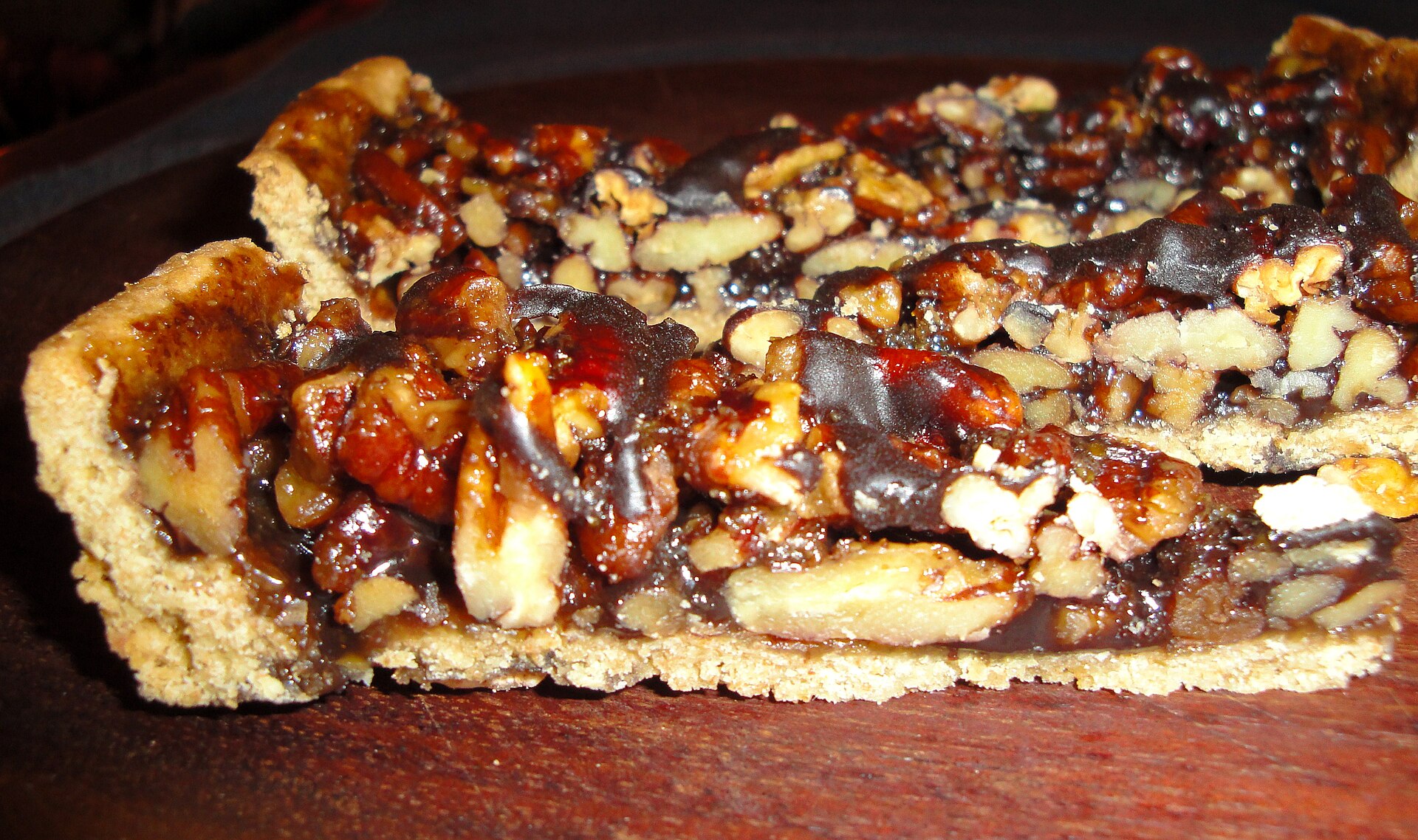
Three batches of the same dough went into the same oven on the same tray: one made with butter, one with vegetable shortening, one with half of each. Same flour, same water, same salt, same rest, same 400 degree oven, same twenty-two minutes. They came out looking like three different recipes.
The all-butter shell was the darkest, the most flavorful and the least tall. The shortening shell rose highest, held the sharpest edge on the crimp, and tasted of almost nothing. The half-and-half shell was within a millimeter of the shortening one for height and had most of the butter flavor, which is the answer nobody wants because it involves buying two fats.
Everything that separates them comes down to two numbers: what temperature the fat melts at, and how much water it contains. What follows is what those two numbers do to a crust, and how to work with each of the three.
- Butter: melts around 90 to 95F, roughly 16 to 18 percent water, best flavor
- Shortening: melts around 115 to 120F, no water, best structure
- Lard, leaf: melts around 95 to 115F, no water, flakiest of the three
- Half and half: 60 percent butter, 40 percent shortening, is the practical answer
- Liquid: reduce it by a tablespoon per cup of flour when using shortening
- Everything cold: fat under 50F, water with ice in it, and a rest before rolling
- The failure to expect: all-butter shrinks and slumps more than the other two
Melting point decides how long the layers survive
A flaky crust is layers of dough separated by layers of fat. In the oven the water in the dough turns to steam and pushes those layers apart, and the fat has to still be solid at the moment that happens or the layers collapse into each other.
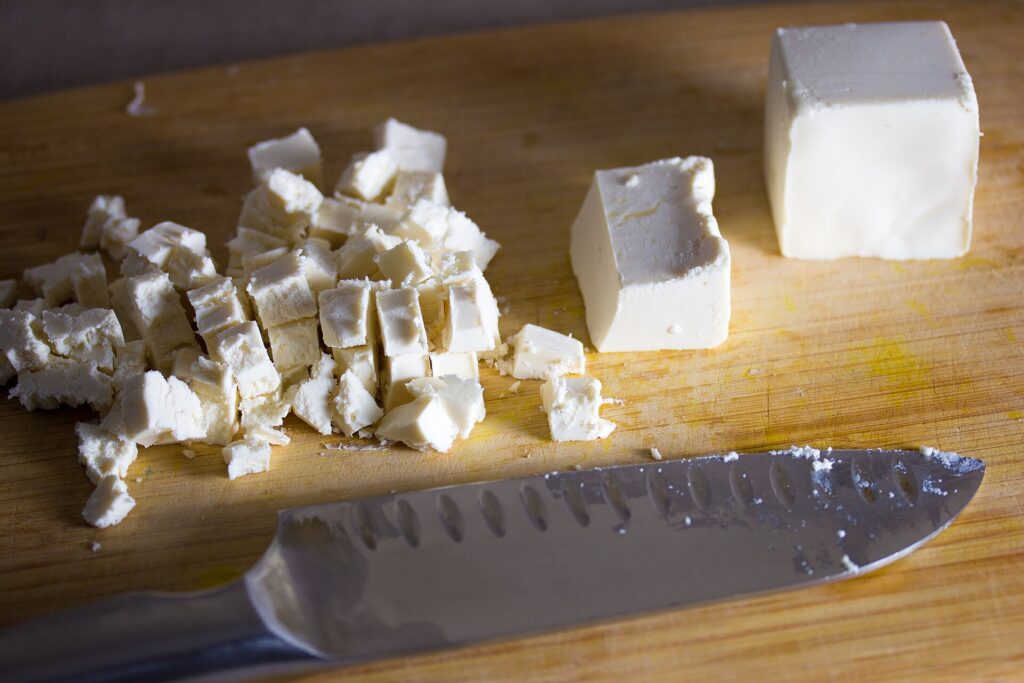
Butter starts softening around 68 degrees and is fully liquid somewhere in the low 90s, which in a domestic kitchen means it can go soft in the bowl, soft on the counter and soft in the fingers before it ever reaches an oven. Shortening stays firm through all of that and does not fully melt until well over 110.
That wider solid range is why shortening is forgiving. It tolerates a warm kitchen, a slow roller and a cook who handles the dough more than they should. Butter does none of that, which is why an all-butter crust is genuinely harder to make well and better when you do.
Water content is the second variable
Butter is not pure fat. Around sixteen to eighteen percent of a stick of American butter is water, and European-style butters run a little lower at around fifteen. That water counts toward the hydration of the dough and it turns to steam in the oven.
Steam is useful; it is what lifts the layers. It also develops gluten while the dough sits, because water plus flour plus time is the whole mechanism. An all-butter dough is effectively wetter than the recipe says, which is part of why it shrinks harder in the pan.
Shortening contains no water at all. A dough made with it needs the liquid the recipe calls for and no more, and it develops less gluten for the same amount of handling. When substituting shortening for butter one for one, take a tablespoon of water out per cup of flour or the dough will be too wet.
Butter vs shortening pie crust, three doughs measured
| All butter | All shortening | 60/40 blend | |
|---|---|---|---|
| Flavor | full, dairy, browned | neutral to waxy | most of the butter |
| Height of a blind-baked shell | lowest | highest | close to shortening |
| Flake structure | large, irregular sheets | fine, even, short | large and even |
| Tenderness | can turn tough if worked | very tender | tender |
| Color | deep gold | pale | gold |
| Shrinkage in the pan | most | least | moderate |
| Working temperature window | narrow | wide | moderate |
| Holds a crimp | softens | sharp | good |
| Day two | firms up, still good | stays soft | good |
The mouthfeel difference deserves a note. Shortening coats the tongue at body temperature because it has not fully melted, which is the source of the waxy sensation people describe. Butter melts on the tongue and releases its flavor at the same moment, which is a large part of why it tastes of more.
Flake and tenderness are two different things
Flaky means separate visible layers. Tender means the crust breaks easily under a fork. They come from different mechanisms and a crust can have one without the other.
Flake comes from keeping the fat in distinct pieces, flattened into sheets between layers of dough. Big, flat, cold pieces of fat give big flakes. That is a matter of how the fat is cut in and how the dough is folded, not of which fat it is.
Tenderness comes from fat coating flour proteins and stopping them from linking into gluten. Fat that is soft and smeared through the dough does this better than fat in large cold sheets, which is why the two goals pull against each other. The classic compromise is to cut in two-thirds of the fat until it disappears and leave the last third in pieces the size of a hazelnut.
Where lard belongs in the argument
Leaf lard, the fat from around the kidneys, is the traditional pastry fat in a great deal of American and British baking and it outperforms both of the others on flake. Its crystal structure is coarse, so it forms large sheets naturally, and its melting range is wide.
It is also not neutral. Good leaf lard is close to flavorless; ordinary rendered back fat tastes distinctly of pork and belongs in savory pastry rather than in a fruit pie. The two are sold under the same word and they are not interchangeable.
The traditional savory arrangement is lard for flake plus butter for flavor, in a similar ratio to the butter and shortening blend. An all-butter crust on a savory pie is a modern preference rather than the historical default.
One recipe, three ways
- Weigh 250 g of flour and half a teaspoon of salt into a wide bowl. A tablespoon of sugar if the pie is sweet. Chill the bowl if the kitchen is warm.
- Weigh the fat cold, straight from the refrigerator. All butter: 170 g. All shortening: 150 g. Blend: 100 g butter and 70 g shortening.
- Cut the fat into cubes and freeze it for ten minutes. Shortening benefits less from this than butter, and it does not hurt.
- Work two-thirds of the fat into the flour until it looks like coarse sand. Fingertips, a pastry blender or eight pulses in a processor. Stop early rather than late.
- Add the remaining third and toss to coat, leaving the pieces intact. These are the pieces that become flakes.
- Add ice water a tablespoon at a time. Butter dough: 60 to 75 ml. Shortening dough: 45 to 60 ml. Blend: 55 to 70 ml. Stop when it holds together when squeezed.
- Gather rather than knead, flatten into a disc, wrap and refrigerate an hour. The rest hydrates the flour and relaxes the gluten, and it matters most for the all-butter version.
- Roll on a lightly floured counter, from the center out, turning a quarter after every pass. If the butter starts to smear, stop and chill it for fifteen minutes.
- Fit it into the pan without stretching, then chill again for 30 minutes. Stretched dough shrinks back. Chilled dough does not slump.
- Bake at 400F for the first fifteen minutes, then drop to 375F. The high start sets the structure before the fat melts out.
Handling: the same dough, three temperatures
All-butter dough has roughly a ten-minute working window in a warm kitchen before the fat softens past usefulness. Roll fast, chill when it resists, and accept that it will need two or three trips to the refrigerator on a summer afternoon.
Shortening dough will sit on the counter for half an hour and behave. It also takes rerolling of scraps better than butter dough does, which matters when a crust is being cut into shapes or a lattice.
Blend dough sits in between and is the one most home bakers should use if they are not enjoying the process. The flavor loss against all butter is small at 60/40 and noticeable at 50/50, which is where the ratio comes from.
Where each fat earns its place
All butter. Fruit pies eaten the day they are made, tarts where the crust is part of the flavor, and anything served warm. It is also the right choice for a cook who wants to taste the difference their technique makes, since butter punishes and rewards handling more than the others do.
All shortening. Cutouts, lattices, decorative work, and anything that has to hold a shape through handling and transport. Also hand pies and anything made in a hot kitchen, which is a practical rather than an aesthetic argument.
The blend. Almost everything else, and particularly a double-crust pie where the top has to look good and taste of something. Sixty percent butter is the ratio that keeps most of the flavor; below that the shortening starts to show through as a flatness at the finish.
Lard, or lard and butter. Savory pies, hand raised pies, empanadas and tortillas. It also makes an exceptional sweet crust if the lard is properly rendered leaf fat, which is worth seeking out once. The rustic free-form version is where a good fat shows most clearly, since there is no pan holding anything up.
Substituting one for the other, by weight
| Recipe calls for | Substitute | Also change |
|---|---|---|
| 100 g butter | 85 g shortening | add 15 ml water |
| 100 g shortening | 115 g butter | remove 15 ml water |
| 100 g butter | 85 g lard | add 15 ml water |
| 100 g butter | 60 g butter + 40 g shortening | remove about 6 ml water |
| Any of the above | oil | do not; it makes a press-in crust, not a rolled one |
The water adjustment is the part that gets skipped and it is the reason a substituted crust often comes out tough. Butter brings water with it; the other fats do not, and the dough has to be corrected in one direction or the other.
Two things that are not optional
Raw dough is not a snack. Flour is a raw agricultural product and has been implicated in E. coli outbreaks more than once, and any egg wash you brush on is raw egg. Neither is a reason for alarm and both are a reason to keep the scraps away from children and to wash hands, boards and the roller after handling.
The second is oven temperature. A crust that goes into an oven below about 375 melts its fat before the structure sets, and the result is a greasy, flat shell with the fat pooled in the pan. If an oven runs cool, and many do, a cheap oven thermometer settles the question in one afternoon. Short pastry is more sensitive to this than almost anything else in a domestic oven.
Six failures, and which fat causes each
Greasy and flat. Fat melted before baking, or the oven was too cool. Most common with butter.
Tough and hard. Too much water, too much working, or not enough fat. Common with butter when the water was not reduced.
Crumbly, will not hold together. Too little water or too much fat cut in too finely. Common with shortening.
Tastes of nothing. All shortening. There is no technique fix; it needs butter in it.
Shrunk down the sides. Gluten not rested, or the dough was stretched into the pan. Worst with all butter.
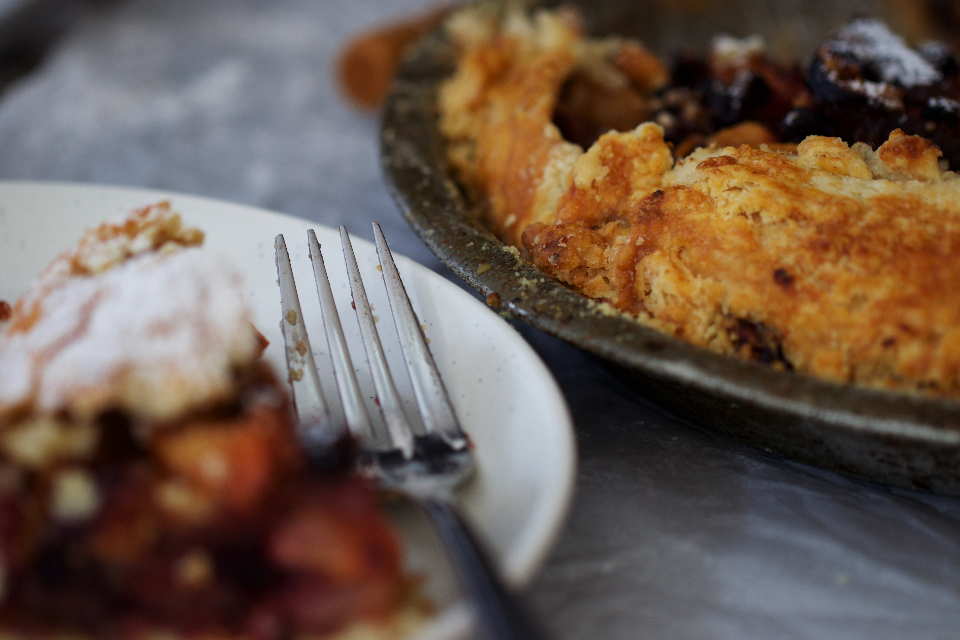
Pale after full baking time. Shortening browns less because it has no milk solids. An egg or cream wash covers it. A fruit pie shows this more than a covered one does, and a free-form galette shows it most of all.
Butter for the taste, shortening for the insurance, and sixty-forty if you would rather not choose. The oven does not care which one you picked; it only cares whether the fat was still cold when it went in.
Frequently Asked Questions
Can I use European butter instead of shortening?
Higher-fat European-style butter has less water and behaves marginally better in pastry, and it does not solve the melting point problem, which is the main reason shortening is used. It makes a very good all-butter crust and it is not a substitute for the structural job shortening does.
Is shortening worse for you than butter?
The trans fat that made older shortening a genuine concern has largely been removed from the products sold today, which are now made by other methods. Both are concentrated saturated or semi-saturated fat eaten in small quantities in a pie. Anyone managing cholesterol or heart risk should take that up with their own clinician rather than with a pastry article.
Why does my all-butter crust always shrink?
Two causes, usually together: the dough was stretched to fit the pan rather than eased in, and it was not rested long enough for the gluten to relax. Chill the fitted shell for thirty minutes before baking and give the dough a full hour of rest after mixing. Butter doughs need both more than the other two do.
Can I freeze the dough?
All three freeze well, wrapped tightly, for about three months. Thaw overnight in the refrigerator rather than on the counter, since a partly thawed disc rolls unevenly. Frozen fitted shells can go into the oven straight from the freezer, and they hold their shape better for it.
Does the vinegar or vodka trick actually help?
A little. Both are usually offered as gluten inhibitors, and the effect is small compared with simply using less water and handling the dough less. Vodka evaporates in the oven so a dough made with it can be wetter and easier to roll, which is a real convenience and not the same thing as a better crust.