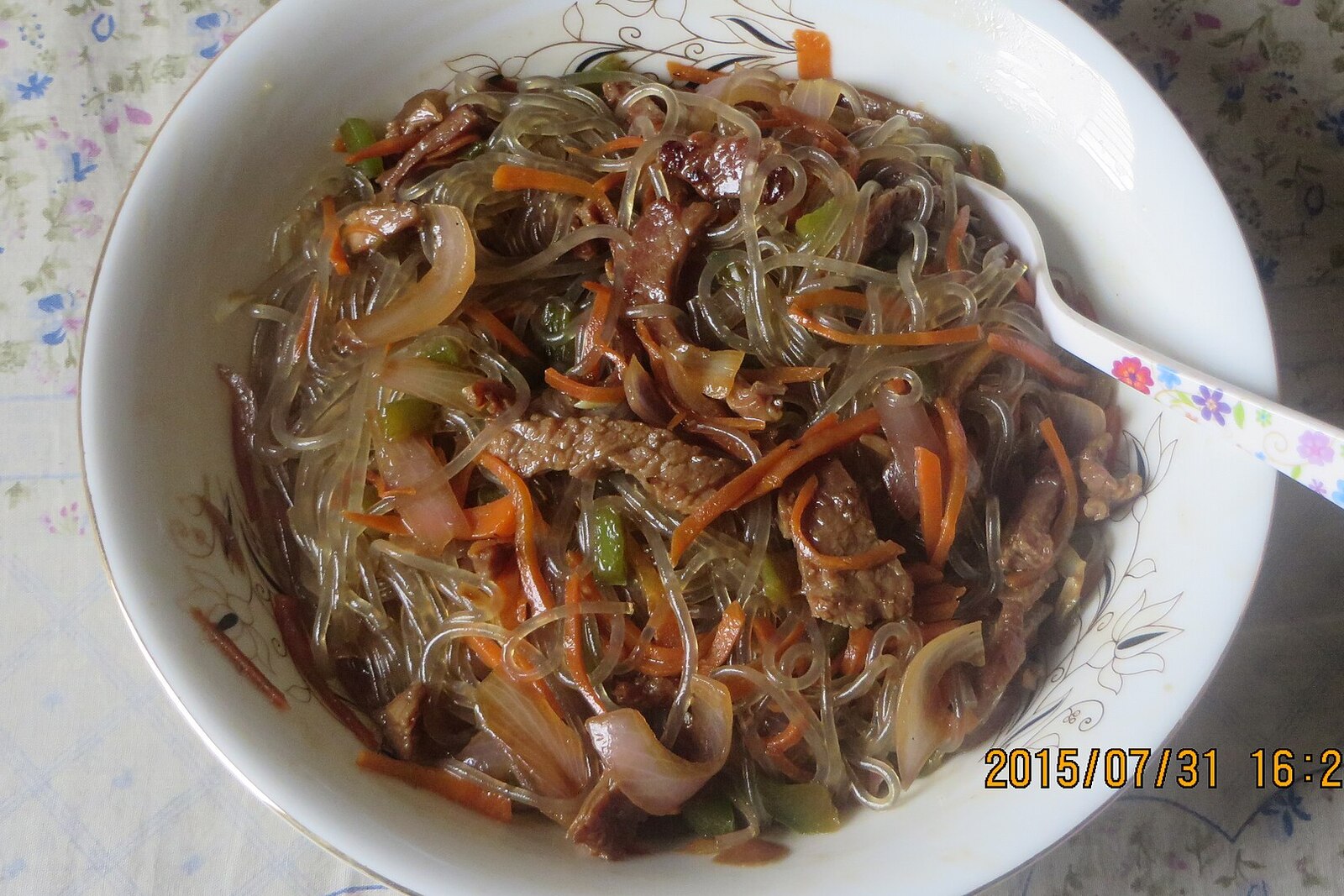
Korean japchae is the dish that defines Korean celebrations. Chewy sweet-potato glass noodles, sesame-soy beef, and a rainbow of stir-fried vegetables tossed together — each component seasoned individually before combining. The result is a dish that looks like a painting and tastes layered and complex. Originally royal court food, now Korean weeknight comfort.
This article is the canonical Korean home version with the right noodles (dangmyeon, not pad thai-style rice noodles), individual vegetable preparation (the labor that defines the dish), and the sesame-soy sauce that ties everything together. Best served at room temperature, the day-after leftovers are even better. The whole thing takes 45 minutes.
Quick Read — At a Glance
| Yield | 4 servings |
| Total time | 45 min |
| Difficulty | Intermediate |
| Texture | Chewy translucent noodles, tender beef, crisp vegetables, sesame finish |
| Critical | Stir-fry each vegetable separately – never together. Defining technique. |
Dangmyeon: The Right Noodles
Sweet-potato glass noodles (dangmyeon in Korean) are translucent and chewy when cooked. Sold dried at Asian markets, typically in 500 g packs. Soak 30 min in cold water before cooking 5 min in boiling water — this two-stage rehydration gives the right bounce. Don’t substitute with bean thread vermicelli (rice paper rolls) or pad thai rice noodles — completely different texture.
The Individual-Vegetable Method
Each vegetable is stir-fried separately with its own oil and seasoning before being combined with the noodles and beef. Carrots get sesame oil. Mushrooms get soy. Onions get garlic. Spinach is blanched and squeezed. This is the labor that separates restaurant japchae from amateur attempts. The 5-minute extra effort makes the dish.
Ingredients
- 200 g dried sweet-potato glass noodles (dangmyeon)
- 200 g (7 oz) beef tenderloin, thin sliced
- 3 tbsp soy sauce + 1 tbsp sugar (marinade)
- 2 tsp sesame oil
- 3 garlic cloves, minced
- 1 carrot, julienned
- 1 red bell pepper, julienned
- 1 yellow onion, thin sliced
- 100 g (3.5 oz) shiitake mushrooms, sliced
- 100 g spinach, blanched
- 3 tbsp sesame seeds, toasted
- For sauce: 4 tbsp soy sauce, 2 tbsp sugar, 1 tbsp sesame oil, 1 tbsp mirin
Making It
- Soak noodles 30 min in cold water. Then 5 min boil until translucent.
- Drain + cut + oil. 15 cm lengths, toss with 1 tbsp sesame oil.
- Marinate beef. Soy + sugar + garlic, 10 min.
- Sear beef in wok until just done. Remove.
- Blanch spinach 30 sec, squeeze, season.
- Stir-fry vegetables separately. Each gets own seasoning, 2-3 min.
- Combine. Noodles + beef + all vegetables + sauce. Toss.
- Sesame finish. Toasted seeds. Serve at room temperature.
Frequently Asked Questions
What are sweet-potato noodles?
Dangmyeon — translucent glass noodles made from sweet-potato starch. Chewy, bouncy texture defines japchae. Asian markets, dried form. Substitute: bean-thread vermicelli (softer texture, less authentic).
Why prepare vegetables separately?
Each vegetable has different cook time. Stir-frying everything together produces muddled flavor and uneven texture. The 2-min extra effort defines proper japchae. Korean tradition preserves individual flavor and color.
Vegetarian version?
Skip beef, add pan-fried tofu cubes or extra mushrooms. Doenjang (fermented soybean paste) 1 tsp adds meaty depth. Common in modern Korea, perfectly authentic.
When is japchae served?
Korean New Year, Chuseok (September Korean Thanksgiving), weddings. Modern Koreans eat weekly as banchan. Best at room temperature 1-2 hours after cooking – leftover the next day is even better.
Sources
- Maangchi — Japchae — The Korean YouTube authority.
- Serious Eats — Japchae — American adaptation with technique notes.
- USDA FoodData Central — Nutritional data.
Each serving contains roughly 485 calories, 22 g protein, 18 g fat, 58 g carbs.
Please note: Contains soy, sesame, beef. Not suitable for these allergies. Consult a dietitian.

Tom Nakamura
Tom learned to cook from his obaachan during summers in Japan - pickling daikon at the kitchen table, watching her stir miso into broth without ever measuring. Later, family trips with cousins took him through markets in Bangkok, Shanghai, and Hanoi, and the food stuck with him. His writing focuses on making authentic Asian techniques accessible to home cooks without diluting the technique or the culture that defines them. He handles Chinese, Japanese, Korean, Thai, Vietnamese, Indian, and Middle Eastern recipes at the publication.