A pound of broccoli cut into florets and boiled for ten minutes gives up roughly half of its vitamin C. The same pound steamed for four minutes keeps most of it. That gap is real, it has been measured many times, and for the majority of people eating a mixed diet it changes almost nothing.
Both halves of that sentence are worth taking seriously. The losses are not a myth, and they are also not the reason anyone is short of vitamins. What decides the outcome is not the heat so much as how much water the vegetable touches, how small it was cut, and how long it sat hot afterward.
What follows is what leaves the food and by which route, the numbers for broccoli, peppers and potatoes specifically, a side-by-side comparison of the common methods, and the short list of places where the loss is large enough to be worth changing a habit over.
- The worst case: vitamin C, which is both water-soluble and heat-sensitive
- Boiling, cut small, water discarded: typically 35 to 65 percent of the vitamin C survives
- Steaming, microwaving, pressure cooking: typically 80 to 90 percent
- Roasting and stir-frying: 60 to 85 percent, with no leaching at all
- Biggest lever: piece size, not heat source
- Goes up with cooking: lycopene, beta-carotene, and the amount of vegetable you actually eat
- Not affected: fiber, minerals that stay in the food, vitamins A, D, E and K
Two losses, and only one of them is heat
Ascorbic acid leaves cooked food by two separate routes, and treating them as one thing is where most kitchen advice goes wrong. The first is leaching. Vitamin C dissolves readily in water, so any cut surface in contact with hot water starts handing it over to the pot within seconds. Nothing is destroyed here. It has simply moved.
The second is chemical breakdown. Ascorbic acid oxidizes first to dehydroascorbic acid, which the body still uses, and then to a compound that is no longer vitamin C at all. Heat speeds that up, dissolved oxygen speeds it up, alkaline conditions speed it up, and trace copper or iron in the water speeds it up considerably.
The two routes respond to different fixes. Leaching is beaten by using less water and larger pieces. Degradation is beaten by less time at temperature. A method that wins on one can lose on the other, which is why a long low simmer and a fast hard boil do not rank the way people expect. The chemistry is standard textbook material on vitamin C and it explains almost every result below.
Broccoli, the vegetable with the most to lose
Raw broccoli carries somewhere near 90 milligrams of vitamin C per 100 grams, which puts it ahead of an orange gram for gram. It is also cut into small pieces with an enormous amount of exposed surface, which makes it the worst case for leaching. Composition tables put boiled broccoli in the mid-sixties per 100 grams, and retention figures for boiling florets generally land between 45 and 65 percent of the starting amount.
Steaming the same florets for four to five minutes typically holds 80 to 90 percent. The difference is not the temperature, which is nearly identical, but the fact that the florets are sitting in vapor rather than in a solvent.
Broccoli has a second, less familiar loss that nobody measures in milligrams. The enzyme that converts its glucosinolates into sulforaphane is a protein, and it denatures at temperatures well below boiling. A short steam leaves enough of it working. A ten-minute boil does not. If broccoli is in your rotation for reasons beyond vitamin C, that alone is an argument for the steamer basket.
Bell peppers, a high number and a low risk
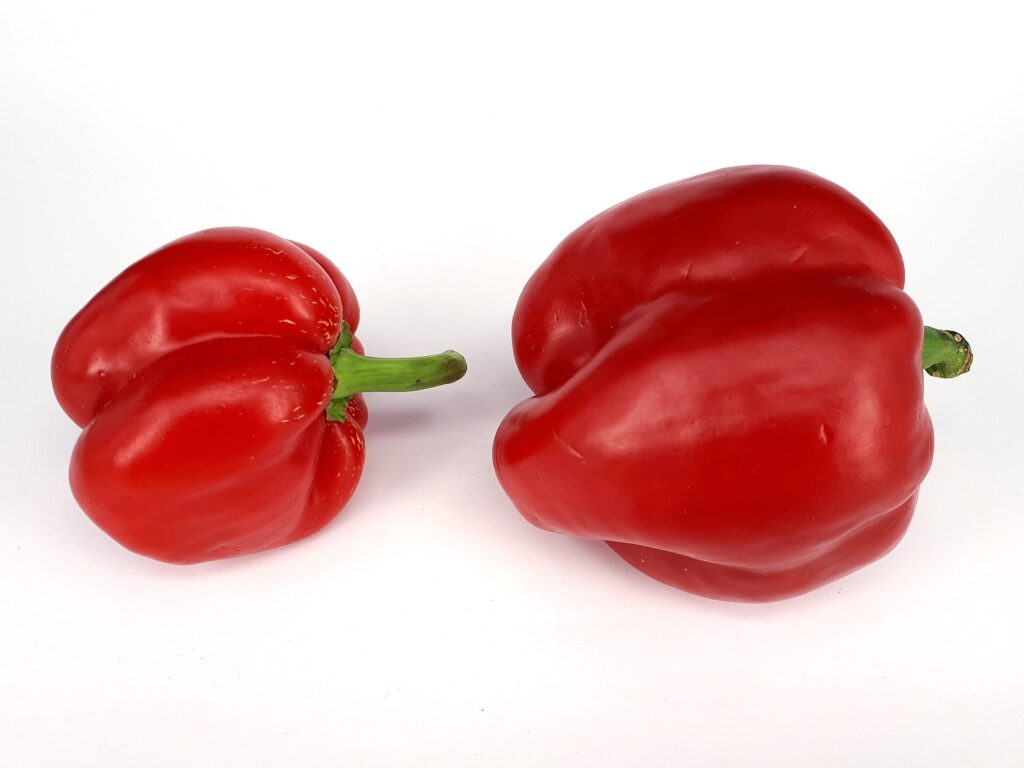
A red bell pepper is one of the densest vitamin C sources in an ordinary supermarket, running well over 100 milligrams per 100 grams, roughly double a green one from the same plant picked earlier. A single medium red pepper covers an adult day’s requirement more than twice over, against reference intakes of 90 milligrams for men and 75 for women.
That starting number is so high that the cooking question mostly dissolves. Roast a pepper until the skin blisters and you will lose a substantial share, plausibly a third to a half, and the remaining pepper still carries more vitamin C than most raw vegetables on the same plate.
Peppers also make the case for not optimizing the wrong variable. Blistering the skin under a broiler concentrates sugars, loosens the peel, and turns a raw pepper into something people will eat by the bowl. Eating more of the vegetable beats retaining a higher percentage of a portion nobody finishes.
Potatoes, where the skin is the whole variable
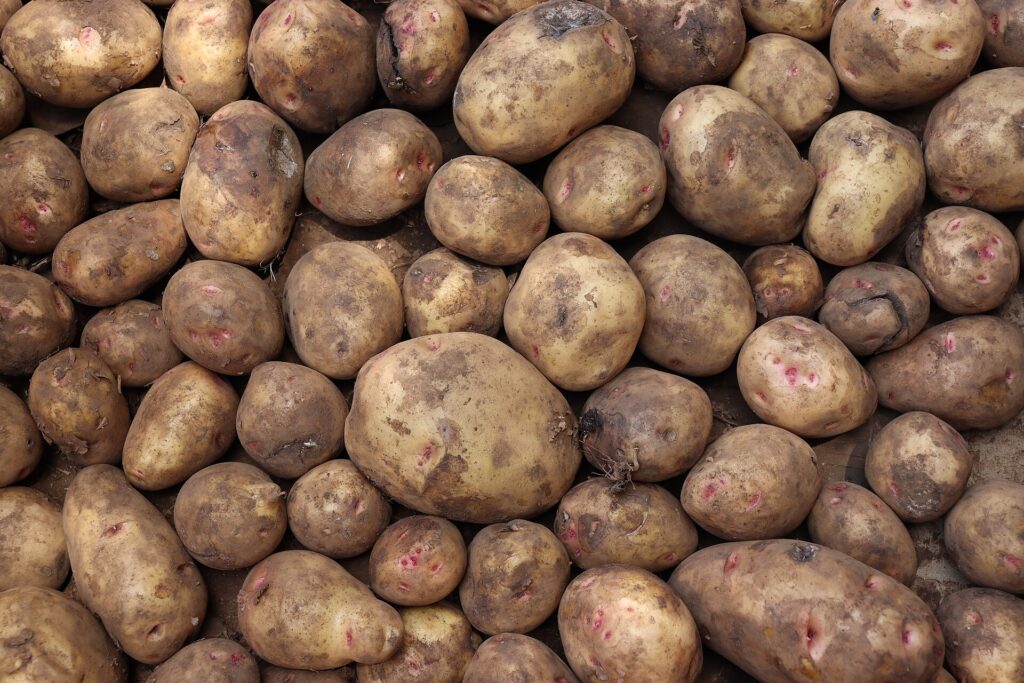
A potato holds around 20 milligrams of vitamin C per 100 grams raw, which is modest per bite. Portion size does the rest of the work, and in countries where people eat a lot of them, potatoes have historically been a meaningful share of the population’s vitamin C.
The skin behaves as a barrier, and the numbers follow accordingly. Boiled whole with the skin on, a potato keeps most of what it started with, because the only surfaces exposed to the water are the ones the water cannot reach. Peel it and cut it into half-inch dice first, and you have multiplied the exposed area several times over before the pot even boils. Baking sits in between, with dry heat causing degradation but no leaching.
Mashed potatoes lose twice: once in the pot, then again while they sit hot in a covered dish. Holding cooked vegetables at serving temperature for an hour is quietly one of the most expensive things a kitchen does, and it is the step that never appears in any retention table.
Nutrient loss cooking methods, ranked on the same pound of broccoli
The table below uses the ranges that turn up consistently across published retention data. Treat them as orders of magnitude rather than as decimals, because variety, freshness, water volume and pot material all move the result by several points.
| Method | Water contact | Time hot | Vitamin C kept | What decides it |
|---|---|---|---|---|
| Raw, eaten same day | none | none | baseline | days since harvest |
| Microwave, covered, splash of water | minimal | 2 to 4 min | 80 to 95 percent | short time is the whole advantage |
| Steam, 4 to 5 minutes | condensate only | 5 min | 80 to 90 percent | no solvent to leach into |
| Pressure cook, 1 to 2 minutes | minimal | 3 min | 80 to 90 percent | speed offsets the higher heat |
| Stir-fry, 4 minutes | none | 4 min | 70 to 85 percent | high heat, short exposure |
| Roast, 425 degrees, 20 to 25 minutes | none | 25 min | 60 to 80 percent | long dry heat, no leaching |
| Boil 5 minutes, drained | high | 5 min | 55 to 70 percent | surface area and water volume |
| Boil 10 minutes or more, drained | high | 10 min plus | 35 to 55 percent | both routes running at once |
| Simmered in soup, liquid eaten | high | 20 min | 70 to 90 percent effective | what leached is still on the spoon |
The last row is the one that reorders the list. Boiling only looks catastrophic when the water goes down the drain. Cook the same broccoli in a soup and most of what leached out is still in the bowl in front of you, minus whatever degraded during a longer cook.
Cut size is the lever nobody adjusts
Leaching scales with exposed surface. Cutting a potato into eight pieces roughly doubles its surface area, and dicing it small can multiply it by four or five. That single decision moves the result further than any choice between steam and boil.
Timing of the cut matters too. Slicing tissue ruptures cells and puts ascorbic acid in contact with both oxygen and the plant’s own enzymes, so a bag of pre-cut florets sitting in the refrigerator for three days is already partway down the curve before it meets any heat. Cut close to cooking whenever the schedule allows.
The practical version is a habit rather than a rule. Halve rather than dice. Leave skins on when the dish tolerates it. Trim broccoli into large spears rather than small florets. None of it costs time, and it accounts for more of the difference than the appliance does.
The green water in the pot is the vitamin
Anyone who has boiled broccoli in an unsalted pot has seen the water turn green. That color is pigment, and traveling with it are vitamin C, folate, potassium and part of the flavor. Pouring it out is the single largest loss in the whole sequence.
The fix is not complicated. Cook the vegetable in the dish rather than beside it: soups, braises, a pot of beans, a pan of rice cooked in the vegetable water. Even reducing a cup of blanching liquid down and stirring it into a sauce recovers part of it.
There is one situation where leaching is the goal rather than the problem. People managing kidney disease are sometimes advised to reduce dietary potassium, and cutting potatoes small and boiling them in a large volume of water is a recognized way to do exactly that. The technique is identical. Only the objective is reversed.
Vitamin C is not the only thing leaving
Folate behaves similarly, since it is water-soluble and heat-sensitive, and green vegetables boiled hard lose a comparable share of it. Thiamin is heat-sensitive and destroyed outright by alkaline conditions, which is the real argument against adding baking soda to a pot of green beans. Vitamin B6 sits in the middle.
Minerals are a different case. Potassium, magnesium and calcium do not break down, so nothing destroys them. They only move, which means they are entirely recoverable if the cooking liquid stays in the dish.
Fiber survives everything, and so do vitamins A, D, E and K, which are fat-soluble and stay bound in the tissue. Most of the nutrients people actually run short of are not the ones that a pot of boiling water takes away.
Three things that go up when you cook
Heat is not only subtraction. Tomatoes release more of their lycopene once the cell walls have been broken down, and the same is true of the beta-carotene in carrots and winter squash, especially when a little fat is present to carry it. A raw carrot yields a fraction of what a cooked one does.
Cooking also improves what a person can extract from starch, softens fiber enough to make large portions comfortable, and moves some antinutrients out of the food and into the water. Oxalate leaches from greens the same way vitamin C does, which is a benefit rather than a cost for anyone who has been told to watch it.
The largest term is behavioral. A roasted tray of vegetables gets eaten and a bag of raw florets often does not. A method that keeps 95 percent of the vitamin C in a portion nobody finishes retains nothing at all. The same reasoning applies to whole grains, where the version people cook regularly beats the version that stays in the cupboard.
Frozen is not the compromise it sounds like
Vegetables are blanched before freezing, and blanching costs vitamin C, generally somewhere between a tenth and a third depending on the vegetable and the time. That is the whole of the frozen penalty, and it happens once, within hours of harvest.
Fresh produce keeps losing vitamin C every day it spends in transit, on a shelf and in a refrigerator drawer. Spinach and green beans decline quickly, broccoli somewhat more slowly. By the time a fresh bunch has spent a week getting to a Wednesday dinner, the frozen bag processed at the field often carries as much or more.
Buy fresh for the vegetables that get eaten within two or three days and frozen for the ones that sit. The frozen bag is also already cut, which means it should go into as little water as possible for as short a time as possible, straight from frozen.
A weekly routine that does not need a spreadsheet
Steam or microwave the green vegetables that are eaten as a side. Boil the ones going into a soup, since the liquid is part of the dish. Roast the dense ones, where the flavor gain is worth a moderate loss. Keep skins on where the dish allows, cut large, and serve within a few minutes of finishing rather than holding the pan on a warm burner.
Eat one raw thing a day, not out of principle but because it costs nothing. A sliced pepper, a handful of cherry tomatoes, a wedge of cabbage in a slaw. That single habit covers more than any cooking method can lose.
None of this is dietary advice for a specific condition. If a clinician has asked you to track a particular nutrient, or to restrict one, the numbers here are background rather than a plan, and the restriction should come from them.
The honest summary is that a person eating a reasonable variety of vegetables cannot cook their way into a vitamin C deficiency, and a person eating almost none of them cannot steam their way out of one. The method is worth a few minutes of thought. The quantity on the plate is worth considerably more.
Frequently Asked Questions
Does microwaving destroy nutrients?
It is usually among the better methods, for a mechanical reason rather than a mysterious one. A covered dish with a spoonful of water cooks in two or three minutes with almost nothing to leach into, and short time at heat is exactly what limits degradation. The reputation is inherited from a general suspicion of the appliance, not from the retention data.
Should I drink the cooking water?
Use it rather than drink it. Vegetable cooking water makes a reasonable base for a soup, a braise, or a pot of rice or grains, and it carries both the leached vitamins and a fair amount of flavor. The exception is water from strongly bitter greens, which will carry that bitterness straight into whatever it joins.
Does adding baking soda to keep vegetables green cost anything?
Yes, twice over. Alkaline water protects the green pigment but accelerates the destruction of vitamin C and destroys thiamin outright, and it softens the structural pectin in the cell walls, so the texture collapses. It solves a cosmetic problem by creating two real ones.
Do reheated leftovers keep losing vitamin C?
They do, and the losses stack. Each reheat adds time at temperature, and vegetables held hot on a stove or in a warming drawer keep degrading the whole time. Cool cooked vegetables quickly, store them cold, and reheat only the portion being eaten.
Is any of this worth changing my cooking over?
Two habits, at most. Stop boiling green vegetables in a large pot of water you then pour away, and stop holding cooked vegetables hot for an hour before serving. Those two account for the majority of avoidable loss. The rest of the difference between methods is smaller than the difference between eating vegetables four days a week and eating them seven.