Two skillets of cornbread came out of the same oven ten minutes apart. One was pale yellow, slightly sweet, and cake-like enough to eat plain as a snack. The other was darker, coarser, and distinctly savory, closer in spirit to a dense biscuit than a dessert.
Both are correctly made cornbread. The difference between them is not a mistake on either side; it is a genuine regional split that comes down to one ingredient added in one direction and left out entirely in the other, plus a handful of smaller choices that follow from it.
Baked side by side, using the same cornmeal and the same cast iron skillet, the sugar question turns out to explain almost the entire argument, and it also explains why one version survives as dressing base days later while the other does not hold up nearly as well.
- The core split: sugar added, or not, to an otherwise similar batter
- Northern style: sweeter, more flour relative to cornmeal, softer cake-like crumb
- Southern style: little to no sugar, all or mostly cornmeal, denser and more savory
- Buttermilk and baking soda: common to both, providing rise and tang
- Skillet preheat: critical for the Southern style’s crisp crust, optional for Northern
- As dressing base: the Southern style holds up far better; the Northern style turns overly sweet in a savory dish
- Neither is the “correct” cornbread; they solve different jobs at the table
Northern vs southern cornbread: the sugar argument, settled
| Element | Northern style | Southern style |
|---|---|---|
| Sugar | 2 to 4 tbsp per batch | none, or a token teaspoon |
| Flour to cornmeal ratio | often equal parts, or more flour | little to no flour, mostly or all cornmeal |
| Texture | soft, cake-like crumb | coarser, denser, more crumbly |
| Skillet preheat | optional | essential for the crust |
| Fat | often oil or melted butter, mixed in | often bacon drippings, some in the batter and some heating in the pan |
The sugar is the headline difference, but it is not the only one. A Northern-style batter with more flour relative to cornmeal produces a softer, more cake-like crumb regardless of the sugar question, while a Southern-style batter built mostly or entirely from cornmeal has less gluten development available and comes out coarser and more crumbly by nature.
Why sugar became the dividing line in the first place
Cornmeal itself carries a natural sweetness that is more pronounced in some regions’ preferred corn varieties and processing methods than others, and how much a given batch of cornmeal already tastes sweet on its own influences whether a baker feels the need to add more.
The more commonly cited explanation traces to available ingredients and cost historically. In parts of the country where wheat flour and sugar were more available and affordable, cornbread recipes drifted toward incorporating both, producing a cake-like result closer to other quick breads of the era. In regions where cornmeal was the dominant, most affordable grain and sugar was a comparative luxury, cornbread stayed closer to unsweetened, all-cornmeal preparations.
Neither version developed in a vacuum from the other, and plenty of individual family recipes blur the line with a small amount of sugar or a partial flour substitution, but the two poles described here represent the identifiable ends of a real regional spectrum still visible in cookbooks and restaurant menus today.
The chemistry of buttermilk and soda that both versions share
Regardless of the sugar question, most traditional cornbread recipes, Northern and Southern alike, lean on buttermilk and baking soda together rather than baking powder alone, and that combination is doing real chemical work rather than just adding tang.
Buttermilk’s acidity reacts with baking soda the moment the two combine, releasing carbon dioxide that provides lift, and that reaction happens quickly once the wet and dry ingredients meet, which is why cornbread batter should go into a hot oven or hot skillet promptly rather than sitting around after mixing. A batter left to rest too long loses some of its rise as that carbon dioxide escapes before baking traps it.
The acidity also tenderizes the batter’s gluten structure somewhat, which matters more in the Northern style with its higher flour content, and it contributes a distinct tang that plays differently against a sweetened batter than an unsweetened one, adding brightness to the Southern version and a contrasting note to the sweeter Northern one.
Why the skillet preheat matters more for one version than the other
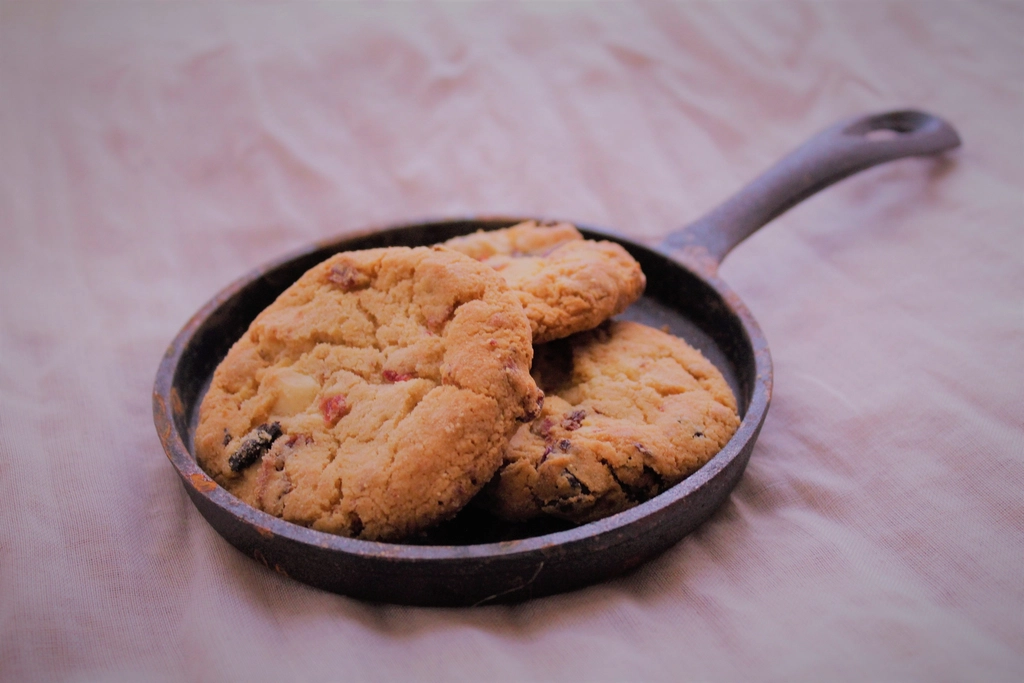
A cast iron skillet heated in the oven before the batter goes in, then given a swirl of hot fat right before pouring, creates an immediate sizzle on contact that starts crisping the bottom crust the instant the batter hits the pan. This step is close to essential for the Southern style, where that crisp, almost fried bottom crust is a defining textural feature.
The Northern style, with its softer, more cake-like intended texture, benefits less dramatically from this step, since a crisp bottom crust is not as central to what that version is trying to be. It can be baked in a room-temperature pan, even a standard baking dish rather than cast iron, without losing much of its character.
Skipping the preheat on a Southern-style cornbread produces a noticeably softer, less distinct bottom crust, which is a real loss for that particular version even though it would barely register as a difference on the Northern one.
How to make the Southern style, step by step
- Preheat the oven to 425F with a cast iron skillet inside it. The skillet needs a full 10 to 15 minutes to get properly hot.
- Whisk together cornmeal, a small amount of salt, and baking soda. Little to no flour and no sugar, or at most a teaspoon if a slight softening is wanted.
- Whisk buttermilk and an egg together separately, then combine with the dry ingredients quickly. Do not overmix; a few lumps are fine and mixing too much toughens the crumb.
- Carefully remove the hot skillet and add a tablespoon or two of bacon drippings or oil, swirling to coat. It should sizzle audibly on contact.
- Pour the batter into the hot, greased skillet immediately. The sizzle continues around the edges as it goes in.
- Bake for 18 to 22 minutes, until a deep golden crust forms and a tester comes out clean. Let it rest five minutes in the pan before slicing.
How the Northern style differs in method, not just ingredients
A Northern-style batter, with its higher flour ratio and added sugar, behaves more like a standard quick bread and does not depend on the same searing-hot-skillet technique to succeed. It can go into a room-temperature baking dish or a moderately warmed skillet without losing much of its intended soft, cake-like result.
Mixing technique matters slightly more here too, since the higher flour content means more gluten is available to develop, and overmixing a Northern-style batter risks a tougher, less tender crumb more readily than overmixing a nearly flourless Southern-style batter would. A gentle fold until just combined protects the texture either way, but it matters more in this direction.
Baking time runs similar between the two styles, generally 20 to 25 minutes at a slightly lower temperature, around 375 to 400F, since the higher sugar and flour content browns a bit faster than an all-cornmeal batter and benefits from a slightly gentler heat to avoid over-darkening before the center finishes.
Which one holds up better as a dressing base
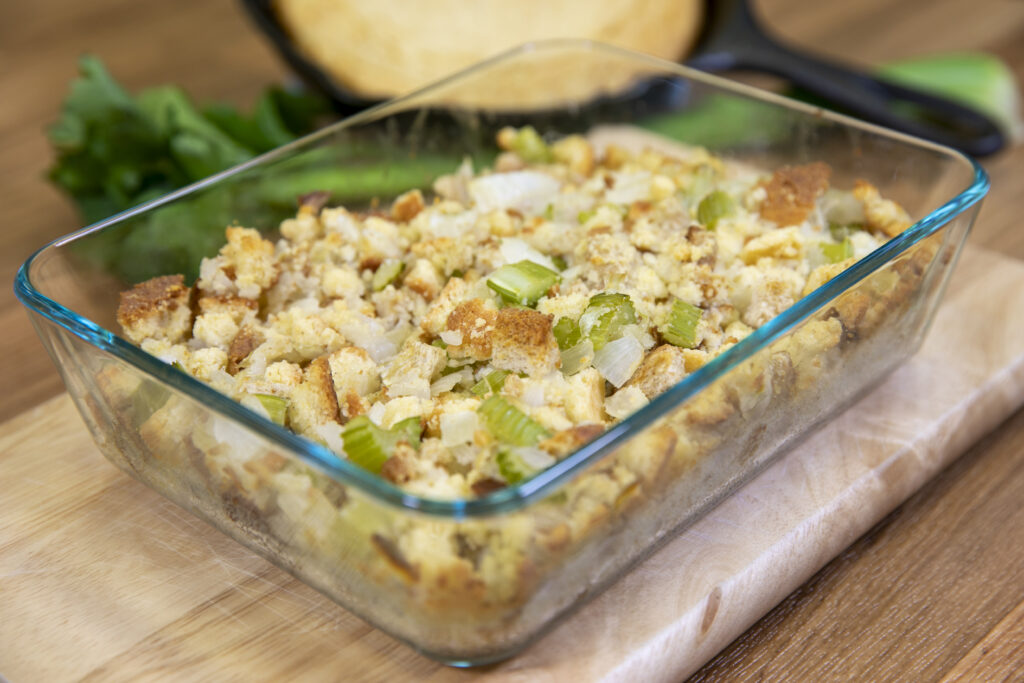
Cornbread dressing, a Southern Thanksgiving staple built by drying and crumbling cornbread and combining it with stock, aromatics, and often sausage, works dramatically better with the unsweetened Southern style than with a sweetened Northern loaf.
A sweetened cornbread, once combined with savory stock, sage, and sautéed onion, produces a dressing with an odd, unresolved sweetness running through an otherwise savory dish, since the sugar was calibrated for a plain, snackable cornbread rather than a component meant to disappear into a savory casserole. It is not inedible, but it reads as slightly off to most palates.
The Southern style’s savory, minimally sweet profile blends far more naturally into a dressing’s overall flavor, which is a large part of why cornbread dressing recipes overwhelmingly specify or assume an unsweetened cornbread base rather than leaving the choice open, the same reasoning behind getting the savory balance right in a sausage gravy meant to sit over biscuits rather than compete with them.
Choosing cornmeal grind and type for either version
Medium-grind cornmeal is the most common choice for both styles and gives a balanced texture, neither too gritty nor too smooth. A finer grind produces a softer, more cake-like crumb regardless of which regional style is being made, while a coarser grind adds more textural bite and works especially well in the Southern style, where texture is part of the appeal.
Stone-ground cornmeal, which retains more of the corn’s germ and hull compared to more heavily processed versions, carries a more pronounced corn flavor and a shorter shelf life, since the retained oils in the germ can go rancid faster than in a more processed product. It is worth seeking out for either style specifically for the flavor difference, though it needs to be stored properly, ideally refrigerated, to stay fresh.
White and yellow cornmeal differ mainly in color and a slightly milder flavor in the white variety, a distinction that also splits somewhat regionally but has less bearing on the sugar question than on regional tradition and personal preference, similar to the way buttermilk’s tang carries a soda bread without needing added sugar to taste finished.
What goes wrong when converting one recipe into the other style
Simply removing the sugar from a Northern-style recipe without adjusting anything else usually produces a disappointing result, since that recipe’s flour-heavy ratio was built around sugar’s tenderizing and browning effects. Without it, the crumb turns pale and slightly gummy rather than transforming into a proper Southern-style loaf.
A more reliable conversion also reduces the flour and increases the cornmeal proportion at the same time the sugar comes out, moving the ratio closer to the Southern style’s mostly-cornmeal base rather than just subtracting one ingredient from an otherwise unchanged recipe. The fat and buttermilk amounts generally stay close to the same across both directions.
Going the other way, adding sugar and more flour to a Southern-style recipe, tends to work more forgivingly, since extra flour and sugar are easier for a batter to absorb without breaking than cornmeal is to remove without a replacement. Still, matching an established recipe for whichever style is the goal gives a more predictable result than adjusting an existing one on the fly.
The fat choice can also complicate a conversion attempt if it is not adjusted alongside everything else. A Southern recipe built around bacon drippings carries a smoky, savory note that clashes somewhat if sugar is added on top of it, while a neutral oil or butter, more common in Northern recipes, sits more comfortably next to added sweetness. Swapping the sugar level without reconsidering the fat is a common reason a converted recipe tastes slightly off even when the ratios are otherwise correct.
Neither cornbread is the correct one. A sweet, cake-like loaf and a savory, crisp-bottomed skillet bread are both doing exactly what they were built to do, and the sugar decision is the fork in the road that sends the rest of the recipe in one direction or the other.
Frequently Asked Questions
Can I make a middle-ground version with a small amount of sugar?
Yes, plenty of home cooks land somewhere between the two poles, using a tablespoon or two of sugar with a mostly cornmeal base. It will not be strictly traditional to either camp, but it is a common and reasonable compromise.
Does the type of skillet matter, or does any oven-safe pan work?
Cast iron holds and distributes heat more evenly than most other materials and is specifically what gives the Southern style its signature crust. A regular metal cake pan works fine for the Northern style but will not produce the same crisp bottom the Southern method depends on.
Why does my cornbread come out crumbly and dry?
This is more common with an all-cornmeal, Southern-style batter, especially if it is overbaked or made with too little fat. Adding a bit more buttermilk or fat, and checking doneness a couple minutes earlier than the recipe states, usually corrects it.
Is self-rising cornmeal the same as regular cornmeal plus baking powder?
Close, but not identical. Self-rising cornmeal mix already includes leavening and often some salt, and substituting it for plain cornmeal in a recipe that also calls for separate baking soda or powder can lead to an overly airy or slightly bitter result unless the recipe is adjusted for it.
Can I freeze leftover cornbread?
Yes, wrapped tightly, either version freezes well for about a month. Thaw at room temperature and reheat briefly in a warm oven to restore some of the crust’s texture before serving again.