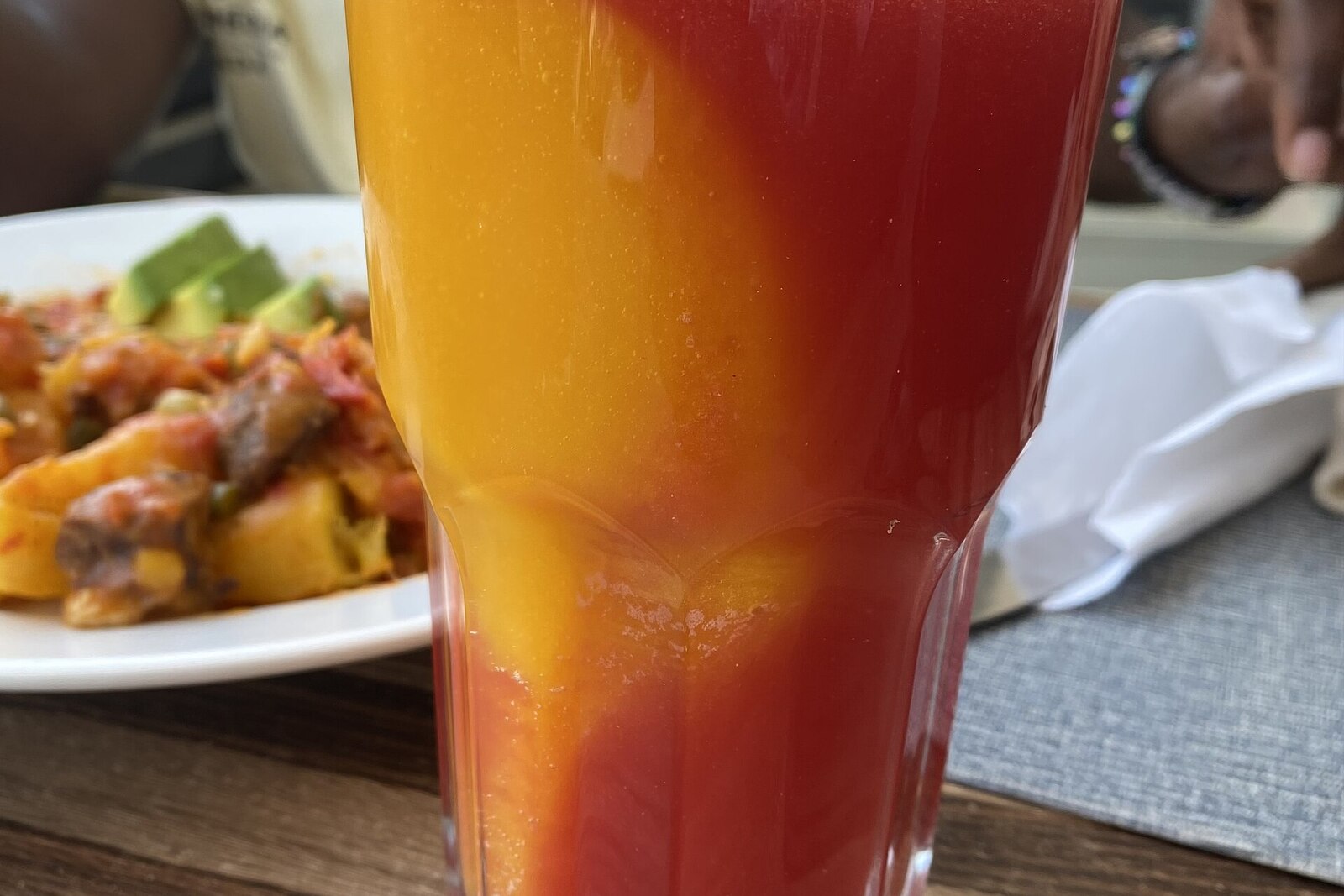
Walk through Ho Chi Minh City at 3 PM and the cafés are full of locals doing one thing: watching coffee slowly drip through phin filters into glasses of sweetened condensed milk. The drip takes 4-5 minutes. The wait is part of the ritual. Then you stir, pour over ice, sip. The result is the most intense iced coffee in any culinary tradition — strong robusta, chocolatey from chicory, sweet from condensed milk, cold from ice.
This article is the canonical Vietnamese preparation with the phin filter (essential), Vietnamese robusta blend, and sweetened condensed milk. Total time is 7 minutes but only 2 minutes of active work. Best for August afternoons when iced coffee is the only acceptable caffeine source. Beats any $7 cold brew from Blue Bottle.
Quick Read — At a Glance
| Yield | 1 drink |
| Total time | 7 min (5 min drip) |
| Difficulty | Easy (once you have a phin) |
| Texture | Strong concentrated coffee + creamy sweet milk + cold ice |
| Critical | Slow 4-5 minute drip — faster means grind too coarse |
The Phin Filter
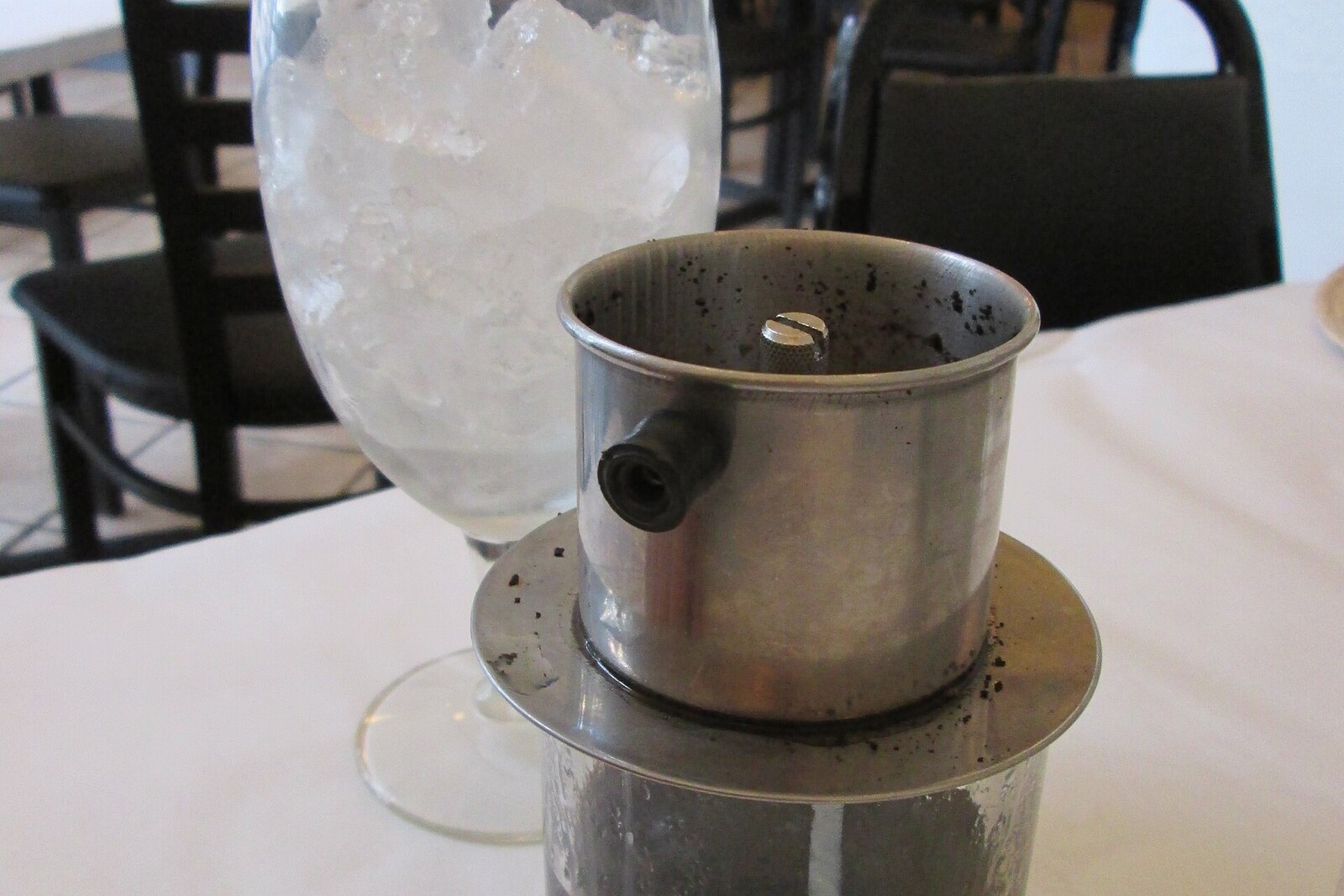
A 3-piece Vietnamese drip filter. Bottom round perforated cup, ground coffee inside, heavy disc on top that compresses the grounds, lid to retain heat. Sits on a glass. Hot water (90 C, not boiling) added in two pours: 30 ml to bloom 30 seconds, then 70 ml more. Total drip time 4-5 minutes. Available on Amazon ($10-15) or any Asian market.
Vietnamese Robusta Coffee
Vietnam produces robusta (vs arabica dominant in America). Robusta has 2× the caffeine, lower acidity, chocolatey-nutty notes that hold up to condensed milk. Trung Nguyen brand from Vietnam is authentic. Cafe Du Monde with chicory (Louisiana, French Quarter staple) is the most accessible substitute — same chicory tradition that French colonizers brought to both Vietnam and Louisiana.
Ingredients
- 3 tbsp coarse-ground Vietnamese coffee (Trung Nguyen or Cafe Du Monde with chicory)
- 3 tbsp sweetened condensed milk (Longevity or Eagle Brand)
- 100 ml just-boiled water (90 C)
- Large clear ice cubes
- Vietnamese phin filter (or substitute: AeroPress, French press)
Making It
- Condensed milk bottom. 3 tbsp in tall glass.
- Phin + coffee. Place on glass, add coffee, light tamp.
- Bloom. 30 ml water, wait 30 sec.
- Pour remaining. 70 ml water, lid on.
- Wait 4-5 min for drip. Faster = coarser grind, slower = finer.
- Remove phin, stir. Coffee + condensed milk.
- Pour over ice. Large clear cubes. Stir, sip.
Frequently Asked Questions
What’s a phin?
Vietnamese drip filter — metal cup + perforated bottom + compressing disc. Sits on glass, hot water drips 4-5 min. $10-15 on Amazon, Asian markets.
VN vs regular coffee?
VN robusta has 2× caffeine, lower acidity, chocolatey-nutty. Often with chicory. Trung Nguyen (VN) or Cafe Du Monde with chicory (LA) both authentic.
Without phin?
AeroPress (medium-fine, 4 min) closest texture. French press (coarse, 4-5 min steep) closest to phin. Espresso = too strong, dilute first.
Why condensed milk?
Vietnamese tradition from 1860s French era. Shelf-stable + sweet for tropical climate without refrigeration. Thick syrup floats then mixes = signature texture.
Sources
- Serious Eats — Vietnamese Iced Coffee — Phin technique.
- Viet World Kitchen — Cà Phê Sữa Đá — Andrea Nguyen guide.
- USDA FoodData Central — Nutritional data.
Each drink contains roughly 185 calories, 4 g protein, 5 g fat, 30 g carbs, 200 mg caffeine.
Please note: Contains dairy. High caffeine. Not suitable for caffeine-sensitive, pregnancy. Consult dietitian.

Tom Nakamura
Tom learned to cook from his obaachan during summers in Japan - pickling daikon at the kitchen table, watching her stir miso into broth without ever measuring. Later, family trips with cousins took him through markets in Bangkok, Shanghai, and Hanoi, and the food stuck with him. His writing focuses on making authentic Asian techniques accessible to home cooks without diluting the technique or the culture that defines them. He handles Chinese, Japanese, Korean, Thai, Vietnamese, Indian, and Middle Eastern recipes at the publication.