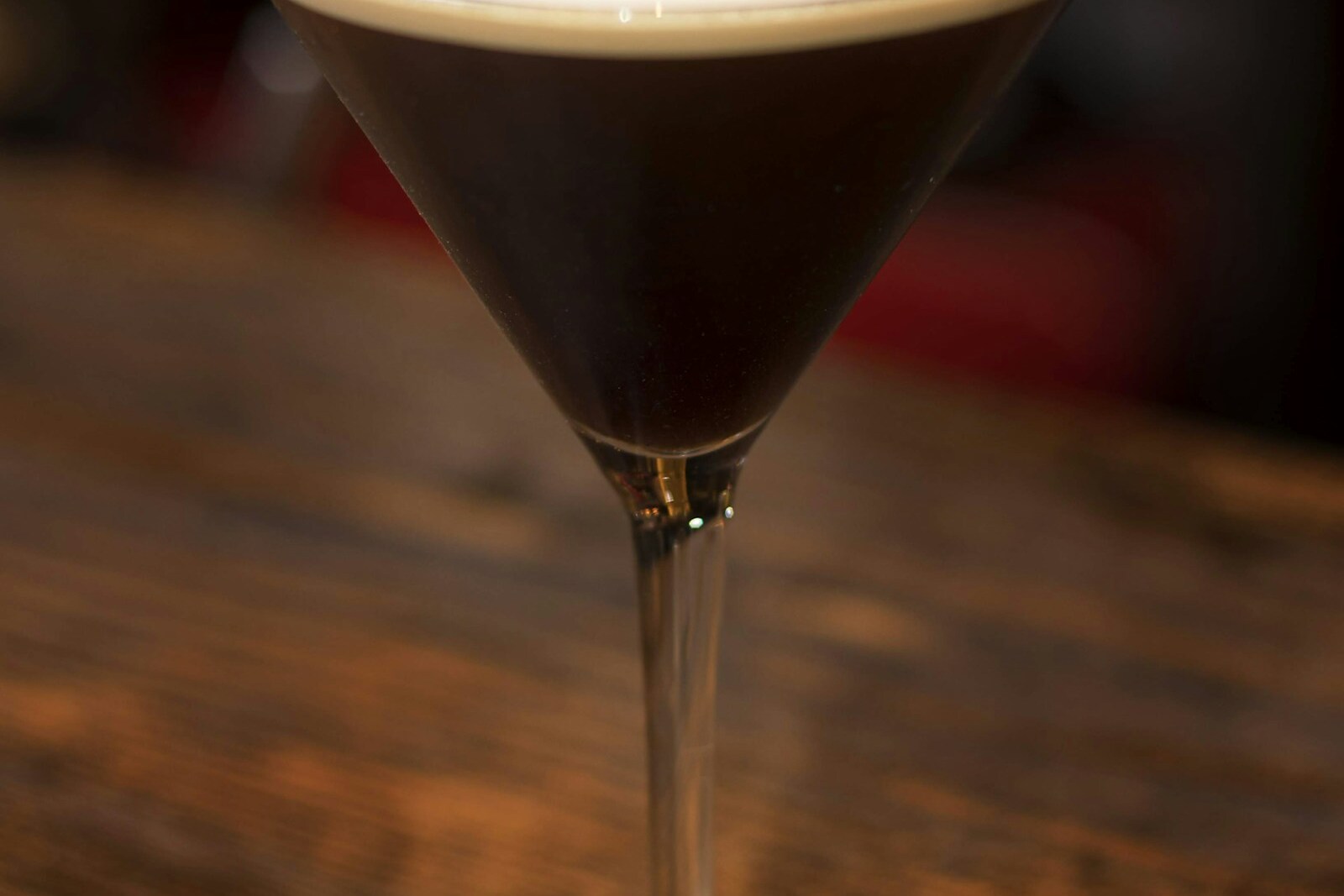
There is a precise moment when an espresso martini comes together that you can hear before you see. The shake has gone on for fifteen seconds, hard enough that the shaker is uncomfortable to hold and the ice has started to break. You stop, lift the lid, and pour. The liquid hits the glass dark and silky, and then, in the space of about two seconds, a thick pale crown of foam rises from underneath the surface like something is alive in the glass. You float three coffee beans on top. You serve it. The whole drink is made and consumed within four minutes — any slower and the crown has collapsed and the cocktail is half of what it was.
The espresso martini was invented in 1983 by Dick Bradsell at the Soho Brasserie in London. The order, recorded by Bradsell himself in multiple interviews before his death in 2016, came from a young model who wanted “something that will wake me up and then mess me up.” Bradsell combined vodka, freshly pulled espresso (still a relatively new technology in London at the time), Kahlúa, and a touch of sugar. He shook it hard and produced what he originally called the “Vodka Espresso,” later renamed the “Pharmaceutical Stimulant,” and only finally settled on “Espresso Martini” in the 1990s as bars adopted the drink.
By the 2010s, the cocktail had quietly become one of the most ordered drinks in upscale bars worldwide. By 2018, after the launch of Mr Black cold-brew coffee liqueur in 2013 made better espresso martinis easier to build, it had moved from upscale into mass appeal. By 2022 it was being described by industry trade publications as “the most-ordered cocktail in the United States” and was a TikTok phenomenon. The classic recipe has not changed since 1983 in any meaningful way. The technique — fresh espresso, hard shake, cold glass — is everything. The rest of this article is exactly how Bradsell intended it.
Why the Espresso Must Be Hot and Fresh
The foam crown is not magic. It is fluid dynamics. When freshly pulled espresso (within five minutes of extraction) is shaken hard with cold ice in a cocktail shaker, the natural oils and proteins suspended in the espresso get aggressively whipped into a stable air-and-liquid emulsion. Espresso extraction itself partially emulsifies these oils (this is what creates the crema on top of a freshly pulled shot); the shake then takes that nascent emulsion and amplifies it. Cold or stale espresso has lost these emulsifiers to evaporation and oxidation, and the resulting cocktail has no crema at all — just a flat dark liquid.
Pull the shot fresh, every time. The thirty-second rest before adding to the shaker is intentional — it lets the very hottest steam come off the shot, which would otherwise dilute the cocktail with excess water vapor when shaken. But beyond about three to four minutes, the espresso has cooled enough that the emulsifiers begin to settle and the foam suffers. The window for ideal foam is the first ninety seconds. This is also why espresso martinis cannot be batched or pre-mixed: the espresso has a brief life as a cocktail ingredient, and the cocktail is built around that life.
The Hard Shake: Fifteen Seconds, Not Eight
A standard cocktail shake is about eight seconds. The espresso martini needs more — twelve to fifteen seconds of aggressive shaking. The reason is the foam: a short shake produces enough chill and dilution but not enough mechanical energy for foam formation. The aggressive shake forces enough air into the liquid to create the stable foam structure, which then rises naturally when the cocktail is poured. Hold the shaker firmly with both hands. Shake in a fast back-and-forth motion. The shaker should become noticeably cold in the first five seconds and uncomfortably cold by ten.
Some bartenders use a “dry shake” technique — shaking without ice first to build foam, then adding ice and shaking again to chill. This is more common for whiskey sours (where egg white needs aggressive aeration). For espresso martinis, a single hard shake with ice produces sufficient foam without the extra step. If your foam is weak, the most likely cause is insufficient shake intensity, not technique error.
Vodka Choice: Premium but Not Boutique
Espresso martinis are often described as “cocktails that hide cheap vodka,” which is partly true and mostly insulting. The dominant flavor is coffee, and a clean unflavored vodka is essential. But truly cheap rotgut vodka brings a sharp ethyl note that fights with the espresso. The sweet spot is mid-range premium vodka: Tito’s, Absolut Elyx, Belvedere, Grey Goose Original. Boutique craft vodkas (Reyka, Aylesbury Duck) work well. Avoid: bottom-shelf well vodkas, flavored vodkas (citrus, vanilla, cucumber — all wrong here), and anything in plastic bottles.
Some bartenders make an “espresso martini variant” with bourbon, rum, or gin instead of vodka. These are not espresso martinis — they are different cocktails (whiskey espresso, rum espresso, gin espresso) with their own identities. They can be excellent drinks. The classic vodka-based recipe remains the canonical version that Bradsell built in 1983 and is what is meant when a guest orders an espresso martini at a bar.
Espresso Martini vs Variations: A Quick Map
| Cocktail | Base spirit | Flavor profile |
|---|---|---|
| Classic Espresso Martini | Vodka | Clean coffee, slightly sweet, foam crown |
| Black Russian | Vodka + Kahlua, no espresso, no shake | Sweet coffee, served on rocks, no foam |
| White Russian | Vodka + Kahlua + cream, on rocks | Sweet coffee with cream, no foam |
| Irish Coffee | Whiskey + hot coffee + cream + sugar | Hot drink, layered cream on top |
Ingredients (for one cocktail)
- 45 ml (1.5 oz) premium vodka (Tito’s, Belvedere, Absolut Elyx, etc.)
- 30 ml (1 oz) freshly pulled hot espresso (single shot)
- 15 ml (0.5 oz) coffee liqueur (Mr Black, Kahlua, or Tia Maria)
- 10 ml (1/3 oz) simple syrup (1:1 sugar:water), to taste
- 3 whole coffee beans, for garnish
- Ice (large cubes preferred)
Making It
- Pull fresh espresso. Single shot (30 ml), hot. Rest 30 seconds to release steam.
- Chill the glass. Fill martini or coupe glass with ice water while you prep.
- Fill shaker with ice. Large cubes preferred. Shaker at least 70% full of ice.
- Add liquids. Vodka, hot espresso, coffee liqueur, simple syrup to shaker.
- Hard shake. 12-15 seconds vigorously. Shaker should become uncomfortably cold. Foam builds in this step.
- Dump ice water from glass.
- Double strain. Hawthorne strainer in shaker, fine-mesh strainer underneath. Pour in slow steady stream. Crema forms as liquid hits glass.
- Garnish. Float 3 coffee beans on foam crown in triangle pattern. Serve immediately — foam degrades within 4-5 minutes.
Common Mistakes
The most common mistake is using cold or pre-made espresso. There is no shortcut here — the foam crown depends on fresh hot espresso. If you do not have an espresso machine, a stovetop moka pot (Bialetti) produces an acceptable approximation. Drip coffee or French press will not work; the espresso oils that create the foam come from high-pressure extraction. The second mistake is too short a shake. Eight seconds produces a chilled cocktail with no foam; you need twelve to fifteen seconds of hard aggressive shaking. Time it.
The third mistake is forgetting to chill the glass. A warm glass collapses the foam within seconds. Always chill with ice water in advance — dump just before pouring. The fourth mistake is over-sweetening. Bradsell’s original recipe used 10 ml (1/3 oz) simple syrup. Many modern recipes call for 15 to 20 ml, which makes the cocktail cloying. Start with 10 ml and add only if the espresso is particularly bitter.
When and What to Serve It With
Espresso martinis are after-dinner drinks. The caffeine plus alcohol combination is unusual and waking; it is not a pre-dinner drink. Traditional service is at the end of a meal in place of coffee plus dessert — the cocktail is both. The pairing with rich desserts is excellent: dark chocolate, tiramisu, dulce de leche, or our Basque burnt cheesecake with pistachio all align with the coffee profile. For a different sweet pairing, try our French macarons with the almond flour technique for a more refined contrast.
Storage and Make-Ahead
The espresso martini genuinely does not pre-mix. Every attempt to batch the cocktail loses the foam crown, which is half the drink. The practical approach for a dinner party: pre-measure the vodka, liqueur, and syrup in advance (each cocktail’s portion in a small container, refrigerated). When ready to serve, pull fresh espresso shots one at a time, add to the pre-measured spirits, shake hard, pour. With practice, you can produce six cocktails in eight to ten minutes. Have everything mise en place before guests sit down. Simple syrup keeps refrigerated 2 weeks; coffee liqueur indefinitely. The only fresh component is the espresso itself, every time.
Frequently Asked Questions
Why does the espresso need to be hot?
The hot espresso is the entire mechanism for the foam crown. Fresh espresso oils and proteins emulsify into stable foam when aggressively shaken with ice. Cold or stale espresso lacks the active emulsifiers and produces no crema — just a flat cocktail.
Did Dick Bradsell really invent the espresso martini?
Yes — in 1983 at the Soho Brasserie in London. A young model (often reported but not confirmed to be Kate Moss) ordered something to wake her up and mess her up. Bradsell combined vodka, espresso, Kahlua, and sugar. He died in 2016; the cocktail is his most famous creation.
What coffee liqueur is best?
Mr Black (Australian cold-brew, 2013) is the modern preference — cleaner, less sweet. Kahlua (Mexican, 1936) is the classic Bradsell used. Tia Maria (Jamaican) is similar to Kahlua. For most home setups, Kahlua works perfectly well.
Can I make espresso martinis for a group?
Not by batching — the foam dies. Practical approach: pre-measure spirits and syrup in advance, pull espresso fresh per cocktail, shake one at a time. With practice you can produce 6 cocktails in 8-10 minutes. Alternatively serve in waves of 2-3.
Sources
- Serious Eats — The Best Espresso Martini — Detailed walkthrough with foam-crown technique notes.
- Bon Appétit — Best Espresso Martini — The 2022 cocktail-of-the-year coverage with sourcing notes for Mr Black.
- USDA FoodData Central — Alcohol and Coffee — Nutritional data.
Each cocktail contains roughly 235 calories, 0 g protein, 0 g fat, 15 g carbohydrates, and approximately 25 ml of pure alcohol (about 1 standard drink).
Please note: Contains alcohol and caffeine. Not suitable for pregnancy, alcohol abstention, or caffeine sensitivity. The cocktail is unusually waking due to combined alcohol and caffeine; avoid serving close to bedtime. Drink responsibly. Consult a dietitian for specific dietary needs.

Elena Vasquez
Elena learned to bake from her abuela on a family farm in the south of Spain - wood-fired ovens, breakfast bread before sunrise, and a tia who taught her pastry between long lunches with cousins. At CookingZone she develops desserts, pastry, breakfast, healthy recipes, and beverages - from protein-rich morning bowls to classic French patisserie and viral bakery hits. She still tests every dessert on the same crew of family and friends before it makes it onto the site.