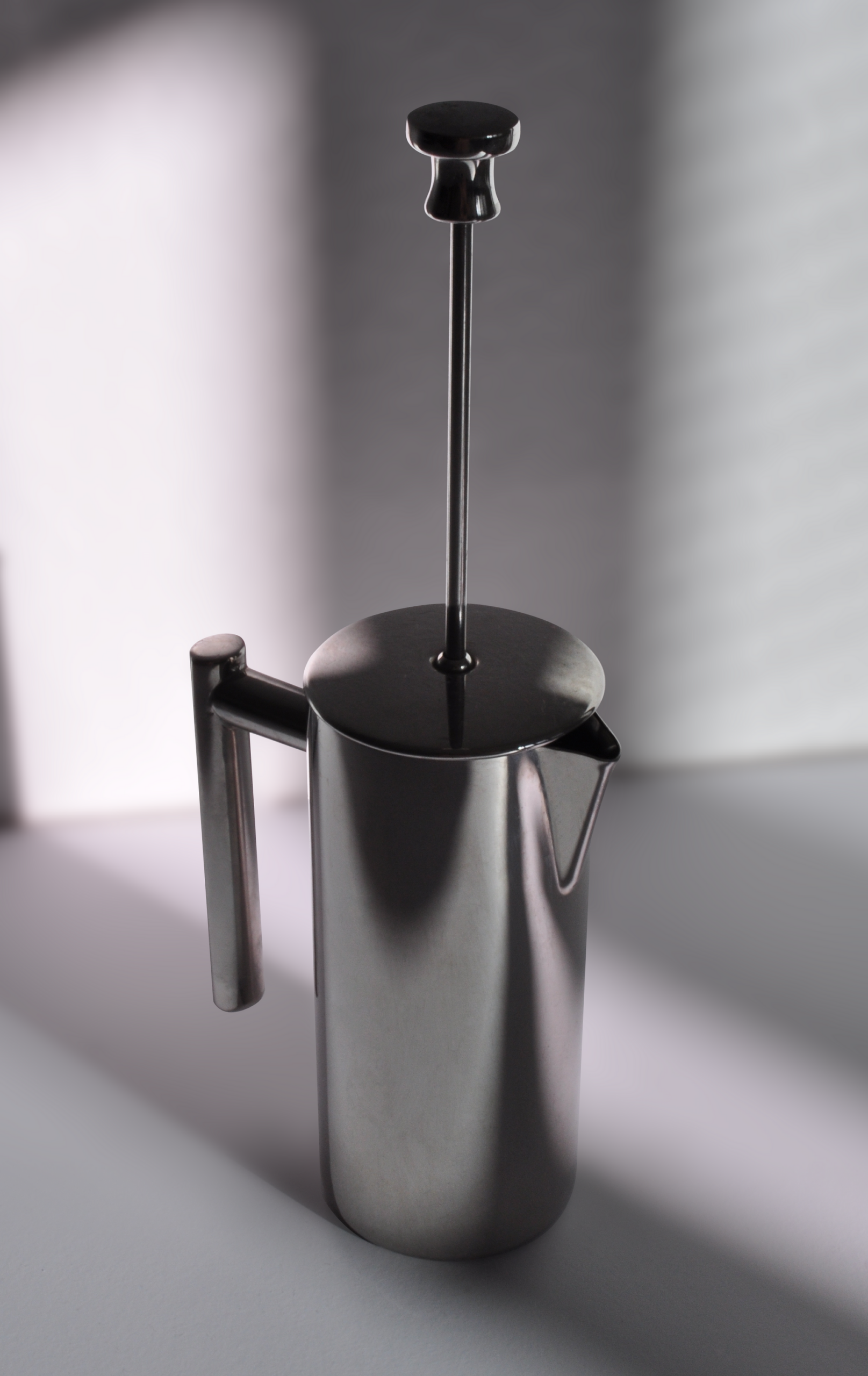
A wide-mouth vacuum flask filled with soup at seven in the morning and opened at noon should still be hot enough to be worth eating. Half the time it is not, and the person holding it usually blames the flask. Four runs with the same flask, the same pot of soup and a probe thermometer say the flask is rarely the problem.
The variables are the temperature of the food going in, whether the flask was warmed first, and how much air is left inside once the lid goes on. Get all three right and lunch reads 151F after five hours. Get all three wrong and the same flask, the same soup and the same morning produce 110F, which is lukewarm and, more to the point, sits inside the range where bacteria multiply fastest.
Below: the four cooling curves, what each variable is actually worth in degrees, the temperature line that matters for safety rather than pleasure, and the four things that should never be sent out in a flask at all.
- Preheat with boiling water for five minutes. Worth roughly ten degrees at hour five, and it costs nothing.
- Fill it to within half an inch of the rim. Air is the enemy; a half-full flask loses heat almost twice as fast.
- Put the food in at a rolling boil, not at serving temperature. Every degree you skip at the start is gone for good.
- Aim to stay above 140F. Below that is the range food safety guidance tells you to move through quickly, not sit in for hours.
- Keep rice, warm leftovers, milk drinks and anything carbonated out of it. Reasons below, and they are not about taste.
A vacuum flask leaks heat in exactly one place
The body of a modern flask is two steel walls with the air pumped out of the gap between them. Conduction needs matter to travel through and convection needs air to circulate, so removing the air removes both. What is left is radiation, which the mirrored coating on the inner wall reflects back. Through the sides, a good flask is close to a sealed system.
Heat still gets out, and it leaves through the top. The rim where the inner and outer walls are joined is solid metal, a direct bridge from the contents to the room, and the lid assembly sits above the food with nothing but its own plastic and gasket to slow things down. That is the entire loss path.
Two consequences follow. A wide-mouth food jar loses faster than a narrow-necked drinks bottle of the same volume, because the bridge is wider and the lid is bigger. And a flask standing upright loses less than one lying on its side, because upright, the hottest liquid sits at the bottom, farthest from the leak.
Seven minutes of setup, or how to keep food hot in a thermos
The full routine takes about seven minutes of mostly unattended time, and it happens while the food is still cooking.
- Boil a kettle and fill the flask to the brim. Cap it loosely and leave it while the food finishes. Five minutes is the minimum, ten is better, and the point is to bring the inner steel and the lid up to temperature so the food is not paying to heat them.
- Bring the food to a genuine boil. Not steaming, not hot enough to eat. A rolling boil, held for a minute, so the whole batch is at temperature and not just the top.
- Dump the water and fill immediately. Do not dry the flask and do not let it stand empty; the inside cools measurably in the thirty seconds it takes to find a towel.
- Fill to within half an inch of the rim. Enough clearance for the stopper, no more. If you do not have enough food, top up with a splash of boiling stock or hot water rather than leaving the gap.
- Seal it, then leave it alone. Every opening dumps the hot vapor at the top and pulls in room air. One opening at noon, not three checks during the morning.
- Carry it upright, inside a bag rather than clipped outside one. Wind moving over the outer wall carries away the small amount of heat that does escape.
Four flasks, one pot of soup, five hours
Same 17-ounce wide-mouth steel food jar in all four runs, same tomato and white bean soup, ladled in at 205F, room held near 70F, probe read through the open lid and the flask immediately resealed. The first row is ten minutes after the lid went on, which is when the contents and the flask have finished arguing with each other.
| Reading | Preheated, filled to the rim | Not preheated, filled to the rim | Preheated, half full | Not preheated, half full |
|---|---|---|---|---|
| 10 minutes | 198F | 181F | 195F | 172F |
| 1 hour | 187F | 172F | 178F | 155F |
| 2 hours | 177F | 163F | 163F | 141F |
| 3 hours | 168F | 155F | 149F | 129F |
| 4 hours | 159F | 147F | 137F | 118F |
| 5 hours | 151F | 140F | 127F | 110F |
Read the columns rather than the rows. Only the first one is still comfortably hot at noon. The second is on the line. The third dropped below 140F somewhere in the fourth hour. The fourth was already below it before the second hour was out and spent most of the morning drifting down through the range you least want food to sit in.
What preheating is actually worth
Eleven degrees at hour five, filled to the rim. Seventeen degrees at hour five when the flask is half full. That is smaller than the internet suggests and larger than it sounds, because those eleven degrees are the difference between clearing 140F and landing on it.
The mechanism is simple arithmetic. The inner vessel and the lid of a 17-ounce food jar weigh a few hundred grams between them, and steel takes about an eighth as much energy per gram to heat as water does. Filling a cold flask means the soup gives up part of itself to warm the container before anything else happens, and that loss is permanent.
The rest is not arithmetic. The threaded collar at the rim is the one part of the flask connected to the outside world, and starting it cold means the first half hour is spent pushing heat into a metal ring that is busy dumping it into the room.
Half full is the expensive mistake
Fill level did more damage than preheating in every run. A half-full flask at hour five was 24 degrees behind a full one, and the two effects stack: the worst column is 41 degrees below the best.
Two things are happening. Less food means less stored heat for the same rate of loss, so the temperature falls faster for exactly the same amount of energy leaving. And the air in the headspace circulates, carrying heat from the surface of the food up to the coldest part of the flask and depositing it there, over and over, all morning.
If the portion does not fill the jar, top it up with broth, hot water or another ladle of soup. A little more lunch is a small price for keeping the whole thing above the line, and a flask too big for your usual portion is the wrong flask.
140F is a line, not a suggestion
Food safety guidance in the United States treats the band between roughly 40F and 140F as the range where bacteria multiply quickly, and treats two hours as the total time perishable food should spend inside it, cumulatively, across a whole day. A flask is a holding device, not a refrigerator, and the clock does not restart because the lid is closed.
That reframes the table. The preheated, full flask never entered the band during the test, so the two-hour clock had not started by noon. The unpreheated full one arrived at the edge of it as lunch was served. Both half-full runs spent hours inside the band, and the last one had been there since before nine in the morning.
This matters more for some foods than others. Soup that came out of a rolling boil has very few live organisms in it to begin with, which is exactly why the boil is not optional. Something reheated to merely hot, in a flask that drifts to 120F and stays there, is a different proposition. If the flask is going to a child, an older adult or anyone whose immune system is compromised, treat the 140F line as firm rather than as a target to approach.
The food goes in boiling, not hot
Every degree missing at the start is missing at the end, and no amount of insulation invents heat. A soup ladled in at 175F because it had been sitting off the burner for ten minutes lands roughly 30 degrees lower at noon than the same soup taken straight off a boil.
This is also the step where leftovers go wrong. Cold soup from the refrigerator warmed in a microwave until it feels hot is usually somewhere in the 140s, with cool patches through the middle where the microwave did not reach. Bring it to an actual boil in a pan, stir it, hold it there for a minute, then fill.
Solid foods are harder to judge. A portion of stew has to be stirred while it heats or the bottom scorches while the center stays cool, and grains need enough hot sauce or broth around them to carry the heat, because dry food has almost nothing to hold temperature with.
Wide mouth or narrow neck
| Wide-mouth food jar | Narrow-neck bottle | |
|---|---|---|
| Heat retention | lower, bigger opening and heavier lid | higher at the same volume |
| Suits | soup, stew, chili, curry, grains, braises | broth, tea, coffee, thin soups |
| Eating from it | a spoon reaches the bottom | it does not |
| Cleaning | a hand fits inside | needs a brush, and it will need one |
| Sensible size | 16 to 20 ounces for one meal | 12 to 17 ounces |
Buy for the portion you actually eat. The single most common purchase mistake is a 27-ounce jar used for a 12-ounce lunch, which guarantees the half-full column of the table every day of the week. Two smaller flasks beat one large one if the portions vary.
Four foods that should never go in a flask
Cooked rice and rice-heavy dishes. Rice carries spores that survive boiling and germinate happily in the warm range, and a flask that drifts down through the 120s over a morning is close to an ideal environment for them. Fried rice, rice pudding, congee and rice-thickened soups all belong in a cold container with an ice pack, eaten cold or reheated properly at the other end.
Anything reheated to warm rather than boiling. The flask does not sterilize, kill or improve anything; it only slows cooling. Food that went in at 150F with cool patches through it arrives at lunch having spent five hours in the band, having started with whatever was already growing in it.
Milk, cream drinks and dairy-thickened soups held all day. Milk proteins coagulate against hot steel and leave a film that is difficult to remove and quick to sour, and a cream soup held for hours separates into grease and water. Send the base hot and stir the cream in at the table.
Dry ice and anything carbonated or actively fermenting. A sealed vacuum flask is a strong pressure vessel with a stopper designed to be removed by hand. Carbon dioxide from dry ice, a fizzy drink or a live ferment builds pressure with nowhere to go, which at best jams the lid shut and at worst turns the opening into an event. Flask manufacturers warn against this for a reason.
Nine fillings that hold up, sorted by how they behave
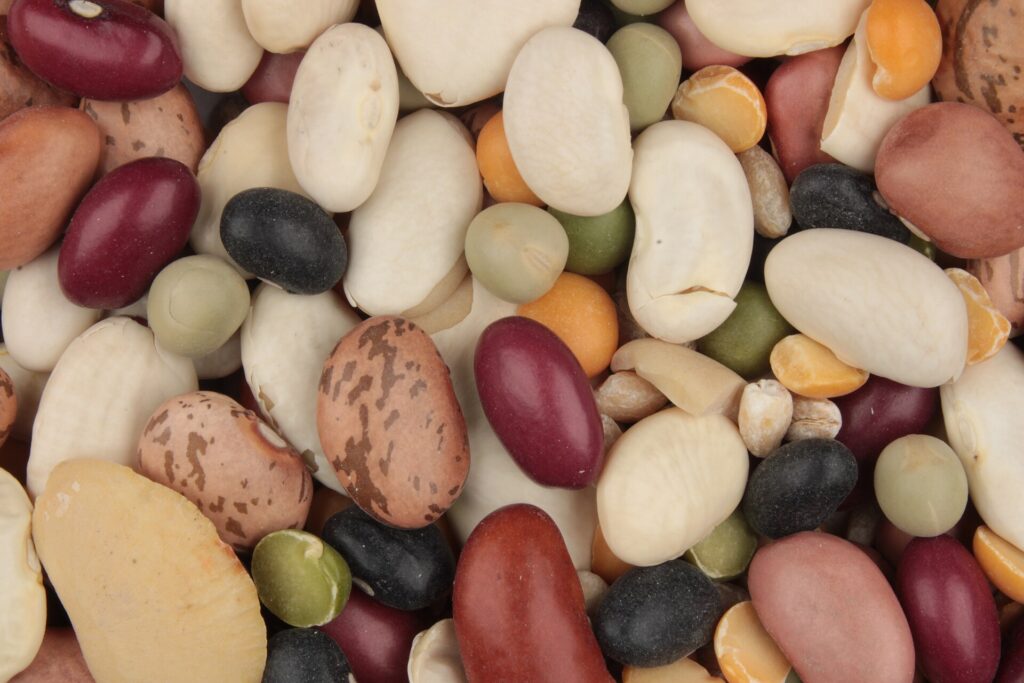
Best in a flask. Thick bean and lentil soups, chili, beef or lamb stew, curry with a heavy sauce, and split pea. Density is the friend here: a thick soup has more mass per ounce of volume and stirs slowly, so heat leaves less readily than it does from thin broth.
Good with one adjustment. Noodle soups, if the noodles travel dry in a separate tub and go in at the table, because five hours in hot liquid turns them to paste. Chunky vegetable soups, if the vegetables were cooked slightly under, since they keep cooking in the flask all morning. Braised meat, if enough of its sauce comes along to surround it.
Workable but unimpressive. Mashed potato and polenta hold heat well and lose all texture. Baked pasta arrives hot and steam-softened, with any crust long gone. Both are fine if you are eating for warmth rather than for pleasure.
The same physics, running cold
Everything above reverses cleanly. Pre-chill the flask with ice water for ten minutes, fill it to the top with food that is properly cold rather than cool, and it holds below 40F for a similar stretch. The same two-hour clock applies above that line.
Do not freeze a filled flask. Water expands as it freezes and a rigid steel inner vessel has nowhere to give. Chill it, and add a small frozen gel pack alongside it in the bag.
Cold suits yogurt, cut fruit, noodle salads and gazpacho, and it is the correct home for the rice dishes ruled out above.
The smell that will not leave, and how it got there
A flask that smells of last month is a flask with a residue problem in one of two places: the gasket groove in the lid, or the shoulder just under the rim where a sponge does not reach. Both stay damp when a flask is capped wet, and both are where the film from milk, coconut or curry sits.
The fix is mechanical first. Take the stopper apart, pull the silicone gasket out of its groove, and wash both separately, using a bent-neck brush for the shoulder. Then fill with hot water and a tablespoon of baking soda, leave it overnight, rinse and dry with the lid off.
Store it dry and open. A capped flask with a few drops of water in it is a sealed damp box, which is how a clean flask develops a smell between Friday and Monday. Keep the vacuum body out of the dishwasher unless the maker says otherwise: the heat cycle can damage the seal at the rim, and a flask with a failed vacuum is an expensive steel cup.
Frequently Asked Questions
Does preheating with hot tap water work as well as boiling water?
No, and the gap is roughly proportional to the temperature difference. Tap water at 130F brings the steel to 130F, so you start further back than a kettle would put you. If the kettle is inconvenient, use the hottest water available and leave it in longer, ten minutes rather than five, which recovers part of the difference.
How long can a flask genuinely keep food safe?
For as long as it stays above 140F, which for a preheated, full, boiling-hot fill is five to six hours in a decent flask and less in a cheap one. Once it drops below that line, the standard two-hour limit for perishable food starts running. A single lunch is comfortably within reach. A flask packed at seven and eaten at four is not.
Why is my flask cold at lunch even though it feels warm outside?
A flask that feels warm on the outside has a compromised vacuum, and the warmth is the heat that used to be in your soup. A hard drop can crack the inner weld without marking the outer shell, and there is no repair. Test one by filling it with boiling water and holding it ten minutes later; a working flask stays cool to the touch.
Can I put a whole hot meal in for a child?
Yes, with the routine above and one addition: fill it fuller than feels necessary and choose the smallest flask that holds the portion. Children eat later than they say they will, and a child-sized portion in an adult-sized flask is the half-full column of the table. Skip rice dishes entirely and send those cold with an ice pack instead.
Should I stir the food before eating it?
Stir it, and stir it before you check the temperature rather than after. The contents of a flask stratify over five hours, with the top noticeably cooler than the bottom, so the first spoonful is not representative of the rest. Stirring also tells you quickly whether anything has separated or thickened past the point of being appetizing.