Broccoli cut on Sunday and packed raw into a container is olive brown by Tuesday and smells faintly of sulfur by Thursday. The same broccoli, held sixty seconds in boiling water and dropped straight into ice, is still green on Friday and still snaps when you bite it. The whole difference is one minute and a bowl of ice.
The color is not a cosmetic detail. What turns green vegetables drab is a chemical change in the chlorophyll molecule itself, and the enzymes driving it are the same ones that make broccoli smell like a school cafeteria and green beans go limp in a container. A short boil shuts those enzymes down. A long one destroys the thing you were trying to protect.
Below: what actually happens to the pigment, a timing chart organized by thickness instead of by vegetable name, the ice bath rule almost everybody cuts short, and why the times for freezing are longer than the times here.
- Working time: 45 seconds to 3 minutes in boiling water, by thickness
- Ice bath: at least as long as the boil, in water that still has ice floating in it
- Pot size: 4 quarts of water minimum per pound of vegetables
- Lid: off, the entire time
- Storage: 5 to 7 days refrigerated, dried thoroughly, in a container with a paper towel
- Dress with acid: only at the table, never in advance
Why green turns drab in the first place
Chlorophyll is built around a flat ring with a single magnesium ion held at its center, and that magnesium is what makes the molecule read as bright green. Heat and acid together knock the magnesium loose and a hydrogen ion takes the seat. The resulting compound, pheophytin, is olive brown, and the change does not run backward.
The acid does not come from anywhere exotic. Plant cells store organic acids in their vacuoles, and every cut, every bruise, and every minute of heat releases more of them. That is why a whole head of broccoli in the refrigerator keeps its color for a week and the same head cut into florets does not.
Enzymes finish the job. Chlorophyllase strips part of the pigment, and lipoxygenase attacks the fats in the cell membranes, producing both off flavors and free radicals that degrade what pigment is left. All of these run slowly in a cold refrigerator and stop entirely once the protein is denatured, which is what a minute in boiling water is for. The pigment chemistry behind it is well documented in any reference on chlorophyll.
The flash of bright green, and what it is
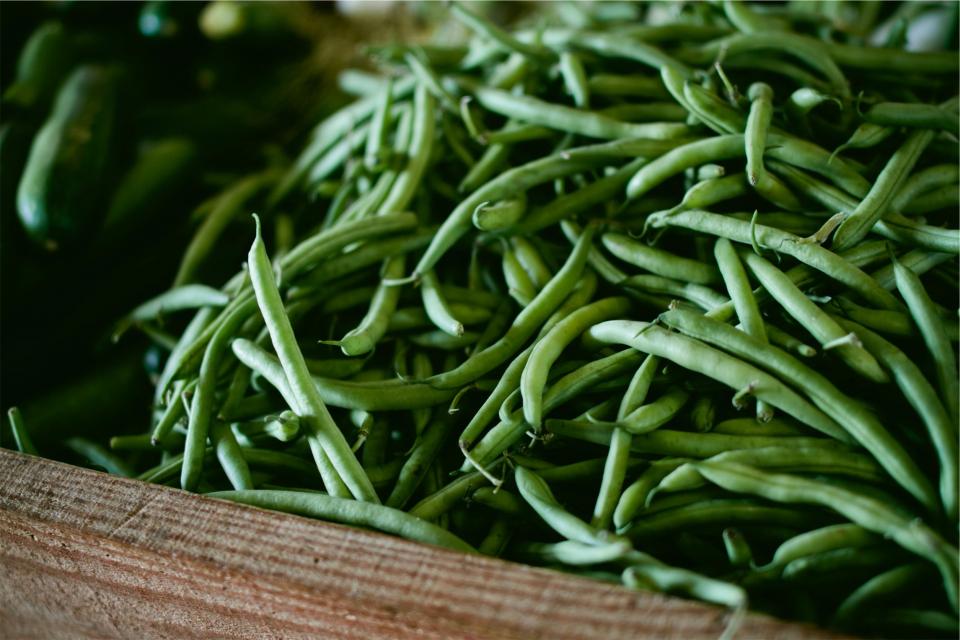
Drop green beans into boiling water and the color visibly jumps within about fifteen seconds. That is not the chlorophyll changing. It is air leaving.
Raw plant tissue holds gas in the spaces between cells, and those pockets scatter light before it ever reaches the pigment, which is why raw greens look slightly hazy and pale. Heat expands the trapped gas and pushes it out, water moves into the vacated space, and light now travels through to the chlorophyll and back. The vegetable has not become greener. You can simply see the green that was already there.
The flash is also the clock. From the moment it happens, every additional minute in the pot converts more chlorophyll into pheophytin. The window between fully bright and starting to dull is narrower than most people believe, which is why the times below are written in seconds for thin vegetables.
How to blanch vegetables in five steps
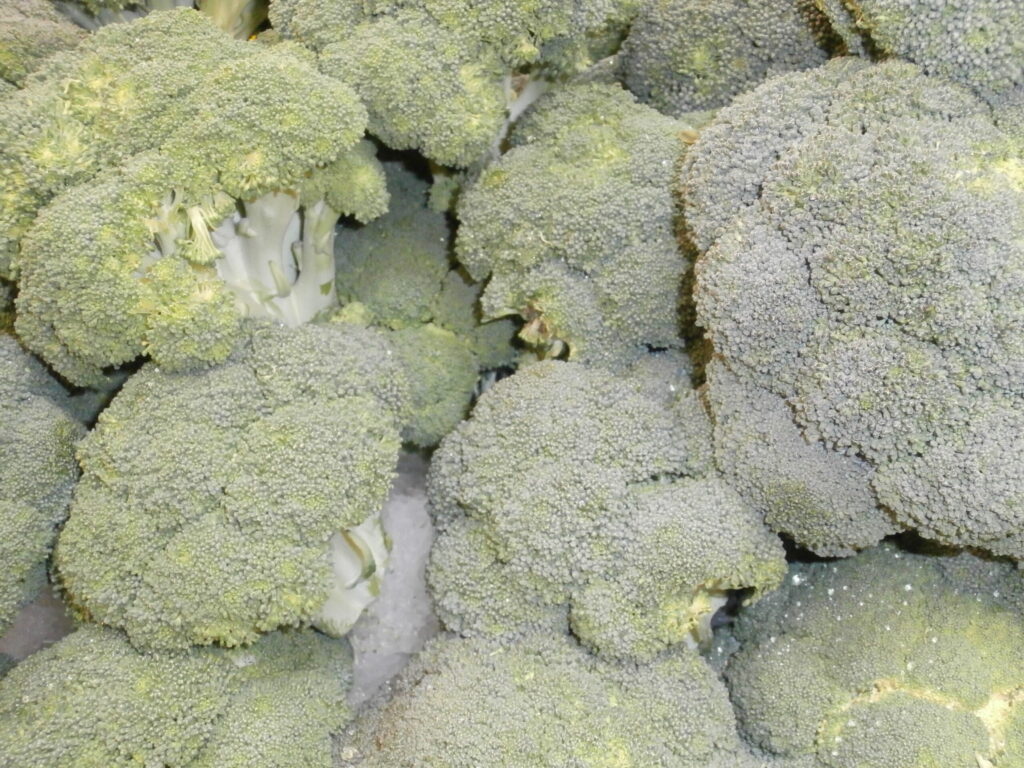
- Boil a lot of water and salt it. Four quarts per pound of vegetables, salted until it tastes like a good soup, roughly a tablespoon of kosher salt per quart. Volume is what lets the pot recover its boil.
- Fill the ice bath before anything goes in the pot. Equal parts ice and cold water, in a bowl large enough that the vegetables float rather than pack.
- Work in batches and start the clock at the return to a boil. If the water stops boiling for more than fifteen seconds the batch is too big. Timing from the moment food hits the water is the single most common source of overcooked results.
- Lift, do not pour. A spider or slotted spoon moves the batch to the ice in two seconds and leaves the water boiling for the next one. Pouring the pot into a colander costs a minute and the pot has to come back to a boil from scratch.
- Chill, drain, and dry completely. Hold in the ice at least as long as the boil lasted, then spread on a towel and dry.
Salt, water volume, and why the lid stays off
Salt does two things here. It seasons the vegetable from the outside in, faintly but noticeably, and it raises the ionic strength of the water enough to slow the loss of soluble pigment and minerals out of the cut surfaces. Unsalted blanching water turns green far faster, and that green in the pot is color that left the vegetable.
Volume matters more than most people give it credit for. A pound of cold broccoli dropped into two quarts of water knocks the temperature down twenty degrees or more, and the pot spends the next ninety seconds climbing back while the florets sit at a temperature that softens without setting the color. Four quarts per pound recovers in seconds.
The lid stays off for a specific reason. Volatile organic acids leave the vegetable with the steam, and an open pot lets them go into the room. A lid condenses that steam and returns the acid to the water, and acid is exactly the reagent that converts chlorophyll to pheophytin. A covered pot of green beans goes drab measurably faster than an open one at the same time and temperature.
Timing by thickness, not by vegetable
Vegetable names are a poor guide because a pencil asparagus spear and a thumb-thick one behave nothing alike. Thickness at the widest point is the number that predicts the time.
| Vegetable | Cut | Boil | Ice bath |
|---|---|---|---|
| Spinach, tender greens | whole leaves | 30 to 45 seconds | 1 minute |
| Snap peas, snow peas | whole | 45 to 60 seconds | 1 minute |
| Shelled peas | loose | 60 seconds | 1 minute |
| Asparagus, pencil | whole spears | 60 seconds | 1 minute |
| Broccolini, thin stems | whole | 90 seconds | 2 minutes |
| Broccoli | 1 inch florets | 90 seconds to 2 minutes | 2 minutes |
| Green beans | whole, trimmed | 2 minutes | 2 minutes |
| Kale, collards | stemmed leaves | 2 minutes | 2 minutes |
| Asparagus, thick | whole spears | 2 to 3 minutes | 3 minutes |
| Brussels sprouts | halved | 3 minutes | 3 minutes |
| Green cabbage | wedges | 3 minutes | 3 minutes |
Test the first batch rather than trusting the chart blindly. Pull one piece at the low end of the range, cool it under cold water for ten seconds, and bite it. It should be bright, hot through, and still resistant at the center. If it bends without snapping, take fifteen seconds off the next batch.
The ice bath has a clock too
A bowl of cool water is not an ice bath. The point is to drop the interior of the vegetable below the temperature where the pigment reaction and the residual enzyme activity continue, and cool tap water does that slowly enough that a broccoli floret keeps cooking for another two minutes on its own heat.
Equal parts ice and water by volume, and there should still be ice floating when the batch comes out. Hold each batch at least as long as it boiled. A three-minute Brussels sprout wants three minutes in the ice, and it is done when the center of the thickest piece is cold to a fingertip, not when the surface is.
Refresh the ice between batches. Three rounds of hot vegetables will melt a bowl into lukewarm water, and by the fourth batch you are no longer blanching, you are simmering and then leaving it out.
Drying is the step that decides whether Thursday is any good

Everything up to this point is about color. Drying is about whether the container is still pleasant on day five. Water clinging to the surface of blanched vegetables is where the sliminess starts, and it also speeds up the last of the pigment loss.
A salad spinner is the fastest route for anything leafy or small. For beans, asparagus and florets, spread them in one layer on a clean towel, blot the tops, and leave them ten minutes. The surface should look matte, not glossy.
Store them in a rigid container with a folded paper towel at the bottom and another on top, lid on. Swap the towels around the middle of the week. That single habit adds two or three good days, and it is the difference between vegetables you are glad to find on Thursday and vegetables you throw out on Friday.
What a week of blanched produce actually looks like
Five to seven days is the honest window for most blanched green vegetables held at refrigerator temperature. Green beans, broccoli, broccolini, asparagus, snap peas, kale and cabbage all hold well. Zucchini and cucumber do not; they collapse regardless of technique, and they are better prepped raw the day of.
Blanched vegetables reheat in about thirty seconds, which is the real payoff. A minute in a hot pan with oil and garlic, a toss into pasta at the last moment, a fold into fried rice off the heat. They also go straight into a hot oven without the usual soggy first ten minutes, so roasted vegetables come out crisper when the moisture has already been dealt with.
One rule holds for all of it. Do not dress them with anything acidic until the moment they are served. Vinaigrette on blanched beans turns them olive within a couple of hours in the refrigerator, for exactly the reason described at the top: added acid finishes what heat started. Lemon, vinegar and tomato go on at the table.
Blanching for the freezer is a different job
Blanching for a week in the refrigerator is about pigment. Blanching for the freezer is about enzymes, and enzymes need more heat than color does. Peroxidase, the marker used to check whether the job is done, survives the sixty-second treatment that keeps broccoli green on the counter.
The standard home preservation times run longer: three minutes for green beans and broccoli florets, two to four minutes for asparagus by thickness, two minutes for spinach and kale, a minute and a half for shelled peas, three to five minutes for Brussels sprouts by size. Ice, dry, then freeze in a single layer before bagging.
The warning attached to those numbers is worth repeating, because it runs against intuition. Underblanching before freezing is worse than not blanching at all. A partial heat treatment activates the enzymes without destroying them, and the frozen result loses color, texture and flavor faster than raw frozen produce does. If you are freezing, use the longer times.
Four habits that ruin a blanch
Baking soda in the water. It works, in the narrow sense that alkaline water protects the magnesium in the chlorophyll and keeps the color electric. It also dissolves the pectin and hemicellulose holding the cell walls together, so the beans go mushy, and it destroys a good share of the vitamin C. The color is not worth the trade.
Crowding the pot. Two pounds into a four-quart pot means a long temperature recovery, uneven cooking, and the outer layer overshooting while the center of the batch is still cold. Batches of half a pound, back to back, are faster in wall-clock time than one big batch done badly.
Covering the pot. It returns acid to the water and it also makes the boil harder to watch, which matters when the whole timing scheme runs on the return to a boil.
Skipping the dry. Wet vegetables in a sealed container are a texture problem within two days and a smell problem within four. Blanched asparagus held for a risotto is only as good as how thoroughly it was dried before it went into the box.
Frequently Asked Questions
Does blanching cost a meaningful amount of nutrients?
Some water-soluble vitamins leach out, and the loss scales with time in the water and with how finely the vegetable was cut. At sixty to ninety seconds it is small. Set against it the fact that raw cut produce keeps losing vitamin C over a week in the refrigerator, and for anything you intend to store, the blanched version usually comes out ahead by the time you eat it.
Can I reuse the blanching water for several batches?
For three or four batches, yes, topping it up as it evaporates. After that the water is noticeably green and increasingly acidic from everything that has leached into it, and the later batches dull faster. Start fresh water for a second session.
Do I need to blanch vegetables before roasting them?
No. Roasting drives moisture off and browns the surface, and a blanched vegetable arrives wet and partly cooked. Blanch for storage, for salads, for a quick reheat, and for the freezer. Roast raw.
Can I steam instead of boiling?
Yes, with about fifty percent more time, and steaming leaches out fewer soluble nutrients because the vegetable never sits in water. The tradeoff is control: a steamer basket heats unevenly, the pieces at the edges lag behind the ones in the middle, and timing gets less predictable. For a small batch of tender greens it is a fine choice.
My green beans went brown anyway. What happened?
Three usual causes, in order of frequency. The pot was too small and the beans spent ninety seconds below boiling. The lid was on. Or they were dressed with something acidic and left in the refrigerator overnight. Denser vegetables like sprouts are more forgiving, but thin green vegetables punish all three mistakes visibly.