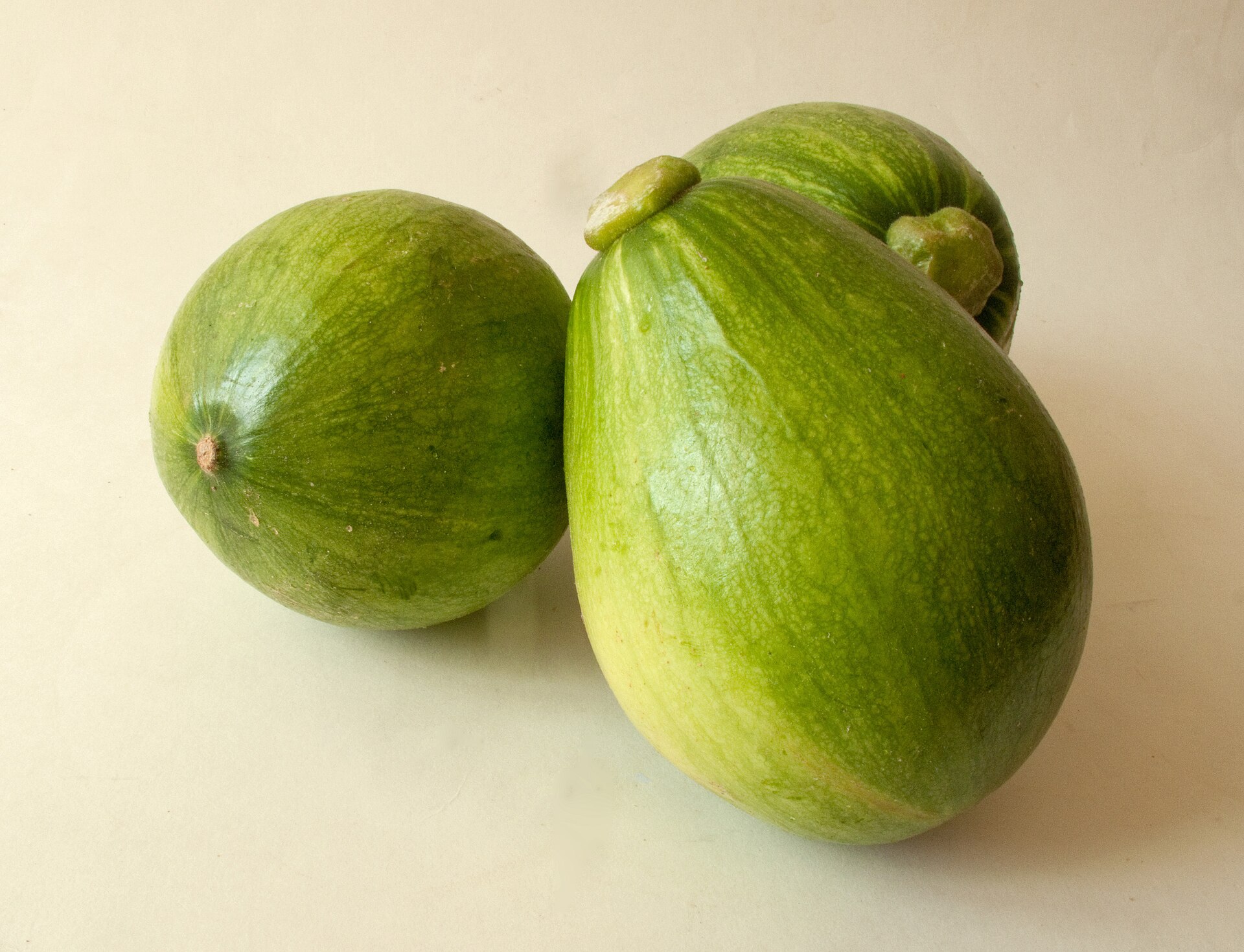
A Hubbard squash the size of a car battery costs about what a butternut costs, which makes it look like the bargain of the market. Take it home, wrestle it apart, roast it, and weigh what comes off the tray: the usable yield is a good deal lower than the price per pound suggested, because a third of that weight was shell and seed cavity.
Seven varieties went through the same treatment this month. Whole weight, trimmed weight, roasted weight, and then the questions that actually decide what a squash is for: does the skin come off, does the flesh puree smoothly or stay stringy, does it hold a wedge shape, and how long will it sit in the pantry before it turns.
The answers sort into three groups, and once you know which group a squash belongs to, most recipes become interchangeable within it.
- Eat the skin: delicata, acorn, red kuri, kabocha once tender
- Peel it: butternut, Hubbard, and any squash going into a smooth puree
- Best puree: kabocha and butternut, in that order
- Best wedges: delicata and acorn
- Not a puree at all: spaghetti squash, which shreds by design
- Longest keeper: Hubbard, four to six months in a cool room
- Shortest keeper: delicata, six to eight weeks
How the seven were weighed
Each squash was weighed whole, halved, seeded and trimmed, then weighed again. That second figure is the edible fraction before cooking. Halves and wedges were roasted cut side down at 400 degrees on parchment with a tablespoon of oil, until a knife met no resistance, then weighed a third time.
The third figure is lower than the second in every case, because roasting drives off water. That loss is not waste; it is concentration, and it is the reason roasted squash tastes sweeter and denser than steamed squash of the same weight.
The number worth carrying to the market is the middle one. It tells you how much squash you are actually buying, and it varies from about 60 percent to about 85 percent depending on how much shell and cavity the variety carries.
Seven types of winter squash, before and after
| Variety | Whole | Trimmed | Edible fraction | After roasting | Skin |
|---|---|---|---|---|---|
| Delicata | 1 lb 2 oz | 15 oz | about 82% | 11 oz | eat it |
| Acorn | 1 lb 12 oz | 1 lb 6 oz | about 79% | 1 lb 1 oz | edible, tougher |
| Butternut | 3 lb 4 oz | 2 lb 12 oz | about 85% | 2 lb 2 oz | peel |
| Kabocha | 3 lb | 2 lb 7 oz | about 81% | 1 lb 14 oz | eat it once tender |
| Red kuri | 2 lb 6 oz | 1 lb 15 oz | about 81% | 1 lb 8 oz | eat it |
| Spaghetti | 3 lb 8 oz | 2 lb 14 oz | about 82% | 2 lb 3 oz | discard, use as a bowl |
| Hubbard | 9 lb | 6 lb 3 oz | about 69% | 4 lb 12 oz | peel, and it is hard work |
Butternut has the best edible fraction of the seven and the least interesting flavor, which is a fair summary of why it dominates the supermarket. Hubbard has the worst fraction and the deepest flavor, and it is sold in wedges for a reason.
The three that roast in wedges
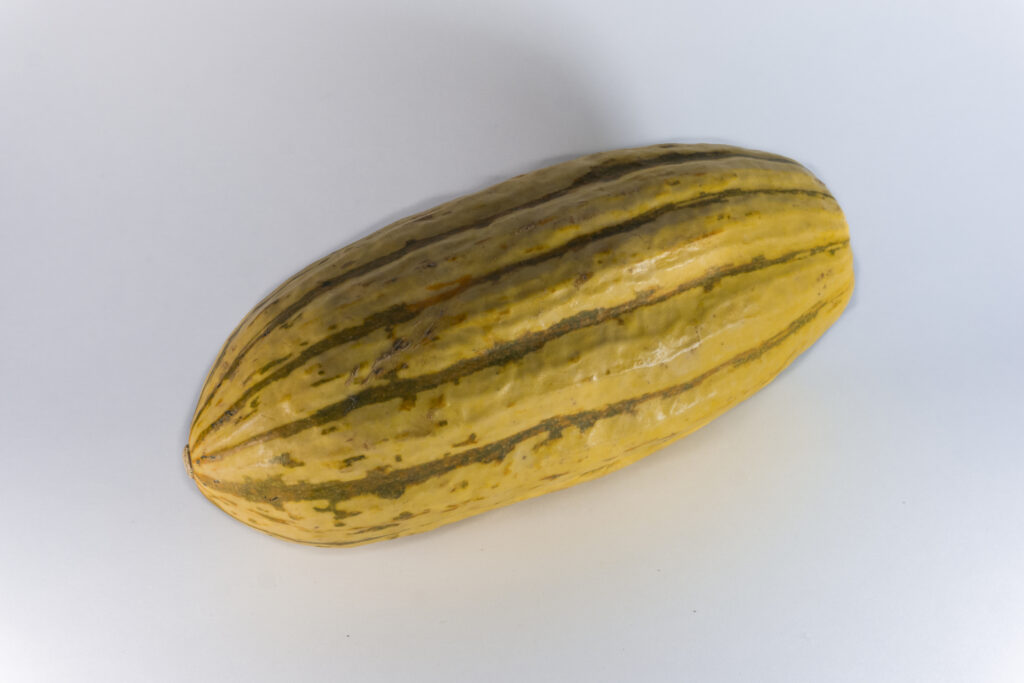
Delicata is the easiest squash on the market and the least like the others. The skin is thin enough to eat, the seed cavity is small, and a whole one halved lengthwise, seeded and cut into half-moons roasts in twenty-five minutes. It is the squash to buy if you have never cooked one.
Acorn holds a wedge better than anything else because the ridges give it structure. The skin is edible but chewy, and most people eat around it. Its flesh is more watery and less sweet than the others here, which is why it is so often served with something sweet in the cavity.
Red kuri, sometimes sold as potimarron, splits the difference. Thin edible skin, dense chestnut-flavored flesh, and a teardrop shape that yields good wedges from the wide end and awkward ones from the point. It is also excellent pureed, which puts it in both groups.
The two that puree properly
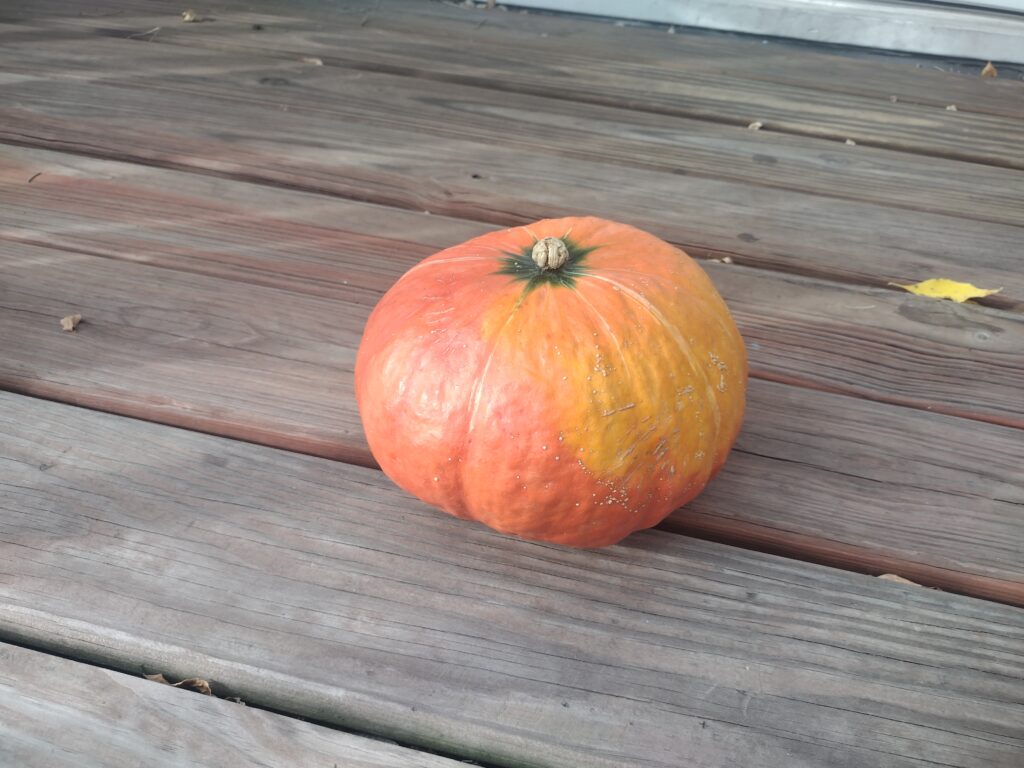
Kabocha is the best puree of the seven by a clear margin. The flesh is dry and starchy rather than watery, so it mashes to something closer to a chestnut puree than a vegetable soup, and it needs less reduction afterward. It is also the hardest of the seven to cut into.
Butternut purees smoothly and reliably and brings less to the table. It is sweet, mild and slightly wet, which means a soup made from it usually wants reducing or thickening. Its advantages are the long straight neck, which is solid flesh with no cavity, and the fact that it peels with an ordinary vegetable peeler.
Both benefit from roasting rather than boiling before they are pureed. Boiling adds water to something that already has plenty and washes out flavor. Roast until the cut faces have caramel-colored patches, then scoop and blend. A risotto takes roasted squash far better than boiled.
Spaghetti squash is not in the same category
The flesh of a spaghetti squash separates into strands rather than a mass, which is a cell-structure difference rather than a cooking technique. There is no way to puree it into anything pleasant and no reason to try.
Roast it halved, cut side down, at 400 degrees for about forty minutes, then drag a fork across the flesh. Cut crosswise into rings instead of lengthwise if you want longer strands, since the fibers run around the circumference rather than along the length.
It is watery. Salt the strands and let them drain in a colander for ten minutes before saucing, or the plate fills with liquid. Treat it as a vegetable that happens to be shaped like noodles rather than as a substitute for them, and it stops disappointing people.
Peeling, and when it is not worth doing
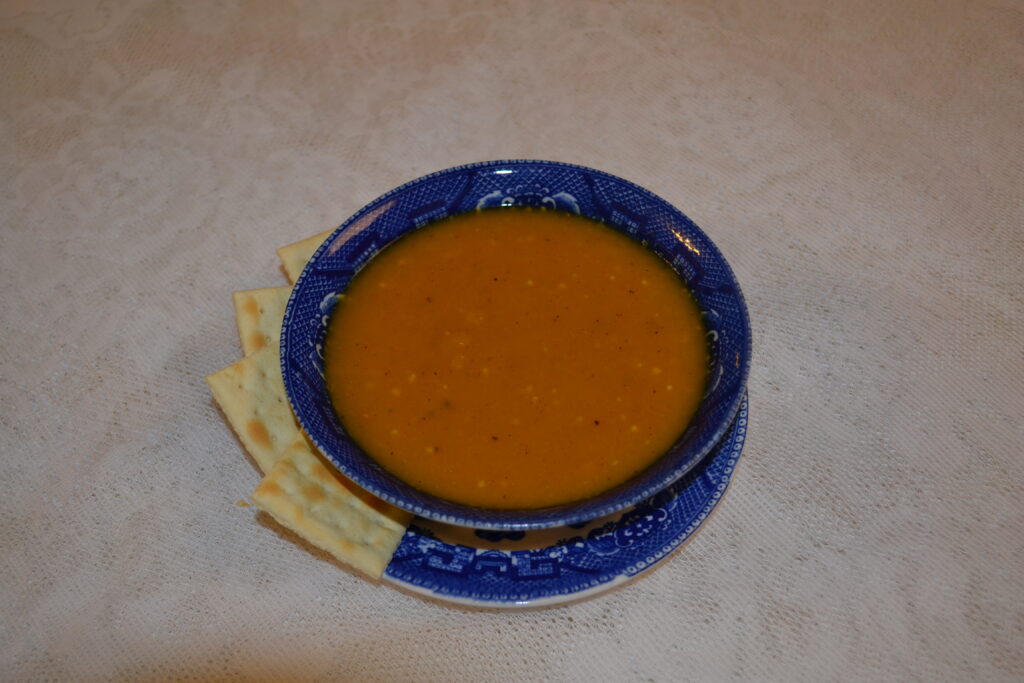
Raw squash peels badly and the risk of a slipped knife is real. The safer sequence for a hard variety is to microwave it whole for three to four minutes to soften the skin, or to roast it in halves and scoop the flesh out afterward, which removes the peeling step entirely.
Cut a flat base before you do anything else. A round squash on a board will roll, and squash injuries are one of the more common autumn hospital visits in this country for exactly that reason. Use a heavy knife, keep the fingers of the other hand behind the blade, and if a Hubbard will not yield, drop it on a concrete step outside; that is the traditional method and it works.
For butternut, peeling raw with a sharp swivel peeler is straightforward on the neck and awkward around the bulb. For kabocha and Hubbard, do not peel raw at all. Roast, scoop, and skip it.
Roasting times at 400F, by variety and cut
| Variety and cut | Time | Doneness cue |
|---|---|---|
| Delicata, half-moons | 22 to 28 min | edges browned, skin wrinkled |
| Acorn, wedges | 30 to 40 min | knife slides in at the thickest ridge |
| Butternut, 1-inch cubes | 25 to 35 min | corners caramelized, centers soft |
| Butternut, halved | 45 to 55 min | flesh collapses under a spoon |
| Kabocha, wedges | 35 to 45 min | skin gives, flesh dry and floury |
| Red kuri, halved | 40 to 50 min | cut face deeply browned |
| Spaghetti, halved | 35 to 45 min | strands separate under a fork |
| Hubbard, 2-inch wedges | 50 to 65 min | flesh pulls away from the shell |
Cut side down on parchment for every one of them. Cut side up dries the surface out and browns it poorly; cut side down traps steam against the flesh and then browns the face in contact with the tray. The rules for roasting vegetables generally apply here with one exception, which is that squash wants a slightly wetter start than most.
Curing is why two identical squash taste different
A squash cut from the vine is not finished. Held somewhere warm and dry for a week or two after harvest, the skin hardens, small wounds seal over, and some of the starch in the flesh converts to sugar. That process is called curing, and it is the difference between a squash that tastes of vegetable and one that tastes of squash.
Kabocha is the clearest case. Straight off the field it is watery and bland; a month later it is dense, sweet and floury. Most Japanese growers hold it deliberately for exactly that reason, and a kabocha bought in late autumn is usually better than one bought the week it appeared.
Delicata and acorn are the exceptions. Both have thinner skins and both go the other way with time, losing sweetness and turning fibrous after a couple of months. Buy those two to eat within a few weeks and buy the hard-shelled varieties to keep.
The seeds, the skins and the shell
Seeds from any of the seven are worth roasting, and the ones from kabocha and red kuri are the best of them, since the hulls are thinner and the kernels larger. Rinse the pulp off, dry them properly on a towel, toss with oil and salt, and roast at 300 degrees for twenty-five to thirty-five minutes, stirring twice. Higher than that and the outsides burn before the insides toast.
The stringy pulp around the seeds is not waste either. It carries flavor and can go into a stock along with the trimmings, simmered for half an hour and strained. It contributes body rather than much taste, and it is a reasonable base for the soup the squash is heading into anyway.
The shell is where it stops. Hubbard and kabocha rind will not soften into anything pleasant, and no amount of roasting changes that. On delicata and red kuri the skin is thin enough to disappear into the flesh, on acorn it stays chewy, and on butternut it is edible in theory and unpleasant in practice.
Storage life, and where the pantry beats the refrigerator
| Variety | Whole, cool and dry | Cut, refrigerated | Cooked |
|---|---|---|---|
| Delicata | 6 to 8 weeks | 4 to 5 days | 3 to 4 days |
| Acorn | 4 to 8 weeks | 4 to 5 days | 3 to 4 days |
| Butternut | 2 to 3 months | 5 to 6 days | 3 to 4 days |
| Kabocha | 2 to 4 months | 5 days | 3 to 4 days |
| Red kuri | 2 to 3 months | 5 days | 3 to 4 days |
| Spaghetti | 2 to 3 months | 5 days | 3 to 4 days |
| Hubbard | 4 to 6 months | 5 to 6 days | 3 to 4 days |
Whole winter squash keeps best somewhere around 50 to 55 degrees with air moving, which describes a cellar, an unheated back hallway or a garage before it freezes. A refrigerator is too cold and too damp for a whole squash, and it shortens the life rather than extending it.
Cut squash is a different food and belongs in the refrigerator, wrapped, with the cut face covered. The seed cavity is where spoilage starts, so scoop it out before storing halves. Any squash with a soft patch, a weeping spot or visible mold at the stem goes out; cutting around mold works on hard cheese and does not work on a vegetable this wet.
What each one is actually for
Delicata. Weeknight roasting, salads, anything where you want visible slices and no peeling.
Acorn. Halves filled and baked, or wedges served as a side. It is a shape more than a flavor.
Butternut. Soup, puree, cubes for a tray, and anything a recipe calls squash without specifying.
Kabocha. Tempura, simmered dishes, the best puree, and mashed with butter as a side that behaves like a potato.
Red kuri. Soup where you want chestnut depth, and roasted wedges where you want color.
Spaghetti. Its own thing, sauced and eaten in strands.
Hubbard. Buy it cut, use it for a large batch of soup or a pie filling, and freeze what you do not use. Cooking from the market rather than from a list is the way most of these get used up.
Weigh one before you cook it and once more after, and the whole category stops being interchangeable orange vegetables. The seed cavity and the shell are the difference between a bargain and a chore.
Frequently Asked Questions
Is pumpkin one of these?
Yes, botanically. Field pumpkins, kabocha, butternut and Hubbard are all Cucurbita species, and the culinary distinction between pumpkin and winter squash does not follow the botanical one. The large carving pumpkins are stringy and watery and make poor eating; the small sugar pie types behave much like acorn squash.
Can I freeze raw squash?
Cubes freeze acceptably after blanching and come out softer than they went in, which is fine for soup and poor for roasting. Roasted puree freezes better than anything raw. Freeze it flat in bags, in portions you will actually use, and it holds well for about six months.
Why is my squash stringy?
Either it is a variety that is stringy by nature, which includes most large carving pumpkins and some Hubbards, or it was harvested young and not cured. Curing after harvest, meaning a week or two somewhere warm and dry, converts starch and firms the texture. Supermarket squash has usually been cured; farm stand squash sometimes has not.
Do I need to salt squash before roasting?
Salt it as it goes on the tray rather than in advance. Squash is wet enough already, and salting an hour ahead draws more moisture to the surface and makes browning harder. Oil, salt, straight into the oven.
How do I know a squash is ripe at the market?
The stem should be dry, hard and still attached, since a squash cut with no stem invites rot at the scar. The skin should be dull rather than glossy, hard enough that a fingernail leaves no mark, and heavy for its size. Soft spots and a shiny surface both mean it came off the vine early.