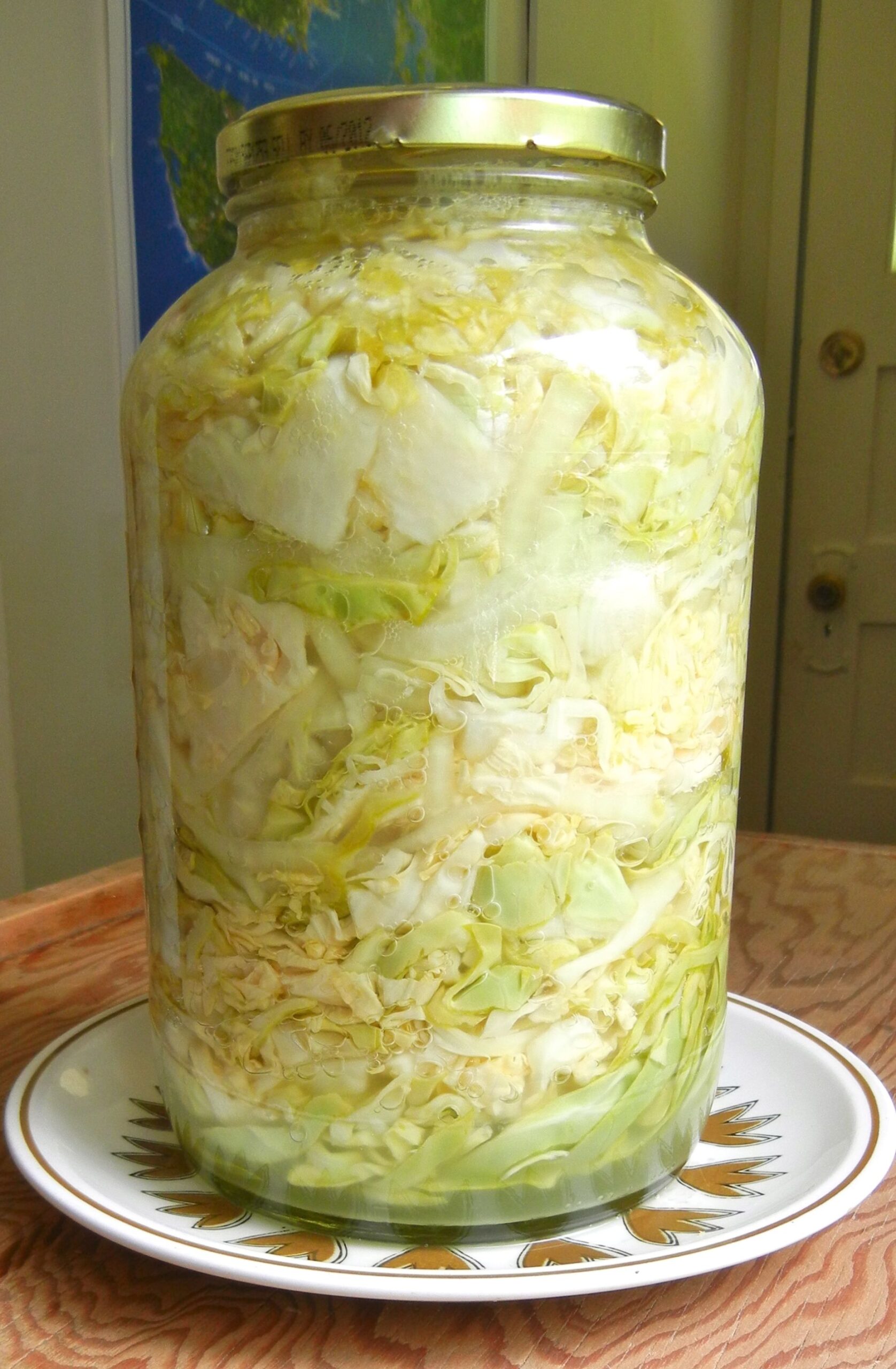
Shred a cabbage, weigh it, add salt equal to two percent of that weight, and pack it into a jar. Nothing else goes in: no starter, no vinegar, no heat. Within two days the liquid clouds and bubbles climb the glass, and three weeks later the jar holds something sour, still crunchy, and stable enough to keep until spring.
The method is old enough that no single kitchen can claim it. Cabbage was salted and left to sour in northern Europe, in Korea and along the Yangtze, by households that had no concept of a bacterium. What changed is the instruments around it: a scale that reads to the gram, pH strips that cost pennies, a refrigerator that holds a finished batch at a chosen temperature.
Nearly everything that goes wrong at home traces back to three variables: how much salt, at what temperature, and whether the vegetables stayed under the brine. What follows covers those three, one full batch of sauerkraut, and the point at which a jar becomes garbage.
- Salt: 2 percent of the vegetable weight when shredded, 3 to 5 percent brine for whole vegetables
- Temperature: 64 to 72F. Cooler is slower and more complex, warmer is fast and soft
- Time: five days to three weeks for cabbage
- Equipment: a jar, a weight, a scale
- The one rule: everything stays under the brine
- Finished acidity: the low 3s on the pH scale, under the 4.6 safety line
- Throw it out when: fuzzy colored growth appears, the smell turns putrid, or it never soured
What the bacteria are doing while the jar sits
Raw vegetables arrive carrying the organisms that do the work. Lactic acid bacteria live on leaves and roots in modest numbers, alongside a much larger population of molds, yeasts and spoilage bacteria that would win in open air. Salt and the absence of oxygen flip that competition, because lactic acid bacteria tolerate both and most of their rivals do not.
Salt pulls water out of the plant cells by osmosis, and that water becomes the brine. Submerged in it, the bacteria convert the sugars in the vegetable into lactic acid, carbon dioxide and aromatic compounds that were not there before. This is lactic acid fermentation, the same process at work in kraut, kimchi, brined cucumbers and yogurt.
The population changes as it goes. Gas-producing species dominate the first days and pull the acidity down from near neutral; as the brine turns sharp they hand off to more acid-tolerant ones that push it into the low 3s. That succession is why a jar tasted on day four and on day eighteen does not taste like the same food. The acid is also the preservative: at that level, the organisms that rot food cannot establish themselves.
Salt is the control variable, not the seasoning
Two percent of the vegetable weight is the default for shredded ferments, and it is weight to weight rather than a spoon count. Nine hundred grams of cabbage takes eighteen grams of salt. A tablespoon of coarse flake salt and one of fine sea salt can differ by half in mass, which is the whole argument for a scale.
Below about one and a half percent the brine stops selecting hard enough: ferments go soft and uninvited organisms get a foothold. Above three percent the bacteria slow down, and past four the batch can stall outright. Firmness rises with salt and speed falls with it.
Whole or large-cut vegetables cannot release enough liquid to cover themselves, so they go into a made brine measured against the water: thirty grams of salt per liter is three percent, fifty is five. Use salt without iodine or anti-caking agents.
| Ferment | Salt | Method | Time at 68F |
|---|---|---|---|
| Shredded cabbage, kraut style | 2% of weight | dry-salted, own brine | 1 to 3 weeks |
| Cabbage for kimchi | salted hard, rinsed back to about 2% | seasoned and packed | 2 to 4 days, then cold |
| Whole cucumbers | 3.5 to 5% brine | submerged | 5 to 14 days |
| Chile mash for hot sauce | 3 to 3.5% brine | submerged | 2 to 4 weeks |
| Carrots, beans, cauliflower | 3% brine | submerged | 4 to 10 days |
Five fermentation families worth learning at home
Almost every home project belongs to one of five groups, separated by which organism does the work and what it is fed. Learn one member of a family and the rest come easily.
| Family | What does the work | Examples | Difficulty |
|---|---|---|---|
| Salted vegetables | lactic acid bacteria already on the produce | sauerkraut, kimchi, brined cucumbers | Beginner |
| Sweetened tea | mixed yeasts and acetic acid bacteria | kombucha, jun | Beginner |
| Grain cultures | yeasts and bacteria in a polysaccharide matrix | milk kefir, water kefir | Beginner |
| Wild flour ferments | wild yeasts and bacteria from the flour | sourdough starter and bread | Intermediate |
| Mold cultures | Aspergillus oryzae on steamed grain | miso, soy sauce, amazake | Advanced |
The first three need nothing beyond a jar and some attention. Wild flour ferments add a maintenance schedule, since a starter is a live population that has to be fed rather than a batch that finishes, which is most of the work in keeping a sourdough starter alive. Mold cultures are the real step up: Aspergillus oryzae needs a warm, humid, temperature-controlled space for two days before it becomes the koji behind miso and soy sauce.
How to ferment vegetables at home without special equipment
A wide-mouth glass jar, something to hold the vegetables down, and a kitchen scale cover the whole requirement. A liter jar handles one head of cabbage, and a plate underneath catches the brine that pushes out in the active days.
The weight matters more than the vessel. A smaller jar of water, a glass fermentation weight, a folded outer cabbage leaf, or a food-grade bag part-filled with two percent brine all work, and brine in the bag means a leak will not dilute the jar.
Gas has to leave. Set the lid on loosely, or seal it and open it once a day. Airlock lids do it automatically and are the one purchase worth making if you ferment often. Keep bare metal off an acidic brine, because acid corrodes it.
Clean is the goal, not sterile. Hot soapy water and a thorough rinse is correct; sterilization belongs to canning, and you want the bacteria that came in on the cabbage.
Sauerkraut, from cabbage to jar

Two ingredients and one decision, which is when to stop. Run this batch first: every variable that matters shows itself in it.
- 1 medium green cabbage, around 900 g once cored
- Salt at 2 percent of the trimmed weight, about 18 g, without iodine
- A 1 liter wide-mouth jar, a bowl, a knife, a weight, a scale
- Trim and weigh. Pull off the outer leaves and keep one intact. Quarter the cabbage, cut out the core, and weigh what is left. That number decides the salt.
- Calculate the salt. Multiply the trimmed weight by 0.02: nine hundred grams takes eighteen.
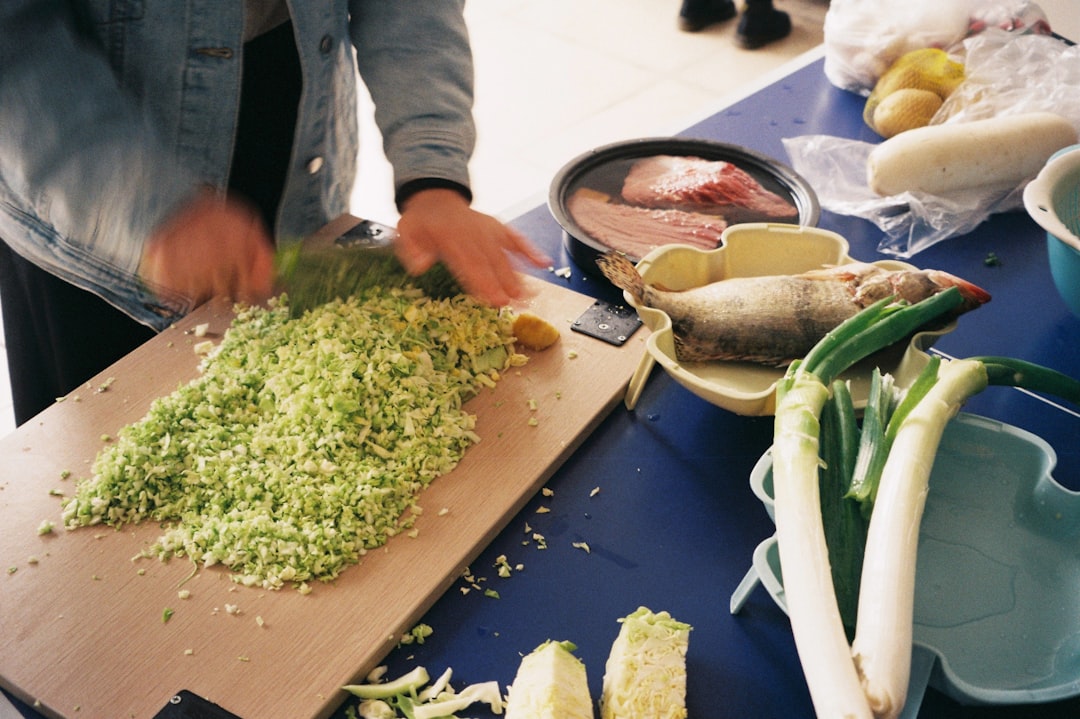
- Shred fine. Two to three millimeters, by knife or mandoline. Thin shreds release liquid faster and pack with fewer air pockets.
- Salt and work it. Toss the shreds with the salt and squeeze by the handful for five to ten minutes, until the cabbage wilts and releases its brine. Standing salted for twenty minutes first does the same job with less effort.
- Pack it tight. Push it in by handfuls, pressing hard to drive out air, and pour in every drop of brine from the bowl. Leave five centimeters of headspace.
- Cover and weigh down. Lay the reserved leaf on the surface and set the weight on it. Brine should rise a centimeter above everything; if it has not by morning, top up with two percent brine, never plain water.
- Set it somewhere steady. Lid loose or airlocked, jar on a plate, out of direct sun, at 64 to 72F. A corner of the counter is fine, a windowsill is not.
- Watch the first week. Burp a sealed lid daily and push down anything that floats.
- Start tasting on day five. Clean fork, one strand, close it again. Keep going every couple of days until the sourness is right.
- Move it cold. Tighten the lid and refrigerate. Fermentation continues at a crawl, so a batch pulled slightly under-soured keeps developing for months.
What the first three weeks taste like
Days one to three are the loud part, and the days when jars overflow. Gas-producing bacteria run hardest, the brine clouds, foam collects at the top, and the flavor is still mostly salted cabbage with a tang behind it.
Days four to ten are where the acid arrives. Bubbling slows, the brine clears, and the taste turns unmistakably sour. Plenty of people stop here, and a light kraut sits well on a sandwich where a longer one would bully everything else.
Weeks two and three round it out. The sharp edge deepens, the color dulls to pale gold, the texture loses some snap. Past that, at room temperature, the cabbage keeps softening and the acid stops getting more interesting.
Temperature decides the pace and the texture
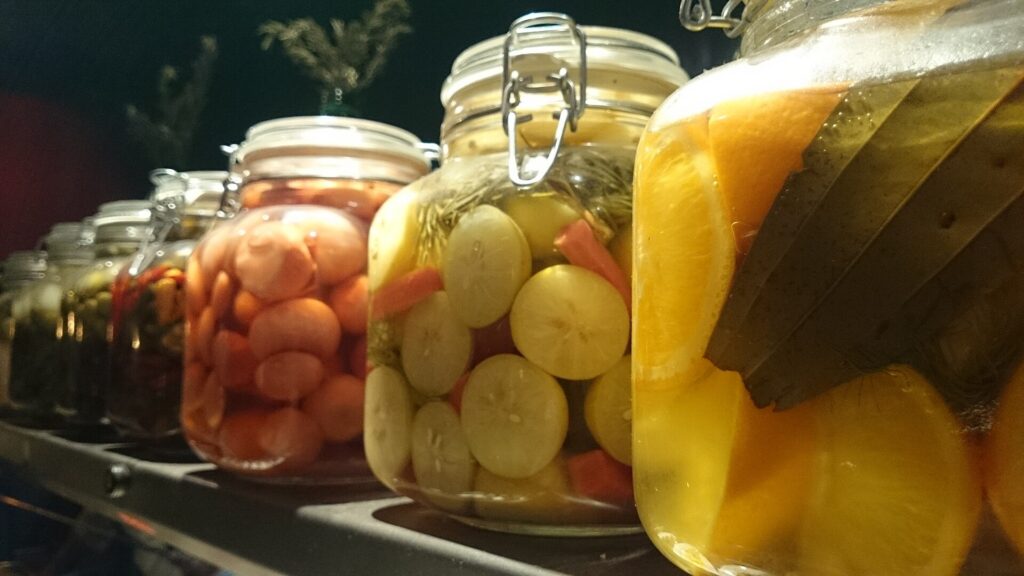
Between 64 and 72F a vegetable ferment moves at a manageable pace and develops a broad flavor. Push it into the 80s and everything accelerates: sour in three days, but the texture goes limp, the aroma narrows to plain acidity, and mush becomes likely.
Cool is the more forgiving error. In the high 50s a jar takes noticeably longer and usually comes out better, firmer and more layered. Below about 50F the process nearly halts, which is the point of moving a finished jar to the refrigerator.
In a hot kitchen, raise the salt toward two and a half percent and start tasting earlier. A batch begun in a heat wave is not doomed, it is on a shorter clock and needs checking on day three.
The things that go wrong, and which ones matter
- A flat white film. Almost always kahm yeast, which is harmless. It forms a thin, wrinkled, matte skin rather than fuzz, and turns the flavor yeasty if left. Skim it, re-submerge everything, carry on.
- Fuzzy raised growth in any color. Black, green, blue, pink or grey with visible texture is mold, and mold in a soft wet food is not a surface problem. Its filaments run deeper than the patch, so the batch goes out.
- Soft or slimy vegetables. Too little salt, too much heat, or produce already past its best. A short ropy phase early on can clear as acidity climbs; slime that persists alongside a bad smell does not.
- Nothing happening. Too cold, too salty, chlorinated water, or soap residue. Move it somewhere warmer and give it two more days before deciding.
- Pieces floating and drying out. Anything above the brine hosts whatever lands on it. Remove those pieces and re-weight the jar.
When to throw the jar out
Preserving carries a lot of folklore about rescuing batches, some of it sound. This part is not. Discard a ferment, brine included, if any of the following is true.
- Fuzzy mold of any color, on the surface or on floating pieces
- A smell that is putrid, cheesy or solvent-like rather than sour and vegetal
- No acidity at all after a week somewhere warm enough
- Vegetables gone to mush in a thick, slippery brine
- Produce left sitting above the brine for days
The reasoning is simple. A vegetable ferment is safe because it acidifies fast and stays acidic. A batch that never got there never built its defense, and smell alone will not tell you what moved in instead.
Where botulism actually comes into it
A properly salted vegetable ferment is among the best-understood preservation methods, and the acid is why. Clostridium botulinum does not grow below pH 4.6, and a healthy kraut or brined pickle drops into the low 3s within days and stays there.
The real risk sits in preparations that are anaerobic but never acidify. Garlic in oil is the classic case: no acid, no air, and a soil-grown ingredient that can carry spores. Keep it refrigerated, use it within days, or acidify it deliberately. The same applies to garlic in honey, and to any jar sealed tight at room temperature without a fermentation that clearly took hold.
Home canning is a separate discipline with separate rules. Low-acid vegetables sealed for shelf storage need a pressure canner, not a boiling water bath. Botulinum toxin has no smell and no taste, so with low-acid preparations the process has to be right in advance; sniffing the jar tells you nothing. Cheap pH strips settle any argument about whether a batch acidified.
What fermented food does for you, and what it does not
Live vegetable ferments carry substantial populations of lactic acid bacteria, and eating them regularly adds those organisms to what passes through the gut. Fermentation also changes the food: it can lower phytic acid, which binds minerals, some strains produce B vitamins as they work, and the pre-digestion of sugars is why several ferments sit easier than the raw vegetable does.
The leap from that to specific health claims deserves more caution. The organisms in a jar of homemade kraut are not identified, not counted and not the characterized strains used in clinical research, and calling a food probiotic in the technical sense means knowing which strain at what dose. A fermented food is a good food, not a treatment, and it does not replace medical care.
Ferments are also salty by design, which matters to anyone tracking sodium, and they are acidic and high in histamine, which some people react to. Anyone pregnant, immunocompromised, or living with a condition that makes raw and unpasteurized foods a concern should ask a clinician rather than working it out by trial.
Start with one head of cabbage and one number written on the lid. Once your hands know what properly salted cabbage feels like after ten minutes of squeezing, the counter tends to end up holding two or three jars at different ages.
Frequently Asked Questions
Do I need a starter culture or a splash of whey?
No. The bacteria are already on the vegetables, which is why the technique predates any understanding of what was doing the work. Whey or brine from an earlier batch speeds up the first day or two, but cabbage and salt get there alone.
There is a white film on top. Is the batch ruined?
Probably not. Kahm yeast forms a flat, wrinkled, matte white skin and is harmless, though it dulls the flavor over weeks. Skim it, wipe the jar above the brine, press everything back under. Fuzzy growth that stands up from the surface is mold, and that batch goes in the bin.
Can I use tap water and ordinary table salt?
Chlorinated tap water can slow a ferment, and letting it stand uncovered for a few hours removes most of the issue. Table salt is the bigger problem, since iodine inhibits the bacteria you want and anti-caking agents leave the brine cloudy. Pickling, sea or kosher salt all behave.
Does refrigerating a jar stop the fermentation?
It slows it to a crawl rather than stopping it. A kraut in the refrigerator keeps getting slightly more sour over the following months, which is a reason to move a batch cold while it is still milder than your target.
Are supermarket sauerkraut and kimchi still alive?
It depends where they were sitting. Shelf-stable jars in the aisle have almost always been heat-treated, which is what makes them shelf-stable and what kills the bacteria. Refrigerated products labeled raw or unpasteurized are usually alive. Vinegar pickles were never fermented at all.