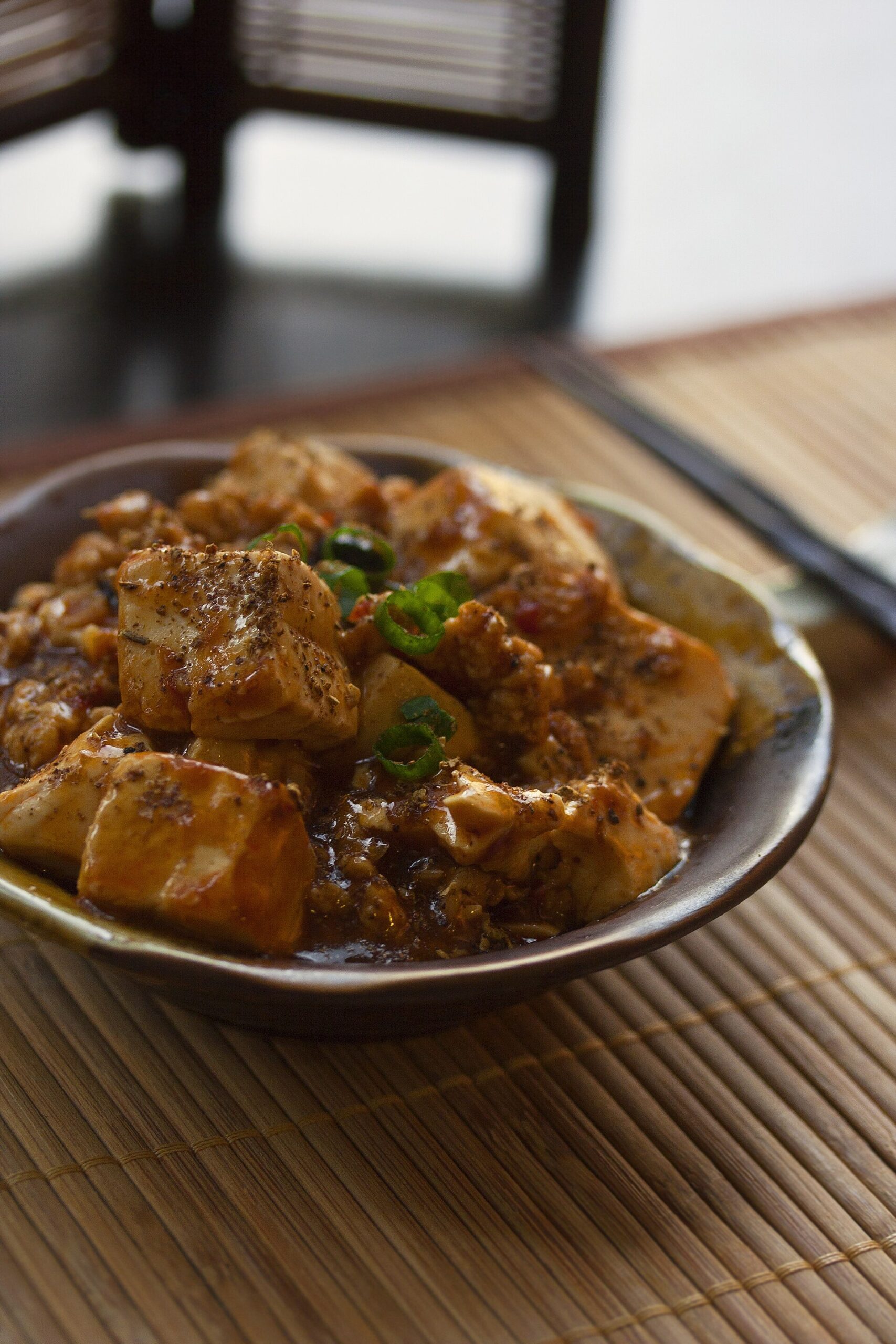
The first thing you notice is the color. Not red exactly, but something deeper — the color of brick after rain, of old terracotta, of chili oil that has been fried so long it has given up some of its harshness and become something else. The sauce clings to the tofu in thick, glossy sheets. Steam rises off the bowl carrying a smell that is not quite food and not quite fire: fermented, earthy, animal, alive.
Then you take a bite, and the second thing happens. The heat arrives first — predictable, declared. But underneath it, something stranger starts: a low tingling on the lip, the tip of the tongue, spreading. Your mouth goes lightly numb. Not painful, not unpleasant, just … dialed down. The flavor becomes louder precisely because the sensation of pain has been muted. This is ma la — the numbing-spicy sensation that defines Sichuan cooking — and mapo tofu is its most famous expression.
Fuchsia Dunlop, the British food writer who apprenticed at the Sichuan Higher Institute of Cuisine in Chengdu, describes mapo tofu in The Food of Sichuan as a dish that “showcases the unique Sichuanese flavor palette in a single bowl.” She is not exaggerating. Every element — the fermented broad bean paste, the black beans, the Sichuan peppercorns, the chili oil, the ground meat, the silken tofu — is a lesson in one of the region’s foundational techniques. Get this dish right and you understand something essential about Chinese cooking that no amount of kung pao or sweet and sour will teach you.
The Pock-Marked Grandmother
The name itself is a story. Mapo — literally “pock-marked old woman” — refers to a widow named Chen who ran a small restaurant on the banks of the Jin River in Chengdu in the late Qing dynasty, sometime around 1862. Her face was scarred from smallpox. Her cooking, legend has it, was famous enough that passing porters and laborers would bring her a block of tofu and whatever scrap of meat they had, and she would transform it into something that warmed them for the long walks ahead. The dish that carries her name — mapo doufu — is still served at her restaurant, Chen Mapo Doufu, which has operated in some form on Chengdu’s Yushui Street for over 160 years.
What makes this bit of history worth keeping in mind is that mapo tofu was a peasant dish. It was not refined or elegant. It was designed to deliver maximum flavor and satisfaction from cheap ingredients to tired people. That ethos — fire, funk, sustenance — is what the home cook is trying to preserve. When you water down the doubanjiang or skip the Sichuan peppercorns because they seem unusual, you are not making the dish more accessible. You are making a different dish entirely, one that has lost the thing that made it travel across two and a half centuries and half the world.
The Non-Negotiable Ingredients
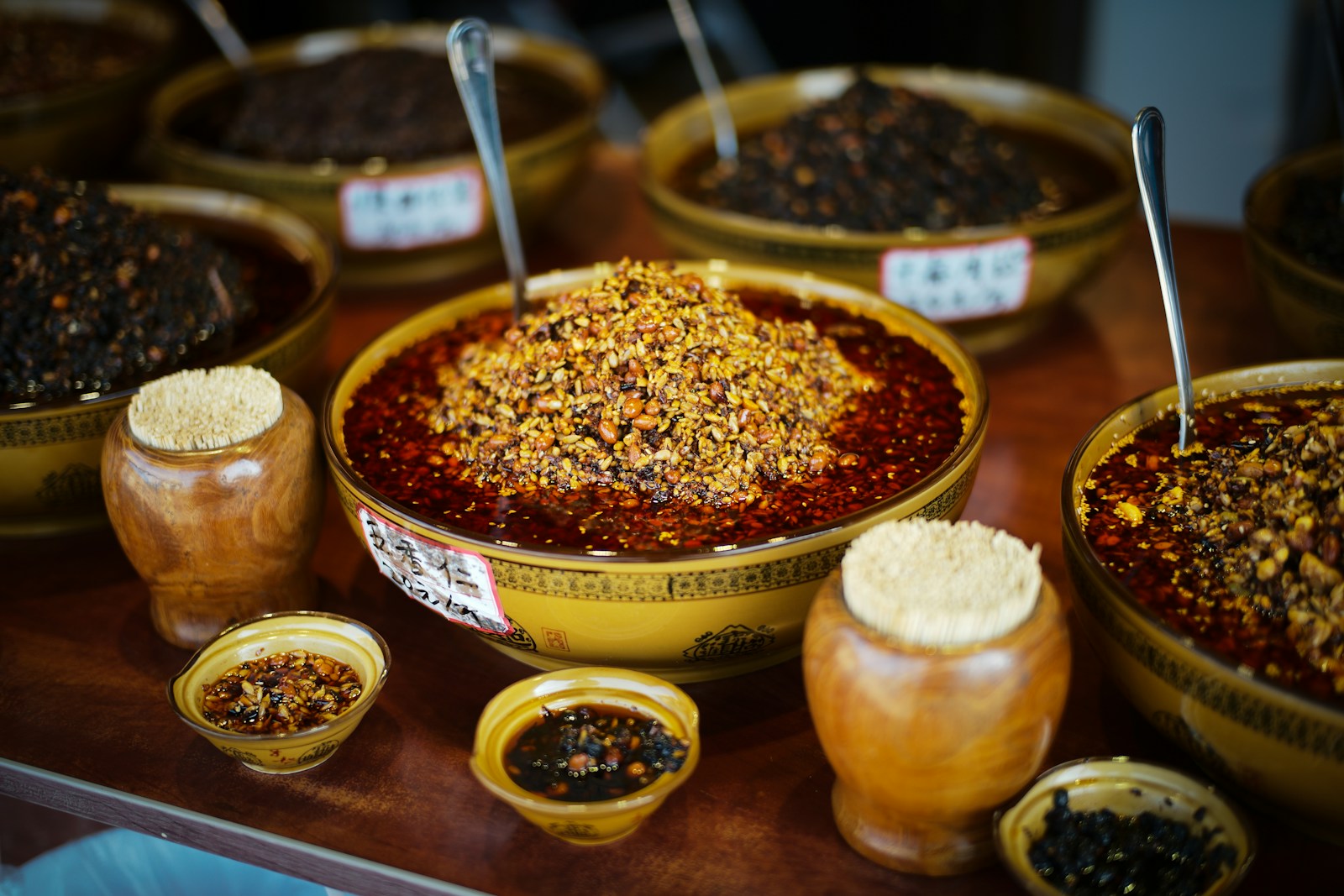
There are three ingredients in this recipe that cannot be substituted without losing the identity of the dish. The first is Pixian doubanjiang — a thick, dark-red fermented paste made from broad beans, wheat flour, and chilies, aged in open-air ceramic urns for at least one year. The best brands come from Pixian County just west of Chengdu, where the microclimate and traditional fermentation methods produce a paste that tastes of chili, miso, aged leather, and nothing else on earth. Look for Juan Cheng or Dan Dan brands in Chinese supermarkets. If the label says “chili bean sauce” without specifying Pixian origin, put it back.
The second is Sichuan peppercorns (hua jiao) — not actually a pepper but the reddish-brown husk of the prickly ash tree. They are what create the numbing sensation through a compound called hydroxy-alpha-sanshool, which activates pressure-sensing nerve endings at around 50 hertz, producing the uncanny sensation of a mild electrical buzz on your lips and tongue. Research published in Nature in 2013 described this as the closest thing in the food world to a chemical experience of vibration. The best peppercorns are er jing tiao from Sichuan’s Han Yuan county, bright red and fresh-smelling. Stale peppercorns, which lose potency fast, are the reason most home attempts fail to deliver the signature ma.
The third is silken tofu — sometimes labeled as soft tofu in American stores, or nen dou fu (田妥) in Chinese markets. Its custardy, almost liquid texture is what creates the contrast that the entire dish is built around: pillows of mild, cool protein held together inside a sauce so intense it seems to buzz. Firm tofu absorbs less sauce, holds its shape too aggressively, and turns mapo tofu into a generic stir-fry. If you cannot find silken, soft is a distant second.
The Ma La Spice Comparison
Understanding the role of each spice helps with troubleshooting — and with buying substitutes when an ingredient is truly unavailable.
| Ingredient | Primary Flavor | Role | Acceptable Substitute |
|---|---|---|---|
| Pixian doubanjiang | Fermented, salty, mildly spicy | Umami foundation | None (non-Pixian chili bean paste is a last resort) |
| Sichuan peppercorns | Citrusy, pine-like, numbing | The ma in ma la | None |
| Douchi (black beans) | Deep, earthy, salty-sweet | Background funk | Miso paste (1 tsp) |
| Sichuan chili flakes | Fruity heat | Top-note spice | Korean gochugaru |
| Ginger & garlic | Pungent, fresh | Aromatic lift | Fresh only — never powdered |
Ingredients
- 14 oz (400 g) silken tofu, drained
- 6 oz (170 g) ground pork or beef (80/20 fat ratio)
- 2 tablespoons Pixian doubanjiang
- 1 tablespoon douchi (fermented black beans), rinsed and roughly chopped
- 1 tablespoon Sichuan chili flakes (er jing tiao preferred)
- 2 teaspoons whole Sichuan peppercorns (hua jiao)
- 3 garlic cloves, finely minced
- 1 tablespoon fresh ginger, finely minced
- 3 scallions, whites and greens separated
- 1 cup (240 ml) unsalted chicken stock or water
- 2 teaspoons light soy sauce
- 1 teaspoon dark soy sauce
- 1 teaspoon sugar
- 1½ tablespoons cornstarch + 3 tablespoons cold water (slurry)
- 3 tablespoons neutral oil (peanut or rapeseed)
- 1 teaspoon toasted sesame oil
Making It
- Warm the tofu. Bring a pot of water to just below simmering, around 170°F — you want tiny bubbles rising, not a rolling boil. Stir in half a teaspoon of salt. Cut the silken tofu into 3⁄4-inch cubes and gently slide them in with a wide slotted spoon. Let them sit for five minutes. This step is not intuitive, but it changes the dish: the tofu tightens its protein matrix without firming, making it much more resilient in the sauce and also seasoning it lightly from within. Drain carefully. Set aside.
- Toast and grind the peppercorns. Place the Sichuan peppercorns in a dry skillet over medium heat. Shake the pan gently. Within sixty to ninety seconds, the kitchen will fill with a smell that is hard to describe — citrusy, piney, slightly medicinal, unmistakably Sichuanese. When the peppercorns start to smoke lightly, transfer them to a mortar or spice grinder and pulverize to a coarse powder. Set aside. A pinch goes into the dish; the rest goes on top at the table.
- Render the meat. Heat three tablespoons of neutral oil in a wok or deep skillet over medium-high heat. When the oil is shimmering, add the ground meat. Break it up with a wooden spatula, pressing flat against the pan, and let it brown undisturbed for ninety seconds. Then stir and keep breaking it up for another two or three minutes until the meat is deeply colored — not gray, not pink, but a rich mahogany — and most of the fat has rendered into the oil.
- The chao zhi. Reduce the heat to medium. Push the meat to one side of the wok. Add the doubanjiang and chili flakes directly to the oil on the other side. Stir them in the oil for sixty to ninety seconds. This step has a name in Sichuan cooking — chao zhi, or frying the oil — and it is the single most important technique in the dish. The oil turns a deep, almost glowing red-orange. The harsh edges of the fermented paste mellow. The chili releases its essential oils. Without this step, you have brown meat in watery sauce. With it, you have the foundation of mapo tofu.
- Add the aromatics. Toss in the garlic, ginger, and douchi. Stir for thirty seconds — long enough to perfume the oil but not long enough to burn the garlic. Add the scallion whites and toss another twenty seconds.
- Build the sauce. Pour in the stock, light soy, dark soy, and sugar. Bring to a simmer. Now, gently — more gently than you think you need to — slide the tofu cubes into the sauce using a wide slotted spoon. Shake the wok in small circles to distribute. Do not stir with a spoon. The tofu will break. Shake and swirl. Always.
- Simmer and thicken. Let the tofu simmer in the sauce for four to five minutes so it absorbs the flavor. Stir the cornstarch slurry to re-suspend, then drizzle half into the sauce while swirling the wok. Give it thirty seconds. Assess. If the sauce still runs off the back of a spoon, add the rest of the slurry. You want a sauce that coats and clings but still flows — not a glossy starch-bound gravy.
- Finish and serve. Turn off the heat. Drizzle in the sesame oil. Scatter the scallion greens and a generous pinch of the ground Sichuan peppercorns over the top. Serve immediately into wide bowls over mounds of steamed short-grain or jasmine rice. Set the remaining ground peppercorns on the table so everyone can add more. They will want more.
The Rice Matters
Mapo tofu is a sauce-delivery system, and the rice is the delivery vehicle. Use short-grain or medium-grain white rice — Japanese koshihikari or Chinese jasmine — cooked to the point where the grains are tender but still have a slight chew. The rice is not a side; it is the counterweight. Each bite should be a spoonful of sauce-soaked tofu pulled over a mound of hot rice, the rice absorbing the sauce and softening the heat. A bowl of mapo tofu without enough rice is punishment. With the right ratio, it is balance.
If you want to build a complete meal, pair it with something cool and bright. A simple smashed cucumber salad dressed with rice vinegar, sesame oil, and garlic is the traditional Sichuan answer. Stir-fried leafy greens — bok choy, pea shoots, or water spinach — work too. For a heartier spread that showcases more of Chinese home cooking, consider our complete guide to dim sum or, for a contrasting noodle dish, crispy sesame tofu with stir-fried vegetables — a milder introduction to tofu cookery that happens to make a good counterpoint on a shared table.
Common Mistakes
Mapo tofu is not a difficult dish, but it is unforgiving of the wrong instinct. The most common mistakes:
- Skipping the pre-warm. Raw silken tofu dropped into hot sauce will disintegrate. The 170°F salted-water step is not optional.
- Rushing the chao zhi. If the doubanjiang is stirred into the oil for only ten seconds, it still tastes raw. Give it sixty to ninety seconds until the oil is deeply red and the harsh edge is gone.
- Using ground Sichuan peppercorn from a jar. Ground peppercorns from the spice aisle lose their numbing potency in weeks. Buy whole, toast, and grind yourself. The difference is not subtle.
- Stirring the tofu with a spoon. Tofu breaks. Shake and swirl the wok — never press or stir through.
- Over-thickening the sauce. A properly cornstarch-finished sauce in Chinese cooking is glossy and clinging, not gummy. Add slurry in halves, not all at once, and stop when it coats.
Vegetarian Version
The dish translates beautifully to a meatless version — in fact, temple kitchens in Chengdu have served vegetarian mapo tofu for centuries. Replace the ground meat with six ounces of finely chopped fresh shiitake mushrooms. Sear them hard in the oil for four to five minutes until deeply browned and slightly crisp at the edges, then continue the recipe exactly as written. The mushrooms provide the umami and textural chew that the meat normally delivers, and the doubanjiang’s fermented depth more than carries the dish. Use vegetable stock instead of chicken stock, and verify your doubanjiang label for any added pork fat — some cheaper brands include it.
Storage and Reheating
Mapo tofu keeps in the refrigerator for up to three days in an airtight container. The flavor actually deepens overnight as the doubanjiang and peppercorn compounds integrate. To reheat, warm gently in a skillet with two tablespoons of water or stock over medium-low heat, shaking the pan to recombine the sauce. Do not microwave — the texture of silken tofu collapses under microwave heat, turning the dish spongy and strange. Freeze is not recommended: silken tofu loses its custard structure entirely after thawing. For something else in the Chinese home-cooking tradition that holds up well for meal prep, see our Korean bibimbap rice bowl guide.
Frequently Asked Questions
What makes authentic mapo tofu different from the Western version?
Two ingredients define authentic mapo tofu: Pixian doubanjiang and freshly ground Sichuan peppercorns. Pixian doubanjiang is a fermented broad bean and chili paste aged for at least a year in Pixian County near Chengdu; its flavor is unique and cannot be swapped for Korean gochujang or generic chili bean sauce. Sichuan peppercorns provide the ma — the numbing sensation — that is half the signature. Western versions often omit both, substituting hot sauce and black pepper, which produces a dish that is spicy but flat. The complexity comes from fermentation and the electrical buzz of sanshool, not from heat.
Can I use firm tofu instead of silken?
You can, but the result is a fundamentally different dish. Silken tofu’s custard-like texture provides the contrast with the intense sauce that defines mapo tofu. Firm tofu holds its shape too aggressively, absorbs less sauce, and turns the dish into a generic stir-fry. If you must use firm, cut it into half-inch cubes and simmer an extra three minutes to let it absorb flavor. But soft or silken is the right answer, and most supermarkets now carry both.
Is mapo tofu supposed to be this spicy?
The Chengdu original is genuinely spicy and numbing. But you can adjust the heat without losing authenticity by reducing the chili flakes while keeping the doubanjiang and Sichuan peppercorns at full strength. The ma la character — numbing-spicy — is the signature. Raw heat intensity can be tuned. A milder version with less er jing tiao is still recognizably mapo tofu. A version without doubanjiang or Sichuan peppercorns is not mapo tofu at all, regardless of what it is called.
Why did my tofu break apart in the sauce?
Three likely reasons: you stirred with a spoon instead of swirling the wok, you skipped the 170°F salted-water pre-warm step, or you used extra-soft tofu when silken was called for. The pre-warm tightens the protein network slightly without firming the tofu. Movement should come from the wok — tilt, swirl, shake — never a spoon pressing through the cubes. And make sure your tofu is labeled silken (or nen dou fu in Chinese markets), which is structurally more stable than extra-soft.
Sources
- Serious Eats — Real-Deal Sichuan Mapo Tofu — Technique deep-dive by J. Kenji López-Alt, including chao zhi methodology.
- Bon Appétit — Mapo Tofu Ingredient Guide — Identification and sourcing for Pixian doubanjiang and Sichuan peppercorns.
- USDA FoodData Central — Silken Tofu — Nutritional data for per-serving calculations.
Each serving contains roughly 318 calories, 22 g protein, 19 g fat, 14 g carbohydrates, and 2 g fiber — based on 4 servings using silken tofu, ground pork, and Pixian doubanjiang. Sodium is naturally high due to the fermented paste and soy sauces.
Please note: Nutritional estimates are derived from the USDA FoodData Central database and may vary depending on specific brands of doubanjiang, soy sauce, and meat fat content. This recipe contains soy and wheat (from doubanjiang and soy sauce). Nothing in this article should be interpreted as medical or dietary guidance. If you have food allergies, sodium-sensitive conditions, or specific dietary needs, consult a registered dietitian or healthcare provider before preparing this recipe.