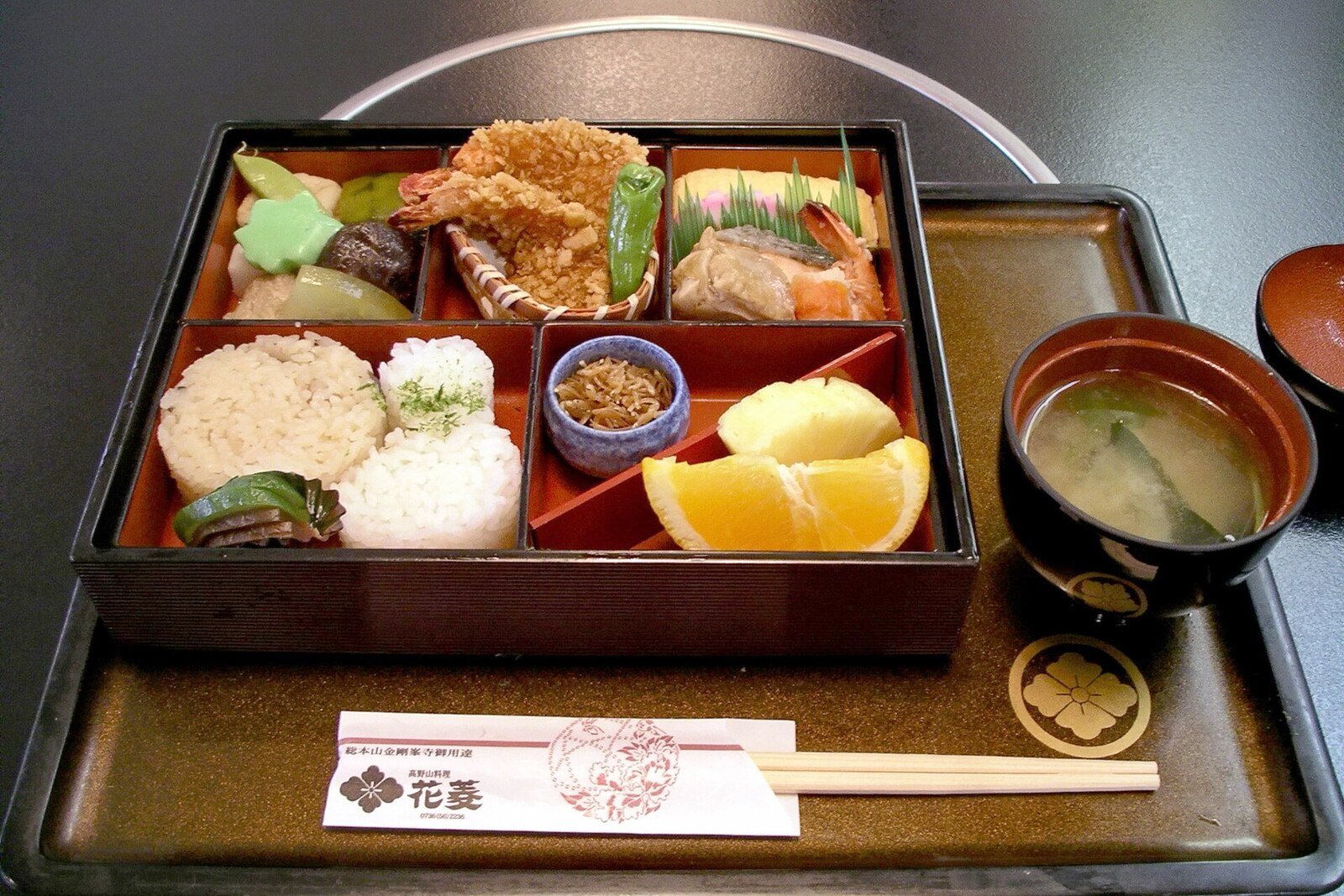
Japanese schools rarely have cafeterias. Generations of Japanese mothers (and now fathers) have packed bento boxes for school lunches – 5-component compartmentalized lunch boxes with rice, protein, two vegetables, and a pickle. The system is a marvel of make-ahead efficiency: cook on Sunday, pack for Monday through Friday. By the time American back-to-school season hits in late August, every Japanese family has been doing this for centuries.
This is the canonical 5-component bento system, designed for American school lunches. Short-grain Japanese rice (the sticky kind that travels well), salted salmon or tamago (rolled omelet), steamed vegetables with sesame, pickled ginger. The whole prep takes 75 minutes Sunday afternoon and produces 5 complete lunches. The dish that solved the school-lunch problem 200 years before American Lunchables.
Quick Read — At a Glance
| Yield | 5 bento boxes (Monday-Friday) |
| Total time | 75 min Sunday prep + 5 min daily assembly |
| Difficulty | Intermediate |
| Texture | Sticky rice, flaky fish, crisp vegetables, sharp pickle |
| Critical | Use Japanese short-grain rice – long-grain becomes a loose mess in transit |
The 5-Component Architecture
Traditional Japanese bento follows a 60-20-15-5 ratio: 60% rice (largest portion), 20% protein, 15% vegetables, 5% pickle. The compartmentalized box separates components so flavors don’t cross. Visual balance is part of the design – alternate colors and textures.
Modern variations are flexible but the 5-component framework keeps lunches balanced. Common proteins: salted salmon, teriyaki chicken, tamago (rolled omelet), pork katsu. Vegetables: broccoli, carrots, edamame, spinach gomae (sesame). Pickles: gari (ginger), umeboshi (plum), takuan (radish).
Tamago: Japanese Rolled Omelet
Tamago (or tamagoyaki) is the canonical bento protein – rolled rectangular omelet with sweet-savory seasoning. Made in a rectangular tamago pan (rectangular nonstick pan, $30 at Asian markets). Egg cooked in thin layers, rolled as each layer sets.
Seasonings: mirin (sweet rice wine), sugar, salt, sometimes dashi. Slice the rolled omelet into 1 cm pieces for bento. Looks visually striking in the lunch box. Substitute: regular omelet cut into wedges.
Ingredients
- Rice (60% of box):
- 500 g (2 1/2 cups) Japanese short-grain rice
- Salt and furikake for topping
- Protein options:
- 5 salmon fillets (salted, pan-fried)
- OR 6 eggs + 2 tbsp mirin + 1 tbsp sugar (tamago)
- Vegetables:
- 250 g broccoli florets
- 250 g carrot batons
- 2 tbsp sesame oil
- 2 tbsp soy sauce
- 1 tbsp toasted sesame seeds
- Pickles:
- Pickled ginger (gari) or umeboshi plums
Making It
- Rice. Rinse 3x. Cook per rice cooker. (Sunday)
- Salmon. Salt + pan-fry 6-8 min. Divide 5 portions. (Sunday)
- OR Tamago. Whisk eggs+mirin+sugar+salt. Roll thin layers in tamago pan. Slice 1 cm. (Sunday)
- Vegetables. Steam broccoli 4 min, carrots 5 min. Sesame oil + soy + sesame seeds. (Sunday)
- Refrigerate components. Separate containers, 4-5 days max.
- Assembly daily. 60% rice, 20% protein, 15% vegetables, 5% pickle.
- Eat at room temp. Take out of fridge before school.
Frequently Asked Questions
Bento culture?
Centuries-old Japanese tradition. Schools rarely have cafeterias = bento. 5-component box: rice (60%), protein (20%), vegetables (15%), pickle (5%). Visual balance matters.
Why short-grain rice?
Sticky from amylopectin = travels well, clumps don’t fall apart. Brands: Tamaki Gold, Nishiki, Kokuho Rose. Long-grain becomes loose mess.
What is tamago?
Japanese rolled omelet. Rectangular tamago pan. Egg + mirin + sugar + salt. Sliced 1 cm. Sweet-savory.
How long keep?
Assembled bentos 2 days safe. Components separate 4-5 days. Strategy: cook all Sunday, assemble each lunch the night before.
Sources
- Just One Cookbook — Bento Box — Namiko Chen Japanese authority.
- Serious Eats — Bento Recipes — American adaptations.
- USDA FoodData Central — Nutritional data.
Each bento (1 day) contains roughly 485 calories, 22 g protein, 15 g fat, 58 g carbs.
Please note: Contains fish (salmon), soy, sesame, eggs (tamago option). Adjust for child allergies. Consult a dietitian.

Tom Nakamura
Tom learned to cook from his obaachan during summers in Japan - pickling daikon at the kitchen table, watching her stir miso into broth without ever measuring. Later, family trips with cousins took him through markets in Bangkok, Shanghai, and Hanoi, and the food stuck with him. His writing focuses on making authentic Asian techniques accessible to home cooks without diluting the technique or the culture that defines them. He handles Chinese, Japanese, Korean, Thai, Vietnamese, Indian, and Middle Eastern recipes at the publication.