Most rundowns of bite-sized party appetizers assume a two-hour gathering where everyone shows up close together. Guests trickle in for a Saturday party between six and nine, which means the spread put out at six thirty is still sitting there, at room temperature, when the last group walks in at nine. Most party food was never built for that stretch. A bowl of guacamole browns and weeps by hour two. A cream cheese dip splits into an oily layer over the same window. Cocktail meatballs in a slow cooker are fine; the same meatballs cooling on a platter are not.
The problem is not that people arrive over three hours. The problem is picking food that assumes everyone shows up at once and eats within thirty minutes. A different set of choices, built around what actually survives sitting out, solves the timing question without anyone standing guard over the table refreshing dishes.
What follows is the two-hour rule that actually governs how long any of this is safe, which dips fail and why, eight items chosen specifically to hold, and a serving order that spreads the work instead of front-loading it.
- The hard limit: perishable food out of refrigeration for more than two hours should be discarded, one hour if the room is above about 90F
- What breaks fastest: dairy-based dips, anything with mayonnaise, and fresh avocado
- What holds well: pickled and cured items, hard cheese, dense baked goods, and anything served on ice
- The fix for hot food: a chafing dish or slow cooker on low, not a platter and a hope
- The fix for cold food: a bowl nested in a larger bowl of ice, refreshed as it melts
- The move that actually works: put out half the spread, hold the rest cold, and swap trays at the ninety-minute mark
The two-hour rule is not a suggestion
Perishable food sitting between roughly 40 and 140F is in what food safety guidance calls the danger zone, the temperature range where bacteria that cause foodborne illness multiply fastest. Two hours in that range is the generally accepted limit for food meant to be eaten, and that clock starts the moment a dish leaves the refrigerator or comes off the heat, not when the last guest finally takes a bite.
A hot room shortens that window considerably. Above about 90F, which is not unusual for a crowded kitchen or an outdoor gathering in warm weather, the safe window drops to one hour. A party running from six to nine with food set out once at six thirty and never refreshed is, for a meaningful share of what is on the table, already past the point where it should still be served by the time the later arrivals show up.
None of this means the food has to disappear from the table after two hours. It means the table needs either active heat, active cold, or a rotation plan, which is the entire premise behind choosing dishes for how they hold rather than only for how they taste fresh out of the oven.
Which dips break when they cool
Dips built on fresh dairy, sour cream, cream cheese, and soft cheese blends, separate visibly as they sit at room temperature: the fat rises, the liquid weeps out, and the texture that was smooth at serving time turns oily and loose within an hour or two. Refrigerating and re-stirring restores most dips like this, which argues for serving them in smaller batches replaced from a cold reserve rather than one large bowl left out for the duration.
Guacamole has its own failure mode. Avocado oxidizes on contact with air and browns within thirty minutes regardless of temperature, and the acid tricks that slow it, lime juice pressed directly against the surface, only buy a little time. A large bowl set out at the start of a three-hour party will look unappetizing well before the food safety clock is even the main concern.
Mayonnaise-based dips and spreads, including a classic buffalo chicken dip built on a cream cheese and sour cream base, sit squarely in the danger-zone category and should be treated like any other perishable dairy item: out for two hours, then refreshed or removed, not simply topped up on top of what has already been sitting.
Eight halloween party appetizers built to hold three hours
| Item | Why it holds | Serve on |
|---|---|---|
| Baked brie with fig and nuts | low moisture, stays spreadable as it cools | a board, room temp |
| Marinated olives and cured meat | salt-cured, already shelf-stable | a board, room temp |
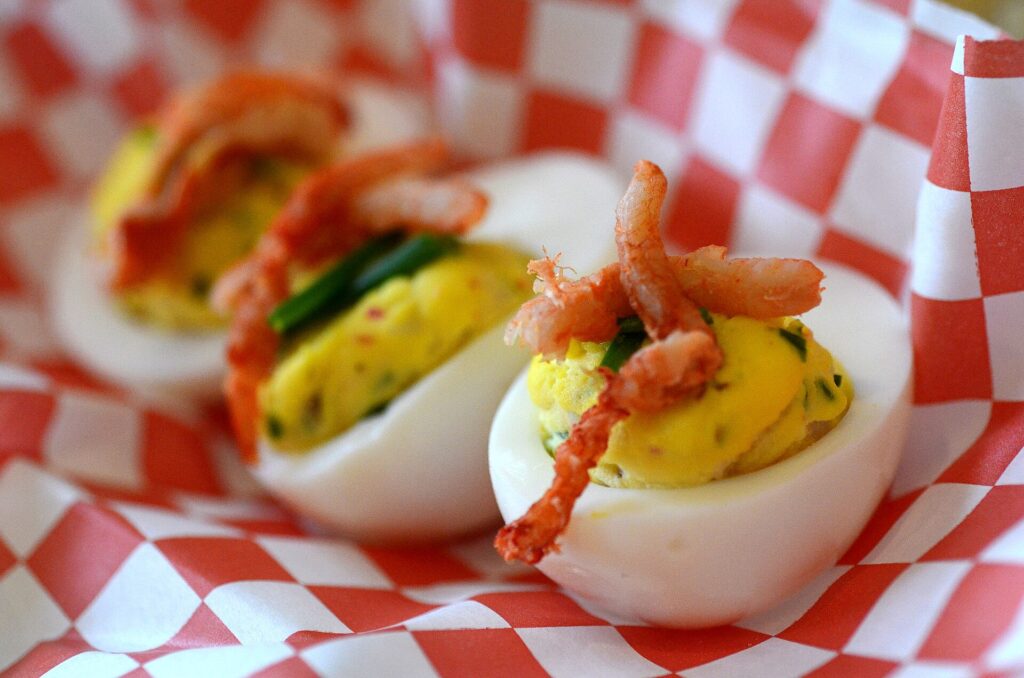
| Deviled eggs, chilled on ice | egg holds shape; ice keeps it out of the danger zone | a tray nested in ice |
| Meatballs in a slow cooker | active heat source, not a cooling platter | the slow cooker itself, on low |
| Spiced roasted nuts | essentially no moisture, stable for hours | a bowl, room temp |
| Pickled vegetables | brine’s acidity resists spoilage | a jar or shallow dish |
| Hummus with vegetables served separately | plant-based, lower risk than dairy dips | a bowl, refreshed hourly |
| Caramel or chocolate dipped apple slices, dipped fresh | sugar coating slows browning briefly | a tray, first hour only |
The pattern across the list is either low moisture, high acid or salt, or an active heat source. Nothing on it depends on starting cold and staying that way through sheer luck, which is the assumption that fails most party spreads by the second hour.
Cold trays that actually improve with time
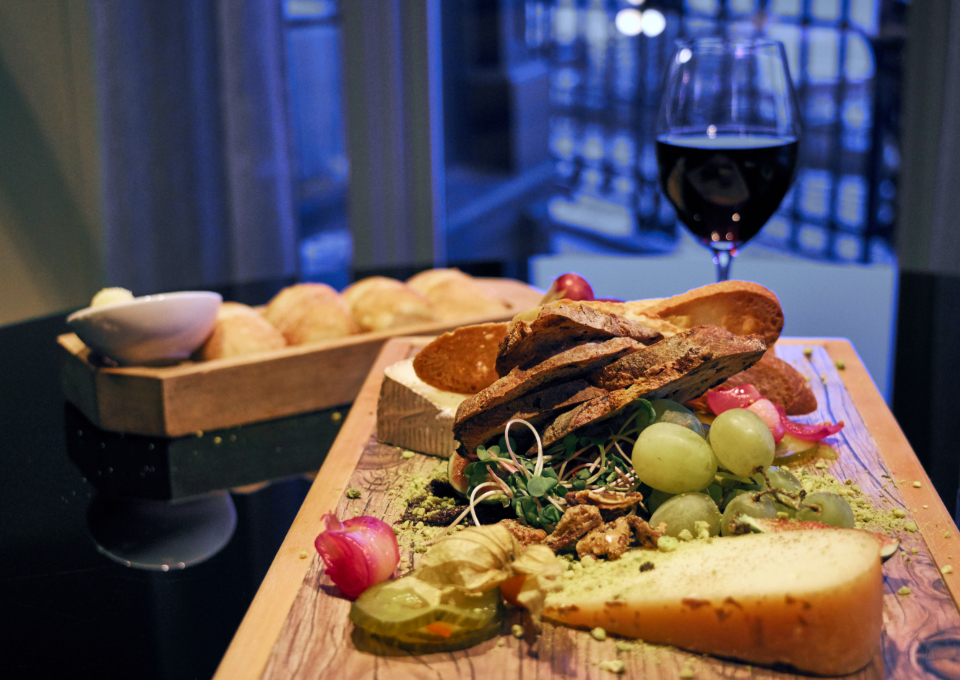
A cured meat and cheese board is close to the ideal party item precisely because it was designed, historically, to be stable without refrigeration. Salt-cured meats, hard and semi-hard cheeses, dried fruit, and nuts all sit safely at room temperature for hours and in some cases taste better slightly warmed from their fridge-cold starting point.
Pickled vegetables, olives, and anything preserved in vinegar or a strong brine carry their own acidity as protection, the same chemistry that makes a jar of pickles shelf-stable in the first place. A dish of these needs no ice bath and no rotation, just a spoon and a refill from the jar when it runs low.
Roasted nuts and dense baked crackers or flatbread round out a cold board that can genuinely sit for the full three hours without anyone needing to think about it again after setting it out.
Hot food needs a heat source, not a head start
A tray of hot appetizers pulled from the oven at six thirty and left on the counter is inside the danger zone by seven thirty, regardless of how good it smelled coming out. The fix is not to serve it earlier or hotter; it is to give it a way to stay hot for the whole window.
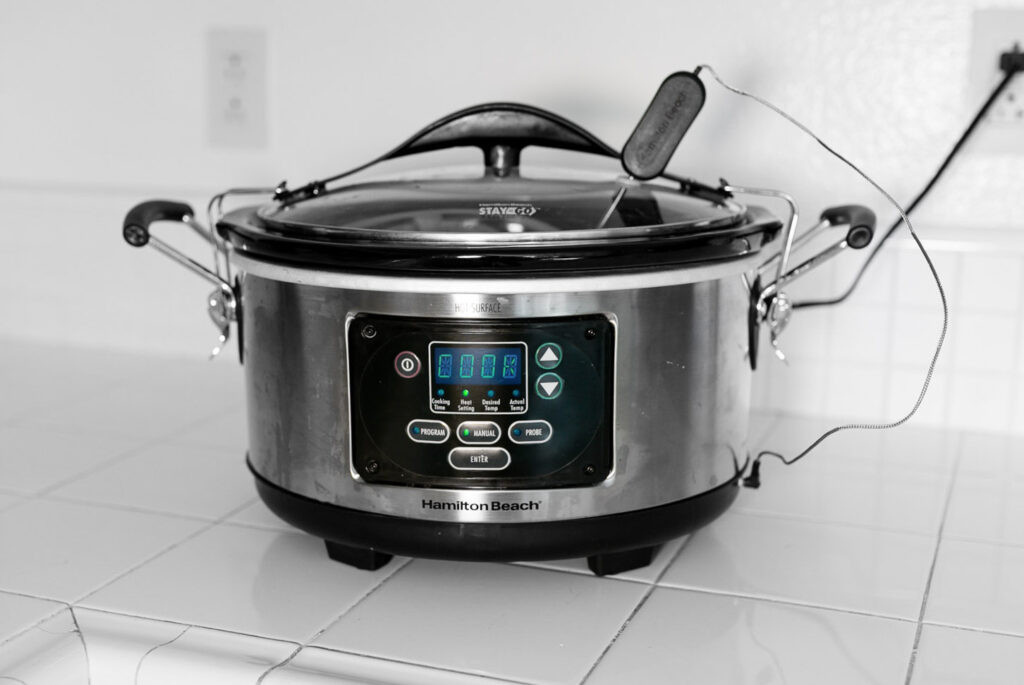
A slow cooker on the warm or low setting, a chafing dish with a sterno underneath, or a warming tray plugged in near the serving table all keep food above 140F for hours rather than the twenty or thirty minutes an unheated platter manages. Meatballs, small sausages, and anything already sauced work particularly well in this format, since the sauce also protects the food from drying out under sustained heat.
Items that specifically need to be crisp, like fried appetizers or anything breaded, do not hold well under a heat lamp or in a slow cooker, since the moist heat that keeps other food safe also turns a crisp coating soggy. These belong on the schedule as small, freshly cooked batches served in waves rather than sitting out at all.
The ice bath trick for anything creamy
Nesting a serving bowl inside a larger bowl packed with ice keeps a cold dip meaningfully colder for longer than a bowl sitting directly on a table, and it is the single easiest upgrade for anything dairy-based that has to be out for the full evening. Deviled eggs, shrimp cocktail, and any yogurt- or sour-cream-based dip all benefit.
The ice needs replenishing as it melts, roughly every forty-five minutes to an hour depending on room temperature, and a shallow drain hole or a towel underneath handles the meltwater without it puddling across the table. This is a small amount of maintenance in exchange for extending a genuinely risky category of food through a whole party safely.
A cold dip without an ice bath is not automatically unsafe the moment it is set out; it is simply on the same two-hour clock as anything else, and the ice bath is what buys the extra hour a long party actually needs.
Skewers, bites, and other single-serve formats hold better than bowls
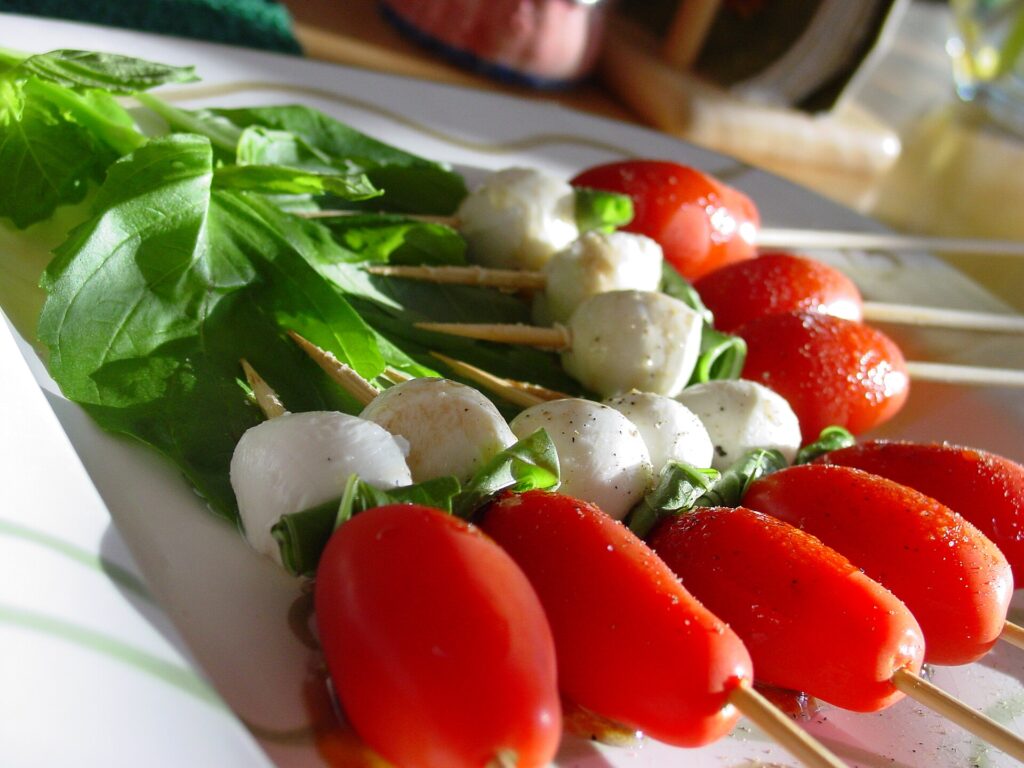
A shared bowl of dip gets dipped into repeatedly by different hands over the course of an evening, which introduces contamination that a communal serving dish cannot really defend against no matter how cold or hot it stays. Individual portions sidestep the problem entirely.
Skewers, small cups, and single bites arranged on a tray let each guest take one without touching the rest, which matters for both hygiene and for how quickly food actually gets used up versus sitting untouched and aging on a shared platter. They also make it far easier to bring out a fresh, smaller tray every hour instead of committing an entire dish to the table at once.
This format costs some prep time up front, since assembling forty small skewers takes longer than filling one bowl, but it removes most of the food safety guesswork from the middle of the party, when the host is busy with guests rather than watching a thermometer.
What to serve last, at hour three
The final wave of a long party is the wrong moment to bring out anything delicate or dairy-heavy, since it will only be out for the tail end of the evening rather than the whole stretch, and starting something fragile late is when it is most likely to be forgotten and left out well past a safe window as the party winds down.
Save the most shelf-stable items for last: nuts, chips, pretzels, and the same sturdy category of game night snacks that already work for a different kind of long, grazing evening. A fresh batch of something hot, brought straight from the kitchen in a small tray meant to be finished quickly, also works well at this point since it has the shortest possible time to sit before the party ends.
Anything creamy or egg-based that has been sitting on ice since the beginning should be checked at this point rather than assumed fine; three hours is close to the outer edge even with active cooling, and a final look decides whether it gets one more round or gets wrapped up.
Reheating and rotating: keeping a second batch in reserve
The single most effective habit for a long party is never putting the entire quantity of any dish on the table at once. Half a batch of meatballs in the slow cooker and half held cold in the refrigerator, swapped in around the ninety-minute mark, resets the clock on food safety and also means the second half arrives looking freshly made rather than tired.
This works for baked items too. A tray of stuffed mushrooms or mini quiches can be split, with the first half served warm at the start and the second half held cold and reheated in the oven partway through the evening rather than kept warm the entire time on a counter.
The extra dish this requires, usually just a second serving tray and a few minutes back in the kitchen, is a small cost against either throwing food away at the two-hour mark or serving something that has been sitting far longer than it should have.
A staggered serving schedule for guests arriving over a long evening
- 6:00 to 6:30 PM. Put out the cold board: cheese, cured meat, olives, pickled vegetables, nuts. This can sit for the whole party without attention.
- 6:30 PM. Start the slow cooker of meatballs or sausages on low, and keep it running through the evening.
- 7:00 PM. Bring out the first tray of cold, individually portioned items, deviled eggs or shrimp, nested in ice.
- 7:30 PM. Serve a first small batch of anything fried or crisp, made to order in small numbers.
- 8:00 PM. Refresh the ice under the cold items and swap in the reserved second half of any dairy-based dish.
- 8:30 PM. Bring out a second small batch of fried or crisp items for the later arrivals.
- 9:00 PM. Check anything on ice one last time, and close out the evening with the shelf-stable board items that have held from the start.
None of this requires more total food than a single spread laid out at once. It requires splitting what is already planned into two waves and giving hot and cold items an actual way to stay in the temperature range that keeps them both safe and appealing for the whole three hours.
Frequently Asked Questions
Can I just put ice packs under the whole table instead of individual bowls?
A cooled surface under everything helps somewhat but is much less effective than direct ice contact for each dish, since the food itself needs to stay cold, not just the platter beneath it. Individual ice baths for anything perishable are worth the extra bowls.
How do I know if a dip has been out too long?
Track time rather than appearance, since many risky foods look perfectly fine well past the safe window. If more than two hours have passed since it left the refrigerator, or one hour in a hot room, it should be discarded rather than judged by smell or texture.
Is it safe to just leave the slow cooker going for the entire party?
Yes, as long as it is genuinely holding food above 140F rather than sitting on a low setting that lets it drift into the danger zone. Check the temperature with a thermometer once during the party to confirm the setting is doing its job.
What about food guests bring themselves?
Treat it the same way as anything made in your own kitchen: ask roughly when it was prepared, and if it has already been sitting out or in transit for a while before arriving, its safe window is correspondingly shorter once it joins the table.
Can leftovers from the party be saved afterward?
Only if they stayed within the safe time and temperature window throughout the party. Anything that was out for close to or beyond two hours should be discarded rather than packed up, even if it looks and smells completely normal.