The hard yellow end of a wedge of Parmigiano is not packaging. It is the same cheese as the part you grated, made in the same vat on the same day, dried and hardened over months of aging while the paste behind it stayed soft. Throwing it away is throwing away the most concentrated piece of the wedge.
Long aging breaks the milk proteins down into free amino acids, and one of them, glutamate, is the compound behind savory depth in almost everything that tastes of more than its ingredients. A rind is that process taken further, with most of the water gone. Which is why a two-inch scrap dropped into a pot of beans changes the pot, and why nine different uses are worth writing down.
Below: what a rind is and is not, nine ways to spend one with the simmer time each needs, how long a bag survives in the freezer, which other cheeses have rinds worth keeping, and the point at which one belongs in the bin.
- Minimum useful simmer: 30 minutes. Below that the rind has barely started giving anything up.
- It never fully dissolves. Expect to fish out a softened, gummy piece at the end.
- It is salty. Season the pot after the rind comes out, never before it goes in.
- Freezer life: three months easily, six at the outside before it starts tasting of the freezer.
- Only natural rinds qualify. Wax, cloth and bark are not rinds and do not go in the pot.
A rind is the same cheese with the water gone
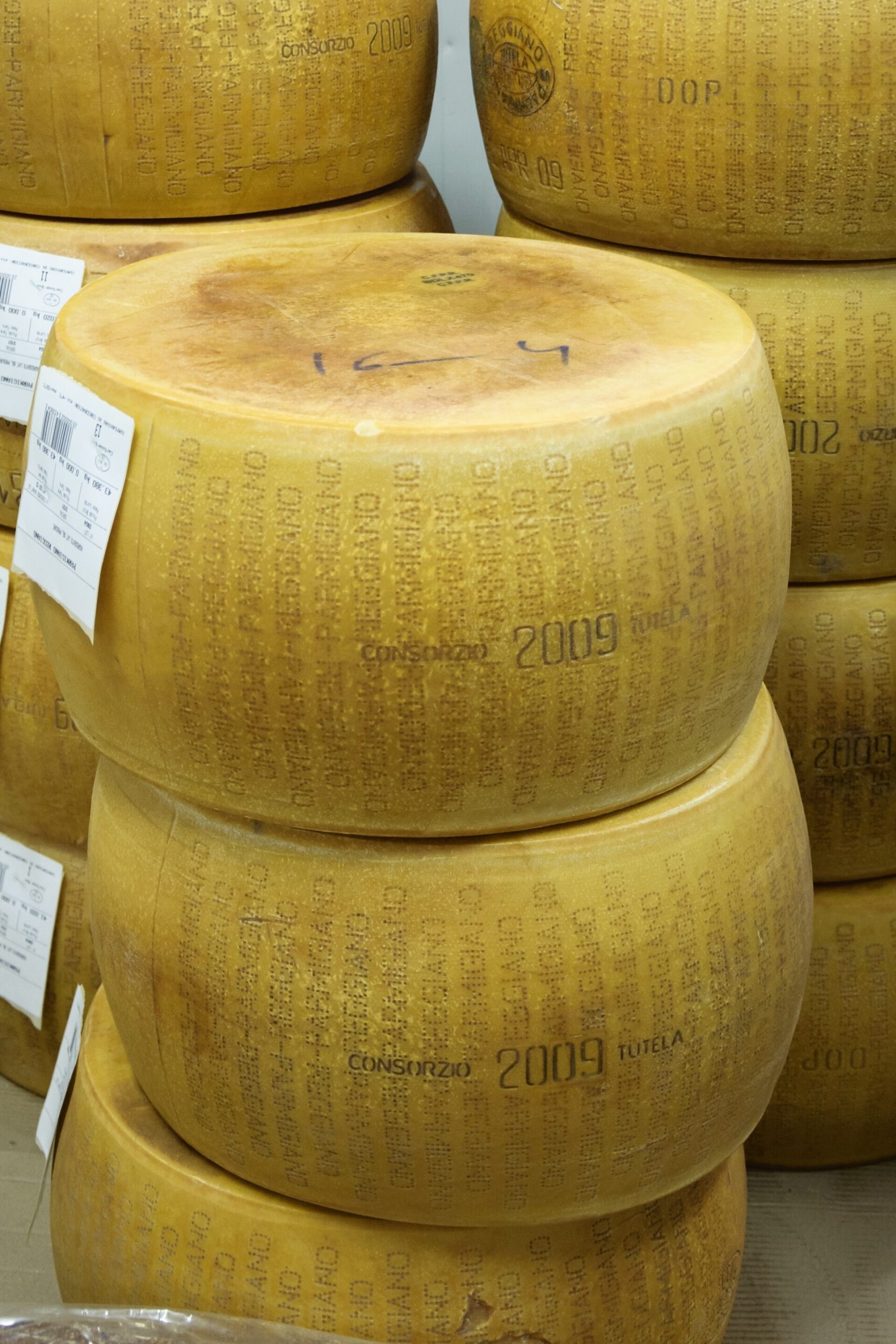
Parmigiano-Reggiano is formed in a mold, brined, and then aged for a minimum of twelve months, with most of what reaches a shop sitting between two and three years. During that time the outer layer loses moisture steadily and hardens into a shell perhaps a quarter-inch thick, which is what protects the interior over such a long aging.
Nothing is added to make that shell. The pin-dot stencil around the wheel and the branded oval mark are applied at the start of aging, and the surface may have been brushed or oiled by the affineur, which is the only reason anyone bothers to trim the outermost skin. The layer under it is cheese, edible as it stands, and merely too hard to eat comfortably.
That hardness is the point. A dry, dense piece will not melt into a sauce the way a shaving does. It sits in liquid and leaches, slowly, which makes it a flavoring agent rather than an ingredient, and it explains every simmer time in this article.
Glutamate is why it punches above its size
Cheese made for a long aging is deliberately built to be broken down. Enzymes from the milk, the rennet and the starter cultures spend months cutting the casein into shorter and shorter chains and finally into free amino acids, and the concentration of free glutamate climbs the whole way. Aged hard cheeses sit near the top of any list of foods rich in it.
Glutamate is what the tongue reads as savory depth, and it does something else that is more useful in a soup pot: it works in combination. The compounds that produce that depth in cured pork, in dried mushrooms, in tomato and in fish reinforce each other rather than simply adding up, which is why a rind in a pot that already contains tomato and beans is doing more than the same rind in plain water.
The white crunchy specks in an old wedge are part of the same story. They are crystals of tyrosine, another amino acid, thrown out of solution once there is more of it than the cheese can hold. Their presence is a rough indicator of age, and an old wedge has an old rind, which is the one worth saving.
Nine parmesan rind uses, and the simmer time each one needs
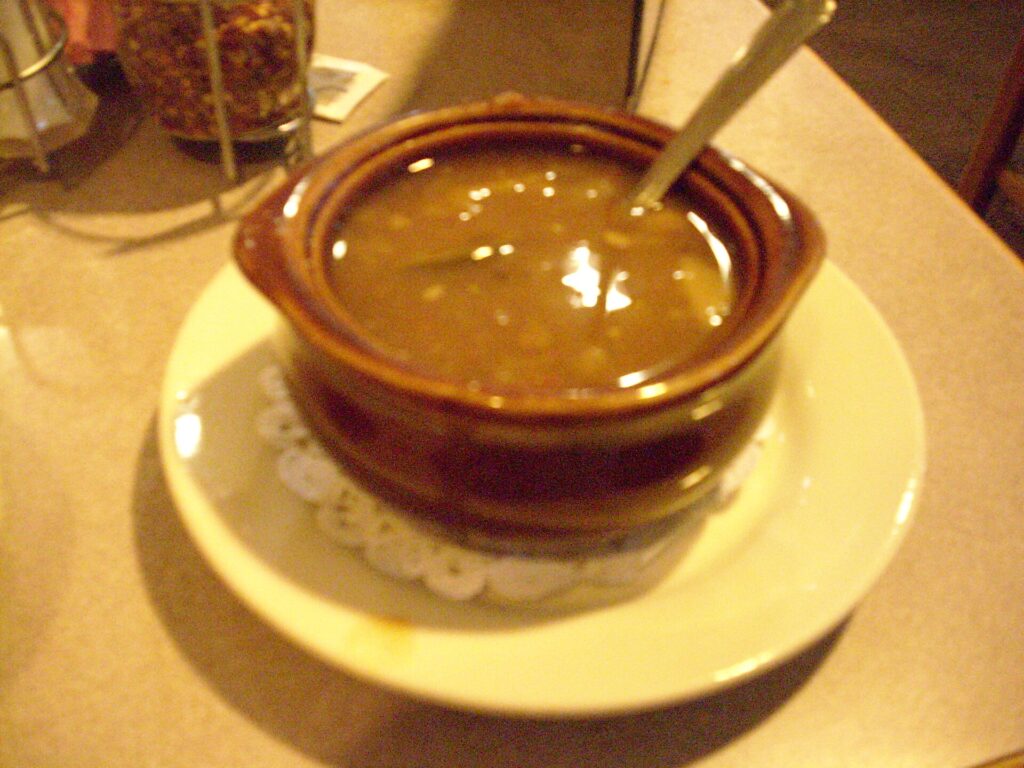
- A pot of dried beans, 60 to 90 minutes. The best use there is. Put the rind in with the soaked beans and the cold water at the start and leave it for the entire cook. The long, gentle simmer suits it exactly, and the starch coming out of the beans gives the broth something to hold onto.
- Minestrone and vegetable soup, 45 minutes. In with the stock, after the base has been softened and before the quick vegetables go in. Forty-five minutes is enough for a soup that will be eaten the same day.
- A broth built from nothing but rinds, 45 to 60 minutes. Covered in water with an onion, a bay leaf and a few peppercorns, it becomes a stock in its own right. Details in the next section but one.
- A long tomato sauce, 40 minutes. Add it once the sauce is at a bare simmer. Tomato and rind are the classic pairing here, and the acid in the tomato helps draw flavor out.
- Risotto, 30 minutes in the stock. Not in the rice. Drop it into the stock pot while it heats, keep it there through the cooking, and ladle from around it. Putting a rind into the rice itself gives you a rubbery obstacle to hunt for at the end.
- Polenta or grits, 40 minutes. Straight into the cooking liquid, stirred around, removed before serving. It seasons the whole pot from the inside instead of sitting on top as grated cheese does.
- Braises and stews, 90 minutes or the whole cook. Beef, pork, chicken thighs, chickpeas with greens. Anything spending an hour and a half in liquid can carry one, and unlike a soup there is no risk of it becoming the loudest thing in the pot.
- A pot of greens, 30 to 45 minutes. Escarole, kale, chard or cabbage simmered in water or thin stock. This is where a rind earns the most, because there is nothing else in the pot supplying savory weight.
- Puffed as a snack, 6 to 8 minutes, no liquid at all. Cut into half-inch squares, spread on parchment, 400F oven until they blister and puff. They come out crisp on the outside and chewy in the middle. Watch them; the window between puffed and burnt is short.
Half an hour before it gives anything up
Under thirty minutes, a rind is mostly warming up. The dense outer millimeters have to hydrate before anything inside them can migrate into the liquid, and that takes time no amount of heat shortens, because a harder boil does not make water diffuse into a dense solid meaningfully faster.
What it does do is damage the pot in other ways. A rolling boil emulsifies fat into the broth and clouds it, and it agitates the softening rind until pieces shear off and end up in the bowl. A bare simmer, the kind where a bubble breaks every second or two, is the right heat for every use on the list above.
Cut the rind into two or three pieces before it goes in if the cook is short, since a wider surface gives up more in the same time. For a ninety-minute bean pot, leave it whole and let the clock do the work.
A broth made of nothing but rinds
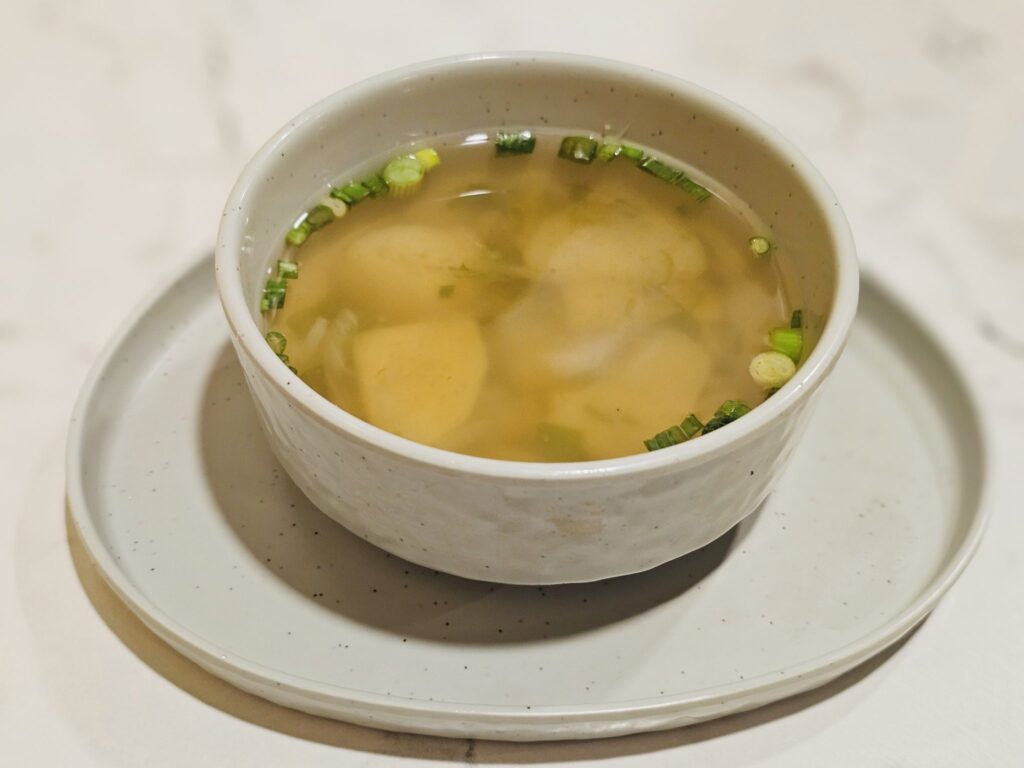
Once the freezer bag holds six or eight pieces, they are worth cooking on their own. Cover roughly eight ounces of rinds with two quarts of cold water, add a halved onion, a bay leaf, a few black peppercorns and a stalk of celery, bring it to a bare simmer and hold it there for forty-five minutes to an hour.
What comes out is pale gold, faintly cloudy and unmistakably savory, with a slight body from the fat and protein that have come out of the cheese. It is not a substitute for chicken stock and it is not trying to be. It is a base for risotto, for a fast soup of white beans and greens, or for cooking farro and other grains that benefit from being cooked in something.
Salt it at the end and taste before you do, because the rinds have already brought a good deal with them. Strain it, cool it quickly in a shallow container rather than leaving a hot pot on the stove, and refrigerate it within two hours. It keeps four days cold and freezes well for three months in flat bags.
The salt shows up before you expect it
Parmigiano is a brined cheese, and the rind carries the salt of the wheel plus whatever concentrated as the water left. A single two-inch piece in a quart of soup is not going to overwhelm anything, but three pieces in a small pot of beans will, and by then there is no way to take it back out.
The rule is simple and it applies to every use on the list. Salt the pot at the end, after the rind has been fished out, and taste first. This is the opposite of how most cooks work, and it is the single most common thing that goes wrong with rinds.
Pecorino rinds need the rule doubled. Sheep’s milk cheeses are brined harder and the difference is obvious in a pot; use a piece half the size you would use of Parmigiano, which is also true of the pecorino in a Roman pasta, and expect a sharper, more animal flavor alongside the salt.
How long a freezer bag really holds
Keep a bag in the freezer and add to it as wedges finish. The pieces do not stick together, so you can pull one out without thawing anything, and they go into a pot frozen with no adjustment to the timing.
Three months is comfortable. At around six months the pieces start picking up the smell of the freezer, because a rind is porous and dry and behaves like a sponge for whatever else is in there. Double-bag them or use a rigid container with a real seal if the freezer holds anything strongly aromatic.
The refrigerator is fine for a week or two, wrapped in paper rather than plastic film, which traps moisture against the surface and encourages exactly the growth you are trying to avoid. Room temperature is not an option; a rind left in a cupboard sweats, develops mold and picks up mites.
Which cheese rinds earn a place in the bag
| Cheese | Save the rind | What it brings |
|---|---|---|
| Parmigiano-Reggiano | yes, always | the benchmark: deep, nutty, moderately salty |
| Grana Padano | yes | milder and cheaper, use a slightly larger piece |
| Pecorino Romano | yes, sparingly | sharp and much saltier, half the usual size |
| Comte, Gruyere, Beaufort | yes, scrape the outside first | sweet and brothy, excellent in onion soup |
| Aged Gouda, wax removed | yes | caramel notes, good in bean and lentil pots |
| Asiago and aged provolone | yes | lighter, closer to Grana in effect |
| Brie, Camembert, bloomy rinds | no | turn bitter and slimy in hot liquid |
| Taleggio and washed rinds | no | the aroma that works on a board dominates a pot |
| Cloth-bound cheddar | no | the cloth and its dressing are not food |
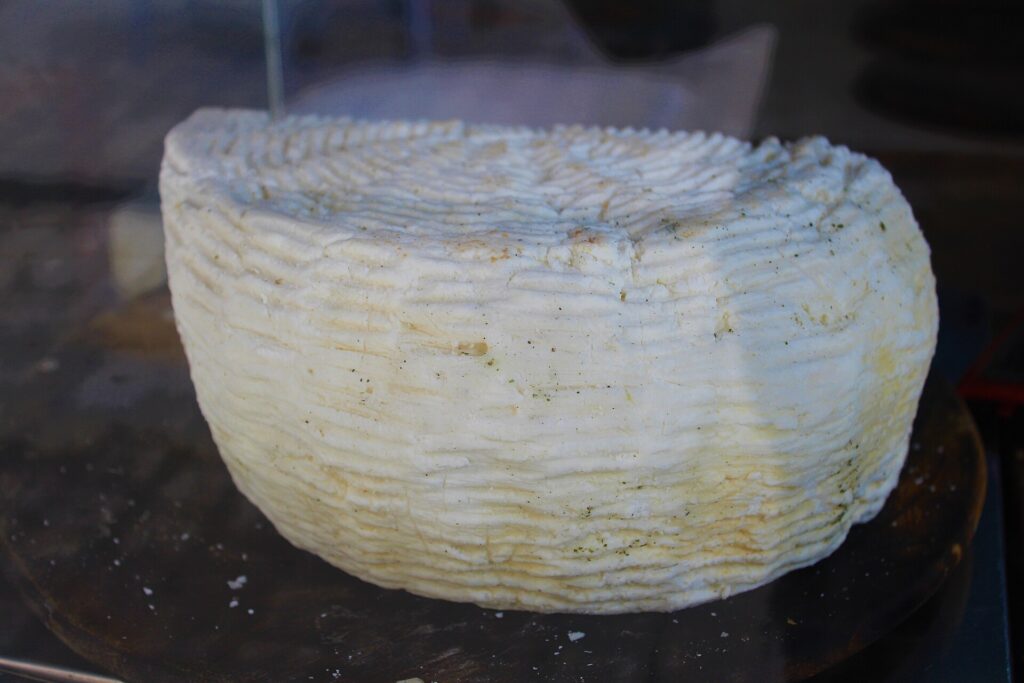
The dividing line is whether the rind formed by drying or by being colonized. A natural rind on a hard cheese is dehydrated cheese and behaves like it. A bloomy or washed rind is a living surface, made by mold or bacteria, and the flavors that make it interesting on a board become harsh once heated.
Wax, cloth and bark are not rinds
Three coverings get mistaken for rinds and none of them belong in a pot. Wax on a young Gouda or an Edam is a sealed coating; peel it off and discard it, and the cheese underneath, if it is aged enough to have dried out at the edge, is worth keeping. Plastic coatings on supermarket blocks look similar and are the same story.
Cloth binding on a traditional cheddar is fabric, usually rubbed with fat before aging. It is not edible and it does not soften. The layer of cheese immediately under it is often dry and slightly musty and is a matter of taste; the cloth itself is not.
The spruce bark around a Vacherin is structural. It is worth smelling and not worth simmering, and it will make a pot taste of resin. When in doubt, run a knife over the surface: if it cuts like cheese it is a rind, and if it peels away as a separate skin it is not.
When a rind goes in the bin
Surface mold on hard cheese is common and not automatically a disaster. Standard food safety guidance for hard cheese is to cut at least an inch around and below a mold spot, taking care not to touch the mold with the knife blade on the way back through. That works on a wedge, where there is an inch of cheese to spare.
A rind is a quarter-inch thick, so there is no inch to cut away, and the honest answer is that a moldy rind is not worth rescuing. Throw it out. The same goes for one that has gone slimy, one that smells of ammonia rather than of cheese, and one that has been loose in the refrigerator long enough that you cannot remember which wedge it came from.
Simmering does not fix any of this. Heat deals with most bacteria, but it does not remove the compounds a spoiled piece has already produced, and it will not improve something that tasted wrong going in. The rind is a free ingredient; there is nothing to gain by pushing a doubtful one.
What to do with the soft piece you fish out
After an hour in liquid a rind is soft, chewy and still full of flavor, and it is one of the small privileges of cooking. Chop it into pieces the size of a fingernail and stir it back into a bean soup, where it behaves like a dumpling, or eat it standing at the stove, which is the traditional method.
What it will not do is melt. The protein structure of a cheese aged for two years no longer flows when heated, and the piece stays chewy however long it sits. Anyone expecting it to disappear into the pot will spend the meal picking rubbery lumps out of a bowl, which is why every use above ends with removing it.
If the piece has gone unpleasantly gummy, it stayed in too long or the pot boiled. Neither ruins the soup, and both are an argument for setting a timer.
Frequently Asked Questions
Can I eat the rind straight, without cooking it?
Physically yes, and it is safe, but it is very hard and the outermost surface may have been brushed or oiled during aging, which is why most people trim the outer millimeter. The flavor is concentrated and slightly bitter compared with the paste. Cooking is not a safety step here; it is what makes the texture bearable.
Does the stenciled marking need to come off?
It is a matter of preference rather than necessity. The dotted lettering is applied to the surface of the wheel before aging and ends up as part of the rind. Cooks who care about a clean-tasting broth pare off the printed millimeter with a knife; plenty do not bother and never notice a difference in a pot of beans.
Can a rind be used twice?
Once, properly. A piece that has simmered for an hour has given up most of what it had, and a second pot will get a faint suggestion of cheese and a piece of chewy protein. If a rind only spent twenty minutes in something, it is still loaded and worth keeping for a longer cook.
How much rind for how much liquid?
Roughly one square inch of rind per quart of liquid for a soup where the cheese should be felt but not identified, and double that for a broth where it is the point. Weight is a better guide once you are cooking often: an ounce of rind to a quart is a good working ratio, adjusted down for Pecorino.
Is the rind sold cheap at a cheese counter worth buying?
Yes, and it is one of the better bargains in a shop. Ask for the offcuts rather than the display bag, since offcuts usually carry a little paste still attached. Check the pieces are dry and clean, freeze them the day you get home, and label the bag, because a frozen rind is unidentifiable after a month.