In Hong Kong, breakfast begins at a small round table in a tiled room with the windows steaming over. The congee shop opens at six. By six-fifteen, the first bowls are being ladled from a pot the size of a washtub, a pot that has been simmering since before dawn. The porridge is almost white, almost creamy, the color of the inside of a pearl. A cook who has worked the same station for thirty years reaches into the pot with a metal ladle the size of a small cooking vessel and pours the jook in a long continuous ribbon into a deep ceramic bowl. It does not splash. It sighs. The surface steams and catches the light from the hanging fluorescent tubes overhead.
Then come the toppings. A whole peeled century egg — dark green-gray yolk, amber-translucent white — cut into wedges and arranged in a fan. A fluffy crown of pork floss, almost the texture of cotton candy but salty and caramelized. A scattering of pale green scallion, and a single pass of warm ginger-scallion oil poured from a small tin cup. The whole thing takes forty-five seconds to assemble and then sits in front of you for as long as you need. You are supposed to sit with it. You are supposed to eat it slowly. In Cantonese, this style of eating is called yum cha — drink tea — and the congee is not rushed because nothing at that table is rushed.
Grace Young, the Chinese-American cookbook author and James Beard Award winner who grew up eating her grandmother’s jook in San Francisco’s Chinatown, writes in The Wisdom of the Chinese Kitchen that congee is “the most nourishing food in the Chinese kitchen and also the most misunderstood outside it.” She is right on both counts. In Western food writing, congee often gets described as “Chinese rice porridge” — as if it were a plain, medicinal thing, the Asian equivalent of oatmeal. It is not. A proper Cantonese jook, topped with century egg and pork floss and a drizzle of ginger oil, is one of the most satisfying breakfasts on earth. It is the reason people wake up early in Hong Kong.
The 90-Minute Simmer
The defining technique of Cantonese congee is time. Rice cooked for 20 minutes in excess water gives you rice soup. Rice cooked for 90 minutes gives you jook. The difference is not subtle — it is the difference between a broth with discrete grains floating in it and a velvet emulsion in which the rice has completely dissolved into the liquid. This collapse of individual grain into a unified porridge is what the dish is named for; jook literally means “to boil down” in Cantonese, and the texture target is a porridge that flows in slow curtains when lifted from the pot, not something you could pick grains out of.
You cannot rush this. Pressure cookers will produce something that looks like congee in 25 minutes, but the mouthfeel is fundamentally different — the starches have been forced to gelatinize too quickly and the texture is gluier, heavier, less silken. A real jook has an almost whipped quality, a lightness in the thickness. Fuchsia Dunlop, writing about Cantonese home cooking in Every Grain of Rice, describes proper congee as “rice that has forgotten it was rice.” That forgetting takes 90 minutes, minimum. If you have a Sunday morning where you can put a pot on the stove at 8:00 and leave it mostly alone until 9:30, that is the correct time slot for jook.
The Pre-Oiling Secret
Here is a technique that professional Cantonese congee shops use and home cooks often skip: pre-oil the rinsed rice. After rinsing the jasmine rice and draining it thoroughly, toss it in a bowl with 1 teaspoon of neutral oil and a pinch of salt. Let it sit for 10 minutes before adding it to the pot. The oil coats each grain with a microscopic barrier that, counterintuitively, helps the starch break down faster once the rice hits the liquid. The result is a noticeably smoother, silkier congee in the same simmering time.
This is one of those small Cantonese kitchen tricks that you cannot easily find in English-language cookbooks. It does not appear in most Western-written congee recipes. Ask any auntie who runs a congee stall in Sha Tin or the New Territories and she will nod and say of course you oil the rice. The effect is subtle but real. Skip it and your congee is still good. Include it and it becomes notably better.
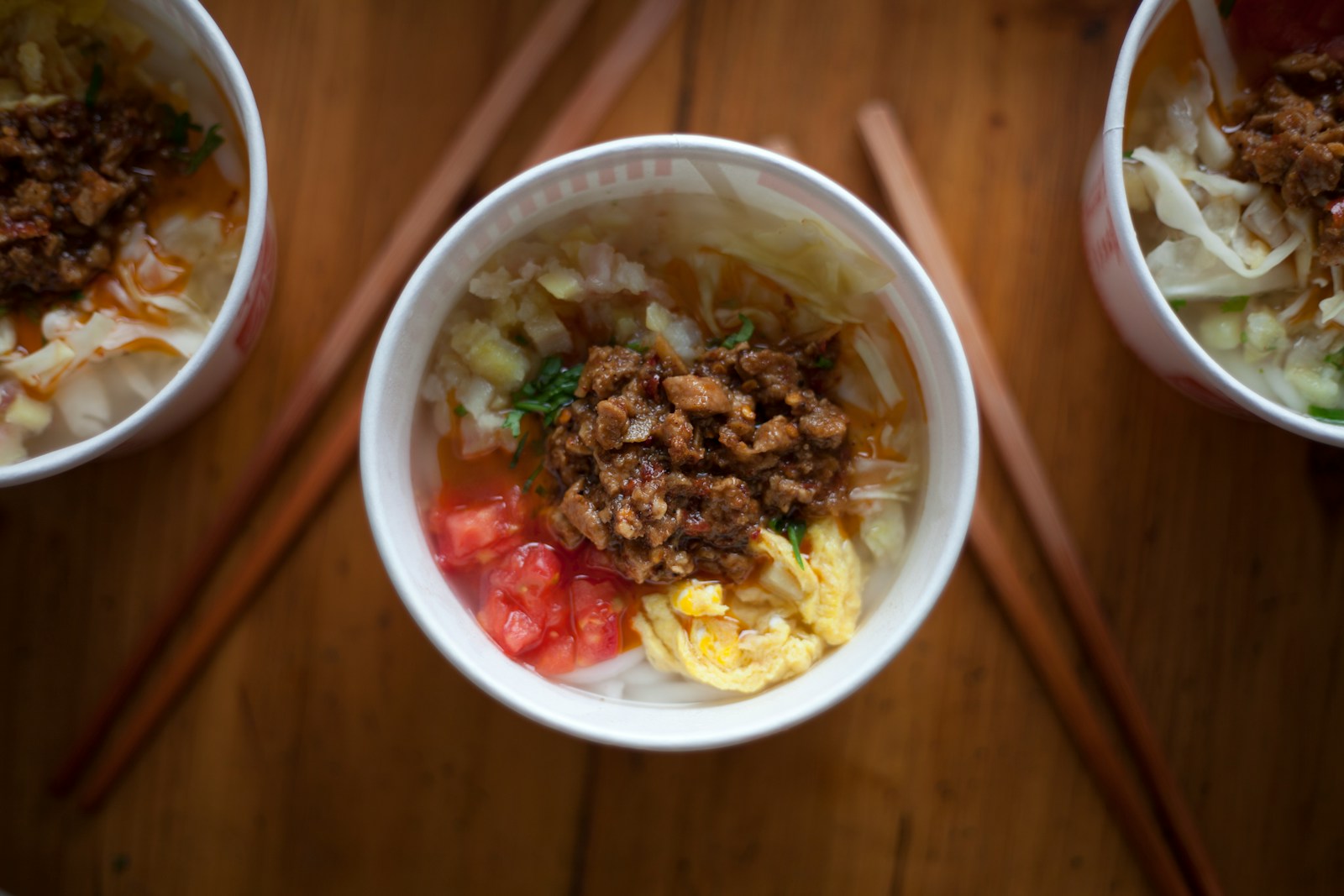
Century Egg: The Myth and the Reality
The century egg — pidan in Mandarin, pei dan in Cantonese — is one of those ingredients that Western food writing has had an uneasy relationship with for decades. The name suggests age, rot, and danger; the translucent amber-and-green appearance looks, to unfamiliar eyes, spoiled. Jeff Corwin called it disgusting on a 2011 CNN segment. Andrew Zimmern called it delicious on Bizarre Foods. Both missed the point. Century eggs are not aged for a century — they are duck eggs cured for a few weeks to a few months in a mixture of clay, ash, salt, quicklime, and rice hulls. The alkaline cure raises the pH of the egg, denaturing the proteins in a controlled way that transforms the yolk into a deep gray-green custard and the white into a clear amber jelly.
The flavor is complex and, for most people unfamiliar with it, initially strange. A properly cured pidan tastes briny, slightly ammoniac, creamy, and deeply savory, with an umami punch that comes from the long alkaline transformation. Paired with plain congee, the ammoniac edge disappears entirely — the warm porridge mutes the volatile compounds and what remains is a rich, almost cheese-like savoriness. Century eggs do not taste like anything else. They are, functionally, a concentrated flavor bomb, and the jook is the canvas that lets them sing.
Quality matters. Cheap century eggs sometimes show crystallized salt deposits or an unpleasantly strong ammonia odor; good ones have a subtle pine-like aroma and a clean, deep umami. Buy from a reputable Chinese or Vietnamese grocer. Cook’s Illustrated ran a 2019 taste test of commercially available century eggs and recommended the Jade brand as the cleanest and most consistently cured. If you can find them, duck eggs yield better pidan than quail eggs or chicken eggs, and always peel the shell just before serving — the egg dries if exposed to air for more than an hour.
Congee Toppings: The Cantonese Spectrum
Jook is a canvas. The toppings carry the dish. Below is the Cantonese breakfast-shop spectrum of common pairings, from delicate to robust.
| Topping Combination | Flavor Profile | Best For |
|---|---|---|
| Plain (rice, ginger, salt) | Clean, warming, almost sweet | Sick-day food or late-night comfort |
| Century egg + pork floss | Briny, savory, sweet crown | The canonical breakfast jook |
| Fish slices + ginger | Delicate, clean, aromatic | Coastal Cantonese / dim sum halls |
| Beef + ginger + cilantro | Hearty, deeply umami | Cold weather / late dinner |
| Dried scallops + chicken | Complex, oceanic, restaurant-level | Banquet or special-occasion jook |
Ingredients
- 1 cup (200 g) jasmine rice
- 10 cups (2.4 L) water or unsalted chicken stock
- 1 knob fresh ginger (3 inches total), divided: 2 inches sliced thin for the pot, 1 inch julienned for garnish
- 1 teaspoon fine sea salt (plus more to taste)
- 1 teaspoon neutral oil for pre-oiling rice
- 4 preserved century eggs (pidan)
- ½ cup (60 g) pork floss (rousong)
- 4 scallions, whites and greens separated
- ¼ cup (60 ml) neutral oil for scallion oil
- 1 tablespoon fresh ginger, finely minced (for scallion oil)
- 2 tablespoons light soy sauce (for drizzling at the table)
- 1 teaspoon toasted sesame oil
- ½ teaspoon freshly ground white pepper
- 1 small bunch fresh cilantro, roughly chopped
- Fried wonton strips or torn youtiao (Chinese cruller), for dunking, optional
Making It
- Rinse and pre-oil the rice. Place the jasmine rice in a fine-mesh sieve and rinse under cold running water, stirring the rice with your fingers, until the water runs noticeably clearer. Drain thoroughly. Transfer to a small bowl and toss with 1 teaspoon neutral oil and a pinch of salt. Let it rest for 10 minutes. This pre-oiling step is a traditional Cantonese trick that produces a noticeably silkier congee.
- Start the pot. In a large heavy-bottomed pot or Dutch oven (at least 5 quarts), combine the oiled rice with 10 cups of water or unsalted chicken stock. Add the sliced 2-inch piece of ginger and 1 teaspoon of salt. Bring to a full rolling boil over high heat, stirring occasionally with a wooden spoon to ensure nothing sticks to the bottom.
- Lower and simmer. Once the pot is boiling, reduce the heat to low — you want a lazy, barely-there simmer with lazy bubbles, not vigorous activity. Partially cover the pot, leaving a small gap for steam to escape. Simmer for 90 minutes. Stir every 15 to 20 minutes with a wooden spoon, scraping along the bottom to prevent sticking. If the congee thickens too quickly, add a half cup of boiling water at a time to keep the consistency slightly thinner than your final target.
- Make the scallion oil. While the congee simmers, heat ¼ cup neutral oil in a small saucepan over medium heat until shimmering. Add 1 tablespoon minced ginger and the scallion whites. Cook 60 to 90 seconds, stirring, until the ginger is fragrant and the scallion whites have just begun to turn translucent. Do not let anything brown. Remove from heat. The oil will continue to infuse as it cools. Transfer to a small bowl or cup so you can pour it cleanly at serving.
- Prepare the century eggs. Just before serving, peel the century eggs. The shells sometimes have a translucent lacy coating from the alkaline cure; rinse briefly under cool water and pat dry. Cut each egg into quarters lengthwise. The yolk should be dark gray-green with a custardy center; the white should be amber-translucent and firm like jelly. Set on a plate.
- Check the consistency. After 90 minutes, lift a spoonful of congee out of the pot. It should fall in slow, silky curtains. The individual rice grains should have largely collapsed into the liquid. If it is still more like rice soup with discrete grains, continue simmering another 15 to 20 minutes. If it is too thick, stir in a cup of hot water and bring back to a simmer for 5 minutes. Taste and adjust with salt and a generous pinch of white pepper.
- Assemble the bowls. Ladle hot congee into 4 deep bowls, filling each about three-quarters full. The surface should glisten. Arrange four century egg quarters on top of each bowl in a fan or cross pattern. Scatter a generous spoonful of pork floss in a small mound. Drizzle 1 tablespoon of warm scallion oil over everything, making sure to catch some of the ginger and scallion solids from the bottom of the oil cup.
- Finish and serve. Top each bowl with julienned ginger, chopped cilantro, and sliced scallion greens. Pass a small cruet of soy sauce and a bottle of toasted sesame oil at the table so diners can add their own. If using youtiao or fried wonton strips, tear them into bite-sized pieces and offer them alongside. The traditional technique is to dunk the youtiao into the congee briefly, letting it absorb some of the porridge, and eat it with the soaked jook in the same bite.
The Youtiao Question
In Hong Kong congee shops, a freshly fried youtiao — a long, golden, airy Chinese cruller — is almost always on offer. You tear it into pieces, dunk them in the jook for a moment, and eat them saturated with the porridge. The contrast is the whole reason for its existence: crunchy-outside-airy-inside cruller paired with velvet congee. Youtiao is hard to make from scratch at home — it requires a specific flour, a long rest, and an oil temperature that most home fryers struggle to hold — so most cooks buy them frozen from a Chinese grocery and reheat in an oven. If youtiao is not available, fried wonton-wrapper strips are an acceptable shortcut. Cut square wrappers into ribbons and fry in hot oil for 30 seconds until puffed and golden, drain on paper towels, salt lightly. They play a similar textural role.
If you want a broader Cantonese breakfast spread, a small plate of choy sum or gai lan in oyster sauce is a classic accompaniment, and of course a pot of strong pu-erh tea. For a weekend dim sum table in full, see our complete guide to dim sum, which pairs beautifully with congee as the grounding starch course. And for a contrasting noodle technique from northern China, our mapo tofu guide shows how far Chinese regional cooking can diverge.
Common Mistakes
Congee is technically simple but easy to do wrong. The traps:
- Vigorous boiling. A rolling boil for 90 minutes produces starchy foam, sticky bottom, and overcooked flavor. Drop to a lazy simmer after the initial boil.
- Not enough water. The 1:10 rice-to-water ratio is not a suggestion. Under-watered congee turns into thick porridge instead of silken emulsion. You can always reduce; you cannot add back body lost to absorption.
- Over-seasoning the base. Jook should taste mild, barely salted. The toppings carry the flavor. A pre-salted base with strong toppings becomes overwhelming.
- Skipping the scallion oil. Many home cooks treat scallion oil as optional. It is not. The warm oil floats on the surface of the jook, releasing aroma with every spoonful. Without it, the bowl is noticeably flatter.
- Cold-from-the-fridge toppings. Century egg should be at room temperature. Cold egg chills the jook and clouds the flavor. Take the eggs out 20 minutes before serving.
Storage and Reheating
Plain congee keeps in the refrigerator for up to 4 days in an airtight container. It will thicken substantially as it cools — expect something closer to rice pudding than porridge by the next morning. To reheat, transfer the desired portion to a saucepan with ½ cup of water per cup of congee, warm over medium-low, and whisk as it loosens back into a pourable consistency. Do not microwave — it heats unevenly and the reheated texture is grainy. Freeze is possible for up to a month; thaw in the refrigerator overnight and reheat the same way. Always top with fresh century egg and scallion oil at the moment of serving; pre-assembled bowls degrade quickly.
Frequently Asked Questions
What is a century egg and is it safe to eat?
A century egg (pidan) is a duck egg preserved for several weeks to several months in a mixture of clay, ash, quicklime, salt, and rice hulls. The alkaline cure transforms the yolk into a soft, dark green-gray custard and the white into a clear amber jelly. The name is poetic, not literal — the egg is not a century old. It is entirely safe to eat; commercially sold century eggs in the US are FDA-monitored. The flavor is complex: briny, deeply umami, slightly ammoniac, with a creaminess that intensifies when paired with warm congee.
Why does congee take 90 minutes?
The texture of real Cantonese jook requires the rice to completely dissolve into the liquid — not just cook and soften, but break down into a smooth porridge where individual grains are no longer visible. That collapse takes 90 minutes of low simmering. Pressure cookers can produce a version in 25 minutes, but the mouthfeel is heavier and gluier, not silkier. If you cannot commit 90 minutes, a 45-minute pressure cycle followed by 15 minutes of open simmer to adjust the texture is the closest shortcut. The traditional method is genuinely better.
Is pork floss the same as dried pork?
Closely related but not the same. Pork floss (rousong in Mandarin, yuk song in Cantonese) is slow-cooked, shredded pork that has been dried and fluffed until it is feather-light and slightly caramel-sweet. Dried pork, in the bak kwa style, is denser and chewier. For congee you want floss specifically — the textural contrast with the creamy porridge is the point. Good pork floss comes in vacuum-sealed bags or paper cans in Chinese groceries. Check the ingredient list for minimal fillers.
What is the difference between congee and Japanese okayu?
Both are rice porridges, but the traditions diverge. Cantonese jook uses jasmine rice simmered for 60 to 90 minutes until the grains dissolve entirely into a smooth emulsion. Japanese okayu uses short-grain rice with a lower water ratio and a shorter cook, leaving visible grains and a chunkier texture. Jook is typically savory with rich toppings (century egg, pork floss). Okayu is plainer, often associated with illness or convalescence, served with umeboshi or a raw egg. Same idea, different textures, different traditions.
Sources
- Serious Eats — Cantonese Congee Recipe and Technique — A detailed look at the 1:10 ratio, the 90-minute simmer, and why pressure cookers fall short.
- Bon Appétit — A Guide to Century Eggs — Explanation of the alkaline curing process, safety, and flavor profile.
- USDA FoodData Central — Jasmine Rice — Nutritional reference data for per-serving calculations.
Each serving contains roughly 318 calories, 16 g protein, 12 g fat, 38 g carbohydrates, and 1 g fiber — based on 4 servings using 1 cup of jasmine rice, 4 century eggs, and the listed toppings. Sodium is naturally high due to pork floss and soy sauce.
Please note: Nutritional estimates are derived from the USDA FoodData Central database and may vary depending on specific brands of pork floss, century egg curing method, and soy sauce. This recipe contains egg, soy, and wheat (from pork floss and soy sauce; some brands of pork floss also contain fish). Century eggs are safe for healthy adults but are not recommended for young children, pregnant women, or individuals on a low-sodium diet. Nothing in this article should be interpreted as medical or dietary guidance. If you have food allergies, sodium-sensitive conditions, or specific dietary needs, consult a registered dietitian or healthcare provider before preparing this recipe.

Tom Nakamura
Tom learned to cook from his obaachan during summers in Japan - pickling daikon at the kitchen table, watching her stir miso into broth without ever measuring. Later, family trips with cousins took him through markets in Bangkok, Shanghai, and Hanoi, and the food stuck with him. His writing focuses on making authentic Asian techniques accessible to home cooks without diluting the technique or the culture that defines them. He handles Chinese, Japanese, Korean, Thai, Vietnamese, Indian, and Middle Eastern recipes at the publication.