I have made pizza in coal-fired ovens in Naples, wood-burning hearths in Alsace, and a converted bread oven in a barn outside Lisbon. But the pizza I come back to most often is the one I make in my home kitchen with a standard oven and a preheated baking steel. A great margherita pizza recipe is not about equipment — it is about dough that has had time to develop flavor, the right tomatoes, and the restraint to keep things simple.
This recipe uses a 72-hour cold fermentation for the dough. That sounds like a commitment, but the active work is about 15 minutes spread across three days. The cold, slow rise in your refrigerator does something that no amount of kneading can replicate: it develops complex, tangy flavor and a gluten structure that stretches paper-thin without tearing. If you have only ever made same-day pizza dough, this will change your understanding of what home pizza can be.
Homemade Margherita Pizza with 72-Hour Dough
Prep Time: 20 minutes (plus 72 hours fermentation)
Cook Time: 8–12 minutes
Total Time: 72 hours 30 minutes (mostly hands-off)
Servings: 4 pizzas (12 inches each, 8 slices per pizza)
Difficulty: Medium
Cuisine: Italian
Ingredients
72-Hour Dough (Makes 4 Balls)
- 500g (3 3/4 cups) bread flour or “00” flour
- 325ml (1 1/3 cups) cold water
- 10g (2 tsp) fine sea salt
- 3g (1 tsp) active dry yeast
- 5g (1 tsp) extra-virgin olive oil
Tomato Sauce (No-Cook)
- 1 can (400g / 14 oz) whole San Marzano tomatoes, drained
- 1 teaspoon fine sea salt
- 1 teaspoon extra-virgin olive oil
- 1 small clove garlic, finely grated (optional)
Toppings
- 8 oz (225g) fresh mozzarella (fior di latte), torn into pieces
- Fresh basil leaves (about 16–20 leaves)
- Extra-virgin olive oil, for finishing
- Flaky sea salt
Instructions
- Day 1: Mix the dough. In a large bowl, dissolve yeast in the cold water. Let stand 5 minutes. Add flour and salt, then stir with a wooden spoon until a shaggy mass forms. Turn onto a clean surface and knead for 8–10 minutes until smooth, elastic, and slightly tacky (not sticky). Add olive oil in the final minute and knead until incorporated. The dough should pass the windowpane test — stretch a small piece thin enough to see light through it without tearing.
- Day 1: First rest. Form the dough into a tight ball, place in a lightly oiled bowl, cover with plastic wrap, and rest at room temperature for 1 hour. It will not rise noticeably — that is expected.
- Day 1: Divide and refrigerate. Turn the dough out, divide into 4 equal pieces (about 210g each). Shape each piece into a tight ball by pulling the edges underneath and pinching the seam. Place each ball in a lightly oiled individual container or on a sheet tray covered tightly with plastic. Refrigerate immediately. The slow fermentation begins now.
- Days 2–3: Cold fermentation. Leave the dough undisturbed in the refrigerator for 48–72 hours. You will notice the balls slowly expand and develop small bubbles on the surface. On day 2, the dough is usable but mild in flavor. By day 3, it has developed a complex, slightly tangy taste and an incredibly extensible texture.
- Day 3: Bring to room temperature. Remove dough balls from the refrigerator 2 hours before baking. This is essential — cold dough resists stretching and will spring back. Cover loosely and let them warm up and relax on the counter.
- Make the sauce. Crush the drained San Marzano tomatoes by hand or with a fork into a chunky paste. Stir in salt, olive oil, and garlic if using. Do not cook the sauce — the oven heat is sufficient, and raw San Marzanos have a bright, sweet acidity that cooking diminishes.
- Preheat the oven. Place a baking steel or pizza stone on the upper-middle rack. Heat the oven to its maximum temperature — usually 500–550°F (260–290°C) — for at least 45 minutes. The steel needs to be thoroughly saturated with heat to simulate the floor of a pizza oven.
- Shape the pizza. Generously flour your work surface with semolina or bread flour. Place one dough ball in the center and press it outward from the middle, leaving a 1-inch border untouched for the cornicione (crust rim). Pick up the dough and drape it over your knuckles, letting gravity stretch it as you rotate. Do not use a rolling pin — it crushes the gas bubbles that create the open, airy crust.
- Top and launch. Transfer the stretched dough to a floured pizza peel or inverted sheet pan. Spread 3–4 tablespoons of sauce in a thin, even layer. Distribute torn mozzarella evenly. Slide the pizza onto the preheated steel in one confident motion.
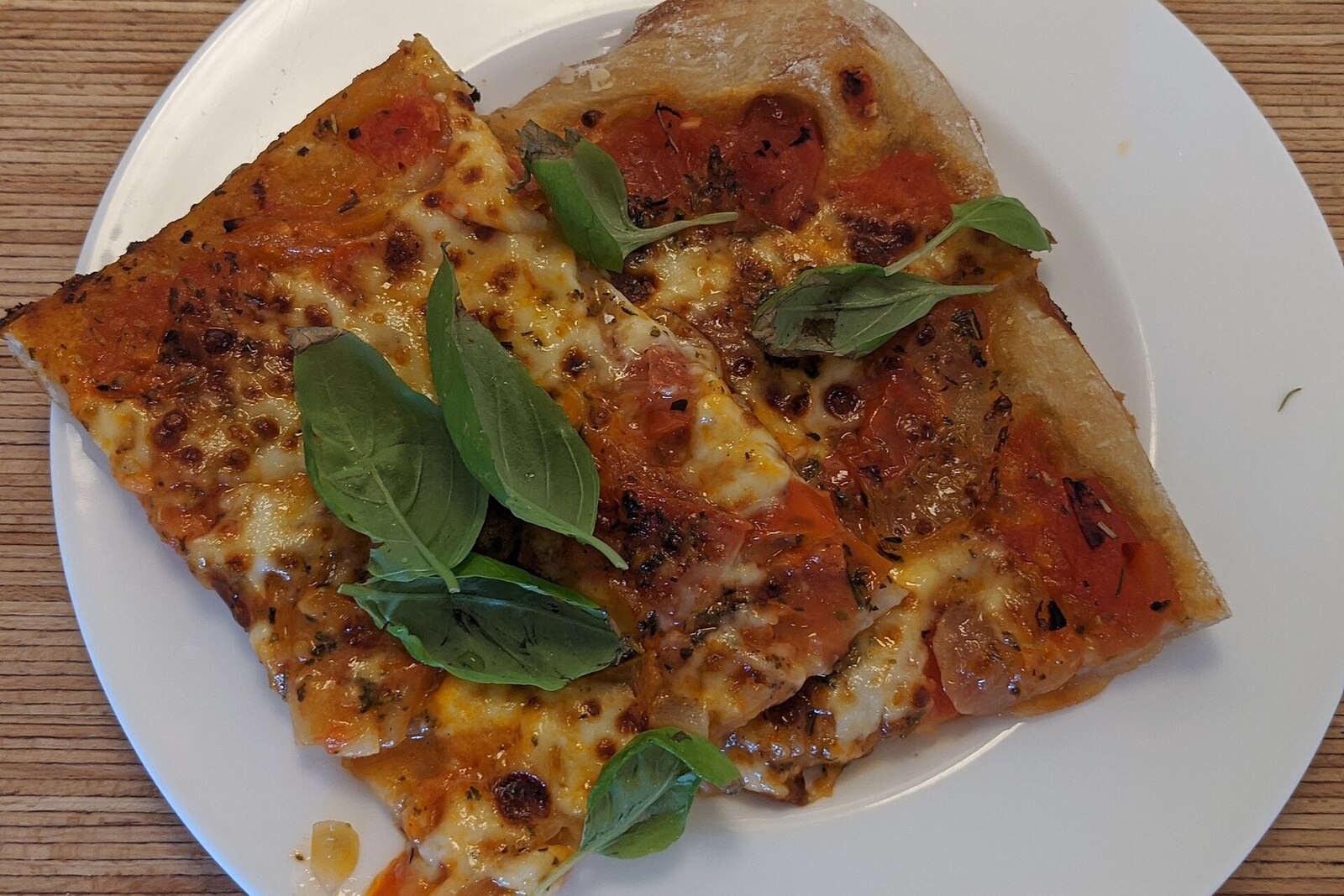
- Bake. Bake for 8–12 minutes (depending on oven temperature) until the crust is deeply golden with charred spots and the cheese is bubbling with brown patches. Add fresh basil leaves and a drizzle of olive oil immediately after removing from the oven. Finish with a pinch of flaky salt.
Why 72-Hour Cold Fermentation Matters
Same-day pizza dough relies on warm temperatures and large amounts of yeast to rise quickly. The result is a bland, bready crust that tastes more like dinner rolls than pizza. Cold fermentation inverts that equation: minimal yeast, low temperature, and time. Here is what happens during those 72 hours:
- Flavor development: Yeast produces organic acids and alcohols during slow fermentation. These compounds create the complex, slightly sour, wheaty flavor that defines artisan pizza dough. According to King Arthur Baking’s fermentation research, cold-fermented dough develops flavors impossible to achieve in a fast rise.
- Gluten relaxation: Extended time allows the gluten network to relax completely, making the dough dramatically easier to stretch. Where same-day dough snaps back stubbornly, 72-hour dough drapes and stretches like fabric.
- Improved digestibility: Longer fermentation breaks down more of the complex starches and proteins in flour. Many people who experience bloating from same-day bread report no issues with long-fermented doughs.
- Better browning: The enzymatic breakdown of starches into simple sugars during cold fermentation gives the crust superior caramelization and those coveted charred leopard spots.
Oven Temperature Guide
| Method | Temperature | Bake Time | Result |
|---|---|---|---|
| Home oven (no stone) | 500°F (260°C) | 12–15 min | Good crust, limited char, softer bottom |
| Pizza stone | 500–550°F (260–290°C) | 8–12 min | Crisp bottom, good rise, moderate char |
| Baking steel | 500–550°F (260–290°C) | 7–10 min | Very crisp bottom, excellent rise, good char |
| Outdoor pizza oven | 750–900°F (400–480°C) | 60–90 sec | Neapolitan-style: blistered, leopard-spotted, soft center |
San Marzano Tomatoes: Worth the Hype
San Marzano tomatoes grown in the volcanic soil near Mount Vesuvius have a natural sweetness and low acidity that makes them ideal for pizza sauce. The DOP (Protected Designation of Origin) certification on the can guarantees authentic origin. If you cannot find genuine DOP San Marzanos, Bianco DiNapoli or Cento brand whole peeled tomatoes are excellent alternatives. The Serious Eats canned tomato tasting ranks the top options if you want to compare.
Whatever you choose, use whole tomatoes and crush them yourself. Pre-crushed and pureed tomatoes often contain calcium chloride as a firming agent, which gives the sauce a slightly metallic edge.
Storage and Make-Ahead Notes
Dough balls can be frozen after the initial 24-hour cold fermentation. Wrap tightly in plastic, then place in a freezer bag. They keep for up to 3 months. To use, thaw overnight in the refrigerator, then bring to room temperature for 2 hours before shaping. The texture after freezing is slightly less extensible but still produces excellent results.
Assembled pizza does not store well — the crust softens and the cheese releases moisture. If you have leftover slices, reheat in a cast-iron skillet over medium heat with a lid on for 3–4 minutes. The bottom re-crisps while the cheese re-melts. Never microwave leftover pizza.
Pair this margherita with a crisp salad, or for a full Italian-inspired menu, explore our dinner recipe collection. If you are looking for more hands-on baking projects, our New York cheesecake uses a similar patience-over-speed philosophy.
Nutrition Facts (Per Slice — 1/8 of One Pizza)
| Calories | 270 kcal |
| Protein | 12g |
| Carbohydrates | 35g |
| Fat | 9g |
| Saturated Fat | 4g |
| Fiber | 2g |
| Sodium | 510mg |
Frequently Asked Questions
Can I make the dough the same day instead of waiting 72 hours?
You can, but the results are noticeably different. For a same-day version, increase yeast to 7g (2 1/4 tsp), use warm water, and let the dough rise at room temperature for 2–3 hours until doubled. The crust will be softer, breadier, and lack the complex flavor of cold fermentation. If you have at least 24 hours, use that — even one day of cold fermentation is a significant improvement over same-day.
Do I need “00” flour, or can I use all-purpose?
Bread flour is the best widely available substitute. It has enough protein (12–14%) to develop the gluten structure needed for a chewy, extensible crust. All-purpose flour (10–11% protein) works but produces a slightly softer, less chewy result. Italian “00” flour (specifically Caputo Pizzeria) is the gold standard if you can find it, as it is milled to a finer texture that produces a tender yet strong crust.
Why does my pizza stick to the peel when I try to launch it?
The dough absorbed moisture from the toppings while sitting on the peel. Work quickly — from the moment the dough touches the peel to the moment it enters the oven should be under 60 seconds. Use a generous amount of semolina flour on the peel, give it a test shake before adding toppings, and shake again before launching. If it sticks, gently lift the edge and blow flour underneath.
Can I use pre-shredded mozzarella instead of fresh?
You can, but it is a different pizza. Pre-shredded low-moisture mozzarella melts into a uniform, stretchy layer (think New York-style). Fresh mozzarella (fior di latte) creates the classic Margherita look: pools of melted cheese separated by exposed sauce. For this recipe, fresh mozzarella is essential to the character of the dish. Tear it into pieces and pat dry with paper towels to reduce excess moisture.
Final Thoughts
Great margherita pizza is an exercise in minimalism. Five ingredients on top, seventy-two hours of patience underneath. The dough does the heavy lifting — you just need to trust the process, heat your oven as high as it goes, and resist the urge to add more toppings. The best pizza I ever ate in Naples had exactly three things on it: tomato, mozzarella, and basil. This recipe is my attempt to bring that experience home.
Pro Tips for Mastering Your Margherita Pizza
Creating the perfect Margherita pizza at home involves more than just following a recipe; it requires attention to detail and a few pro tips to enhance your pizza-making game. Here are some essential tips to ensure your homemade pizza turns out perfectly every time:
- Use a Baking Steel or Stone: If you want a crust that mimics a traditional wood-fired pizza oven, invest in a baking steel or pizza stone. Preheat it in your oven for at least an hour at the highest temperature possible (typically around 500°F to 550°F) before baking your pizza. This will provide an intense heat that results in a beautifully crisp crust.
- Don’t Overload with Toppings: What makes a Margherita pizza is its simplicity. Use only a few high-quality ingredients—fresh mozzarella, basil, and a sprinkle of salt. Overloading the pizza with toppings can lead to a soggy crust and uneven cooking.
- Properly Drain the Tomatoes: When using San Marzano tomatoes for your sauce, make sure to drain them well. Excess moisture can lead to a watery pizza, which can ruin the integrity of your crust. Consider lightly crushing them and letting them sit in a sieve for a few minutes to eliminate excess liquid.
- Experiment with Dough Hydration: Depending on the flour you use, you might need to adjust the water content in your dough. If you’re using “00” flour, you may find that you can use a slightly higher hydration level for a softer, more pliable dough. Keep notes on your adjustments for future reference.
- Let the Dough Rest: After shaping your pizza, allow it to rest for a few minutes before adding toppings. This helps relax the gluten, making it easier to stretch the dough without it springing back.
By incorporating these tips into your pizza-making process, you will enhance the flavor, texture, and overall quality of your homemade Margherita pizza.
Common Mistakes to Avoid When Making Pizza
Even seasoned cooks can encounter pitfalls when making pizza, especially with a more complex dough like the 72-hour cold-fermented variety. Here are some common mistakes to avoid to ensure your pizza turns out perfectly:
- Skipping the Cold Fermentation: One of the most significant advantages of a 72-hour cold fermentation is the development of flavor and texture. Rushing this step undermines the dough’s potential. Ensure you plan ahead and allow the dough to ferment fully in the refrigerator.
- Neglecting Temperature: The temperature of your ingredients matters. Using cold water and letting your dough rise in a cooler environment helps control fermentation. Conversely, if your kitchen is too warm, the dough may rise too quickly, leading to a less flavorful outcome.
- Not Preheating the Oven: Failing to preheat your oven (and your baking surface) can ruin your pizza. An adequately preheated oven is crucial for a crisp crust. Always allow at least an hour for the oven to reach the desired temperature.
- Ignoring Dough Consistency: The dough should be smooth and slightly tacky but not sticky. If your dough feels too wet, add a little more flour during the kneading process. Conversely, if it feels too dry, a small splash of water can help achieve the right consistency.
- Using the Wrong Cheese: Authentic Margherita pizza traditionally uses fior di latte or buffalo mozzarella. Using pre-shredded cheese can lead to poor melting and texture. Always opt for high-quality fresh cheese for the best results.
Avoiding these common mistakes will help you achieve a restaurant-quality Margherita pizza right in your own home, allowing the flavors and textures to shine through.
Disclaimer: This article is for informational purposes only. Nutritional values are estimates and may vary based on flour type and cheese quantity. Contains wheat, dairy, and may contain traces of soy. This content does not constitute medical or dietary advice.

Rachel Summers
Rachel grew up in a Pacific Northwest kitchen, learning Sunday roasts from her mother and pie crust from a grandmother who never wrote a recipe down. CookingZone began as a way to save her family's cooking before it was forgotten, and grew when her cousins started sending in their own. Her work covers foundational American, Italian, French, and Mexican recipes, with an emphasis on weekend baking, comfort food, and the techniques that span both European and American home kitchens.
Please note: Nutritional estimates in our recipes are derived from the USDA FoodData Central database and may vary based on specific brands and ingredient sizes. If you have food allergies, dietary restrictions, or medical conditions, consult a registered dietitian or healthcare provider before preparing this recipe. Always follow safe food-handling guidelines, including proper cooking temperatures for meat, poultry, fish, and eggs. Nothing in this article should be interpreted as medical, nutritional, or dietary advice.