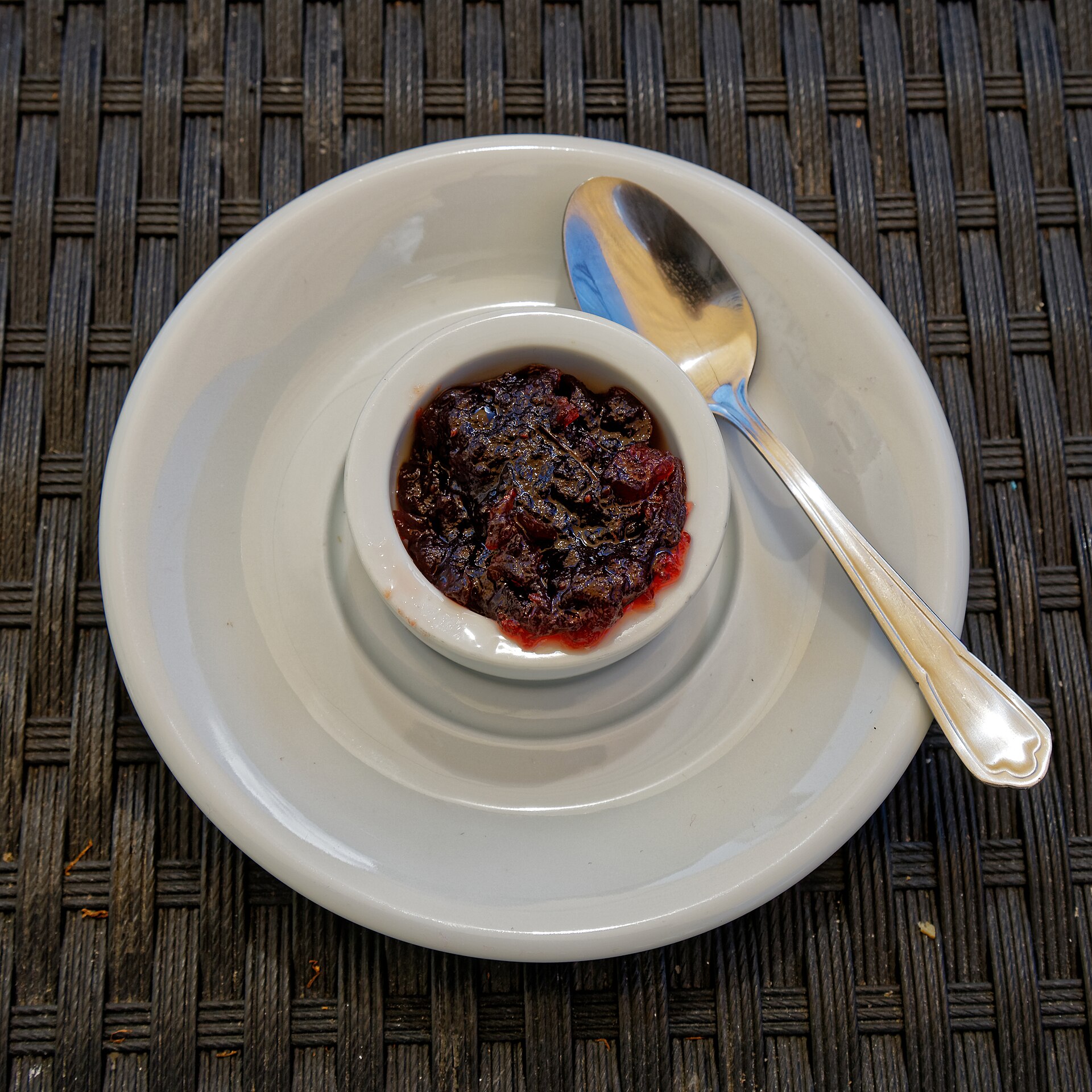
A pot of cranberry sauce, pulled off the stove the moment it looked done, poured warm into a bowl and refrigerated overnight, was noticeably looser the next morning than expected. The same recipe, cooked a couple of minutes longer and cooled the same way, held a clean, sliceable set by the next day.
The difference was not the recipe. It was cook time and sugar concentration, and understanding why those two variables control the set explains something that trips up a lot of home cooks every November: homemade cranberry sauce with no added gelling agent still sets, reliably, if the two variables that actually matter are respected.
Cranberries carry their own pectin, in a high enough concentration that no packet of powdered pectin, gelatin, or cornstarch is needed to get a proper set. What is needed is enough time at a high enough sugar concentration for that native pectin to do its job, and a full day in the refrigerator for the structure to finish forming.
- No added gelling agent needed: cranberries carry enough pectin on their own
- The two variables that matter: cook time and sugar concentration
- The window: roughly 10 to 15 minutes at a steady simmer, not a quick boil
- Why day two is firmer: pectin continues setting over several hours in the fridge, not just while hot
- Sugar’s role: concentrates the pectin network by binding water molecules
- Make ahead window: up to 10 days refrigerated, improves rather than degrades
- Common mistake: pulling it off heat the moment it looks liquid, before pectin has released fully
Homemade cranberry sauce: why day two tastes better
A sauce eaten the same day it is made is still in the process of finishing its set, and its flavor has not yet had time to meld the way a rested sauce’s does. Both texture and taste continue developing for several hours after the pot comes off the stove, which is a large part of why a batch made a day or two ahead of Thanksgiving tastes noticeably rounder and holds its shape better than one made that same morning.
This makes cranberry sauce one of the few Thanksgiving dishes where making it further ahead is not just a scheduling convenience but an actual quality improvement, rather than a compromise made only for the sake of a lighter workload on the day itself.
Where the set actually comes from: native pectin, not an additive
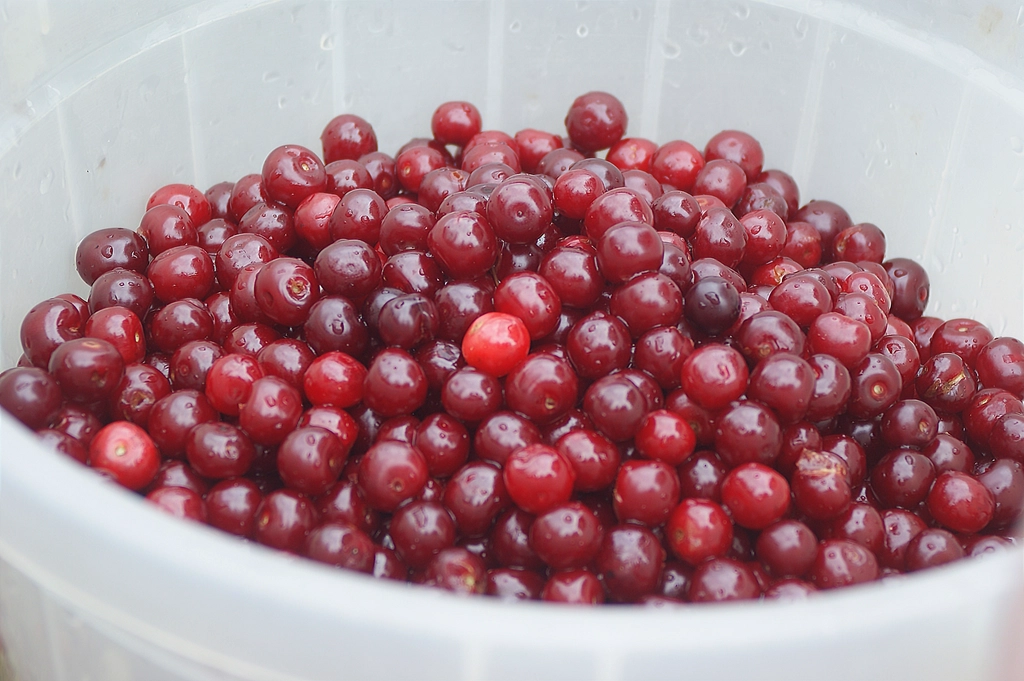
Cranberries contain a naturally high concentration of pectin, a structural carbohydrate found in the cell walls of many fruits, and cranberries carry considerably more of it than most fruits used in home cooking, which is exactly why a simple cranberry sauce, cooked with sugar and water and nothing else, sets into a proper gel without needing any powdered pectin, gelatin, or cornstarch added.
Pectin needs three things to form a gel: enough concentration of the pectin itself, enough sugar to bind free water molecules and let pectin strands link together, and enough acid to help that linking happen efficiently. Cranberries, being naturally quite tart, already supply the acid on their own, which is one reason they gel so reliably compared to lower-acid fruits that often need lemon juice added specifically to help their own pectin set properly.
Cooking the berries until they burst releases this native pectin from the cell walls into the surrounding liquid, and it is only once that pectin is released and given time in a sufficiently concentrated, sugared, acidic environment that the network capable of holding a gel actually forms.
The cook time and sugar concentration that decide the outcome
| Variable | Too little | Right amount | Too much |
|---|---|---|---|
| Cook time | runny, pectin not fully released | 10 to 15 min steady simmer | overly thick, jammy, less bright flavor |
| Sugar | weak set, dull flavor | roughly 3/4 to 1 cup per 12 oz berries | overly sweet, masks tartness |
| Heat level | too gentle, slow, uneven bursting | steady simmer, visible but not violent bubbling | hard boil, can scorch and reduce too fast |
A sauce pulled off heat after only five or six minutes, before most of the berries have fully burst and released their pectin, will taste fine but set poorly, staying loose and syrupy rather than firming into a sliceable gel even after a full day in the refrigerator. The fix is not more time in the fridge; it is more time on the stove in the first place.
Sugar below roughly three-quarters of a cup per standard twelve-ounce bag of berries often will not provide enough concentration for the pectin to link properly, resulting in a thinner sauce regardless of how long it simmers. Increasing sugar within a reasonable range strengthens the set noticeably, though pushing well past a full cup mostly adds sweetness without a proportional improvement in texture.
Why the set keeps improving after the pot comes off the stove
Pectin gel formation is not instantaneous the moment the right conditions exist; the pectin strands need time to align and bond into a stable three-dimensional network, and much of that bonding happens gradually as the mixture cools rather than while it is still hot and actively moving on the stove.
A sauce that looks entirely liquid straight off the heat, still hot and steaming, is not a failed batch; it is a batch that has not yet had the chance to cool and let its pectin network finish forming. This is the single most common point of unnecessary panic in home cranberry sauce making, since the hot, pourable state looks nothing like the set the sauce will actually reach once fully chilled.
A full night in the refrigerator, ideally closer to twenty-four hours, gives the pectin network the time it needs to reach its final firmness, which is why a sauce tasted straight off the stove is a poor predictor of how it will actually hold up once served the next day.
The three-minute simmer window that determines the whole batch
- Combine berries, sugar, and a small amount of water or juice in a saucepan. A ratio of about one cup of liquid to twelve ounces of berries is standard.
- Bring to a boil, then reduce immediately to a steady simmer. A hard, rolling boil risks scorching and reduces the liquid too aggressively before the pectin has had time to release properly.
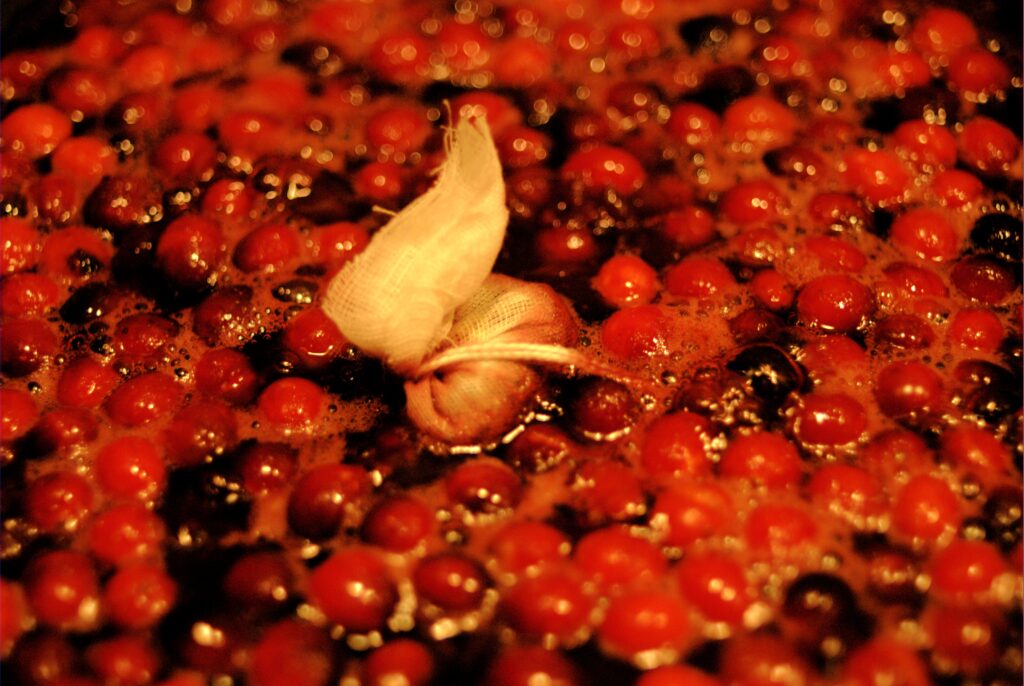
- Simmer for 10 to 15 minutes, stirring occasionally, until most berries have burst. The mixture will look glossy and slightly thickened, though it will still seem loose while hot.
- Taste and adjust sugar if needed, keeping in mind the sauce will taste slightly less sweet once fully chilled. Cold temperatures mute perceived sweetness somewhat.
- Remove from heat and let it cool at room temperature for about thirty minutes before refrigerating. Moving a very hot pot directly into the refrigerator can also raise the fridge’s internal temperature briefly, which is worth avoiding with other perishable food nearby.
- Refrigerate, covered, for at least several hours and ideally overnight before serving. This is the step most often rushed, and it is the step doing the most work for the final texture.
Does the type of sweetener change the set?
Granulated white sugar is the most tested and reliable choice, since it dissolves cleanly and its exact sweetening and pectin-supporting behavior is well understood by most home cooks already familiar with basic jam and preserve making.
Honey and maple syrup can replace some or all of the sugar, but both bring additional water content into the mixture, which can work against the concentration effect that supports a firm set, so a sauce made with a liquid sweetener may need a slightly longer simmer to reduce that extra water and reach a comparable final consistency.
Sugar substitutes marketed as calorie-free generally do not replicate sugar’s role in supporting a pectin gel, since they lack the same water-binding chemistry, and a sauce made entirely with a non-sugar sweetener often needs a separate thickener, like a small amount of added pectin or cornstarch, to reach a comparable set, the same fallback used to thicken a quick berry compote made from low-pectin fruit.
What to do if the sauce still hasn’t set after a full day
If a fully chilled batch is still noticeably looser than expected after twenty-four hours, the most likely cause is insufficient simmer time originally, and the fix is returning the sauce to the stove for an additional five to ten minutes of simmering to release more pectin, then chilling it again for several more hours.
Adding a small amount of fresh lemon juice during that second simmer can help if the original batch was made with particularly ripe, less acidic berries, since additional acid supports pectin’s ability to link into a firm gel. A tablespoon or two, tasted and adjusted, is usually enough without noticeably changing the sauce’s overall flavor.
As a last resort, a small amount of unflavored powdered gelatin, bloomed in cold water and whisked into the warm sauce, provides a fallback set for a batch that genuinely will not firm up with more cooking, though this changes the sauce from a pure pectin gel into a mixed-gel texture that behaves slightly differently once served.
Storing cranberry sauce safely through the holiday week
A properly cooked and sugared cranberry sauce, refrigerated in a sealed container, holds safely for up to ten days, which comfortably covers making it well ahead of Thanksgiving without any food safety concern, provided it is kept consistently refrigerated rather than left out at room temperature between servings.
Freezing extends that window considerably, to about two months, and a frozen batch thaws in the refrigerator overnight without much loss of texture, since the pectin network, once formed, tolerates a freeze-thaw cycle reasonably well compared to some other gelled preparations.
Serving the sauce straight from the refrigerator is standard and traditional, though some households prefer it brought closer to room temperature for twenty minutes before serving, which softens the texture slightly without meaningfully compromising the set that took a full day to develop.
Whole-berry versus smooth: does the style change the pectin math?
A whole-berry sauce, where the berries stay largely intact and simply burst enough to release juice, and a smooth, jellied style, where the mixture is pushed through a strainer or blended after cooking, both rely on the exact same pectin chemistry underneath. The difference between them is textural preference, not a different setting mechanism.
A strained, smooth version does lose a small amount of the pectin-rich skin and pulp left behind in the strainer, which can mean a very slightly softer set compared to an unstrained whole-berry version made with the same cook time and sugar. This is usually minor enough not to matter, though a smooth sauce pushed hard for maximum silkiness may benefit from an extra minute or two of simmer before straining to compensate.
Either style holds up to the same make-ahead timeline and the same overnight chill for the set to finish forming, so the choice between whole-berry and smooth comes down entirely to how the finished sauce is meant to look and feel at the table.
A firm cranberry sauce was never about a special ingredient. It was always about giving the cranberries’ own pectin the simmer time, the sugar, and the overnight patience it needs to finish the job on its own.
Frequently Asked Questions
Can I use frozen cranberries instead of fresh for the same result?
Yes, frozen cranberries work just as well and can go directly into the pot without thawing first, though the mixture may need a couple of extra minutes on the stove since the berries start colder and take slightly longer to reach a full simmer.
Why did my sauce turn out too thick and jammy instead of a sliceable set?
This usually means it simmered too long or the liquid reduced too much before the pot came off the heat. Reducing the simmer time by a few minutes on the next batch, or adding a bit more liquid at the start, corrects it.
Does adding orange zest or other flavorings affect the set?
Small amounts of zest, cinnamon, or a splash of orange juice do not meaningfully interfere with pectin’s ability to set. Adding a large amount of additional liquid, like a full cup of extra juice, does dilute the concentration enough to potentially need a slightly longer simmer.
Is it safe to can homemade cranberry sauce for longer storage?
Cranberry sauce can be processed in a water bath canner following tested, reputable canning guidelines, given its naturally high acidity, which makes it a reasonably safe candidate for that method compared to many lower-acid foods, the same acidity logic covered in any solid canning and pickling guide. Following an established, tested recipe and processing time is important rather than improvising the process.
Can I make cranberry sauce with less sugar for a lower-sugar version?
Yes, though reducing sugar significantly weakens the pectin set and produces a noticeably looser sauce. A reduced-sugar version generally needs a longer simmer or a small amount of added pectin to reach a comparable texture to the standard recipe.