A fourteen-pound turkey occupies the oven for close to four hours, and stuffing, a casserole, and dinner rolls all want oven space too, usually at overlapping times rather than in a tidy sequence. That leaves whoever is planning the sides with a real scheduling problem well before anyone worries about flavor.
The stovetop, by contrast, sits mostly idle on a lot of Thanksgiving mornings until the gravy needs a burner at the very end. Eight dishes built entirely around pots and pans rather than oven racks solve the scheduling problem directly, using equipment that would otherwise go unused for most of the morning.
None of these are consolation-prize sides. Each one is a dish that genuinely belongs on a Thanksgiving table, built to a real pan size and a real order of operations for a standard four-burner range.
- The problem: a turkey occupies the oven for hours, leaving no room for sides that need it too
- The fix: eight stovetop-only dishes, ordered for a standard four-burner range
- Timing: most finish in 15 to 30 minutes, staggered to avoid a burner bottleneck
- Pan sizing: a 12-inch skillet and a wide sauté pan cover most of the list
- Holding: covered on low heat holds most of these safely for up to an hour
- Food safety: anything held warm for guests should stay above 140F, not room temperature
- Result: a full side spread with the oven reserved entirely for the bird
Eight stovetop Thanksgiving sides for a five-hour oven
| Dish | Pan | Time | Burner order |
|---|---|---|---|
| Green beans with shallots | 12-inch skillet | 15 min | early, holds well covered |
| Mashed potatoes | large pot | 25 min | early, reheats gently |
| Braised red cabbage | Dutch oven | 30 min | early, improves holding |
| Creamed spinach | saucepan | 15 min | mid |
| Glazed carrots | wide sauté pan | 20 min | mid |
| Cranberry sauce | saucepan | 15 min | earliest, serves cold or warm |
| Skillet corn | 12-inch skillet | 10 min | last, quick |
| Gravy | saucepan | 15 min | very last, needs drippings |
Ordered this way, the two dishes that hold best, cranberry sauce and braised cabbage, go first, freeing a burner for the next dish while they sit covered on low heat. Gravy goes dead last because it is the only one that depends on drippings that do not exist until the turkey actually comes out of the oven.
Why the oven becomes the actual bottleneck on Thanksgiving Day
A turkey needs a stable, mostly uninterrupted oven temperature for the several hours it takes to cook through, and opening the oven repeatedly to rotate other dishes in and out disrupts that stability, extending the turkey’s own cooking time in the process. A single oven, even a large one, genuinely cannot serve a turkey and three or four side dishes on independent schedules without one of them suffering.
The stovetop has no equivalent constraint. Multiple burners run independently of each other, each dish gets exactly the heat it needs without affecting anything else on the stove, and a burner freed up by a finished dish is immediately available for the next one, none of which is true of a single oven cavity being shared by several dishes at once.
Reframing sides as stovetop-first rather than oven-first is less about avoiding the oven entirely and more about recognizing which piece of equipment is actually the scarce resource on this particular day, the same reasoning that makes an oven-roasted vegetable side a smarter choice on a night when nothing else needs the oven.
Building a burner schedule for a standard four-burner range
A four-burner stove genuinely cannot run eight dishes simultaneously, so the schedule has to stagger them by how far ahead each one holds without losing quality. Cranberry sauce and braised cabbage, both of which taste as good or better after resting, go on early and get pulled off active heat once done, freeing their burners for the next round.
Mashed potatoes, once riced and combined with warm butter and dairy, hold acceptably in a covered pot on the lowest possible heat, stirred occasionally, for up to an hour without much quality loss, which means they can also come early in the sequence rather than needing to finish at the exact moment of serving.
Dishes that genuinely need to be freshly finished, like skillet corn and the final gravy, are scheduled last and kept short, ten to fifteen minutes each, so the last stretch before serving is manageable rather than a scramble across every burner at once.
Green beans with shallots: fifteen minutes, one skillet
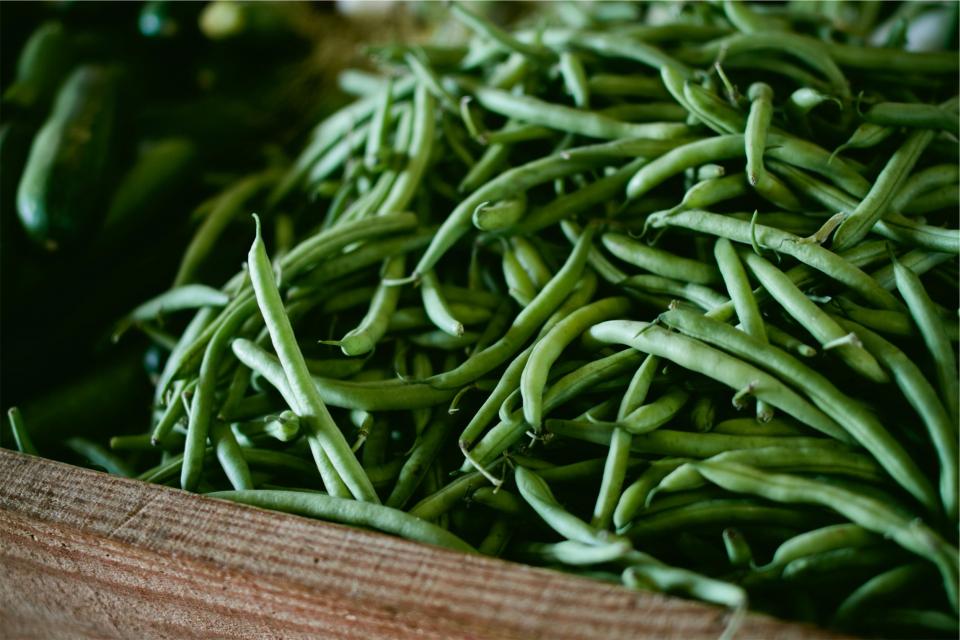
Green beans blanched briefly in salted boiling water, then shocked in ice water to lock in their color, hold in the refrigerator for a day if needed, which means the actual stovetop time on the day itself is just the final sauté: thinly sliced shallots softened in butter, the blanched beans tossed through and warmed for a few minutes, finished with a squeeze of lemon.
This two-stage approach, blanch ahead and finish on the day, splits the work in a way that keeps the actual Thanksgiving-morning burner time to under ten minutes for this dish specifically, even though the full process from raw bean to finished plate takes longer than that in total, the same prep-ahead logic behind a quick vegetable frittata built from components chopped the day before.
Creamed spinach and glazed carrots: two saucepan sides that hold well
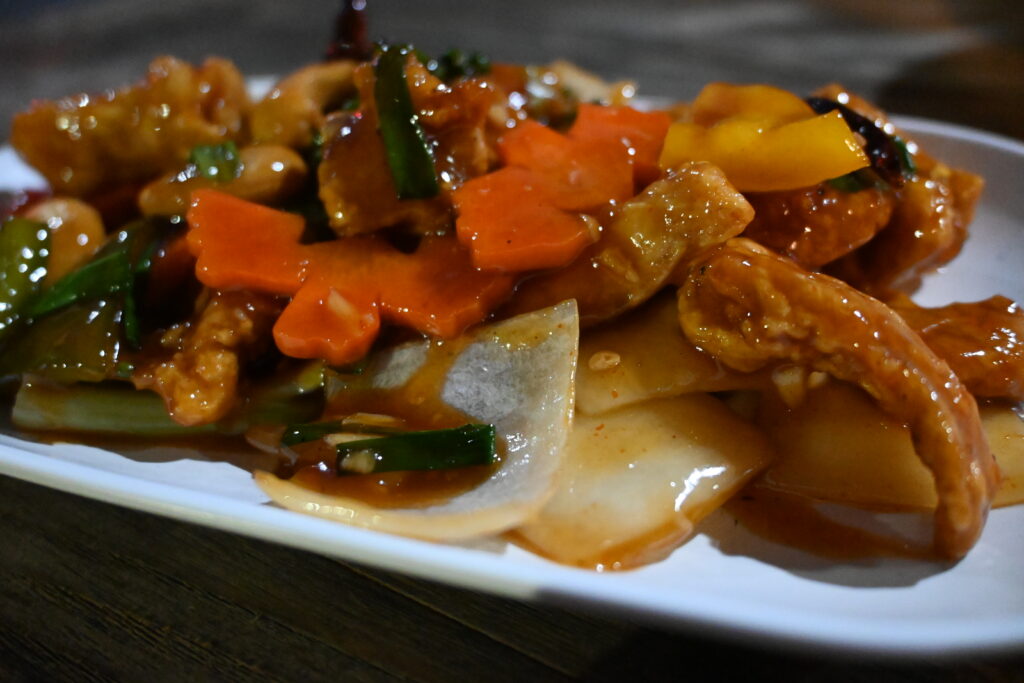
Creamed spinach, built from wilted spinach folded into a quick cream sauce thickened with a small amount of flour, holds covered on low heat for a reasonable stretch without separating badly, provided it is stirred occasionally and not left completely unattended over direct heat.
Glazed carrots, cooked in a wide sauté pan with a small amount of butter, sugar, and stock until the liquid reduces to a light glaze coating each piece, are one of the more forgiving dishes on this list, since a slightly longer cook simply concentrates the glaze further rather than ruining the texture the way overcooking many vegetables does.
Both dishes are well suited to the same wide, straight-sided sauté pan, meaning a kitchen with just one or two large pans can cycle through several dishes on this list without needing an unusual amount of specialized cookware.
Skillet corn and cranberry sauce: the fastest two dishes on the list
Skillet corn, made from fresh or frozen kernels cooked briefly in butter with a touch of sugar and black pepper, comes together in under ten minutes and is best made close to serving time, since its appeal depends on the kernels staying bright and slightly crisp rather than softening from extended holding.
Cranberry sauce, covered elsewhere as one of the most forgiving make-ahead Thanksgiving components, can be made stovetop days in advance and simply reheated gently or served cold, which means it barely counts as a same-day burner commitment at all once it has already been made ahead.
How to hold finished stovetop dishes safely until serving
Food held for serving needs to stay above 140F to remain outside the temperature range where bacteria multiply quickly, which for most of these dishes means keeping the pot or pan on the lowest possible burner setting, covered, rather than turning off the heat entirely and letting the dish drift down through the unsafe range while it waits.
A dish that has cooled to room temperature and needs to be reheated before serving should come back up to a full simmer or a genuinely hot temperature rather than a lukewarm in-between state, and it should not sit at room temperature for more than about two hours total between when it finished cooking and when it is eaten, the same two-hour rule that applies to any warm holiday dish.
A warming drawer, if the oven has one, or a slow cooker set to its warm setting, both work as holding stations that free up stovetop burners for the next dish while keeping an already-finished one at a genuinely safe serving temperature rather than gradually cooling on a back burner with the heat off.
What still might need the oven, and how to minimize the conflict
Dinner rolls and a casserole with a browned top are the two most common holdouts that genuinely benefit from oven heat rather than a stovetop substitute, since browning and rise both depend on dry, ambient oven heat in a way a covered pan cannot replicate.
For a kitchen determined to free the oven entirely, rolls can be baked the day before and reheated briefly, and a casserole’s top can be finished under a stovetop-adjacent toaster oven or a small countertop oven if one is available, which some households already own and underuse specifically because the main oven gets treated as the only baking option by default.
Realistically, reserving the main oven for the turkey and one small tray, like a casserole needing only a short final bake, while everything else runs stovetop, is a more practical middle ground than eliminating oven use entirely, and it still resolves most of the scheduling conflict that a fully oven-dependent side list creates.
Prepping stovetop sides ahead to shorten the actual cook window
Chopping, slicing, and blanching for all eight dishes the day before, then storing each component separately and labeled in the refrigerator, turns Thanksgiving morning’s stovetop work into mostly assembly and final cooking rather than knife work competing for counter space alongside everything else happening at once.
This kind of prep is where the actual time savings of a stovetop-first side list becomes most visible: a fifteen-minute stovetop dish with all its components already prepped the night before genuinely takes fifteen minutes on the day, while the same dish started from raw, unprepped ingredients takes considerably longer once knife work is factored in.
A single sheet pan or a set of labeled containers holding each dish’s prepped components, arranged in the order they will actually be cooked, keeps this system organized enough to execute smoothly even in a kitchen with limited counter space.
What changes for a smaller kitchen with limited counter space
A galley kitchen or a small apartment stove makes the staggering approach more important rather than less, since there is even less room to have several pans, cutting boards, and serving dishes all out at once. Working through the prep list in the order dishes will actually be cooked, rather than prepping everything at once and running out of counter surface, keeps a tight kitchen from becoming the actual bottleneck instead of the oven.
Nesting pans by size, using the same large pot for an early dish like mashed potatoes and then, once emptied and quickly rinsed, for a later one like the gravy, reduces how much cookware needs to be out and washed simultaneously. This matters more in a small kitchen than it might sound, since dish-washing space competes directly with prep space when both are limited.
A small kitchen also benefits disproportionately from the day-ahead prep described earlier, since it removes knife work and ingredient staging from a space that has little room to spare for it once the actual cooking begins.
Eight dishes, four burners, and an oven left entirely to the turkey. The stovetop was never the constrained resource on Thanksgiving Day; it just needed to be treated like the available one.
Frequently Asked Questions
Can I make all eight of these dishes with just two burners instead of four?
Yes, with more staggering. Dishes that hold well, like cranberry sauce and braised cabbage, go first and get moved off active heat, freeing burners for the next round, which works even on a smaller stove, just with a longer total timeline.
Do any of these dishes actually need a specific pan size to work well?
A 12-inch skillet and one wide, deep sauté pan or Dutch oven cover nearly everything on this list. Smaller pans work for a smaller-scale version but crowd the ingredients, which can slow down browning and glazing steps that depend on enough surface area.
Is it safe to keep gravy warm on the stove for over an hour before serving?
Yes, as long as it stays above 140F on very low heat, stirred occasionally, and is not left sitting off heat at room temperature for that same stretch. A double boiler setup makes this easier to maintain without scorching.
Can I substitute a slow cooker for any of these stovetop steps?
Several of them, particularly the braised cabbage and creamed spinach, adapt reasonably well to a slow cooker on low, which also frees up stovetop space entirely for that dish, though the texture and timing will differ somewhat from the stovetop version.
What is the biggest mistake people make trying to cook this many stovetop dishes at once?
Starting all of them at the same time rather than staggering by how well each one holds. A schedule built around which dishes tolerate sitting covered on low heat, and which need to finish right before serving, avoids the scramble that trying to time everything to land simultaneously creates.