Chop an onion, a carrot and a rib of celery, cook them gently in butter, and you have the opening move of about half the savory cooking in Europe. Chop an onion, a pepper and a tomato, cook them four times longer in olive oil, and you have the opening move of a different half. The vegetables barely change. The two pots do not taste remotely alike.
The four bases in the headline are not four names for one habit. They differ in ratio, in the fat they are cooked in, in how long they stay on the heat, and in whether they are built to vanish or built to be lifted out. Those four variables carry most of what people mean when they say a dish tastes French, or Italian, or Spanish.
Below: the ratio for each, the fat each belongs in, the clock each runs on, and a straight side-by-side test of what happens when a pot of beans gets one instead of another.
| Base | Ratio | Fat | Time on the heat | Job in the dish |
|---|---|---|---|---|
| Mirepoix | 2 onion : 1 carrot : 1 celery, by weight | butter | 8 to 12 minutes, no color | dissolves and disappears |
| Battuto, then soffritto | onion-forward, near 2:1:1, chopped very fine | olive oil, butter in the north | 12 to 25 minutes | becomes the body of the sauce |
| Sofrito | onion and tomato lead, garlic and pepper behind | olive oil, more than feels right | 30 to 60 minutes | is already a sauce when it is done |
| Suppengrün | 1 leek : 1 carrot : 1 wedge celeriac, in chunks | often none at all | simmers for the length of the cook | flavors the liquid, then comes out |
One idea, four kitchens, four answers
All four start from the same observation. Raw onion and raw root vegetables taste harsh and thin, and slow contact with heat and fat turns them into something round and faintly sweet that no longer reads as a separate ingredient on the plate. Past that point the traditions disagree about nearly everything.
They disagree about whether the base should survive. A mirepoix is built to dissolve, and by the time a stock has been strained there is nothing recognizable left of it. Suppengrün is built to be removed whole, in pieces big enough to lift out with tongs after an hour.
They disagree about the tomato, which two of the four do not contain at all. And they disagree about what counts as long. Eight minutes against an hour is not preference; different reactions run at those two ends and leave different flavors behind.
Cut size decides how much of it disappears
The most consequential decision here is not the ratio. It is how small the pieces are, because the cut sets how much surface meets the fat and how quickly the cell walls give way.
A quarter-inch dice sweated in butter softens through in about ten minutes and still holds its shape when you stir it. A battuto chopped down to something near a paste has so much exposed surface that it collapses into a wet, glossy layer instead of staying a collection of cubes. A two-inch wedge of celeriac in a stockpot never breaks down at all; it leaks into the water for an hour and comes out looking much as it went in.
Match the cut to the job. A base that must disappear into a sauce headed straight for the table gets chopped fine. A base going into liquid that will be strained gets cut coarse, because coarse pieces are easy to remove and give up plenty over a long simmer. The traditional stock cut is rough on purpose, not out of laziness.
Mirepoix: two parts onion and a knob of butter
The ratio is two parts onion to one carrot to one celery, measured by weight rather than by volume, since a cup of diced onion and a cup of diced celery weigh noticeably different amounts. Butter is the standard fat, or whatever fat the finished dish already contains.
The technique is a sweat, not a fry. Medium-low heat, a pinch of salt at the start to pull water out of the onion, and a lid for part of the time so the vegetables steam in their own liquid. Nothing should brown. Eight to twelve minutes gets the onion translucent and the carrot bendable, which is as far as it needs to go before the stock or the wine arrives.
Two variations are worth knowing. White mirepoix drops the carrot and puts leek and parsnip in its place, for pale stocks and cream sauces where orange flecks would show. And the Cajun trinity of onion, celery and bell pepper is often described as the same thing with a substitution, which undersells the difference: bell pepper is a loud flavor that never fully recedes.
Battuto is the board work, soffritto is what happens in the pan
Italian cooking separates the two stages by name, which is useful. The battuto is the raw mixture as it comes off the cutting board, chopped very fine, often with flat-leaf parsley in it, sometimes with garlic, and frequently with a piece of pancetta or cured pork fat chopped in among the vegetables. The word points at the rhythm of the knife.
The moment that mixture goes into warm olive oil it becomes soffritto, and the second word describes the cooking rather than the ingredients. Twelve to fifteen minutes over low heat for a light base, twenty-five and a hint of real color for a ragu that will simmer for hours afterward.
Northern kitchens lean on butter and keep the base pale. Southern ones use olive oil and let it take some color. The pancetta is not decorative: cured pork fat melts out early and becomes part of the cooking medium, which is why a soffritto built with it tastes deeper than the same vegetables in plain oil.
Sofrito cooks until it stops looking like vegetables
A Spanish sofrito runs on a much longer clock. Onion goes into a generous pool of olive oil first, over low heat, for twenty minutes or more, until it is soft and beginning to turn gold. Garlic follows. Grated or finely chopped tomato goes in last and cooks down until the water is gone.
Three cues tell you it is finished. The volume has dropped by well over half. The color has gone from red to a dark brick. And the oil separates and pools at the edges of the pan, which is the visible sign that the tomato has given up its water and the mixture has turned from a wet mash into a paste. That takes thirty to sixty minutes and cannot be rushed with higher heat, because heat browns the sugars before the water leaves.
One point of confusion is worth clearing up. The same word covers a completely different Caribbean preparation, which is a raw green puree of cilantro, culantro, sweet peppers, garlic and onion, blended and usually frozen in cubes, added at the start of a dish rather than built in the pan. Both are called sofrito. Only one of them is cooked before it is used.
Suppengrün arrives as a bundle and behaves like a filter
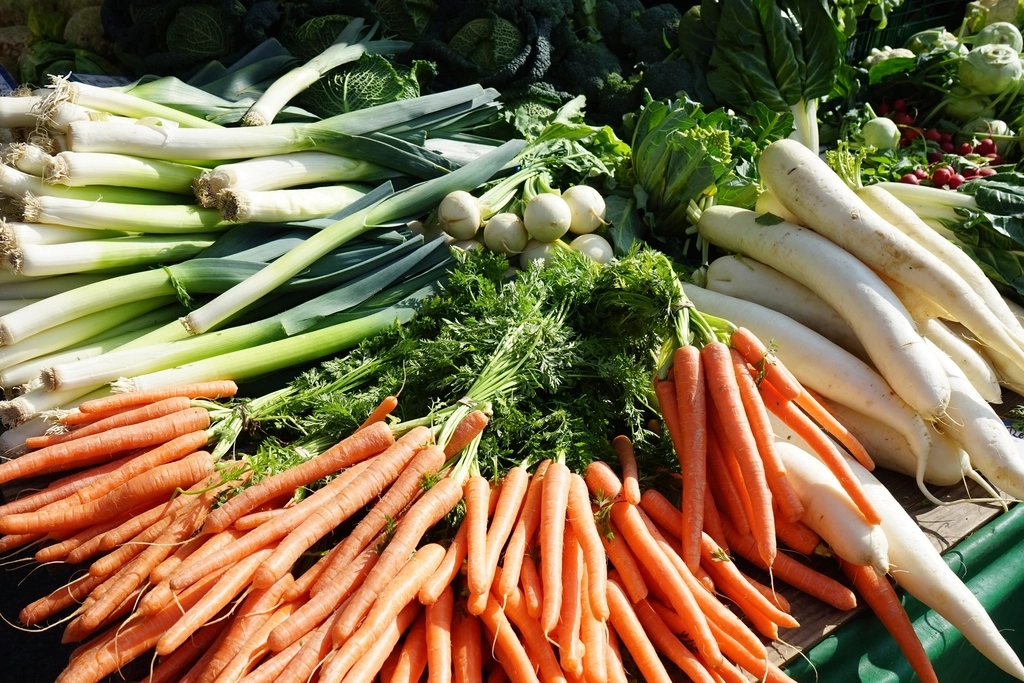
German markets sell it tied together: a length of leek, a carrot, a wedge of celeriac, sometimes a sprig of parsley or a piece of parsley root. Regional versions swap in turnip or add more parsley root. It is bought as a unit, not weighed out as a ratio, which tells you something about how casually it is treated.
It is usually not sweated in fat at all. The pieces go into cold water with bones or a joint of meat, simmer for the length of the cook, and come out with tongs before serving. In a Gulasch or a braise where fat is used, that fat is lard or butter or the rendered fat of the meat itself, not olive oil.
Celeriac is the flavor that makes the bundle recognizable, and it is the one home cooks substitute badly. Celery stalk is not a stand-in. Celeriac is denser, earthier and slightly bitter, and it holds its shape through a long simmer in a way a stalk cannot. If you cannot find the root, use celery leaves and accept that the result will taste lighter.
Mirepoix vs sofrito, tasted in the same pot of white beans
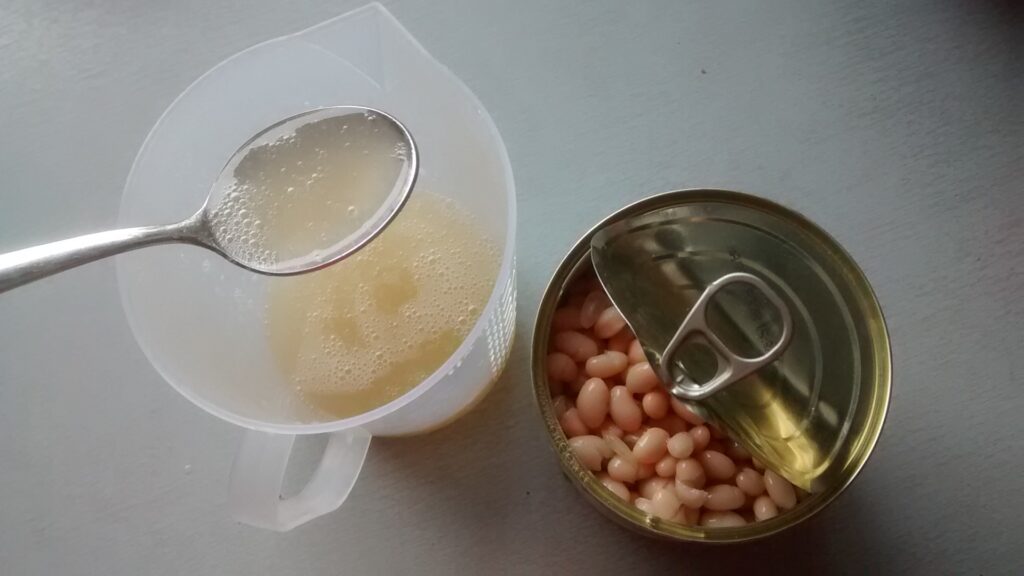
Two pots, same dried cannellini soaked overnight, same weight of water, same twelve ounces of prepared base, salt added only at the end so neither pot got an advantage. One pot got a classic mirepoix sweated ten minutes in butter. The other got a sofrito built over forty-five minutes in olive oil with garlic and grated tomato.
The mirepoix pot came out pale, with a thin broth and a soft sweetness sitting under the beans. The beans were clearly the subject. Nothing competed with them, and the pot had obvious room left in it for anchovy, wilted greens, sausage or a spoon of chili.
The sofrito pot came out orange-brown, with a broth that had real body and clung to a spoon. The beans tasted of tomato and olive oil before they tasted of beans, and a faint bitterness from the long-cooked onion sat behind everything, balanced by the acid of the tomato. It needed nothing else and would have resisted most additions.
Neither result is better. Mirepoix leaves space and sofrito fills it. The honest cost is time: the sofrito pot demanded thirty-five more minutes of attention before a single bean went in, which is the real reason most weeknight cooking ends up French by accident.
The fat is not interchangeable
Butter contains milk solids that brown at a fairly low temperature, and that ceiling is the whole reason mirepoix is sweated rather than fried. Push a butter pan hot enough for real browning and the solids scorch before the carrot softens.
Olive oil takes considerably more heat and is what makes an hour-long sofrito possible without burning. Quantity is part of the technique, not an accident of generosity: a proper sofrito uses more oil than most home cooks are comfortable pouring, and that oil ends up in the dish carrying flavor rather than being drained off.
Lard and rendered pork fat sit behind much of central European cooking and give a savory weight butter does not. Neutral oil contributes nothing, which is occasionally the point. Under a delicate fish or a pale sauce, silence is a feature.
Timings, side by side
| Base | Cut | Heat | Time | Done when |
|---|---|---|---|---|
| Mirepoix | quarter-inch dice | medium-low, lid on part of the time | 8 to 12 min | onion translucent, no color anywhere |
| Mirepoix for stock | rough two-inch chunks | none, straight into cold liquid | the length of the simmer | strained out and discarded |
| Soffritto, light | very fine, near paste | low | 12 to 15 min | glossy, soft, barely blond |
| Soffritto for ragu | very fine, with pancetta | low to medium-low | 20 to 25 min | edges taking real color |
| Sofrito | fine dice, tomato grated | low throughout | 30 to 60 min | oil separates, color turns brick |
| Suppengrün | large chunks, leek split | bare simmer in liquid | 45 to 90 min | lifted out whole with tongs |
Garlic has its own clock
Garlic burns long before an onion is done, and most base failures trace back to putting the two in the pan at the same moment. Classic mirepoix contains none. A battuto often includes it raw from the board and accepts the milder note that results, or adds it in the last few minutes.
In a sofrito the garlic goes in after the onion has already softened, once the pan has liquid coming out of the vegetables to protect it. That is twenty minutes into the process, not at the start.
How you break the clove matters too. Crushing ruptures far more cells than slicing does, releasing more of the sulfur compounds that give raw garlic its bite, and a crushed clove is both sharper and quicker to scorch. Slice it when it has to sit in fat for a while. Crush it when it is going in near the end. If garlic is the first thing to hit your pan, either the heat is wrong or the recipe is.
Swap one base for another and this is what moves
| Swap | What you gain | What you lose | Worth doing |
|---|---|---|---|
| Mirepoix in a ragu | a cleaner, sweeter carrot note | the parsley and cured pork depth | yes, if you use butter and expect it to read French |
| Soffritto in a clear stock | more flavor per ounce | clarity; the fine chop clouds it and the oil floats | no |
| Sofrito anywhere mirepoix belongs | body, color and acid | neutrality; the tomato takes over the dish | only if you wanted a sauce |
| Suppengrün in a braise | an earthy backbone that holds up for hours | the sweetness carrot brings on its own | yes for beef and pork, less so for poultry |
| Trinity in place of mirepoix | a bright vegetal top note | invisibility; bell pepper is always audible | only when the dish is looking for it |
The pattern across all five rows is the same. Swapping toward tomato or pepper adds a flavor that will be identified by anyone eating. Swapping toward carrot and celery adds a flavor that supports without announcing itself. Decide which of those you need before you touch the knife.
Batching it, freezing it, and the jar that is a bad idea
Sofrito is the one worth making in quantity, because it takes the longest and freezes the best. Cook a full pan, cool it, and freeze it in an ice cube tray at roughly two tablespoons per cube, then bag the cubes. Three months holds without any real loss.
Battuto can be chopped raw, pressed flat in a freezer bag and broken off in pieces as needed. Mirepoix freezes acceptably but turns watery on thawing, so tip it into the pan frozen and let the water cook off rather than defrosting it first.
One storage habit deserves a flat warning. Do not keep any garlic-containing base sitting under oil at room temperature. Oil excludes oxygen and garlic is a low-acid vegetable, and that combination is the specific set of conditions food safety authorities warn about for the bacterium that produces botulinum toxin. Anything with garlic under oil belongs in the refrigerator for a few days at most, or in the freezer. A jar of sofrito on the counter is not a time-saver.
Cool it quickly, too. Spread a hot pan of base thin on a plate or a shallow tray instead of leaving the covered pan on a warm stove for hours. It reaches refrigerator temperature in minutes that way, which matters for anything you plan to keep.
Frequently Asked Questions
Can a food processor make a battuto?
For the vegetables, yes, in short pulses with the bowl scraped down between them. A continuous run turns them to puree, and puree releases so much water that the mixture steams in the pan instead of frying, which costs you the browning the base depends on. Chop pancetta or cured fat by hand; the processor smears it rather than cutting it.
Do I have to peel the carrot?
For a stock or anything that gets strained, no. Scrub it well and cut it coarse. For a base that dissolves into a sauce headed straight for the table, peel it, because carrot skin carries bitter compounds and does not break down at the same rate as the flesh underneath.
What is white mirepoix actually for?
Pale sauces, poultry stock and anything where orange flecks would be visible in the finished dish. Keep the same two-to-one-to-one proportion and put leek and parsnip where the carrot was. Expect slightly less sweetness, since parsnip reads earthier than carrot does at the same weight.
How much base does a pot for four need?
Roughly ten to twelve ounces of prepared vegetables for a pot serving four to six. Sofrito is the exception, because it reduces so far that you should start with half again as much raw weight to end up in the same place. Weigh it once and you will not need to weigh it again.
Is a bought jar of sofrito worth using?
Sometimes. Check where the tomato sits in the ingredient list, because the cheap jars lead with water and thicken with starch, giving you the color without the reduction. Taste a spoonful cold: if it reads raw and sharp rather than sweet and concentrated, no amount of time in your pan will fix it.